

A tire pressure sensor fault means your vehicle’s TPMS detects issues like dead sensor batteries, damaged sensors, or communication failures.
It often happens due to internal battery depletion, physical damage from impacts, corrosion, or installation errors.
Faulty sensors cause inaccurate or no pressure readings, triggering warning lights.
Proper diagnosis involves checking sensor signals, battery health, and possible wiring faults.
Understanding these factors helps you maintain your system’s accuracy and reliability. Explore how to identify causes, symptoms, and fixes.
Key Takeaways
- A tire pressure sensor fault indicates a problem with the TPMS device detecting or transmitting tire pressure data accurately.
- Common causes include dead sensor batteries, physical damage, corrosion, or installation errors affecting sensor function.
- Fault symptoms include persistent warning lights, erratic readings, or blank data despite correct tire pressures.
- Diagnosis involves checking sensor signals with a scan tool, verifying tire pressures manually, and inspecting sensors physically.
- Repair typically requires replacing faulty sensors and performing relearn procedures for proper system calibration.
Tire Pressure Sensor Faults
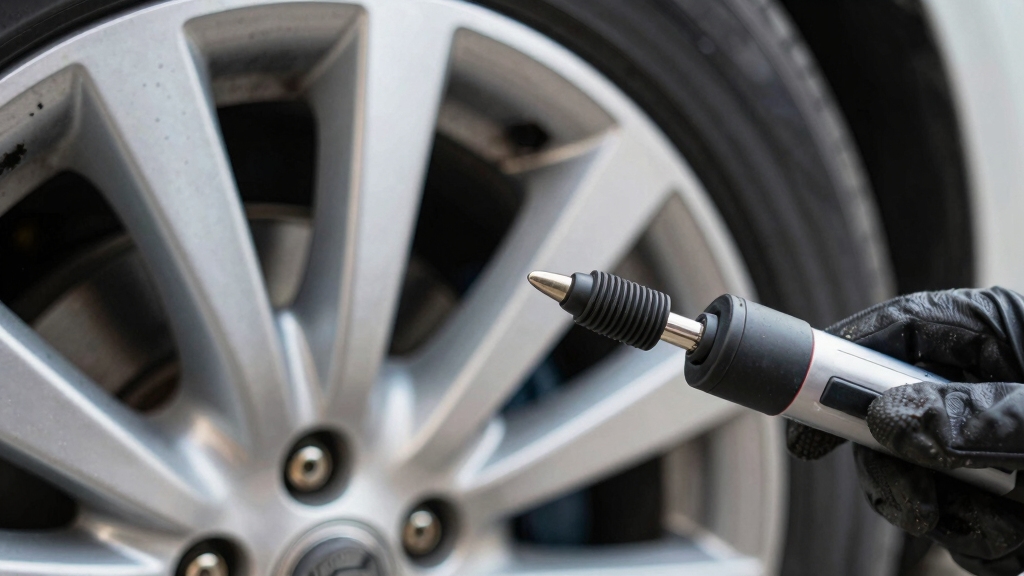
When a tire pressure sensor faults, your vehicle’s TPMS warning light typically comes on, signaling an issue with the tire pressure monitoring system.
You might notice wrong or inconsistent tire pressure readings, or the warning light flashing and then staying lit despite correct tire pressure. Maintaining proper tire pressure is crucial because salt exposure can dehydrate and crack rubber, leading to sensor malfunctions.
This happens because the sensor, located inside the tire near the valve stem, either stops responding or sends faulty data to the vehicle’s computer. Direct TPMS sensors measure pressure and send data in real time, so a fault can disrupt accurate monitoring.
You could also experience handling issues like tight steering or unusual tire wear, often caused by undetected low pressure.
To confirm a fault, check tire pressure with a gauge, compare it to the TPMS display, and use a scan tool to identify errors.
Visual inspection for sensor damage or corrosion is also essential.
Common Causes of Sensor Malfunctions
Sensor malfunctions are pretty common, and they often boil down to a few key issues. One major culprit is battery life. You see, the internal power sources in these sensors can degrade after several years.
When that happens, it can lead to signal loss or those annoying erratic readings we all dread. Most shops recommend replacing sensors when the vehicle is 7+ years old or the battery dies, as the battery life is closely tied to sensor age.
Additionally, battery health monitoring can help detect early signs of power loss to avoid sudden sensor failures.
Then there’s the physical damage aspect. If a sensor gets hit during road impacts or mishandled during tire service, it can crack the housing or even damage the valve stem. This type of damage can really mess with how the sensor functions.
And let’s not forget about installation errors. Sometimes, people overtighten the valves or don’t mount them correctly, which can lead to air leaks and communication faults. It’s all interconnected, really!
Battery Life Limits
Understanding the battery life limits of your Tire Pressure Monitoring System (TPMS) sensors is essential to diagnosing sensor malfunctions accurately.
Most TPMS sensors contain sealed lithium batteries with a typical lifespan of 5–10 years. These batteries aren’t replaceable, so sensor replacement is necessary once depleted.
Battery drain accelerates with frequent stop-and-go driving, repeated low-pressure events, high mileage, and numerous tire rotations or relearns that increase transmission cycles.
Environmental factors like high ambient temperatures and wide temperature fluctuations also reduce battery life by stressing the sealed cells. Proper maintenance and timely sensor replacement help maintain system reliability.
Additionally, electrical issues such as antenna faults or low vehicle battery voltage may mimic battery failure, complicating diagnosis.
Because TPMS sensors are wheel-mounted and transmit only when the vehicle is moving, their power use is very low and does not draw from the vehicle’s 12V battery.
Monitoring these factors helps you anticipate sensor end-of-life and avoid mistaking communication faults for battery exhaustion.
Physical Damage Risks
Physical damage to Tire Pressure Monitoring System (TPMS) sensors often stems from everyday road conditions and handling practices that wear down or compromise sensor integrity. You must be aware of these common causes to avoid sensor malfunctions:
- Impact Events: Potholes, curbs, and road debris can crack sensor housings, dislodge components, or shear valve stems, causing immediate or intermittent failures. Because TPMS sensors are battery-powered devices inside the tires, physical shocks can also damage the internal battery or electronics.
- Corrosion: Exposure to road salts, moisture, and chemical cleaners degrades seals, electrical contacts, and sensor plastics, leading to internal corrosion and transmission faults.
- Mechanical Wear: Incorrect tire servicing, like over-torquing valve stems or improper mounting tools, can crack sensor bodies or break mechanical seals, raising failure risks.
Understanding these factors helps you maintain sensor reliability and prevent costly replacements.
Installation Errors
Beyond damage caused by external forces, many tire pressure sensor malfunctions stem from errors during installation. You must carefully program and pair sensors, torque valve stems correctly, and verify battery health.
Replacing sensors with dead or weakened batteries is essential because battery failure commonly causes transmission failures or faulty readings. Proper installation practices and diagnostic inspections further help prevent persistent sensor issues.
Skipping relearn or calibration steps, over-tightening valve nuts, or misrouting antenna wiring often causes communication failures or air leaks. Neglecting post-installation checks or using incompatible sensors leads to persistent warning lights and inaccurate readings.
| Installation Aspect | Common Errors |
|---|---|
| Sensor Programming | Skipped relearn, wrong ID assignment |
| Valve Stem Mounting | Over-tightening, dirt on threads |
| Battery Handling | Using aged sensors, exposing to shop air |
| Antenna & Wiring | Damaged wires, EMI interference |
| Verification Procedures | No test drive, no diagnostic scan post-installation |
Identifying Symptoms of TPMS Issues
When your TPMS starts acting up, you’ll notice specific warning signs that signal sensor faults. These indicators help you pinpoint issues early and maintain tire safety effectively. Watch for these key symptoms:
Early warning signs of TPMS sensor faults help you catch issues and keep your tires safe and properly monitored.
- Dashboard Warning Lights: The TPMS light flashes or stays on steadily, even when tire pressures are correct. An exclamation mark in a tire-shaped icon signals persistent faults, requiring inspection.
- Inaccurate or Fluctuating Pressure Readings: Your display might show erratic or inconsistent tire pressures that don’t align with manual gauge readings. This can cause misleading alerts or blank data. Such behavior often results from sensor battery failure or damage affecting sensor performance.
- Inability to Reset Warning Light: Despite correcting tire pressures, the TPMS light remains on. This indicates sensor communication errors that prevent system resets.
Recognizing these symptoms early helps guarantee your TPMS functions reliably and keeps your tires properly monitored.
Battery Life and Its Impact on Sensors

Typically, the battery life of your TPMS sensor determines how reliably it communicates tire pressure data. Most sensors use sealed 3-volt lithium-ion batteries lasting 5 to 12 years, with seven years typical for original equipment.
Battery health is critical for uninterrupted TPMS operation, as the system provides continuous monitoring that requires reliable power. Proper sensor installation also plays a vital role in ensuring optimal battery performance and longevity.
Because batteries aren’t replaceable, once depleted, you must replace the entire sensor assembly. Your driving habits directly affect battery longevity; highway cruising reduces transmission frequency, extending battery life, while city stop-and-go traffic increases transmissions, accelerating battery drain.
Temperature also plays a role. Colder climates extend battery performance by reducing strain, whereas heat speeds degradation. To preserve battery life, make certain proper sensor installation and calibration, minimizing unnecessary transmissions.
Understanding these factors helps you anticipate sensor replacement timing and maintain accurate tire pressure monitoring, avoiding unexpected faults caused by battery failure.
Physical Damage and Environmental Effects
Battery life directly affects sensor performance, but physical damage and environmental conditions also play significant roles in TPMS reliability.
You need to be aware that impacts and exposure can degrade sensor function even if the battery is fine.
Consider these key factors:
- Impact Damage: Potholes, curbs, and road debris can crack or misalign sensors, causing inaccurate readings or failure. Overinflated tires increase vulnerability to such damage. It is important to perform regular inspections to detect early signs of sensor damage.
- Corrosion: Moisture and road salts corrode valve stems and sensor contacts, impairing signal transmission. Anti-corrosion treatments help mitigate this risk.
- Temperature Extremes: Heat accelerates battery drain and stresses internals, while cold causes false alerts due to pressure drops. Parking in shaded areas reduces thermal stress. Additionally, sensor malfunctions caused by extreme temperatures often require timely recognition for better management.
Regular inspection and cautious handling during maintenance help preserve your sensors’ integrity and accuracy.
Diagnosing and Resolving Sensor Problems
Begin diagnosing tire pressure sensor problems by performing a thorough diagnostic scan using a specialized TPMS tool. The tool reads sensor signals, detects battery drain, wiring faults, and system errors.
Since dead sensor batteries are a common cause of TPMS faults, checking sensor battery health is crucial during diagnosis. Using circuit analyzers can also help detect wiring issues that may affect sensor performance.
Next, verify tire pressure with a calibrated gauge to compare actual PSI against dashboard readings. If discrepancies persist, proceed with sensor replacement and relearn procedures.
| Step | Action | Purpose |
|---|---|---|
| Diagnostic Scan | Use TPMS tool for system check | Identify faulty sensors |
| Pressure Verification | Measure tire PSI with gauge | Confirm sensor accuracy |
| Sensor Replacement | Remove/install sensor, then relearn | Restore correct TPMS function |
Follow manufacturer specs carefully during replacement to prevent valve stem damage and ensure proper sealing.
Frequently Asked Questions
Can Tire Pressure Sensor Faults Affect Fuel Efficiency?
Yes, tire pressure sensor faults can affect your fuel efficiency.
When the sensors malfunction, they may fail to alert you about underinflated tires, causing increased rolling resistance.
This forces your engine to work harder, boosting fuel consumption.
Faulty sensors can also give incorrect readings, leading to overinflation, which causes uneven wear and reduces efficiency.
Are Tire Pressure Sensor Faults Covered by Vehicle Warranties?
Yes, your vehicle warranty often covers tire pressure sensor faults if the failure stems from a manufacturing defect within the warranty period, typically 3–5 years.
However, damage from wear, battery depletion, misuse, or aftermarket modifications usually isn’t covered.
You should check your warranty specifics and keep repair documentation.
If the fault results from a factory defect, dealer diagnostics and repairs are commonly included at no cost to you.
How Much Does It Cost to Replace a Faulty Tire Pressure Sensor?
Replacing a faulty tire pressure sensor typically costs you between $246 and $368 per sensor, including parts and labor.
Sensor prices vary from $50 to $250 depending on type and brand, with direct sensors costing more.
Labor usually runs $50 to $120, and you might pay extra for programming or relearning.
Dealers tend to charge more, sometimes up to $500 per sensor, so consider independent shops or buying aftermarket sensors to save.
Can I Drive Safely With a Tire Pressure Sensor Fault Warning?
Yes, you can drive safely with a tire pressure sensor fault warning if you manually check and maintain correct tire pressures.
The warning light alerts you to sensor issues, not immediate danger. Make sure your tires are inflated to the recommended levels using a gauge before driving.
Avoid long trips until you fix the sensor fault professionally.
Regular pressure checks are vital to prevent handling problems, uneven wear, and fuel inefficiency.
Do Tire Pressure Sensor Faults Differ Between Car Brands or Models?
Yes, tire pressure sensor faults vary by brand and model. You’ll find differences in sensor types: direct, indirect, or hybrid, each with unique fault indications.
You’ll encounter varied battery lives, communication protocols, and reset procedures. Some brands require programming after sensor replacement, while others allow automatic relearns.
Sensitivity thresholds and diagnostic capabilities also differ, affecting fault detection and troubleshooting. Understanding your vehicle’s specific system helps you address faults accurately and efficiently.
Conquer TPMS Malfunctions for Safer Drives
You should know that nearly 30% of tire pressure sensor faults result from battery failure, emphasizing the importance of regular sensor checks.
By understanding common causes and symptoms, you can quickly diagnose issues before they compromise safety or fuel efficiency.
Staying proactive with maintenance helps you avoid costly repairs and guarantees your TPMS functions reliably.
Remember, addressing sensor faults promptly keeps your vehicle performing at its best and protects your driving experience.



[…] environmental factors like moisture and corrosion can degrade electrical components, leading to communication faults that trigger improper fan […]