You get more precise, on-demand cooling with electric fans since they run based on temperature, not engine speed.
This saves you up to 30 horsepower lost to clutch fans’ continuous mechanical drag.
Electric fans cut noise drastically, improve fuel economy by reducing parasitic load, and require less maintenance thanks to sealed motors.
Clutch fans excel under high RPM but falter at idle, while electric fans maintain consistent airflow.
Understanding these factors helps you determine the best cooling solution for your vehicle’s needs.

- Severe duty
- Designed, tested and built by application
- OE performance, fit and appearance

- OE Original Form, Fitment and Performance
- Interchangeable with Hayden 3200, OE# 25790869, 15293048, 8103830290, 10383029, 15192192
- 1 Year Warranty w/ 30 Days Return Policy
Key Takeaways
- Clutch fans are mechanically linked to engine RPM, causing continuous power drag and reduced fuel economy.
- Electric fans operate on-demand via electrical control, drawing less than 2 horsepower only when cooling is needed.
- Clutch fans provide strong airflow at high RPM but lose efficiency at idle, while electric fans deliver consistent cooling across all speeds.
- Electric fans reduce engine noise and mechanical wear due to fewer moving parts and sealed motor design.
- Switching to electric fans improves horsepower availability, throttle response, and overall engine efficiency by eliminating constant belt-driven load.
Clutch Fan vs Electric: Key Differences at a Glance
| Feature / Factor | Clutch Fan | Electric Fan |
|---|---|---|
| Power Draw | Uses engine horsepower, can sap 20–30 HP at full engagement | Uses electrical power, typically under 2 HP demand |
| Cooling Control | Linked to engine RPM, less control at idle | On‑demand, based on coolant temperature and controller settings |
| Efficiency & Fuel Economy | Continuous mechanical drag reduces efficiency and fuel economy | Lower parasitic load improves fuel economy and performance |
| Performance at Idle | Weak airflow at idle or low RPM | Consistent airflow even at idle and in traffic |
| Noise Level | Noticeable mechanical fan roar, especially at high RPM | Quieter operation, variable speed helps reduce noise |
| Maintenance Needs | More wear items: belts, pulleys, viscous coupling, seals | Sealed motors, fewer moving parts and less frequent maintenance |
| Installation & Complexity | Typically factory-installed, simple mechanical setup | Requires wiring, controller, shroud, alternator capacity check |
| Upfront vs Long-Term Cost | Lower upfront cost, higher ongoing fuel and maintenance costs | Higher upfront cost, potential long-term savings in fuel and repairs |
| Best Use Case | High-RPM, hot environments, simple OEM reliability | Daily driving, towing, performance builds needing power and control |
How Clutch and Electric Fans Differ in Operation?
The primary operational difference between clutch and electric fans lies in their engagement method: clutch fans rely on a viscous coupling connected to the engine belt, spinning proportionally with engine RPM.
Electric fans activate only when cooling demand triggers their thermostatic control.
Electric fans engage precisely when cooling demand activates their thermostatic control system.
You’ll find clutch fans mechanically linked to engine speed, causing them to operate continuously at varying intensities.
In contrast, electric fans function independently of engine RPM, engaging solely based on coolant temperature thresholds.
This means electric fans deliver targeted cooling, modulating airflow precisely when needed.
You can analyze the clutch fan’s performance as inherently tied to mechanical motion, whereas electric fans use electrical signals for activation.
This enables variable speed control.
This fundamental operational distinction dictates their behavior under different driving conditions and thermal loads.
Additionally, ambient temperature significantly influences clutch fan engagement, causing it to lock up more at higher temperatures to meet increased cooling demands.
Which Fan Uses Less Engine Power?
When it comes to fan efficiency in vehicles, there’s a noticeable difference between clutch fans and electric fans. Clutch fans are always pulling power through the engine belt, and at peak engagement, they can sap up to 30 horsepower. That’s quite a bit of engine power being used!
On the other hand, electric fans are a game changer. They only draw power when they’re actually turned on, usually using less than 2 horsepower. This means they put a lot less strain on the engine.
Understanding how these fans work can really help you see their impact on your vehicle’s overall horsepower and efficiency. It’s pretty clear which one comes out on top! Additionally, managing power consumption effectively in cold conditions, such as using AGM batteries, can further enhance vehicle performance and reliability.
Power Consumption Comparison
When comparing power consumption, electric fans clearly use less engine power than clutch fans. Electric fans draw power only when cooling is necessary, typically consuming under 2 horsepower.
Clutch fans, however, engage mechanically through the engine belt and can sap up to 30 horsepower at peak operation, reducing overall engine efficiency. Additionally, electric fans provide better energy efficiency by operating on-demand and avoiding continuous mechanical load.
| Fan Type | Power Draw (HP) | Operation Mode |
|---|---|---|
| Clutch Fan | Up to 30 | Continuous when engaged |
| Electric Fan | Less than 2 | On-demand, variable speed |
| Clutch Fan | ~10-20 (partial) | Partial engagement |
| Electric Fan | Minimal idle draw | Off or low speed idle |
| Clutch Fan | Constant mechanical load | Always connected |
This significant difference means electric fans minimize continuous engine drag. This improvement enhances fuel economy and efficiency.
Impact On Horsepower
Understand that clutch fans greatly sap engine horsepower by drawing power continuously through the engine belt. This often costs you 20 to 30 horsepower at full engagement.
This mechanical load increases disproportionately with engine RPM, as fan power demand cubes with speed. This severely impacts output at higher revs.
In contrast, electric fans consume less than 2 horsepower, drawing roughly 10 amps only when cooling is necessary. This eliminates constant belt-driven drag.
Switching to electric fans yields noticeable power gains, especially at wide-open throttle, where clutch fans impose their highest load.
Additionally, electric fans provide consistent airflow without compromising engine efficiency, improving fuel economy.
Consequently, if maximizing horsepower output and minimizing parasitic loss are your goals, electric fans offer a clear advantage over clutch-driven systems.
For applications requiring reliable, low-maintenance power, electric fans paired with advanced battery management systems can further optimize overall vehicle efficiency and durability.
Comparing Cooling Efficiency at Idle and High RPMs
Although clutch fans excel at high RPMs by moving large volumes of air when fully engaged, they tend to weaken markedly at idle. This reduces cooling efficiency when engine speed is low. In contrast, electric fans maintain consistent airflow regardless of engine speed, ensuring efficient cooling at idle and high RPMs alike.
| Condition | Clutch Fan Efficiency | Electric Fan Efficiency |
|---|---|---|
| Idle | Low | High |
| Low RPM | Moderate | High |
| High RPM | Very High | High |
| Temperature Stability | Variable | Consistent |
You’ll notice electric fans cool faster and maintain stable temperatures in tests. Clutch fans rely heavily on engine speed and road airflow, causing fluctuations in cooling performance.
How Fan Type Affects Fuel Economy and Performance?
Efficient cooling directly influences your vehicle’s fuel economy and engine performance. This makes fan type a significant factor in overall drivetrain efficiency.
Clutch fans continuously draw mechanical power, up to 30 horsepower at peak, via the engine belt. This imposes constant parasitic losses that reduce fuel economy and throttle response.
Conversely, electric fans operate only when needed, consuming less than 2 horsepower through electrical draw. This markedly minimizes load and improves horsepower availability, especially at wide-open throttle.
Additionally, electric fans maintain consistent airflow at idle, stabilizing engine temperature without unnecessary power drag. By eliminating belt-driven drag and engaging selectively, electric fans optimize engine efficiency.
You’ll notice improved fuel consumption and enhanced performance metrics, particularly under variable driving conditions. Clutch fans’ constant engagement hinders drivetrain responsiveness and overall efficiency.
Maintaining cooler engine components through efficient cooling also helps reduce metal expansion and the risk of noise and wear in exhaust system parts.
Electric Fans vs Clutch Fans: Noise Comparison
Electric fans consistently operate with minimal noise, providing a quieter environment compared to clutch fans. Clutch fans generate noticeable mechanical sound due to their constant belt-driven spinning.
You’ll find electric fans run with variable speed control, reducing acoustic output especially at idle. Clutch fans, driven directly by the engine belt, produce amplified noise as RPMs rise, creating a constant mechanical drone.
This difference impacts cabin comfort and perceived engine harshness.
Key points to contemplate:
- Electric fans emit low decibel levels due to electric motor design and speed modulation.
- Clutch fans produce higher mechanical noise from belt engagement and fluid coupling.
- Electric fans maintain quiet operation at idle when clutch fans struggle with airflow.
- Noise pollution from clutch fans increases with engine load and RPM.
Switching to electric fans markedly reduces operational noise. Additionally, electric fans help reduce engine load, which can decrease wear on related mechanical components.
Impact on Engine Horsepower and Throttle Response
Liberating your engine’s full potential hinges on minimizing parasitic losses. Clutch fans greatly sap horsepower by drawing power continuously through the engine belt.
You’ll notice clutch fans can consume 20-30 horsepower when engaged, limiting throttle response and overall performance. In contrast, electric fans draw under 2 horsepower, activating only when cooling is necessary. This enhances throttle sharpness and engine output.
Switching to electric fans directly improves engine responsiveness and peak horsepower. Additionally, using modern cooling solutions with hydrophobic coatings can reduce maintenance and improve heat dissipation efficiency.
| Feature | Clutch Fan Impact | Electric Fan Impact |
|---|---|---|
| Horsepower Draw | Constant 20-30 HP loss | Less than 2 HP, intermittent |
| Throttle Response | Sluggish due to constant drag | Improved with minimal parasitic load |
| RPM Influence | Power loss increases with RPM | Stable power demand, independent of RPM |
Maintenance and Durability: Which Fan Lasts Longer?
When it comes to maintenance and durability, clutch fans tend to take a beating. They experience constant mechanical wear from belts, pulleys, and fluid seals, which means you’ll find yourself doing maintenance more frequently.
On the flip side, electric fans are built differently. They rely on sealed motors that are designed for longevity, which really cuts down on potential failure points. Additionally, choosing equipment with automatic arm restraints can significantly enhance safety and reduce wear during operation.
Mechanical Wear Factors
Understanding mechanical wear factors is essential when comparing fan longevity in cooling systems. You need to assess how each fan’s components endure continuous operation and stress.
Clutch fans rely on belts, pulleys, and fluid couplings that experience friction and heat, accelerating wear. Electric fans eliminate many moving mechanical parts, reducing friction points and wear rates.
Key mechanical wear factors include:
- Belt and pulley degradation in clutch fans causing frequent replacements.
- Fluid coupling breakdown in clutch fans leading to slip and failure.
- Electric fan’s sealed motor design minimizing exposure to contaminants.
- Reduced mechanical stress in electric fans due to direct electrical drive.
Proper maintenance practices such as regular inspections and lubrication can significantly extend the lifespan of both clutch and electric fans.
Motor Longevity Comparison
When comparing motor longevity between clutch and electric fans, you’ll find that electric fan motors generally outlast their mechanical counterparts. This is due to their sealed design and reduced exposure to heat and contaminants.
Electric motors operate independently of engine belts and fluid couplings. This minimizes mechanical stress and wear. In contrast, clutch fans rely on viscous couplings and belt-driven pulleys, which degrade over time, accelerating failure.
The constant mechanical engagement and heat cycling in clutch fans increase bearing and fluid wear. This shortens their service life. Electric fans also feature fewer moving parts and are engineered specifically for prolonged fan operation.
This reduces failure points and enhances durability. Ultimately, you’ll experience longer motor lifespan and improved reliability with electric fans. They’re a more durable choice under typical operating conditions. Additionally, electric fans often incorporate temperature-controlled cooling to optimize performance and prevent heat-related damage.
Maintenance Frequency Differences
Typically, electric fans demand far less frequent maintenance than clutch fans due to their simplified design and lack of mechanical linkages.
You won’t need to worry about belt tension adjustments, pulley wear, or fluid leaks common with clutch fan setups.
Electric motors are engineered for long operational life with fewer failure points, meaning less intervention over time.
In contrast, clutch fans endure mechanical stress and moving parts that require regular inspection and replacement.
Consider these key maintenance differences:
- Electric fans need no belt or lubrication servicing.
- Clutch fans require periodic belt and pulley checks.
- Electric motors have longer mean time between failures (MTBF).
- Clutch fan fluid couplings are prone to leaks and degradation.
Choosing electric fans reduces your maintenance frequency markedly.
Cost Comparison: Electric Fans vs Clutch Fans
Breaking down the costs of electric fans versus clutch fans reveals distinct trade-offs between upfront investment and long-term savings.
Electric fans typically require a higher initial outlay, combined for the fan, controller, and shroud. Clutch fans come cheaper initially.
However, electric fans reduce operating costs by improving fuel economy through minimized engine load and eliminating constant belt drag. Clutch fans impose this drag continuously.
Electric fans also lower maintenance expenses due to fewer mechanical parts prone to wear. Clutch fans demand belt replacements and fluid checks.
Over time, the efficiency gains and reduced repairs with electric fans offset the initial expense, delivering net savings.
Conversely, clutch fans’ lower upfront cost masks higher ongoing expenses from fuel penalties and maintenance. This makes them less economical in the long run.
Choosing the Right Fan Setup for Your Vehicle
Understanding the cost dynamics between electric and clutch fans sets the stage for selecting the best fan setup tailored to your vehicle’s specific needs. You’ll want to balance cooling efficiency, power consumption, noise levels, and maintenance demands.
Consider these factors:
- Cooling Requirements: Assess your engine’s heat output and typical operating conditions. Determine if consistent airflow at idle (electric) or high RPM cooling (clutch) suits you better.
- Power Draw & Fuel Economy: Electric fans reduce parasitic losses, improving horsepower and economy. In contrast, clutch fans impose continuous mechanical drag.
- Noise Tolerance: Electric fans run quietly with variable speeds, ideal if noise is a concern. Clutch fans generate more noise, especially at higher RPMs.
- Maintenance & Longevity: Electric fans require less upkeep and have longer lifespans. This minimizes long-term repair costs compared to clutch fans.
Choose based on your vehicle’s operational profile and priorities.
Frequently Asked Questions
Can Electric Fans Be Retrofitted to Any Vehicle Model?
Yes, you can retrofit electric fans to most vehicle models, but you’ll need to take into account space, mounting points, and electrical system compatibility.
You’ll have to install the fan, shroud, wiring, and a controller, ensuring proper airflow and temperature control. Some vehicles may require custom brackets or modifications.
Always verify the fan’s size and amperage match your cooling needs and alternator capacity to avoid electrical strain or insufficient cooling performance.
How Do Electric Fans Affect the Alternator’s Lifespan?
Electric fans place a consistent electrical load on your alternator, usually drawing about 10 amps during operation.
While this adds some strain, it’s markedly less taxing than the mechanical drag from a clutch fan.
Your alternator’s lifespan might slightly decrease if it’s already aging or undersized, but modern alternators can handle this load efficiently.
Properly sizing the fan and controller guarantees minimal impact, preserving alternator durability in the long term.
Are There Specific Climates Where Clutch Fans Perform Better?
You’ll find clutch fans perform better in consistently hot, high-RPM environments, like desert climates, because they can move markedly more air at peak engine speeds.
They can provide up to 30 horsepower worth of airflow power. Their mechanical engagement ramps cooling as engine demand rises, preventing overheating during sustained high loads.
However, they waste energy and lose efficiency at idle or low speeds. Their advantage is limited to those intense, heat-heavy conditions.
What Are the Best Brands for Electric Fan Controllers?
You’ll find that some of the best electric fan controllers come from brands like Spal, Derale, and Flex-a-lite. These companies offer precise temperature control, reliable relay switching, and adjustable settings for optimal cooling efficiency.
Look for controllers with robust thermal sensors and PWM (pulse-width modulation) capability to reduce power consumption and noise. Investing in a quality controller guarantees consistent fan operation, protects your engine, and maximizes fuel economy.
Do Electric Fans Require Special Wiring or Fuses?
You’ll need to wire electric fans carefully to handle their current draw. Yes, special wiring is essential; use appropriately gauged wire rated for at least 15-20 amps to prevent overheating.
Fuses or circuit breakers are mandatory to protect the circuit. Typically, a 20-amp fuse matches fan specifications.
Proper relays triggered by temperature sensors or controllers guarantee the fans run only when necessary. This safeguards both your electrical system and fan longevity.
Clutch Fan vs Electric: Your Next Step to Better Cooling
Choosing between a clutch fan and an electric fan is like picking the right tool for a machine. You want efficiency without compromise.
Electric fans offer precise control and better fuel economy, especially at idle. Clutch fans provide reliable performance at high RPMs with simpler mechanics.
Consider your vehicle’s needs, maintenance willingness, and budget. Ultimately, understanding these trade-offs helps you optimize cooling, power, and durability for peak engine performance.
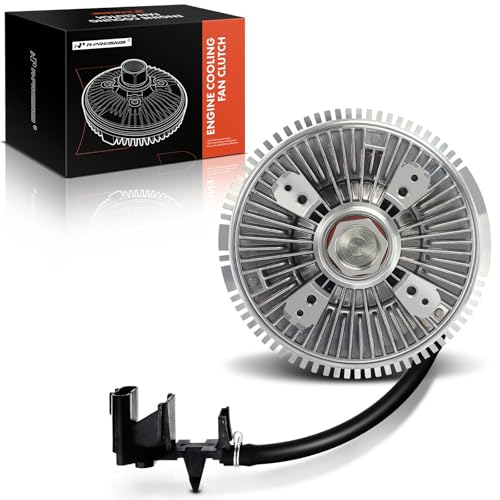
- [Vehicle Fitment-1]: Compatible with Buick Rainier 2004-2007; Compatible with Chevrolet SSR...
- [Vehicle Fitment-2]: Compatible with GMC Envoy 2002-2009, Envoy XL 2002-2006, Envoy XUV...
- [Reference Number...
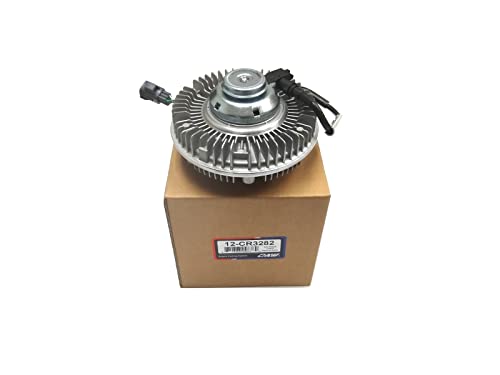
- OE Original Form, Fitment and Performance
- Interchangeable with Hayden 3282, OE# 55056990AC
Last update on 2026-08-14 / Affiliate links / Images from Amazon Product Advertising API