
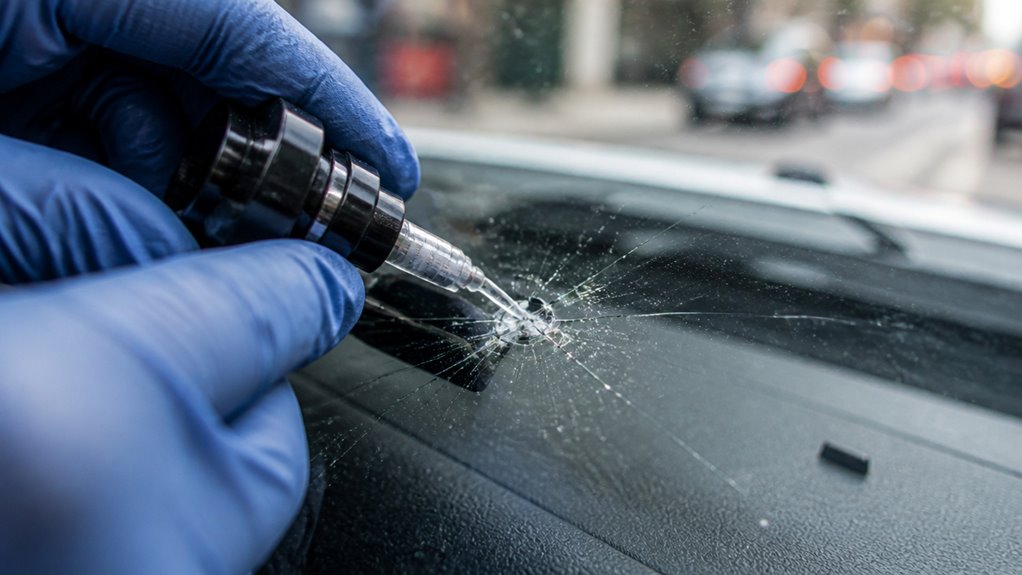
To fix a pitted windshield, start by thoroughly cleaning the glass with a quality cleaner and microfiber cloth. Then dry it completely.
For light pitting, apply a mild automotive polishing compound like cerium oxide using circular motions. Work small sections carefully.
After polishing, apply a protective sealant to help maintain the surface and prevent further damage. If pitting is extensive or deep, professional repair may be necessary.
You’ll also find useful tips to prepare, prevent, and decide on replacement.
Key Takeaways
- Clean and dry the windshield thoroughly before inspecting pitted areas under direct light for repair assessment.
- Use a mild automotive polishing compound with a microfiber cloth to gently polish light pitting in circular motions.
- Mask surrounding trim and paint to protect surfaces during the repair process.
- Apply a protective sealant after polishing to maintain windshield integrity and prevent further damage.
- Consult a professional for deep or widespread pitting to avoid over-polishing and ensure proper restoration.
What Causes Windshield Pitting : And How To Spot It Early?
Windshield pitting frequently results from small debris striking the glass surface while you drive. Flying particles from other vehicles cause most damage, creating tiny indentations that reduce clarity.
Worn wiper blades drag grit across the glass, exacerbating surface erosion. UV rays from the sun also contribute by gradually weakening the windshield’s outer layer.
Additionally, wind-blown sand and road salt, especially in winter, accelerate pitting by abrading and chemically affecting the glass.
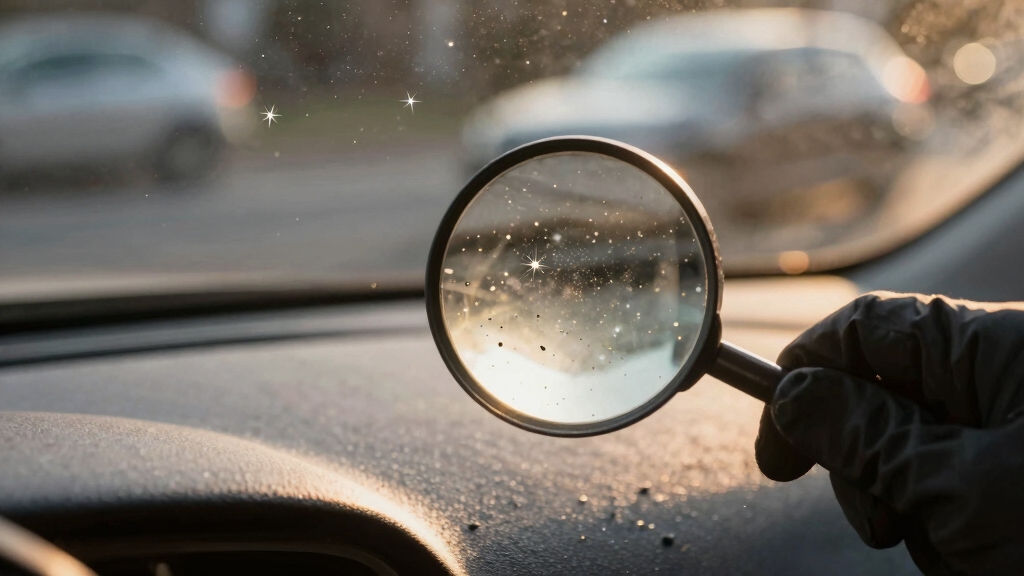
To spot early pitting, inspect your windshield under direct light for a rough, sandpaper-like texture or tiny crater-like marks.
Early detection allows you to address minor damage before it worsens, maintaining safer visibility and preventing more costly repairs or replacement.
Preventing further damage involves keeping the windshield clean and avoiding abrasive contact, similar to how abrasive contaminants can damage car paint.
How To Prep Your Windshield For Pitting Repair?
Once you’ve identified early signs of pitting, preparing the glass correctly sets the foundation for an effective repair.
Start by thoroughly cleaning the windshield to remove dirt, oil, and debris that could interfere with the repair compound. Use a quality glass cleaner and microfiber cloth for this step.
Next, dry the surface completely to avoid moisture trapping. Inspect the windshield under direct light to pinpoint all pitted areas.
| Step | Action |
|---|---|
| Clean | Use glass cleaner, wipe with cloth |
| Dry | Make certain no moisture remains |
| Inspect | Identify pitted spots under light |
| Mask | Protect surrounding trim and paint |
Mask off adjacent areas to prevent accidental damage during repair. Proper prep guarantees prime adhesion and results. Using protective sealant after repair can help maintain the windshield’s integrity and prevent further damage.
DIY Polishing Steps For Light Windshield Pitting
Begin by thoroughly cleaning the glass surface with a quality glass cleaner to remove any dirt, oils, and residues that could interfere with the polishing compound’s effectiveness.
Next, apply a small amount of automotive polishing compound, preferably cerium oxide or Bon-Ami, to a clean microfiber cloth. Polish the affected areas using moderate pressure in circular motions, working on small sections to ensure even abrasion.
Avoid the driver’s side initially to evaluate results safely.
Key steps include:
Use mild abrasives designed specifically for glass to prevent excessive glass removal. Maintain consistent pressure and motion to avoid optical distortion. Periodically wipe away residue to assess progress and prevent over-polishing.
Following these technical steps will help you reduce light windshield pitting and restore clarity effectively. It is important to work in a well-ventilated area and wear appropriate safety gear to protect yourself during the polishing process.
When Should You Call A Pro For Windshield Pitting?
If you notice that pitting covers more than 30% of your windshield or causes deep indentations that catch your fingernail, it’s time to call a professional.
Professionals assess the extent and depth of pitting using specialized tools to determine the appropriate restoration method.
They utilize diamond paste compounds with high-speed polishers, progressing from coarse to fine grits, to restore clarity without compromising glass integrity.
For isolated deep pits, technicians apply pit filler resin to seal and prevent further erosion by wipers.
Attempting severe repairs yourself risks over-polishing and optical distortion, which professionals expertly avoid through controlled techniques.
If your windshield shows widespread or deep pitting beyond mild surface erosion, professional intervention secures safe, effective restoration that DIY methods can’t reliably achieve.
In addition, proper maintenance and cleaning techniques can help prevent further damage and maintain visibility, similar to how safe detailing methods protect a vehicle’s finish.
When To Replace Your Pitted Windshield?
Extensive windshield pitting markedly impairs visibility and compromises safety, signaling the need for replacement rather than repair.
When the damage covers over 30% of the glass surface or deep pits catch your fingernail, repairs won’t restore clarity effectively.
Repeated failed restoration attempts also indicate replacement is necessary to maintain structural integrity and clear vision.
You should replace your windshield if:
- Pitting severely distorts your line of sight, increasing driving hazards.
- Multiple polishing or filling procedures fail to improve transparency.
- The cost of repair approaches or exceeds the average replacement range ($250–$600).
Prioritize replacement to guarantee peak visibility and safety when pitting reaches these critical thresholds.
This is essential to avoid risking compromised performance with inadequate repairs.
Additionally, regular maintenance and inspection of your vehicle’s systems, including HVAC system checks, can help prevent further damage and maintain overall safety.
Easy Tips To Prevent Windshield Pitting
Several straightforward practices can substantially reduce the risk of windshield pitting by minimizing exposure to damaging elements.
Maintain a safe distance from other vehicles to avoid flying debris impact.
Keeping a safe distance from other cars helps prevent windshield damage from flying debris.
Replace your wiper blades every 6 to 12 months, as worn blades drag abrasive grit across the glass, accelerating pitting.
Frequently wash your windshield to remove particles that cause surface erosion.
Whenever possible, park your vehicle in covered or shaded areas to shield the glass from ultraviolet rays and wind-blown particles.
Applying a dedicated glass sealant helps fill minor chips and haze, creating a protective barrier against road salt and sand, especially in winter conditions.
Managing temperature changes helps prevent stress that can worsen surface damage and lead to larger cracks.
Frequently Asked Questions
Can Windshield Pitting Affect My Car’s Resale Value?
Yes, windshield pitting can lower your car’s resale value because it compromises visibility and suggests poor maintenance.
Buyers often view pitting as a safety concern and potential repair expense.
If pitting covers over 30% of the surface or creates deep pits, it signals the need for costly replacement.
Addressing minor pitting with professional restoration can help maintain value.
However, severe damage usually deters buyers and reduces your car’s market appeal.
Are There Specific Brands of Polishing Compounds Recommended?
Think of polishing compounds as your windshield’s armor polish. You’ll want trusted names like cerium oxide, which acts as a gentle warrior against shallow pits.
Bon-Ami is also a great choice for mild abrasives. Automotive polishing compounds designed specifically for glass offer precise abrasion without undue damage.
Avoid generic products; they risk optical distortion. Using these recommended brands guarantees you maintain clarity while minimizing glass thinning, giving your windshield a refined, battle-ready surface.
How Long Does Professional Windshield Restoration Usually Take?
Professional windshield restoration usually takes about 1 to 3 hours, depending on the extent of pitting and damage.
The technician will assess the depth and coverage, then use diamond paste compounds and high-speed polishers.
They’ll progress from coarse to fine grits for clarity.
Single pits may be sealed with resin.
You should expect this timeframe to include preparation, polishing, sealing, and final inspection to guarantee peak results and safety.
Can Windshield Pitting Cause Cracks or Structural Damage?
Think of windshield pitting as tiny battle scars.
While they don’t cause immediate cracks or structural damage, they act like stress concentrators.
Over time, these pits can weaken the glass surface, making it more vulnerable to cracks from impacts or temperature changes.
You won’t see cracks form just from pitting alone, but ignoring it may compromise your windshield’s integrity.
Timely maintenance or repair is essential to prevent further damage.
Is Windshield Pitting Covered by Car Insurance Policies?
Windshield pitting is typically not covered by standard car insurance policies because it’s considered gradual wear and tear, not sudden damage.
However, extensive coverage might cover damage caused by flying debris if you can prove the incident.
You should review your policy details or contact your insurer directly to confirm.
Keep in mind, routine maintenance issues like pitting usually fall under your responsibility, so preventative care is vital to avoid costly repairs.
Know When to Repair and When to Replace
Windshield pitting is like tiny battles fought on your glass, each chip a reminder of time and elements.
By spotting damage early and polishing light pits yourself, you can restore clarity and safety with precision.
But when the damage runs deep, calling a pro or considering replacement guarantees your view stays crystal clear.
Stay vigilant and protect your windshield. Prevention is your best armor against future pitting.


