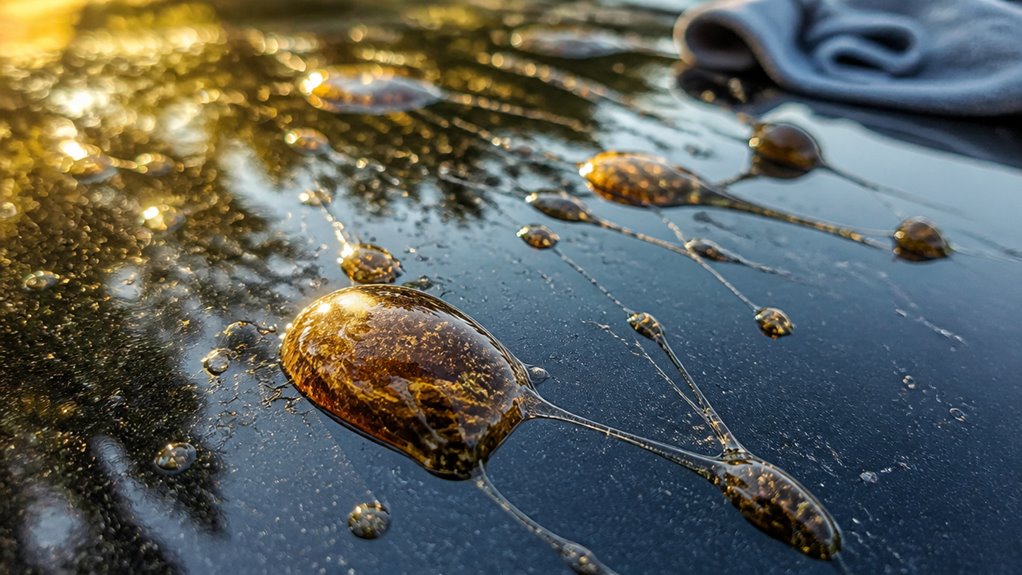
Yes, tree sap can damage your car’s paint by chemically breaking down the clear coat’s protective polymers through its natural acids. This can cause permanent etching and stains.
UV exposure hardens sap onto the surface, making removal harder and accelerating paint degradation. Fresh sap is easier to remove without damage, while hardened sap often requires harsher methods that risk scratches.
Understanding these effects and proper removal techniques helps you protect your vehicle’s finish and maintain its value.
Key Takeaways
- Tree sap contains natural acids that chemically break down and weaken the car’s clear coat, causing permanent damage over time.
- UV exposure accelerates sap hardening, baking it onto the paint and making removal difficult without harming the clear coat.
- Hardened sap chemically bonds and etches the paint surface, leading to fading, discoloration, and peeling if left untreated.
- Prompt removal of fresh sap prevents chemical bonding and reduces the risk of scratches and clear coat degradation.
- Severe sap damage often requires professional refinishing or repainting to restore the vehicle’s appearance.
How Does Tree Sap Affect Car Paint?

Although tree sap might seem harmless at first, it chemically bonds with your car’s clear coat as it hardens, initiating a damaging reaction.
The natural acids within the sap interact with your vehicle’s paint, gradually breaking down the clear coat’s protective layers.
UV exposure accelerates this hardening process, effectively baking the sap onto the surface, which increases adhesion strength.
Over time, these chemical and environmental factors cause oxidation and etching, compromising the paint’s integrity.
The acidic nature of sap slowly eats away the clear coat, leading to visible surface deterioration.
If left untreated, this damage progresses, increasing the risk of permanent peeling or discoloration.
Understanding these mechanisms helps you appreciate the urgency of timely sap removal to maintain your car’s paint quality and longevity.
Similar to pollen, moisture can activate sap’s acids, accelerating clear coat etching and damage through the formation of a corrosive caustic paste.
What Chemical Reactions Cause Sap to Damage Clear Coats?
When tree sap lands on your car’s surface, the natural acids within it initiate chemical reactions that directly attack the clear coat.
Tree sap’s natural acids trigger chemical reactions that aggressively target and damage your car’s clear coat.
These acids break down the polymer chains in the clear coat, weakening its molecular structure.
As sap hardens, it chemically bonds to the clear coat through cross-linking reactions, embedding itself into the paint layer.
This bonding disrupts the protective barrier, making the surface vulnerable to further degradation.
Over time, the acidic sap catalyzes oxidative reactions within the clear coat, causing etching and micro-abrasions.
These reactions degrade the resin matrix, reducing gloss and promoting peeling.
If left untreated, the sap’s chemical activity penetrates deeper, compromising the clear coat’s integrity and leading to irreversible damage that standard washing can’t reverse.
Using specialized cleaners and degreasers formulated for tough stains can help mitigate such damage when treated promptly.
How Do UV Rays Make Sap Damage Worse on Your Car?
The chemical breakdown of a car’s clear coat by tree sap intensifies markedly under exposure to UV rays.
When UV radiation strikes sap on your car, it accelerates the sap’s hardening process, causing it to bake onto the clear coat.
This baked sap forms a stronger chemical bond with the paint’s protective layer, making removal more difficult.
Additionally, UV rays promote oxidation reactions within the sap and the underlying clear coat, which weakens the paint’s molecular structure.
Over time, this leads to etching, discoloration, and permanent peeling.
Without UV exposure, sap remains softer and less reactive.
Applying waxes or sealants can create a protective barrier that helps minimize the damage caused by UV rays.
Why Is Fresh Sap Easier to Remove Than Hardened Sap?
Since fresh sap hasn’t yet chemically bonded or hardened, you can remove it with minimal effort before it adheres strongly to the clear coat.
Fresh sap remains sticky and pliable, making it easier to lift without damaging the paint.
Once sap hardens, UV exposure accelerates chemical bonding, turning it into a tough, resinous layer that clings aggressively to the clear coat.
This hardened sap requires stronger solvents and more abrasion, increasing the risk of surface damage.
Here’s why fresh sap removal is simpler:
- It hasn’t penetrated the clear coat chemically yet.
- Its sticky, soft state allows gentle wiping.
- No acid-induced paint breakdown has started.
- Minimal force is needed, reducing scratch risk.
Act quickly to protect your finish effectively. Additionally, protective measures like ceramic coating can enhance resistance against chemical etching from substances such as tree sap.
What Long-Term Damage Does Tree Sap Cause on Paint?
If tree sap lingers on your car’s paint for too long, it can really do a number on it.
You mightn’t notice it right away, but over time, that sap starts breaking down the clear coat’s protective layers.
The acids in the sap are pretty aggressive; they actually etch into the clear coat.
This can lead to permanent discoloration and surface damage that you won’t be able to fix easily.
As this chemical reaction continues, it weakens the paint, and before you know it, the damage becomes irreversible.
At that point, the only real solution might be a complete repaint.
Timely maintenance or repair is essential to prevent further damage and preserve your car’s finish.
Irreversible Paint Fading
When tree sap remains on your car’s surface for an extended period, it initiates chemical reactions that cause irreversible paint fading. The natural acids in sap break down the protective layers of your paint, especially when combined with UV exposure.
This accelerates sap hardening and oxidation. Over time, this leads to permanent discoloration and degradation of your vehicle’s finish.
You may experience:
- Gradual loss of paint vibrancy and gloss
- Uneven color patches that worsen with sun exposure
- Increased vulnerability to environmental damage
- Necessity for professional repainting to restore appearance
Ignoring sap damage allows these processes to progress, making paint fading permanent and irreversible. Prompt removal is essential to protect your car’s finish and preserve its value. Using specialized cleaners designed for contaminants like sap can help ensure effective and safe removal without further damaging the paint.
Clear Coat Etching
Beyond irreversible fading, tree sap causes another form of long-term damage known as clear coat etching. When sap hardens, its natural acids chemically bond with your car’s clear coat, breaking down this protective layer.
UV rays accelerate this process, baking the sap into the surface and intensifying the chemical reaction. Over time, the acidic compounds penetrate deeper, oxidizing and etching microscopic grooves into the clear coat.
This etching compromises the smooth finish, making your paint vulnerable to further environmental damage. If you leave sap untreated, it slowly eats away the clear coat, leading to permanent surface degradation.
You’ll notice dull, rough patches where the sap sat, which often require professional restoration to correct. Quick removal is essential to prevent this irreversible clear coat damage. Additionally, harsh chemicals and improper washing methods can exacerbate clear coat deterioration caused by sap, underscoring the importance of using pH-balanced soaps and gentle cleaning techniques.
Permanent Discoloration Effects
Although tree sap initially appears harmless, it can cause permanent discoloration to your vehicle’s paint if left unaddressed.
The natural acids in sap chemically bond with the clear coat, breaking down protective layers and accelerating oxidation.
UV exposure worsens these effects by baking sap onto the surface, making removal more difficult and damage irreversible.
You should be aware that:
- Sap etching penetrates deep, causing permanent stains and fading.
- Prolonged exposure leads to peeling and clear coat loss.
- Acidic components degrade the paint’s protective barrier over time.
- Severe damage often requires professional refinishing or complete repainting.
Act quickly to prevent sap from embedding itself and permanently harming your vehicle’s finish. Using specialized cleaners and polishers can help restore and protect affected surfaces after sap removal.
How to Safely Remove Tree Sap Without Scratching Your Car?
Because tree sap chemically bonds with your car’s clear coat and hardens quickly, removing it without causing scratches requires careful technique and the right materials.
Tree sap bonds with your car’s clear coat and hardens fast, so gentle removal techniques are essential to avoid scratches.
Start by washing the area with warm water and a car-safe soap to eliminate loose dirt.
Use a microfiber cloth dampened with warm water to gently rub the sap, avoiding abrasive pressure.
If sap persists, apply a diluted rubbing alcohol solution (equal parts water and alcohol) to a cloth and press it on the sap for about 30 seconds to soften the residue.
Never scrape hardened sap, as this risks scratching the paint.
Instead, repeat gentle applications and use soft cloths.
Patience and softness prevent damage, preserving your car’s finish while effectively removing sap buildup.
After removal, thoroughly clean the area and protect the surface with wax or polish to maintain the paint’s integrity and shine, as recommended in post-removal protection.
Which Household Products Work Best to Remove Tree Sap?
You can definitely tackle tree sap with some everyday household items. Try using diluted rubbing alcohol or even a baking soda paste. These solutions work wonders by breaking down the sap’s acidic compounds, and they won’t harm your car’s clear coat if you apply them the right way.
Just remember to use soft microfiber cloths and apply gentle pressure. This will help ensure you remove the sap safely while minimizing any risk of damaging the paint. Happy cleaning!
For best results, always start with a clean, dry car surface to avoid trapping dirt or debris that can cause micro-abrasions during cleaning.
Effective Household Sap Removers
Remove tree sap effectively using common household products that break down its sticky, acidic composition without damaging your car’s paint. These solutions soften and dissolve sap, making removal less abrasive and preventing clear coat damage.
- Rubbing Alcohol: Dilute 1:1 with water. It penetrates sap’s resin bonds, easing removal.
- Baking Soda Paste: Mixing baking soda with water forms a gentle abrasive that lifts sap without scratching.
- Hand Sanitizer: Contains alcohol and moisturizers that dissolve sap effectively while protecting paint.
- Vegetable Oil: Loosens sap’s grip by breaking down its sticky components, allowing gentle wiping away.
Using these products promptly reduces chemical bonding and minimizes paint etching. This preserves your vehicle’s finish.
Safe Removal Techniques
When tackling tree sap on your car, selecting the right household product materially affects both the ease of removal and the preservation of your paint’s clear coat.
Start by washing the area with warm water and car-safe soap to clear dirt. Use a microfiber cloth dampened with warm water to gently rub fresh sap.
For stubborn deposits, apply a diluted rubbing alcohol solution (1:1 with water), pressing it onto the sap for 30 seconds to soften the residue without damaging the clear coat.
Alternatively, a baking soda paste (baking soda mixed with water) can be applied and gently rubbed to lift sap safely.
Avoid harsh scrubbing or scraping, which risks scratching. Employing these precise, gentle methods helps remove sap effectively while preserving your vehicle’s finish.
Why Scraping Hardened Sap Harms Your Car?
Although hardened sap may seem like a stubborn nuisance, scraping it off can cause significant damage to your car’s paint surface. When sap hardens, it bonds chemically with the clear coat, making mechanical removal risky. Scraping can easily scratch or gouge the delicate paint layers beneath.
Here’s why you should avoid scraping hardened sap:
- You risk deep scratches that expose underlying paint, accelerating corrosion.
- Scraping can chip the clear coat, diminishing your car’s protective barrier.
- Hard tools can create micro-abrasions that dull the finish irreversibly.
- Damaged clear coats allow sap acids to penetrate, worsening etching and staining.
Use gentle, chemical-based methods instead to protect your vehicle’s finish and avoid costly repairs.
How Protective Coatings Can Prevent Tree Sap Damage?
By applying protective coatings such as wax or ceramic layers, you create a resilient barrier that prevents tree sap from bonding directly with your car’s paint surface.
This barrier reduces the chemical interaction between the sap’s acids and your paint’s clear coat, minimizing the risk of etching and discoloration.
These coatings also make sap easier to remove since it adheres less firmly, allowing you to clean it off before hardening occurs.
Wax layers offer a sacrificial surface that absorbs minor damage, while ceramic coatings provide a more durable, hydrophobic shield that repels sap and contaminants.
Regular maintenance of these coatings is essential to ensure continuous protection.
When Should You Seek Professional Help for Sap Damage on Paint?
If sap has hardened and bonded firmly with your car’s paint, you’ll likely need professional assistance to prevent further damage.
Attempting removal on your own risks scratching or worsening the etching caused by acidic sap. You should seek expert help when:
- Sap has deeply etched or stained the clear coat, causing visible discoloration.
- DIY removal methods fail to lift hardened sap after several attempts.
- Large sap patches cover critical paint areas, increasing oxidation risk.
- You notice peeling or bubbling paint, indicating sap has penetrated protective layers.
Professionals use specialized solvents and polishing techniques to safely restore the finish.
Timely intervention can prevent irreversible damage, such as permanent fading or repainting.
Don’t delay if sap damage is extensive or persistent.
Frequently Asked Questions
Can Tree Sap Damage Car Windows or Just the Paint?
Tree sap primarily damages car paint due to its acidic properties and chemical bonding, but it can also affect car windows.
While sap doesn’t chemically etch glass like it does paint, it can harden and become stubborn to remove. This can cause surface residue or minor staining.
If left untreated, sap residue on windows can impair visibility and require specialized cleaners to fully remove without scratching the glass surface.
Does Tree Sap Harm Different Car Paint Colors Differently?
Think of tree sap as a slow-acting acid rainstorm on your car’s paint.
While sap’s chemical damage doesn’t discriminate by color, lighter shades might show discoloration less visibly than darker or metallic paints, where etching and staining stand out sharply.
The sap’s acidic properties attack the clear coat beneath all colors equally.
You must remove it promptly regardless of your paint’s hue to avoid irreversible damage and costly repairs.
How Often Should I Apply Protective Coatings to Prevent Sap Damage?
You should apply protective coatings like wax or ceramic every 3 to 6 months to maintain an effective barrier against tree sap.
Regular reapplication makes certain the coating remains intact, preventing sap from chemically bonding with your paint.
If you frequently park under trees, consider applying ceramic coatings annually for enhanced durability.
Keep in mind, timely removal of sap combined with consistent protective layers minimizes long-term paint damage and preserves your vehicle’s finish.
Are Certain Tree Saps More Harmful to Car Paint Than Others?
Yes, certain tree saps are more harmful to your car paint than others.
Pine sap, for example, contains higher concentrations of natural acids that break down clear coats faster. This causes more severe etching and discoloration.
Sap from maple or oak trees is generally less acidic but can still damage paint if left untreated.
Always remove sap quickly to minimize chemical bonding and prevent permanent damage, regardless of the tree type.
Can Bird Droppings Combined With Sap Worsen Paint Damage?
Yes, bird droppings combined with sap can worsen paint damage. Both substances contain acids. Sap’s natural acids weaken the clear coat, while bird droppings are highly acidic and can etch paint.
Together, they accelerate chemical reactions, causing faster degradation, discoloration, and etching. You should promptly remove both to prevent compounded damage, especially under UV exposure.
UV light hardens sap and intensifies acid effects, leading to irreversible paint damage.
Protect Your Car by Timely Sap Removal and Preserve the Paint Quality
Just like a silent saboteur, tree sap creeps onto your car’s paint, triggering chemical reactions that erode clear coats, especially under relentless UV rays.
Fresh sap yields easily to careful removal, but hardened sap demands caution. Scraping risks deeper damage.
Using household products and protective coatings acts as your shield. If the damage runs deep, don’t hesitate to call in professionals.
Stay vigilant; preventing sap’s stealth attack preserves your car’s finish and value.