You should remove bird droppings immediately to prevent acidic etching on your car’s paint.
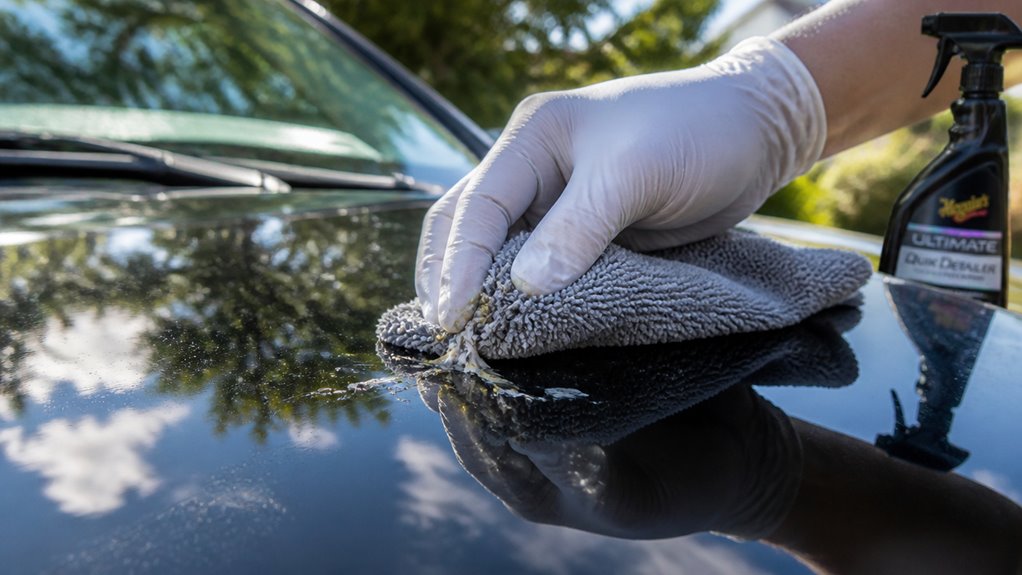
Start by softening fresh droppings with a damp microfiber cloth or a baking soda solution (4 tbsp per quart of warm water) for 5–10 minutes.
Gently lift residue using a clean microfiber towel with dabbing motions. Avoid scrubbing or using abrasive materials.
For stubborn spots, extend soaking or use a plastic spatula carefully.
Proper aftercare and protective waxing further safeguard your finish from damage.
Exploring these steps guarantees your vehicle stays pristine longer.
Key Takeaways
- Remove bird droppings immediately to prevent acidic damage and etching on the paint surface, especially under direct sunlight.
- Soften droppings with a damp microfiber cloth or low-pressure water rinse for 5–10 minutes before gentle removal.
- Use a baking soda solution (4 tbsp per quart warm water) to neutralize acidity and safely lift droppings without scratching.
- Avoid scrubbing or using abrasive materials; gently dab or roll with a clean microfiber towel from edges inward.
- Rinse thoroughly and dry the area, then apply wax or sealant to restore protection and maintain paint gloss.
Why You Should Remove Bird Droppings Immediately?

Act quickly to remove bird droppings from your car because the acidic composition of the droppings can rapidly damage the paint surface.
Remove bird droppings promptly to prevent their acidic damage from harming your car’s paint surface.
The uric acid and enzymes in the droppings etch into the clear coat, causing discoloration and corrosion within hours, especially under direct sunlight.
Delaying removal increases the risk of permanent etching and paint degradation. You should prioritize immediate cleanup over waiting, as fresh droppings are easier to remove and less likely to require aggressive correction.
Ignoring this can lead to costly polishing or repainting. By acting promptly, you protect your vehicle’s finish and maintain its value, reducing the necessity for abrasive treatments.
This methodical urgency is essential for preserving the integrity of your car’s paintwork.
For best results, use pH-balanced soaps and gentle microfiber towels to safely clean the affected area without causing additional damage.
How to Soften Fresh Bird Droppings Safely?
To soften fresh bird droppings safely, you can start by using a low-pressure rinse. Just be careful not to blast it too hard!
If you prefer, you can also place a damp microfiber cloth over the area where the droppings are. This will help loosen the material without causing any scratches.
Another great option is to whip up a baking soda solution. Just mix about four tablespoons of baking soda in a quart of warm water.
This mixture works wonders in breaking down the acidity of the droppings. Plus, it’s a gentle approach that helps protect your paint while making it easier to clean up.
For best results, regularly vacuum crevices and mats to prevent dirt buildup and maintain cleanliness.
Water Softening Methods
A reliable way to soften fresh bird droppings involves using water to loosen the residue without damaging your car’s paint.
Begin with a low-pressure rinse or dampen a microfiber cloth with clean water. Place it gently over the droppings for 5–10 minutes.
This controlled moisture softens the residue, reducing abrasion risk during removal. Avoid direct scrubbing or high-pressure sprays at this stage to prevent grinding grit into the clear coat.
For added safety, use warm water to enhance softening, ensuring it’s not hot enough to harm paint. After soaking, lift the softened droppings carefully with a clean microfiber towel using a gentle dabbing motion.
Repeat soaking as needed before attempting further removal to protect your vehicle’s finish effectively.
Addressing bird droppings promptly is crucial because, like pollen, they can etch and corrode the paint’s clear coat if left untreated.
Baking Soda Solutions
Mix baking soda with warm water to create an effective softening solution for fresh bird droppings.
Use a ratio of about 4 tablespoons of baking soda per 32 ounces of warm water to guarantee ideal pH balance and gentle alkalinity.
Apply the solution generously to the affected area using a clean microfiber cloth or spray bottle.
Allow the mixture to sit for 5 to 10 minutes to break down the acidic components and soften the droppings without harming the clear coat.
After soaking, gently lift the droppings with a microfiber towel using a dabbing motion.
Work from the outer edges inward to prevent spreading.
Avoid scrubbing to minimize abrasion.
Rinse the area with low-pressure water and dry thoroughly to prevent residue and potential paint damage.
For best results, always wash the car first and use microfiber towels to avoid scratches during cleaning.
How to Lift Bird Droppings Without Scratching Paint?
When lifting bird droppings off your car, focus on gentle removal techniques that protect the paint’s clear coat.
Start by softening the droppings with a damp microfiber cloth or warm water soak for several minutes.
Avoid scrubbing or applying excessive pressure, as grit within the droppings can scratch the surface.
Use a clean microfiber towel to lift the droppings, employing a gentle dabbing or rolling motion from the outer edges inward to prevent spreading.
Follow these steps:
- Soften the droppings with a damp microfiber cloth or warm water soak.
- Use a clean microfiber towel to gently lift the droppings without scrubbing.
- Work from the edges toward the center, using fresh towel sections as needed.
This method minimizes paint damage while effectively removing droppings. For best results, use premium microfiber cloths designed to avoid scratches and preserve surface integrity.
Common Mistakes to Avoid When Removing Bird Droppings
Properly lifting bird droppings protects your car’s paint, but overlooking common errors can undo your efforts and cause damage.
Avoid dry scrubbing or using abrasive materials like paper towels, as they grind grit into the clear coat.
Don’t apply excessive pressure; it embeds contaminants deeper.
Steer clear of harsh cleaners, opting instead for dedicated detailing sprays.
Never let droppings bake in the sun, as heat hardens them, complicating removal.
Using proper lubricants or surface prep sprays can help prevent marring during cleaning.
| Mistake | Consequence | Correct Action |
|---|---|---|
| Dry scrubbing | Paint scratches | Soften droppings first |
| Paper towels used | Increased abrasion | Use microfiber towels |
| Excessive pressure | Paint etching | Use gentle dabbing motions |
| Harsh cleaners | Damage chemical layers | Use dedicated quick detailers |
| Sun exposure | Hardened stains | Remove promptly in shade |
How to Remove Stubborn or Dried Bird Droppings?
If you encounter bird droppings that have dried and hardened, you’ll need to extend the soaking process using water, a damp microfiber cloth, or a specialized detailing spray to effectively loosen the residue.
Avoid scrubbing, which can embed grit into the paint. Instead, follow these steps:
- Place a damp microfiber cloth or soaked paper towel on the droppings for 5–10 minutes to soften buildup without pressure.
- Gently lift softened droppings using a clean microfiber towel, dabbing or rolling from outer edges inward to prevent spreading.
- For stubborn crusts, repeat soaking, or carefully use a plastic or rubber spatula to lift residue before wiping again.
Patience and repetition are key. Avoid harsh scrubbing and all-purpose cleaners, as they risk damaging the clear coat. Using pH-balanced cleaners can help protect delicate surfaces while effectively loosening tough residues.
Aftercare Tips After Removing Bird Droppings
Completing the cleanup process by thoroughly rinsing and drying the affected area helps eliminate any lingering cleaner or residue that could harm your car’s paint. After drying, inspect the surface for dullness or residue. If needed, apply a wax or sealant to restore protection and enhance gloss.
For persistent contaminants, a clay bar treatment may be necessary. Keep your microfiber towel and quick detailer handy for prompt response to future droppings. Using a pH-neutral car wash shampoo with high-lubricity foam can further protect your ceramic coating during regular washes.
| Aftercare Step | Purpose | Recommended Product |
|---|---|---|
| Rinse & Dry | Remove residue | Hose, microfiber towel |
| Wax Application | Restore paint protection | Carnauba or synthetic wax |
| Clay Bar Treatment | Remove bonded contaminants | Automotive clay bar kit |
| Quick Detailer Spray | Maintain cleanliness | pH-balanced detailer spray |
How to Prevent Bird Dropping Damage in the Future?
To keep bird droppings from damaging your vehicle, it’s a good idea to apply a protective wax regularly. This creates a barrier that really helps reduce adhesion and the risk of paint damage.
Also, don’t forget about clay bar treatments. They’re great for removing contaminants and giving your surface that smooth finish, which makes future cleanups a lot easier.
And here’s a handy tip: keep a microfiber towel and some quick detailer spray in your car. That way, you can tackle any droppings right away before they’ve a chance to cause any harm.
For ongoing protection, consider using waxes with UV protection features to prevent fading and deterioration caused by sun exposure.
Apply Protective Wax
Apply a high-quality protective wax regularly to create a durable barrier against bird droppings and other contaminants. Wax shields your paint by preventing acids and enzymes in droppings from bonding with the clear coat. This reduces the risk of etching.
To maintain effective protection, follow these steps:
- Clean and dry the car thoroughly before wax application to guarantee proper adhesion.
- Apply a thin, even layer of wax using a foam applicator, working in small sections for uniform coverage.
- Allow the wax to cure as directed, then buff with a microfiber cloth to restore shine and maximize protection.
Consistent waxing not only eases bird dropping removal but also preserves the paint’s integrity and gloss. For enhanced chemical resistance and longer-lasting protection, consider combining wax with a ceramic coating.
Integrate this step into your regular maintenance to safeguard your vehicle efficiently.
Use Regular Clay Bar
Incorporate a regular clay bar treatment into your maintenance routine to effectively remove bonded contaminants and prevent bird droppings from permanently etching the paint surface.
After washing and drying your car, gently glide the lubricated clay bar over small sections of the paint. This action detaches embedded particles that ordinary washing misses, reducing surface roughness that can trap acidic droppings.
Use light, back-and-forth motions without excessive pressure to avoid marring the clear coat. Regular clay bar use restores smoothness, enabling protective wax or sealant layers to adhere better and form a more effective barrier against contaminants.
Keep Cleaning Supplies
Keep a dedicated set of cleaning supplies readily accessible in your vehicle to enable prompt removal of bird droppings before they cause paint damage. Immediate action prevents etching and staining.
Equip your kit with these essentials:
- Microfiber towels – Soft, lint-free cloths prevent scratching and allow gentle lifting of softened droppings.
- Quick detailer spray or dedicated bird-dropping remover – Formulated to safely dissolve droppings without harming the clear coat.
- Spray bottle with water – For initial softening using low-pressure rinsing or dampening towels.
Maintain this kit consistently to act fast and avoid drying or heat-induced bonding. Prompt cleaning minimizes the need for aggressive correction and preserves your vehicle’s finish.
Frequently Asked Questions
Can Bird Droppings Damage Other Car Parts Besides Paint?
Yes, bird droppings can damage other car parts besides paint.
The acidic content can corrode metal surfaces like chrome trim, wheels, and exposed engine components if left untreated.
Rubber seals and windshield wipers may also degrade from prolonged exposure.
You should clean droppings promptly to prevent this damage.
Using appropriate softening and removal techniques minimizes risk, protecting both aesthetics and functionality across your vehicle’s exterior components.
Are There Eco-Friendly Bird Dropping Removers Available?
Yes, you’ll find eco-friendly bird dropping removers made from biodegradable, non-toxic ingredients that minimize environmental impact.
These products often use plant-based surfactants and avoid harsh chemicals, preserving your car’s finish while being safer for waterways and soil.
Look for removers labeled “biodegradable” or “eco-friendly,” and verify ingredient lists.
Using such options helps you clean effectively without compromising environmental safety or your vehicle’s paint integrity.
How Often Should I Wash My Car to Prevent Bird Dropping Damage?
You should wash your car at least every two weeks to minimize bird dropping damage.
Studies show bird droppings can etch paint in as little as 24 hours if left untreated.
Frequent washing removes contaminants before they bond with the clear coat.
Combine regular washing with prompt spot cleaning using a microfiber cloth and detailer spray to maintain paint integrity.
This helps prevent costly repairs from acid etching and staining.
Can Bird Droppings Cause Health Risks to Humans?
Yes, bird droppings can pose health risks to you. They may carry pathogens like histoplasma capsulatum, which causes histoplasmosis, a respiratory illness.
Direct contact or inhaling dried droppings’ dust increases exposure. You should avoid touching droppings with bare hands and clean affected areas promptly using gloves and protective gear.
Proper hygiene and careful removal reduce your risk of infection from bacteria, fungi, or parasites present in bird feces.
Is It Safe to Use Household Vinegar to Clean Bird Droppings?
Sure, you could douse your car in household vinegar and pretend you’re a DIY chemist releasing acidic justice on bird droppings. But don’t.
Vinegar’s acidity isn’t car-paint-friendly; it risks dulling or etching your finish. Instead, use products designed for auto surfaces, like quick detailer sprays.
They soften droppings safely without corrosive effects. If you want safe, effective cleaning, skip the vinegar and preserve your paint’s integrity methodically.
Follow The Way of Cleaning for Long-Lasting Paint Protection
To tackle tough bird droppings, trust timely treatment.
Soften spots safely, then lift layers lightly to limit paint loss.
Avoid abrasive actions and apply aftercare attentively to assure automotive appeal.
Remember, regular rinsing and protective coatings prevent persistent problems.
By practicing precise procedures, you’ll preserve your paint’s pristine perfection and prevent potential paint pits.
Stay sharp, stay safe, and stop stains swiftly. Your car’s coating deserves diligent defense.