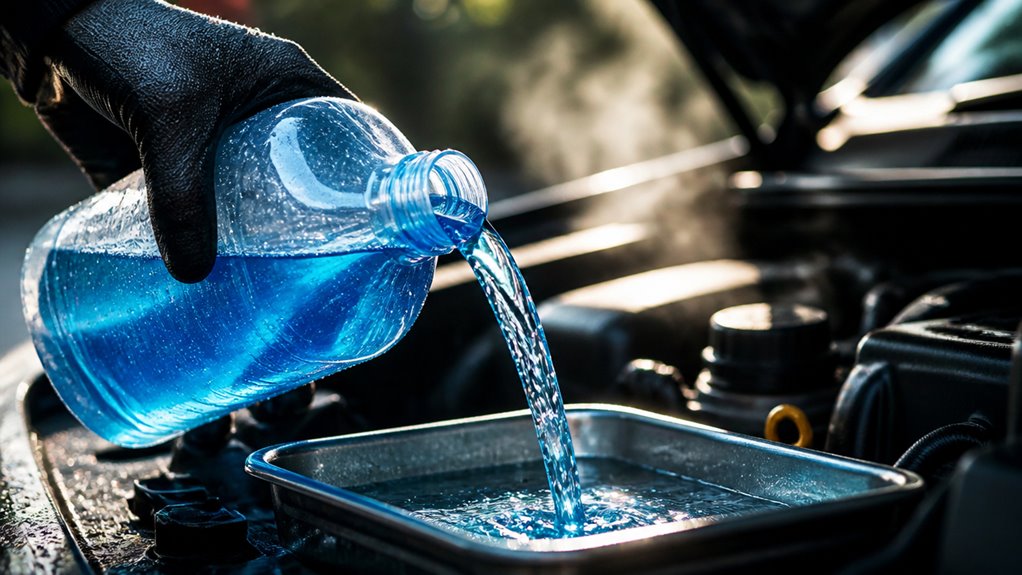
Yes, windshield washer fluid can be flammable because many formulas contain alcohols like methanol, ethanol, or isopropyl, which have low flash points around 11°C to 38°C. This enables vapor ignition at moderate temperatures.
Higher alcohol content increases fire risk, while water dilution reduces it. Methanol-based fluids are especially hazardous due to their very low flash points and volatile vapors.
Understanding ingredient risks, flash points, and safety protocols helps you manage and mitigate the fire hazards effectively.
Key Takeaways
- Many windshield washer fluids contain alcohols like methanol, ethanol, or isopropyl, which make them flammable.
- Fluids with methanol have flash points near 11°C, classifying them as highly flammable liquids under fire codes.
- Flash points below 37.8°C indicate flammability and increased ignition risk near heat or sparks.
- Higher alcohol content increases fire danger; water dilution raises flash points and lowers flammability.
- Labels and safety data sheets often warn about flammability; methanol presence signals elevated fire hazards.
What Makes Windshield Washer Fluid Flammable?

Although not all windshield washer fluids are equally flammable, many contain alcohols such as methanol, ethanol, or isopropyl alcohol that markedly increase their fire risk.
Many windshield washer fluids include alcohols like methanol or ethanol, significantly raising their flammability risk.
These alcohols possess low flash points, making the fluid susceptible to ignition at relatively low temperatures. Methanol, commonly used in winter formulations, has a particularly low flash point near 11°C, categorizing it as a Class IB flammable liquid.
The presence and concentration of these alcohols directly affect the fluid’s flammability classification, often listed as “flammable liquid and vapor” on safety data sheets.
Conversely, formulations with minimal or no alcohol content greatly reduce this risk. Understanding the specific chemical makeup allows you to assess the fire hazard accurately and take appropriate precautions during handling and storage.
For example, ethanol-free fluids, similar to ethanol-free gasoline, generally offer improved storage stability and reduced flammability risks due to the absence of alcohol-based components, enhancing safety during extended storage periods storage stability.
How Flash Point Affects Washer Fluid Fire Risk?
Let’s dive into the concept of flash point and why it’s so important when it comes to washer fluid. Essentially, the flash point is the lowest temperature at which the vapors of the washer fluid can ignite in the air.
If a fluid has a flash point below 37.8°C, it’s classified as a flammable liquid. This classification really ramps up the fire risk, especially when there are heat sources or sparks nearby.
Understanding this threshold is crucial because it helps guide safety measures. It’s not just about knowing the flash point; it also helps us evaluate how the formulation of the washer fluid might impact its ignition hazards.
Because washer fluids often contain methanol, which provides antifreeze properties but is flammable, it’s important to consider its chemical composition.
Understanding Flash Point
When evaluating the fire risk of windshield washer fluid, understanding its flash point is critical. This temperature indicates the lowest point at which the fluid’s vapors can ignite in the presence of an ignition source.
The flash point directly correlates with the likelihood that vapor-air mixtures will become flammable under normal storage or use conditions.
Fluids containing alcohols like methanol have remarkably low flash points, sometimes near 11°C.
This means they can produce ignitable vapors even at moderate temperatures. This property elevates the fire hazard, especially in warm environments or near ignition sources.
Additionally, the presence of paraffin wax crystallization in related fluids like diesel can influence cold-weather handling but does not affect the flash point of windshield washer fluids.
Flash Point Thresholds
Since the flash point determines the temperature at which windshield washer fluid vapors ignite, it directly influences the fluid’s fire risk classification.
Most washer fluids have flash points near or below 37.8°C (100°F), the standard threshold categorizing flammable liquids.
For example, formulations containing methanol often exhibit flash points around 11°C, marking them as highly flammable.
When the flash point is low, vapors form ignitable mixtures at common ambient temperatures, elevating fire risk.
Conversely, fluids with higher flash points, often due to reduced alcohol content or water dilution, present lower ignition potential.
Understanding these thresholds helps you assess how likely a given washer fluid will ignite from heat or sparks.
This knowledge guides safe handling and storage practices aligned with regulatory classifications.
Proper storage in powder-coated steel containers can reduce the risk of fire by preventing corrosion and containment failure.
Impact on Fire Hazard
Although flash point alone doesn’t determine the overall fire hazard, it critically influences how easily windshield washer fluid vapors ignite under normal conditions.
Lower flash points indicate a higher risk, as vapors ignite at relatively low temperatures. This increases fire incidents near heat sources. Fluids with flash points below 37.8°C are classified as flammable liquids, requiring strict handling.
| Flash Point (°C) | Fire Risk Level |
|---|---|
| < 20 | Very High |
| 20 – 37.7 | High |
| 37.8 – 50 | Moderate |
| 50 – 70 | Low |
| > 70 | Minimal |
Understanding this helps you assess hazards and implement safety protocols effectively. This minimizes ignition potential during storage and use. For example, employing quiet operation technology in equipment can reduce heat and noise hazards related to fluid ignition.
Key Ingredients That Increase Fire Danger in Washer Fluid
Recognize that the primary contributors to the fire hazard in windshield washer fluid are the alcohol-based ingredients, particularly methanol, ethanol, and isopropyl alcohol. These compounds lower the fluid’s flash point, increasing flammability risk.
You should focus on these key factors:
- Methanol: Often used in winter blends, it has a flash point near 11°C, making it highly flammable.
- Ethanol and Isopropyl Alcohol: Both have low flash points (around 12-17°C), contributing to vapor ignition potential.
- Concentration Levels: Higher alcohol percentages correlate with increased fire danger due to more volatile vapors.
- Additives and Water Content: Water dilution can reduce flammability; additives may alter ignition characteristics.
Understanding these ingredients helps you assess the fire risks inherent in various washer fluid formulations. Proper use of fuel additives can help mitigate issues related to ethanol, such as corrosion and phase separation, which may indirectly influence flammability risks.
How to Identify Flammable vs. Non-Flammable Washer Fluids?
You can easily spot flammable washer fluids by taking a close look at the product labels. Just check for GHS classifications and any fire-risk warnings. It’s really important to understand the flash point, too.
If a fluid has a flash point below 37.8°C, it usually comes with a higher risk of catching fire.
And don’t forget to look at the ingredients! If you see methanol in the formula, that’s a red flag for increased flammability. So, make sure to scrutinize the labels carefully to assess any potential fire hazards. It’s better to be safe than sorry! Proper maintenance practices can also help reduce risks associated with flammable fluids.
Checking Product Labels
When selecting windshield washer fluid, carefully examining the product label is essential to determine its flammability risk. Labels provide explicit warnings and hazard classifications you need to assess before purchase or use.
To identify flammable versus non-flammable fluids, focus on these four key label elements:
- Hazard statements like “Flammable Liquid, Category 3” or “Highly flammable liquid and vapor” indicate significant fire risk.
- Ingredient listings showing alcohols such as methanol, ethanol, or isopropyl alcohol suggest low flash points and increased flammability.
- Precautionary instructions warning to “keep away from heat, sparks, and flames” confirm ignition hazards.
- Safety Data Sheet (SDS) references, if available, give detailed flammability classifications and recommended handling procedures.
Always follow manufacturer specifications to ensure safe and proper use of windshield washer fluids, as incorrect handling can increase fire hazards.
Understanding Flash Points
Examining product labels gives initial clues about windshield washer fluid flammability.
Understanding flash points provides a more definitive measure of fire risk.
The flash point is the lowest temperature at which the fluid’s vapors can ignite when exposed to an ignition source.
Fluids with flash points below 37.8°C (100°F) are classified as flammable liquids under standard fire codes.
You can identify potentially hazardous washer fluids by their reported flash points, often around 36°C to 38°C.
Fluids containing alcohols like methanol typically have lower flash points, increasing ignition risk.
Conversely, fluids with higher flash points or water-based formulas pose less hazard.
Evaluating flash points helps you distinguish between flammable and non-flammable washer fluids.
This knowledge guides safer handling, storage, and usage decisions.
For example, concentrated formulas often contain methanol and require careful mixing to reduce fire hazards during use.
Key Ingredient Indicators
Although windshield washer fluids vary widely in formulation, the presence of certain key ingredients, especially alcohols like methanol, ethanol, or isopropyl alcohol, serves as a reliable indicator of flammability risk.
To identify flammable versus non-flammable fluids, focus on these factors:
- Alcohol Content: Fluids with methanol or ethanol concentrations above 20% typically exhibit significant flammability due to low flash points.
- Safety Data Sheet (SDS) Classification: Look for labels such as “Flammable Liquid, Category 3” or warnings about ignition hazards.
- Ingredient Transparency: Products listing water or non-alcoholic solvents usually have reduced fire risk.
- Flash Point Values: Flash points below 37.8°C (100°F) confirm a flammable classification under fire codes.
Since antifreeze and coolant mixtures in vehicles contain additives that influence their chemical behavior, understanding chemical additives is crucial when assessing the flammability of windshield fluids.
Health and Fire Hazards of Flammable Washer Fluid Exposure
Because flammable windshield washer fluid contains volatile alcohols like methanol, exposure poses significant health and fire risks that you must recognize and mitigate.
Inhaling vapors may cause dizziness, headache, nausea, and even target organ damage with prolonged exposure. Skin contact can result in absorption of toxic substances, while ingestion is highly dangerous.
Fire hazards arise from low flash points (~36°C) and flammable vapor-air mixtures, which can ignite near heat or sparks. Containers may explode under fire conditions due to pressure buildup.
| Hazard Type | Effects/Concerns |
|---|---|
| Health | Dizziness, organ damage, nausea |
| Fire | Ignition near heat, low flash point |
| Physical | Container rupture, vapor explosion |
Stay vigilant to these hazards to avoid serious injury or damage.
Safe Handling and Storage Tips for Windshield Washer Fluid
When handling windshield washer fluid, you must strictly keep it away from heat sources, sparks, and open flames due to its flammable nature. The fluid’s vapors can ignite easily, so controlling the environment is critical.
To guarantee safe handling and storage, follow these guidelines:
- Store containers tightly sealed in a cool, well-ventilated area, away from ignition sources.
- Avoid smoking or using pilot lights near the fluid to prevent vapor ignition.
- Use explosion-proof ventilation indoors to minimize vapor accumulation.
- Treat empty or partially used containers with caution, as residual vapors remain flammable.
Adhering to these precise measures minimizes fire risk and exposure hazards, guaranteeing safe use and storage of windshield washer fluid.
Fire Safety Measures for Washer Fluid Fires
When dealing with washer fluid fires, it’s essential to know which extinguishing agents to use. Alcohol foam, dry chemical, or carbon dioxide are your best bets. Just a heads-up: steer clear of using water directly, as it can actually spread the fire instead of putting it out.
Also, make sure to store your washer fluids securely, away from any ignition sources. Keeping those containers sealed is super important, too—it helps reduce the release of vapors that could potentially ignite.
If you find yourself in a spill situation, act quickly! Contain the vapors and do your best to prevent any contaminated runoff from entering drains. This not only helps minimize fire hazards but also protects the environment.
Extinguishing Washer Fluid Fires
Extinguishing windshield washer fluid fires requires careful selection of appropriate firefighting agents to effectively control the flames while minimizing hazards.
You should avoid using a direct water stream, as it can spread the flammable liquid and exacerbate the fire. Instead, rely on methods that suppress vapors and cool surrounding areas.
Consider these steps:
- Apply alcohol-resistant foam to smother flames and prevent vapor release.
- Use dry chemical extinguishers (e.g., ABC or BC type) to interrupt the chemical reaction.
- Deploy carbon dioxide extinguishers to displace oxygen and cool the fire zone.
- Use water fog or fine mist to cool adjacent containers and reduce vapor ignition risk.
These approaches balance fire suppression efficacy with safety in flammable liquid scenarios.
Safe Storage Practices
To minimize fire hazards, store windshield washer fluid away from heat sources, sparks, and open flames in tightly sealed containers.
Make certain storage areas are cool and well-ventilated to prevent vapor accumulation, which can form flammable mixtures within lower explosive limits (5.5%-6%).
Use containers rated for flammable liquids and ensure they remain closed to limit vapor release.
Avoid storing near pilot lights, electrical equipment, or ignition sources.
Label storage clearly to indicate flammability risks and comply with local fire codes.
Separate windshield fluid from incompatible substances to prevent hazardous reactions.
Regularly inspect containers for leaks or damage that could increase fire risk.
Handling Spills and Vapors
Although windshield washer fluid spills may seem minor, their vapors can create significant fire hazards due to flammable vapor-air mixtures within explosive limits of 5.5% to 6%.
When handling spills and vapors, you must control ignition sources and ventilate the area thoroughly to prevent vapor accumulation.
Use appropriate personal protective equipment to avoid inhalation and skin contact, as vapors can cause systemic toxicity.
For fire safety:
- Eliminate all ignition sources, including sparks and open flames.
- Use water fog, alcohol foam, dry chemical, or CO2 extinguishers for fires; avoid direct water streams.
- Contain spill runoff to prevent environmental contamination.
- Dispose of contaminated materials and fluids via licensed hazardous waste handlers.
Strict adherence to these measures minimizes fire and health risks related to windshield washer fluid.
Proper Disposal Methods to Prevent Fire Risks
When disposing of windshield washer fluid, you must follow strict protocols to minimize fire hazards.
First, never pour the fluid down drains or onto soil, as vapors can ignite and contaminate waterways.
Use sealed, labeled containers to store waste fluid securely, preventing vapor release.
If the fluid meets ignitability criteria, engage a licensed hazardous-waste handler for disposal.
Avoid open flames, sparks, or heat sources near disposal sites.
Make certain containers remain tightly closed during transport.
Proper ventilation is necessary in storage areas to prevent vapor accumulation.
Cleanup materials contaminated with fluid also require careful containment and disposal.
Following these procedures reduces the risk of ignition from flammable liquid and vapor, protecting both personnel and the environment from potential fire and explosion hazards.
When Is Used Washer Fluid Considered Hazardous Waste?
Because used windshield washer fluid often contains residual alcohols and contaminants, you need to evaluate whether it meets hazardous waste criteria before disposal. You must assess its ignitability, toxicity, and contamination levels to confirm compliance with regulations.
Here’s how to determine if used fluid is hazardous waste:
- Check if its flash point is below 60°C (140°F), indicating ignitability.
- Test for toxic constituents like methanol exceeding regulatory thresholds.
- Identify if it contains heavy metals or other hazardous contaminants after use.
- Evaluate if spill residue or mixing with other wastes alters its classification.
If any criteria apply, you must handle and dispose of the fluid through licensed hazardous-waste facilities to prevent environmental and fire hazards.
Why Methanol-Based Washer Fluids Pose Higher Fire Risks?
Since methanol has a markedly lower flash point than many other windshield washer fluid ingredients, it dramatically increases the fluid’s flammability risk.
Methanol’s flash point near 11°C classifies it as a Class IB flammable liquid, meaning it can ignite at relatively low temperatures compared to ethanol or isopropanol.
When you use methanol-based fluids, vapors readily form flammable mixtures within a narrow concentration range (approximately 5.5% to 36%), raising ignition potential even without direct flame.
Additionally, methanol’s volatility enhances vapor pressure, increasing the likelihood of vapor accumulation in enclosed or poorly ventilated spaces.
You must handle these fluids cautiously, keeping them away from heat, sparks, and flames to mitigate fire hazards.
Their chemical properties also make spills and container ruptures particularly dangerous, necessitating strict storage and disposal protocols to prevent fire incidents.
Frequently Asked Questions
Can Windshield Washer Fluid Explode if Heated in a Closed Container?
Yes, windshield washer fluid can explode if heated in a closed container.
As you heat it, vapors build pressure inside due to the fluid’s low flash point and flammable alcohol content.
If the pressure exceeds the container’s strength, it can rupture or explode.
Always keep it away from heat sources and never seal containers tightly when warming to prevent dangerous pressure buildup and potential ignition of flammable vapors.
How Does Temperature Affect the Evaporation Rate of Washer Fluid Vapors?
You might think evaporation happens slowly regardless of temperature, but it actually speeds up markedly as temperature rises.
When washer fluid heats up, its alcohol components, like methanol, vaporize more rapidly, increasing vapor concentration in the air.
This enhanced evaporation rate raises flammable vapor presence, especially near or above the fluid’s flash point, typically around 36–38°C.
Are There Specific Regulations for Transporting Flammable Windshield Washer Fluid?
Yes, transporting flammable windshield washer fluid is regulated under hazardous materials guidelines.
You must comply with DOT and OSHA rules, including proper labeling as a flammable liquid.
Use approved containers and follow quantity limits.
You’ll need to secure shipments to prevent leaks and avoid ignition sources.
Additionally, provide safety data sheets during transport and train personnel on handling flammable fluids to ensure compliance and safety.
What Emergency Procedures Are Recommended for Large Windshield Washer Fluid Spills?
Imagine a spreading pool of liquid fire waiting to ignite.
For large windshield washer fluid spills, you should immediately isolate the area and eliminate all ignition sources.
Use non-sparking tools and absorbents like dry sand or earth to contain the spill.
Avoid water streams; instead, use water fog if fire suppression is needed.
Dispose of contaminated materials via licensed hazardous-waste handlers.
Ensure runoff doesn’t enter drains or waterways to prevent environmental harm.
Can Flammable Windshield Washer Fluid Damage Vehicle Paint or Components?
Yes, flammable windshield washer fluid can damage your vehicle’s paint and components. Alcohols like methanol in the fluid can degrade paint finishes and rubber seals with prolonged or repeated exposure.
It may also cause plastic parts to become brittle or discolored. To avoid damage, clean spills promptly and avoid leaving fluid on painted surfaces. Always use manufacturer-recommended formulations to minimize chemical compatibility issues with your vehicle.
Protect Your Vehicle and Home From Flammable Windshield Fluid Hazards
You might think windshield washer fluid isn’t a fire hazard, but its methanol content makes it flammable and risky if mishandled.
Understanding flash points and ingredient profiles helps you identify safer options and take proper precautions.
Don’t underestimate the fire and health dangers. Safe storage, usage, and disposal are vital.
By staying informed, you minimize hazards and protect yourself from unexpected fire risks linked to windshield washer fluid.