Power cuts hit hardest when the fridge, lights, and charger all wake up at once. Campsites make it worse when the generator is too loud or too heavy to move.
AIVOLT Dual Fuel Portable Inverter Generator uses 64 pounds and wheels to make setup less of a haul. Champion Portable Inverter Generator leans on 61 dBA noise and 14 hours of runtime for quieter nights.
ERAYAK Portable 4500W Inverter Generator fills the gap for lighter carries. It keeps the load down at 54 pounds and stretches to 16 hours of runtime.
| Image | Name | Editor's Rating | Price |
|---|---|---|---|
|
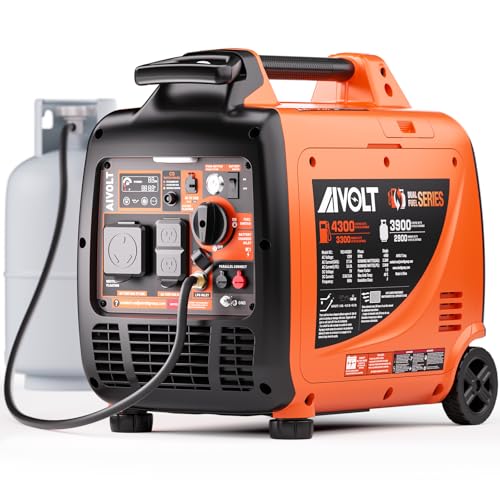
AIVOLT 4300W Dual Fuel Inverter Generator 53dB Quiet for RV ...
|
|
|
|
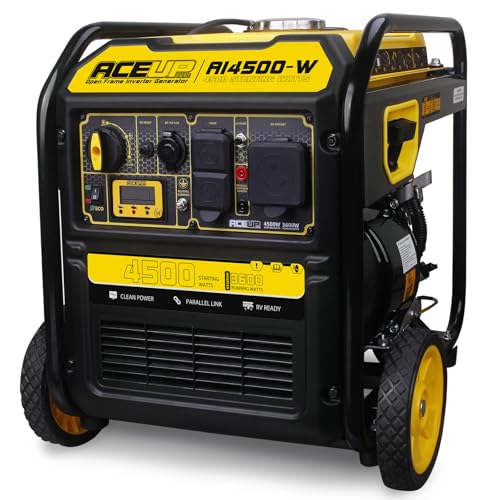
Aceup Energy 4500 Watt Gas Powered Generator, Inverter Porta...
|
|
|

|
Champion 4500-Watt RV Ready Portable Inverter Generator
|
|
|

|
PowerSmart 4500 Watt Portable Generator for Home Use | CO Pr...
|
|
|

|
ERAYAK 4500W Portable Inverter Generator for Home Use, Super...
|
|
4500 Watt Inverter Generators for RVs, Backup, and Camps
Limited power, cramped spaces, and noisy engines can ruin a trip fast; the right generator delivers steady energy, easier handling, and far less frustration.
1. AIVOLT Dual Fuel Portable Inverter Generator with Remote Start and Wheels
- Lightweight Yet Mighty Power - Weighs only 64 lbs with built-in wheels and telescoping handle...
- Remote Start RV Ready Power - Fire up your inverter generator from your RV couch using the key fob...
- Dual Fuel for Unlimited Flexibility - Switch between gasoline (11.5 hrs) and propane (34 hrs) at...
Tight RV pads and rough campsite paths can make generator setup more annoying than the power itself. AIVOLT keeps the footprint manageable at 64 lbs, and the built-in wheels with a telescoping handle make it easier to move without awkward lifting.
Remote starting changes the routine fast. From your seat, you can fire up the unit and send clean power for sensitive electronics through the 30A outlet, which is useful for air conditioners, microwaves, and other household-style loads.
Fuel flexibility adds a practical edge. Gasoline gives you up to 11.5 hours at 25% load, while propane stretches runtime to 34 hours under the same conditions. That kind of dual-fuel versatility helps you plan around emergencies or longer trips without constantly refilling.
Noise matters when you are parked near others, and the 53 dBA output stays quiet enough for shared spaces. UL2201 and EPA certification, plus carbon monoxide auto-shutoff and low-oil protection, add a safer unattended setup for home backup or outdoor use.
Parallel readiness gives you room to grow if your power needs expand. The included LPG hose with regulator and electric start round out a setup built around easy operation and flexible use.
Best for: RV owners, campers, and home backup users who want portable power with quiet operation and fuel flexibility.
Pros:
- Remote start for easier setup
- Dual-fuel operation with long propane runtime
- 53 dBA output for quieter use
- Wheels and telescoping handle improve portability
- CO auto-shutoff and low-oil protection
Cons:
- Running wattage may be limiting for heavier appliance loads
- Parallel kit is needed if you want to expand output later
2. Aceup Energy 4500W Portable Gas Inverter Generator for RVs, Home Backup
- 223cc 4-stroke OHV engine produces 4500 peak watts and 3600 rated watts with recoil start for up to...
- Intelligent gauge keeps track of voltage, run-time and hertz, plus feature low oil led and economic...
- Includes 120V AC two 20A outlets and one 30A RV, one 12V DC 8.3A outlet, one car charger adapter...
Tight power budgets usually become obvious the moment a fridge, phone charger, and RV hookup all need to run at once. A 223cc 4-stroke OHV engine gives you 4500 starting watts and 3600 running watts, so you can keep essential gear moving without juggling outlets. Clean inverter output helps protect sensitive electronics from rough power swings.
The control layout stays practical. An intelligent gauge tracks voltage, run time, and hertz, while low-oil protection and economic mode help you manage fuel use more carefully. Aceup Energy also uses a 5-in-1 knob that combines fuel, engine, and choke control into one step, which makes shutdowns feel simpler and less rushed.
For everyday hookups, you get two 120V AC outlets, one 30A RV outlet, one 12V DC outlet, and a car charger adapter with two 5V USB ports. Parallel-ready design gives you room to scale output later with a second unit and a separate kit.
Fuel capacity and runtime matter more than raw wattage on long job sites or overnight stops. The 2.65-gallon tank can support up to 10 hours at quarter load, and the recoil start keeps the setup straightforward. EPA-compliant construction and factory testing add another layer of confidence for routine residential, camping, and backup use.
Best for: RV owners, campers, and households that need steady backup power for essential appliances and electronics.
Pros:
- 4500 starting watts with 3600 running watts
- THD below 1.5% for sensitive devices
- Multiple outlet options, including RV and USB
- Intelligent gauge with low-oil protection
- Parallel-ready for expanded output
Cons:
- 2.65-gallon fuel tank may feel modest for users needing extended heavy-load runtime
- Recoil start could be less convenient than electric starting for some setups
3. Champion Portable Inverter Generator, 4500 Starting Watts, RV Ready, Quiet
- Quiet Technology and Extended Run Time: 61 dBA is great for RVs, tailgating, or camping with...
- Parallel Ready: The optional parallel kit (sold separately) enables this inverter to connect with...
- Intelligauge with Power Meter: Monitor voltage, frequency and operating hours with ease, plus...
Quiet campsite power often comes down to more than raw wattage. A unit that stays steady under load, keeps noise in check, and starts without drama is easier to live with after dark or on a crowded lot.
Champion Power Equipment built this 4-stroke inverter around 4500 starting watts and 3500 running watts, with up to 14 hours of runtime from 2.3 gallons of gasoline. The 61 dBA output helps keep conversation, sleep, and nearby campers from being drowned out.
Clean power matters if you plan to run electronics, and the less than 3% THD output is meant for that kind of job. You also get a 120V 29.2A RV outlet, a 120V 20A duplex outlet, and an Intelligauge that shows voltage, frequency, and hours.
CO Shield adds automatic carbon monoxide shutoff, while the EZ Start Dial and Cold Start Technology make setup less fussy. Add the optional parallel kit and you can pair it with another compatible Champion inverter for more output when your load grows.
Steel construction and a portable 92.2-pound frame keep it practical for camping and backup use, and the included oil, funnel, and tools help you get started with fewer extra parts to hunt down.
Best for: Campers, RV owners, and backup-power users who want a quieter fuel-powered inverter with clean output and long runtime.
Pros:
- Quiet 61 dBA operation
- Up to 14 hours of runtime
- RV-ready outlet plus household duplex outlet
- Less than 3% THD for sensitive electronics
- Parallel-ready for expanded output
Cons:
- 92.2-pound weight may be less convenient for frequent lifting
- 2.3-gallon tank size may require refueling during heavier use
4. PowerSmart Portable 4500W Gas Generator with CO Sensor and Long Runtime
- Reliable Power: Equipped with a 223cc 4‑stroke engine, it delivers 4500 starting watts and...
- Long Runtime: It supplies 6.5‑hour runtime at 50% load (1900W) , avoiding frequent refueling amid...
- Inverter Technology: This generator delivers clean power (<3% THD) to operate sensitive electronics...
Power cuts get frustrating fast when the fridge, lights, and charging gear all need to stay on at once. A compact unit with enough surge capacity changes that balance, and the PowerSmart brings 4500 starting watts with a 223cc four-stroke engine for residential backup use.
At 50% load, it runs up to 6.5 hours, so you are not refueling every few hours during an outage. The inverter design keeps output clean at under 3% THD, which matters when you need to power phones, tablets, cameras, and other sensitive electronics.
Its control panel covers the basics without clutter: a 120V 30A twist-lock outlet, a 120V 20A household duplex, a 12V DC port, Eco-mode, and parallel ports. With low-oil shutdown, overload protection, short-circuit protection, and a CO sensor, it is built to handle everyday backup use with fewer surprises.
At 61 pounds and a compact footprint, it is easier to store than many higher-output standby options. The digital display helps you track operation at a glance, while PowerSmart includes a screwdriver and spark plug wrench to simplify setup. ANSI/PGMA G300, ANSI/UL2201, and EPA compliance round out a practical package for home power needs.
Best for: Homeowners needing portable backup power for appliances, electronics, and essential circuits during outages.
Pros:
- Clean inverter output for sensitive devices
- 4500 starting watts for appliance startup loads
- 6.5-hour runtime at 50% load
- CO sensor and low-oil protection built in
- Parallel-ready with multiple outlet options
Cons:
- 30A RV hookup needs an adapter
- 61-pound weight may be less convenient for frequent lifting
5. ERAYAK Portable 4500W Inverter Generator for Home Backup, RV and Camping
- Powerful & Clean Energy Output:4500W peak watts / 3500W running watts, delivering dependable power...
- Quiet Generator: Ultra-quiet operation at just 60.5 dB(A)—perfect for campgrounds, RV parks, and...
- Compact, Lightweight & RV Generator: Portable inverter generator 4500P weighs just 55.12 lbs for...
Power cuts and campsite hookups both demand more than raw wattage. You need stable output, quiet operation, and enough outlets to keep essential gear moving without juggling adapters.
ERAYAK pairs 3500 running watts with 4500 starting watts, so you can keep appliances, lights, and tools online with cleaner electricity for sensitive electronics. The low THD output helps protect laptops, TVs, gaming consoles, and CPAP machines.
At 60.5 dB(A), the engine stays restrained enough for residential use and RV parks, while Eco Mode trims fuel use by matching speed to demand. The 2.25-gallon tank supports longer stretches between fill-ups, and the manual-start 4-stroke engine keeps the design straightforward.
Portability matters when you move power from garage to driveway to campsite. Weighing 55.12 lbs, it fits a compact footprint, and the outlet mix covers RV connection, household loads, USB charging, and 12V accessories. Parallel-ready capability also lets you scale output with a second unit.
Built for clean, usable backup power, it includes circuit breakers for overload protection and the brand’s included setup tools. Add oil before first use so the low-oil system allows startup.
Best for: Homeowners, RV travelers, and campers who need a quiet portable generator with stable power for essential devices.
Pros:
- Stable inverter output for sensitive electronics
- Quiet 60.5 dB(A) operation
- Compact 55.12 lb portable design
- Multiple outlets for RVs, devices, and appliances
- Parallel-ready for expanded output
Cons:
- Manual start may take more effort than electric-start models
- Oil must be added before first use for startup
6. LIFAN 4800W Portable Gas Generator with Remote Start and RV-Ready Outlet

- POWERFUL 4800W PEAK OUTPUT: Generates 4800W Starting / 3800W Running Watts. Easily starts a...
- WHISPER QUIET 58dB OPERATION: Fully enclosed acoustic housing reduces noise to just 58dB (at...
- WIRELESS REMOTE START: Stop pulling the recoil cord in the rain or cold. Use the included Key Fob to...
Power cuts and campsite hookups usually expose the same problem: your essentials do not all draw power the same way. LIFAN solves that with a compact unit that delivers 4800 watts of starting power and 3800 running watts for appliances, tools, and RV gear.
Pure sine wave output helps protect sensitive electronics, while the 30A RV-ready connection makes it easier to run an air conditioner, refrigerator, microwave, and lights without juggling cords. A single 120V outlet layout keeps the setup simple for backup use or mobile power.
Remote operation changes the routine in a practical way. You can start or stop the generator from up to 50 feet away, and the electric start gives you another easy option when you are moving between home, jobsite, and travel use.
Quiet operation matters more than people expect, especially in tighter spaces. The enclosed design keeps sound down to 58dB at 25% load, while Eco Mode helps stretch fuel use for up to 10 hours at light demand. Carbon monoxide sensing, low-oil shutoff, and overload protection add a safer layer for everyday operation.
At 66.1 pounds, with wheels and a telescopic handle, it moves more like luggage than a traditional open-frame generator. That makes it easier to store, roll, and deploy when you need dependable backup power fast.
Best for: RV owners, campers, homeowners, and jobsite users who need portable backup power with remote starting.
Pros:
- 4800W starting output for larger loads
- Remote start plus push-button electric start
- 58dB enclosed design for quieter operation
- RV-ready 30A outlet with pure sine wave power
- Wheels and telescopic handle for easier transport
Cons:
- 3800 running watts may limit heavier simultaneous loads
- Single outlet layout may feel restrictive for multi-device setups
7. AMERISUN 4500W Portable Open-Frame Gas Generator with CO Alert and RV Outlet
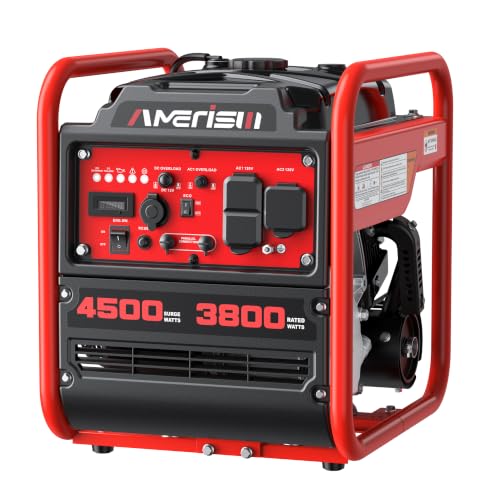
- RELIABLE 4500W POWER OUTPUT – Delivers 4500 peak watts and 3800 running watts to power...
- BUILT-IN CO ALERT FOR ENHANCED SAFETY – Integrated carbon monoxide detection continuously monitors...
- PARALLEL READY FOR MORE POWER – Connect two compatible inverter generators with an optional...

Power flickers become a bigger problem when your fridge, sump pump, or RV hookup all need to stay running at once. AMERISUN builds around that pressure with 4500 peak watts and 3800 running watts, giving you enough headroom for essential backup power without jumping into a much larger machine.
A built-in CO Alert adds a layer many buyers overlook until it matters. The sensor monitors carbon monoxide and shuts the unit down if levels rise, which helps make outdoor operation feel more controlled near living spaces, campsites, and garages.
The open-frame design keeps the unit portable at 68 pounds, while Eco Mode trims engine speed to match demand. That means better fuel efficiency, less unnecessary strain, and runtime that can stretch up to 6.5 hours at 50% load.
Need to feed an RV or expand for more load? The 30A TT-30R outlet, household outlets, and parallel-ready setup give you room to adapt. A VFT digital display shows voltage, frequency, and runtime, so you can keep track of output instead of guessing.
For camping, home backup, or a jobsite, the combination of recoil start, 12V DC output, and compact dimensions makes it easier to move and put to work. It is a practical choice when you want portable high-output power without extra bulk.
Best for: RV owners, campers, and homeowners who need dependable backup power for appliances, tools, and essential circuits.
Pros:
- 4500 peak watts with 3800 running watts
- CO Alert adds an automatic safety shutdown
- 30A TT-30R outlet supports RV use
- Eco Mode helps reduce fuel use under lighter loads
- Parallel-ready design expands output with a second unit
Cons:
- 68-pound weight may still take effort to lift frequently
- Open-frame design can be less compact than enclosed inverter units
8. WEN Super Quiet 4500W RV-Ready Portable Inverter Generator with Electric Start

- Extremely quiet 212cc engine produces 4500 surge watts and 3500 rated watts with a half-load runtime...
- Features both keyless electric start for easy ignitions as well as a recoil pull start as backup
- Fuel shutoff maximizes the generator’s lifespan by using up the remaining fuel in the carburetor...
Quiet power matters most when you need to keep a campsite calm or a few home essentials running without the roar. WEN’s 212cc engine delivers 4500 surge watts and 3500 running watts, giving you enough output for electronics, appliances, and small backup needs without pushing into bulkier, louder territory.
Clean power helps protect sensitive devices, so you can plug in phones, tablets, and laptops with more confidence. A keyless electric start speeds up ignition, while the recoil pull start gives you a dependable backup if you want it.
Fuel shutoff uses the remaining gas in the carburetor before shutdown, which helps reduce storage hassle and keeps the engine ready for the next use. The 2.2-gallon tank supports up to 8.5 hours at half load, and the digital display keeps an eye on load and fuel levels.
Built for easy movement, the unit includes onboard wheels and a carrying handle. You also get two 120V outlets, one RV-ready TT-30R outlet, a 12V DC outlet, and two USB ports, making multi-device charging and small-appliance use more straightforward.
Best for: Campers, RV owners, and homeowners who want portable backup power with cleaner output and simple startup.
Pros:
- 4500 surge watts and 3500 running watts
- Electric start with recoil backup
- RV-ready TT-30R outlet included
- USB ports for direct device charging
- Wheels and handle improve portability
Cons:
- At 99.2 pounds, it may still feel heavy for single-person lifting.
- The 2.2-gallon tank may require refueling for longer, uninterrupted use.
9. GENMAX GM4500iSAD Dual-Fuel Silent Inverter Generator for Home Backup

- 【DUAL FUEL Flexibility】Powered by a 145cc 4-stroke OHV high-speed engine, this generator...
- 【Clean & Stable Inverter Power】Delivers ≤3% Total Harmonic Distortion (THD) pure sine wave...
- 【EASY TO CARRY AND USE】Weighs only 51.4 pounds with a lightweight, compact design—effortless...
Power cuts and campsite restrictions expose the same problem fast: you need steady output without dragging around a heavy machine. The GENMAX GM4500iSAD handles that gap with dual-fuel flexibility, giving you usable power on gasoline or propane when the situation changes.
Its 145cc 4-stroke engine delivers 4500 peak watts on gasoline and a clean pure sine wave with ≤3% THD, so phones, laptops, and other sensitive gear stay protected. The built-in CO sensor adds another layer of practical safety for tighter spaces and backup use.
At just 51.4 pounds, it is easier to move than most units in this class, and the compact frame stores without taking over your garage. Low idle mode helps stretch fuel during lighter loads, which matters when you want longer runtime instead of constant refueling.
GENMAX also gives you the right outlet mix for real-world use: RV-ready 120V output, household AC outlets, USB-C, USB-A, and a 12V port. That setup makes it easier to run appliances, charge devices, and keep essentials connected without juggling adapters.
Quiet operation at 62 dB(A) keeps the noise level manageable for campgrounds, neighborhoods, and RV parks. If you want a portable dual-fuel inverter that balances clean power, compact size, and everyday flexibility, this model fits that brief well.
Best for: Home backup, RV travel, camping, and jobsite use where quiet operation and flexible fueling matter.
Pros:
- Dual-fuel setup for gasoline or propane
- Pure sine wave output for sensitive electronics
- Lightweight, compact design for easier transport
- Multiple outlet types, including RV-ready and USB ports
- CO sensor and low idle mode for added practicality
Cons:
- Running wattage may be limiting for heavier whole-home loads
- Manual starting may not suit users who want push-button startup
10. Genkins GK4500iF_Lite Portable 4500W Gas Inverter Generator, 30A RV Ready
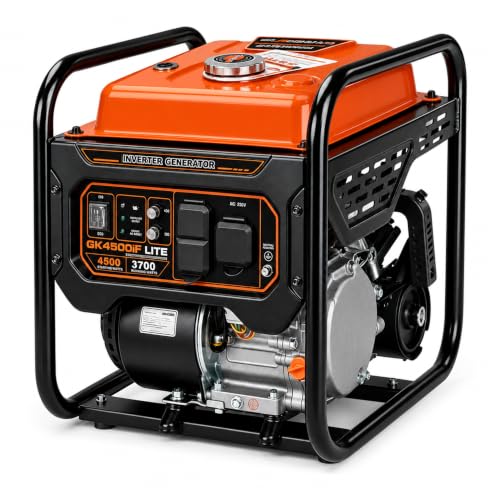
- Powerful Performance: This portable generator features 4500 Peak Watts & 3700 Rated Watts with 30A...
- All‑Weather Power: Genkins Commercial‑Grade 212 cc 4‑Stroke OHV Engine with pull‑start and...
- Extended Runtime Capacity: Built with a generous 2.11-gallon fuel tank for its power category...
Power outages and remote setups get tricky when your appliances need clean output, not just raw wattage. Genkins addresses that gap with a compact open-frame unit that delivers 4500 peak watts and 3700 running watts for dependable backup and outdoor use.
The pure sine wave output keeps sensitive electronics stable, while the 30A outlet and standard 120V receptacle give you practical connection options for home backup, RV use, and job-site tools. A 212 cc 4-stroke OHV engine helps it start reliably in tougher temperature swings.
A 2.11-gallon tank supports up to 8 hours at half load, so you spend less time refueling. At 56 pounds, it stays easier to move than many open-frame gas units, and the cooler-running design helps protect the engine during longer sessions.
Built-in low-oil shutdown and overload protection add a useful layer of engine protection without extra guesswork. The GK4500iF_Lite also meets EPA emissions standards, making it a sensible fit for year-round backup power, camping trips, and light commercial tasks.
Best for: Campers, homeowners, and mobile crews who need a portable 120V power source with cleaner output and simple outlet options.
Pros:
- 4500 peak watts with 3700 running watts
- Pure sine wave output for cleaner power
- 30A RV-ready outlet plus household receptacle
- Up to 8 hours of runtime at half load
- Low-oil shutdown and overload protection
Cons:
- 56-pound frame may still feel bulky for some users
- Open-frame design can be less enclosed than compact suitcase-style units
11. BILT HARD Portable 4500W Gas Inverter Generator for Backup and Outdoor Power

- HIGH-OUTPUT POWER PERFORMANCE: Delivers up to 4,500 starting watts and 3,500 running watts on...
- RELIABLE ENGINE PERFORMANCE: Powered by a 4-stroke 223cc air-cooled OHV engine with a recoil-start...
- SMART POWER MANAGEMENT: The built-in Low Idle switch automatically adjusts engine speed according to...
Power gaps get noticeable fast when a fridge, a few tools, or campsite gear all need support at once. BILT HARD answers that problem with a 4-stroke 223cc OHV engine that produces 4,500 starting watts and 3,500 running watts on gasoline.
That output gives you a practical buffer for home backup, outdoor events, and job-site use without dragging in a full-size stationary unit. The 1.6-gallon tank and recoil start keep the setup simple, while the open-frame build helps keep the unit portable at 57 pounds.
A Low Idle switch adjusts engine speed to match the load, so lighter power demands can run more efficiently and with less noise. BILT HARD also adds parallel-ready expansion, letting you link two compatible units when your power needs grow.
The outlet layout includes 120V 20A duplex outlets, a 120V 30A twist-lock outlet, and a 12V DC outlet for compatible equipment. Safety features such as CO auto-shutoff, low-oil shutdown, overload warning, and circuit breakers help protect the generator while the LED multi-meter tracks voltage, frequency, and runtime.
Best for: Home backup, camping trips, tailgating setups, and portable power needs where moderate-to-high output matters.
Pros:
- 4,500 starting watts for heavier startup loads
- Low Idle switch helps reduce fuel use under lighter demand
- Parallel ports for expandable output
- Multiple outlets for mixed device compatibility
- CO shutoff and low-oil protection built in
Cons:
- 57-pound weight may feel bulky for frequent lifting
- 3,500 running watts may limit larger whole-home applications
Top 4500 Watt Inverter Generator Specs Compared
| Product Name | Starting / Running Watts | Fuel Type | Runtime | Weight |
|---|---|---|---|---|
| AIVOLT Dual Fuel | 4300 watts / 3.3 KW | Dual Fuel | 34 hours | 64 pounds |
| Aceup Energy 223cc | 4500 watts / 3600 watts | Gasoline | 10 hours | 30.07 kg |
| Champion RV Ready | 4500 watts / 3500 watts | Gasoline | 14 hours | 92.2 pounds |
| PowerSmart Portable | 4500 watts / 3800 watts | Gas | 6 hours | 61 pounds |
| ERAYAK Super Quiet | 4500 watts / 3500 watts | Gasoline | 16 hours | 54 pounds |
| LIFAN Remote Start | 4800 watts / 3800 watts | Gas | 10 hours | 66.1 pounds |
| AMERISUN Open Frame | 4500 watts / 3800 watts | Gas | 11 hours | 68 pounds |
| WEN Electric Start | 4500 watts / 3500 watts | Gasoline | 8 hours | 99.2 pounds |
How to Pick a 4500-Watt Unit That Actually Fits Real Use?

Choosing the best 4500 watt inverter generator is less about chasing the biggest number and more about matching the machine to your load, runtime, and mobility needs. A generator that looks strong on paper can still be annoying to live with if it is too loud, too heavy, or short on the outlets you actually use.
The details below separate a convenient power source from one that turns into a compromise the second you plug in a fridge, RV, or sensitive electronics.
Running Watts vs Starting Watts
Running watts are what the generator can sustain, while starting watts cover the brief surge when motors kick on. That difference decides whether a fridge compressor, microwave, or RV air conditioner starts cleanly or trips the unit. A 4500-watt class generator often advertises a high surge number, but the usable output is the lower continuous rating, which is the figure that matters during an outage or overnight campsite use.
Inside the machine, the alternator and inverter board convert raw engine output into stable AC power, and the control system has to absorb short spikes without collapsing voltage. For example, a unit with 4500 starting watts and 3500 running watts can handle startup surges, but only if your combined steady load stays under that lower ceiling. Ignore this and the generator may start fine, then bog down once everything settles into continuous draw.
If you size it wrong, the consequence is constant overloads, nuisance shutdowns, and appliances that never get a clean chance to run.
Clean Power Quality for Sensitive Electronics
Clean power matters because phones, laptops, routers, CPAP machines, and modern TVs hate rough voltage swings. Inverter generators are built to flatten the output waveform, usually targeting low total harmonic distortion, so the AC current looks closer to utility power. That is the difference between safe charging and a machine that slowly beats up electronics with unstable energy.
The mechanism starts with the engine generating AC, then the inverter section rectifies it to DC and reforms it into a tightly regulated sine wave. Models with under 3% THD are especially useful for sensitive gear, while a basic generator with poorer waveform control can still power lights and tools but is less friendly to small electronics. This is one reason RV owners and home backup buyers lean toward inverter designs rather than open-frame basics.
Skip this factor and you risk noisy power, device glitches, battery chargers that run hot, and electronics that age faster than they should.
Runtime and Fuel Efficiency
Runtime decides how often you are refueling, and that becomes a bigger deal than wattage during long outages or overnight camping. A generator that runs 6 to 10 hours at moderate load may be fine for a day trip, but it turns into a hassle if you need power through the night. Fuel efficiency also affects noise and wear, because the engine does not have to work as hard when the load stays light.
Economy mode changes throttle response so the engine speeds up only when demand increases, which lowers fuel burn and helps stretch a tank. Tank size, carburetion, and engine displacement all shape this curve; a compact 223cc engine paired with a smart governor can sip fuel more carefully than a larger engine running flat-out. That is why some units advertise 14 to 34 hours at lighter loads while others burn through gas much faster.
Ignore runtime and you get middle-of-the-night refuels, more heat cycling, and a backup source that feels less reliable than it looked on the box.
Noise Level and Neighborhood Comfort
Noise level is one of the first things people regret overlooking. A generator that seems “quiet enough” in a yard can still feel loud at a campsite, on a patio, or near a bedroom window. Inverter models are usually better here because the engine does not have to run at a fixed high speed all the time, and the enclosure design helps damp mechanical sound.
The real-world difference shows up in decibels, where a unit around 60 to 61 dBA is much easier to live with than a louder open-frame machine. Muffler design, panel thickness, vibration isolation, and engine speed control all shape the final sound profile. Lower RPM under light loads matters because airflow noise and combustion noise both drop when the governor is not forcing a constant roar.
Overlook noise and the generator can become the thing everybody hears, whether that is your campsite neighbors or the people trying to sleep inside the house.
Portability and Setup in Tight Spaces
Portability matters more than a lot of buyers expect, especially if the generator has to move between a garage, truck bed, RV pad, or backyard. Weight, wheel design, and handle geometry decide whether one person can reposition it or whether the unit becomes a two-person lift every time fuel needs topping off. A lighter frame around 54 to 64 pounds feels very different from one creeping toward 90 pounds.
Design details matter here. A telescoping handle reduces awkward lifting angle, while larger wheels roll better over gravel and uneven campsite ground. Compact packaging also helps with storage clearance, which is useful when the generator has to sit beside an RV or inside a crowded shed. The frame, fuel tank placement, and balance point all affect how stable it feels while rolling or parking.
If you ignore portability, setup gets annoying fast, and a generator you rarely want to move is a generator you use less often than planned.
Outlets, RV Readiness, and Safety Features
Outlet layout decides whether the generator fits your gear without a mess of adapters. A proper 30A RV-ready outlet is a big deal for travel trailers and campers, while standard 120V outlets handle smaller appliances and chargers. Safety features matter just as much, especially low-oil shutdown, overload protection, and a CO alert on models designed for outdoor use.
Under the hood, the outlet board and sensor system work together to protect both the generator and the connected devices. A carbon monoxide sensor can trigger shutdown when exhaust levels climb, and low-oil protection prevents the engine from running itself into damage if lubrication drops. For RV users, the right outlet saves you from messy adapters and voltage confusion; for home backup, it keeps the setup simpler and safer during a stressful outage.
Miss this factor and you may end up with incompatible plugs, unnecessary extension cords, or a setup that feels far less safe than it should.
Frequently Asked Questions
What size load can a best 4500 watt inverter generator handle?
A 4500-watt starting capacity usually covers a fridge, lights, phone chargers, and a few small appliances at the same time. The catch is the running watt limit, which is often closer to 3500 to 3800 watts, so the total continuous load matters more than the headline number.
If you plan to run a microwave or air conditioner, check the startup surge first, since those spikes can use a big chunk of capacity fast. A quick wattage check before plugging in saves headaches later.
Tip: add up your essential running watts before choosing a model, not after the outage starts.
Is a dual fuel 4500 watt inverter generator worth it?
A dual fuel model is worth a look if you want more flexibility during outages or camping trips. Gasoline is easy to find, while propane stores longer and can be cleaner to handle for occasional use.
The tradeoff is usually a slightly higher price and a little more weight, but that can pay off if your generator sits unused for long stretches. A unit like the AIVOLT gives you that backup option without making the setup feel oversized.
Warning: if you mainly want the lowest upfront cost, single-fuel gas units are often simpler.
How quiet are 4500 watt inverter generators for camping?
Most inverter models in this size range are much quieter than open-frame generators, and that matters a lot at campgrounds. Noise ratings often sit around 60 to 61 dBA, which is far easier to live with than a loud contractor-style unit.
That said, sound carries differently on hard ground, near RV walls, or in a quiet forest. A generator can still sound noticeable if it is parked too close to your sleeping area.
Pro tip: place it farther away and use a longer RV cord when the campsite layout allows it.
Can a 4500 watt inverter generator run an RV air conditioner?
Many can, especially models with a 30A RV outlet and enough surge power to handle compressor startup. The real answer depends on your air conditioner size, whether other appliances are running, and how much running wattage the generator can sustain.
A 13,500 BTU RV A/C may work on a 4500-watt unit, but adding a microwave or coffee maker at the same time can push the system too far. Soft-start devices can also make the load easier to manage.
Tip: check the A/C startup watts before buying, not just the generator rating.
What features matter most for home backup use?
For backup power, look for runtime, clean output, and safety features before chasing the highest watt number. A low-THD inverter is better for phones, routers, TVs, and medical devices than a rougher power source.
Long runtime helps during overnight outages, while CO sensors and low-oil shutdown add peace of mind. A model with a practical gauge or electric start can also be easier to manage when the power is already out.
Warning: keep the unit outdoors and never run it in a garage, even with the door open.
What a 4500-Watt Generator Can Handle
The right 4500 watt inverter generator closes the gap between bare-bones backup and dependable whole-room support. It keeps essentials powered, delivers steadier output, and makes outages or remote work far less disruptive. With the right match, you gain quieter operation, safer electronics, and a setup that feels easier to live with than an oversized, fuel-hungry machine.
Campers and RV owners should favor RV-ready outlets and quiet operation, while homeowners may prefer longer runtime and fuel flexibility. For tailgates or weekend trips, lighter units make transport easier. Jobsite users should lean toward tougher frames, multiple outlets, and features that stand up to frequent use.
Before buying, compare your load list to refrigerator, lighting, and charging needs. A 30A RV outlet simplifies hookup, but ventilation, preheating, and maintenance still matter. Avoid size mismatch problems, or you may lose capacity when it counts.
Last update on 2026-10-27 / Affiliate links / Images from Amazon Product Advertising API