You’ll need premium gas for most Audis, especially if your model has a turbocharged or high-compression engine.
Using premium fuel helps prevent engine knocking and allows the ECU to optimize timing and boost, maintaining power and efficiency.
Regular gas can cause reduced performance, increased wear, and potential long-term damage in these engines.
If your Audi’s manual recommends premium fuel, it’s best to follow that guidance to protect your engine’s health and performance.
Learn why this distinction matters.
Key Takeaways
- Most turbocharged Audi engines require premium gasoline (91+ octane) to prevent engine knock and maintain optimal performance.
- Using regular gas in turbo Audis can reduce power and efficiency due to ECU timing and boost adjustments.
- Naturally aspirated Audi models may tolerate regular fuel, but turbocharged engines demand premium for safe operation.
- Premium fuel protects engine components by resisting premature ignition and enabling optimal ignition timing and boost.
- Always check the owner’s manual or fuel-filler door label to confirm the recommended octane rating for your Audi.
How Engine Type Affects Audi’s Fuel Needs?
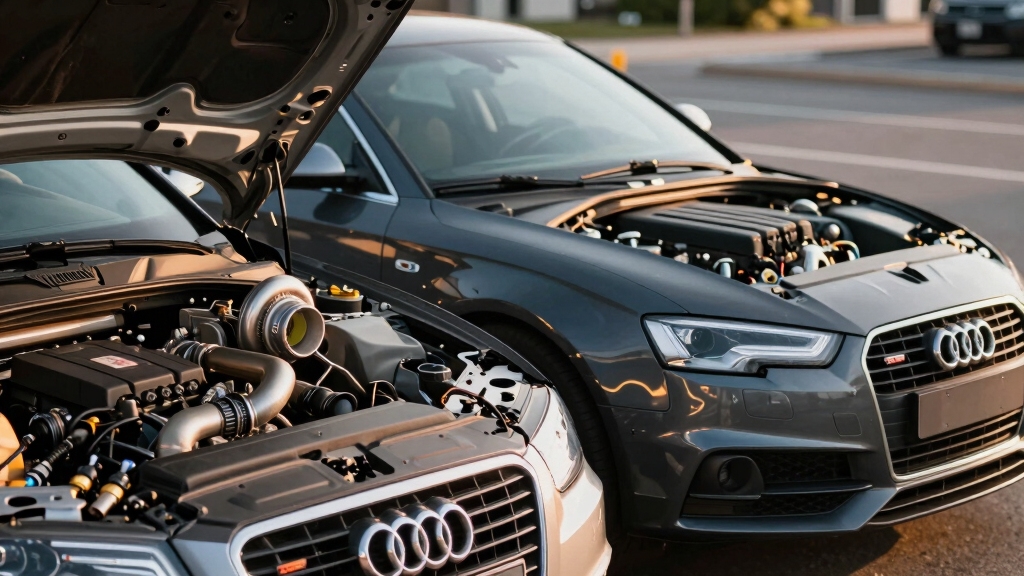
How does the type of engine in your Audi influence its fuel requirements?
If your Audi has a high-compression turbocharged TFSI engine, it typically needs premium fuel. These engines operate with higher compression ratios and turbocharging, increasing the risk of knock and requiring higher-octane gasoline to maintain performance and prevent pre-ignition.
The engine control unit (ECU) is calibrated for specific octane levels. Using lower octane can reduce power and efficiency by triggering timing adjustments. Naturally aspirated engines with lower compression ratios may tolerate regular fuel better.
However, forced-induction engines like supercharged or twin-turbo variants demand premium gasoline to handle increased combustion pressures safely. Meanwhile, diesel (TDI) engines don’t rely on octane ratings at all, as their combustion process fundamentally differs from gasoline engines.
Proper fuel choice also helps prevent engine damage and maintains optimal performance by minimizing engine knock risk, especially in high-performance models.
Which Audi Models Need Premium Gasoline?
If you own a turbocharged Audi, especially those with high compression engines, you’re probably wondering if you need to use premium gasoline. Well, the answer is yes!
Using premium fuel is often necessary to ensure your vehicle performs at its best and to prevent any engine knocking. Premium gasoline supports higher compression and prevents premature ignition, which is crucial for maintaining engine health.
A lot of Audi SUVs, sedans, and performance models rely on 91+ octane fuel. This kind of fuel helps maintain their power output and keeps the engine healthy. Choosing the right fuel quality can significantly impact engine longevity and overall performance.
It’s a good idea to know which models specifically require premium fuel. That way, you can make informed choices that benefit both your car’s efficiency and its longevity.
Turbocharged Audi Models
Which Audi models require premium gasoline due to their turbocharged engines?
Most Audi turbocharged models, including SUVs like the Q3, Q5, Q7, and Q8, specify premium fuel (91+ octane) to maintain power, efficiency, and prevent engine knock.
Similarly, sedans and sportbacks such as the A3, A4, and A5, equipped with turbocharged inline-4 or V6 engines, require premium fuel to deliver rated performance and avoid knock-related issues.
These engines run higher boost pressures, making high-octane gasoline critical for proper combustion timing and boost levels.
Using lower-octane fuel typically causes the ECU to reduce boost and timing, lowering performance and risking engine damage.
Dealers and technical sources consistently recommend or require premium gas for turbocharged Audis to ensure optimal operation, durability, and to comply with manufacturer guidelines.
Regularly using premium fuel also helps maintain engine health by reducing the risk of knocking and associated wear.
Engine Compression Requirements
Why do some Audi engines insist on premium gasoline? It largely comes down to engine compression.
High-compression engines, common in performance-oriented Audis, generate greater cylinder pressure and temperature before ignition. This makes them prone to knocking if you use low-octane fuel.
Premium gasoline, with its higher octane rating (91–94), resists knock better, allowing optimal timing and power. Octane is a colorless liquid additive that improves engine performance. If you use regular fuel in these engines, expect timing retard, reduced power, increased fuel consumption, and possible long-term wear. Poor driving habits such as aggressive acceleration can further reduce fuel economy by up to 40%.
On the other hand, many naturally aspirated Audis with moderate compression can safely run on regular or mid-grade fuel, though premium may slightly reduce deposits and knock events.
Always check your owner’s manual or fuel door label, as Audi treats “Premium Unleaded Only” as a strict requirement, not just a recommendation.
What Happens If You Use Regular Gas in a Turbo Audi?
If you put regular gas in a turbo Audi that’s meant for premium fuel, you might notice some issues. For starters, the engine performance could take a hit. This happens because the car’s system adjusts the ignition timing to avoid knocking, which means you’ll likely feel some sluggish acceleration and a drop in power, especially when you really step on the gas.
Premium gas has a higher octane rating which helps prevent knocking in engines with high compression ratios. Using the recommended fuel also ensures optimal engine protection and performance maintenance.
Now, if you keep using lower octane fuel over time, that knocking can become a problem. It doesn’t just affect performance — it can actually lead to serious engine damage. We’re talking about wear and tear on important parts like the pistons and valves. So, it’s definitely better to stick with the recommended fuel for your turbo Audi!
Engine Knock Risks
Using lower-octane fuel in these high-compression engines increases the risk of abnormal combustion, such as detonation and pre-ignition. These events cause premature fuel ignition, creating pressure spikes felt as knocking.
Turbocharged engines generate higher cylinder temperatures, making low-octane fuel more prone to auto-ignite before the spark. Audi’s knock sensors detect these vibrations and signal the ECU to retard ignition timing and adjust fueling to suppress knock.
However, chronic use of regular gas pushes these systems to their limits, reducing safety margins. Persistent knocking can hammer piston crowns, bearings, and cylinder walls, leading to cracks and wear.
Even with knock control, severe or sustained knock under heavy load can result in engine damage over time.
For maintaining optimal engine performance and preventing damage, using high thermal stability lubricants and protective sprays on turbo components is recommended to reduce wear and friction under extreme conditions.
Performance and Damage
What consequences arise when you fill a turbocharged Audi with regular gasoline instead of the recommended premium?
You’ll face noticeable power and performance losses as the engine’s ECU retards ignition timing and limits boost to prevent knock. This reduction in performance is especially critical in engines designed for high-performance vehicles like Audi’s turbo models.
This results in roughly 20–25 horsepower and 10 lb-ft torque reductions, slower turbo spool, and less responsive throttle.
Efficiency suffers too; fuel economy drops due to decreased thermal efficiency and richer air-fuel mixtures under load, negating any savings from cheaper fuel. Real-world driver experiences often show mixed outcomes with 87 octane, sometimes with engine fault codes or pinging under certain conditions.
Long-term, your engine endures higher stress on pistons, valves, and turbo components, increased carbon buildup, and accelerated wear on ignition parts.
Over time, these effects can cause costly damage and reduce reliability, especially during heavy acceleration or hot weather.
Using regular gas ultimately compromises your Audi’s engineered performance and durability.
How Premium Gasoline Prevents Engine Knocking and Damage?
Because premium gasoline has a higher octane rating, it resists premature ignition that can cause engine knocking and damage. This resistance is crucial in Audi engines with high compression and turbocharging, where combustion pressure is intense. Upgrading to premium fuel is similar to replacing worn suspension components, as both improve overall vehicle stability and performance.
Using low-octane fuel leads to uncontrolled combustion, knocking, and potential mechanical wear. Premium fuel maintains stable combustion temperatures and pressure, reducing thermal stress and protecting engine components like bearings and gaskets. Additionally, maintaining appropriate oil levels is essential, as low oil pressure can exacerbate engine knocking and component wear.
| Factor | Effect on Engine |
|---|---|
| Higher Octane Rating | Prevents premature ignition |
| Stable Chemical Composition | Maintains combustion stability |
| Controlled Combustion | Reduces mechanical and thermal stress |
| Proper Timing | Enhances engine efficiency and longevity |
Choosing premium gasoline safeguards your Audi’s performance and durability by ensuring optimal combustion conditions.
How to Check the Right Fuel Grade for Your Audi?
Wondering which fuel grade suits your Audi best? Start by checking your owner’s manual. Look in the “Fuel” or “Technical Data” section for the minimum octane rating and whether premium fuel is required or recommended. Audi engines generally require premium gasoline with octane 91 or higher to maintain optimal performance and engine longevity.
Next, inspect the label inside the fuel-filler door. It often states the minimum octane needed and any ethanol content limits. Match this info to your engine type: turbocharged or high-compression engines typically need premium (91+ octane), while some naturally aspirated models may accept regular (87 octane). Using the proper fuel grade is crucial to protect your engine and maximize performance and filtration efficiency.
Also, recognize pump labels. Regular is 87, mid-grade 88–90, premium 91–94 octane. When unsure, consult your Audi dealer or service department for fuel guidance specific to your VIN. Following these steps ensures you use the correct fuel for optimal operation.
Why Following Audi’s Fuel Recommendations Protects Performance?
How exactly does following Audi’s fuel recommendations enhance your vehicle’s performance?
Using the recommended premium 91+ octane lets your engine control unit (ECU) optimize ignition timing and boost, maintaining power and torque as designed. Maintaining optimal combustion conditions also helps reduce operating noise and prevents engine knocking, which supports long-term engine health.
Lower octane fuels cause the ECU to retard timing when knock is detected, cutting power and dulling throttle response. This is because a higher octane fuel reduces the risk of premature detonation, allowing the engine to run more efficiently.
Premium fuel also supports smoother acceleration and better fuel efficiency, protecting engine components from stress and wear.
| Benefit | Effect on Performance | Impact on Engine |
|---|---|---|
| Optimal Ignition | Sustains horsepower & torque | Reduces knock risk |
| Consistent Power | Smoother acceleration | Lowers mechanical stress |
| Fuel Efficiency | Improved combustion efficiency | Protects longevity |
| Cleaner Combustion | Stable throttle response | Reduces deposits & emissions |
Why Turbocharged Audis Require Premium Gasoline?
Turbocharged Audi engines demand premium gasoline due to their higher effective compression ratios and increased cylinder pressures. This combination raises the risk of knock, which is premature fuel ignition that can damage pistons, valves, and bearings.
Premium gas with 91+ octane offers greater knock resistance. This allows your engine control unit (ECU) to optimize ignition timing and boost pressure without triggering detonation. When you use lower-octane fuel, the ECU must reduce timing and boost, cutting performance and fuel efficiency.
Turbocharged Audis rely on precise direct injection and turbo boost calibrated specifically for premium fuel’s stable combustion. Not only does premium gas protect engine components and longevity, but it also supports full horsepower, torque, and smoothness, especially under high load or acceleration. Using premium fuel helps prevent engine knocking, which can cause damage over time.
Using recommended premium fuel safeguards your investment and helps avoid warranty issues related to fuel-induced damage.
Frequently Asked Questions
Can Using Premium Gas Improve Audi’s Resale Value?
Yes, using premium gas can improve your Audi’s resale value.
It shows you’ve followed manufacturer recommendations, signaling proper maintenance. Buyers and dealers often trust vehicles with documented premium use, associating it with better engine health, performance, and longevity.
This can justify higher pricing, especially in luxury markets. Plus, consistent premium fuel use reduces engine wear and potential repairs, boosting buyer confidence and trade-in offers.
Does Premium Gas Affect Audi’s Emissions or Environmental Impact?
Think of premium gas as the clean brushstroke on your Audi’s environmental canvas.
Using it reduces emissions by ensuring more complete combustion and preventing engine knock, which otherwise increases pollutants.
Premium fuel’s detergents keep engine parts cleaner, maintaining efficiency and lowering harmful output.
How Does Altitude Influence Audi’s Fuel Grade Requirements?
Altitude doesn’t change Audi’s fuel grade requirements much because turbocharged engines boost pressure to maintain power.
This keeps knock risk high. So, even at higher elevations where air is thinner, you still need premium fuel to prevent engine knock and maintain performance.
Using lower octane can trigger knock sensors, reducing timing and causing wear.
Stick to the manufacturer’s recommended octane regardless of altitude to protect your engine and ensure smooth operation.
Is It Safe to Switch Between Premium and Regular Gas Occasionally?
It’s generally safe to switch between premium and regular gas occasionally in your Audi, thanks to knock sensors that adjust timing to prevent immediate damage.
However, regular fuel causes reduced performance, lower fuel economy, and increased engine stress over time.
Use regular only in emergencies and return to premium quickly to avoid long-term wear or warranty issues.
Consistent premium use ensures optimal performance and engine longevity.
Are There Cost Savings With Premium Gas Despite Its Higher Price?
Like investing in quality shoes, spending on premium gas can save you money over time by preventing costly engine repairs.
You’ll maintain optimal fuel economy and performance, especially in turbo Audis designed for higher octane.
While premium costs more upfront, its benefits in reducing engine knock, deposit buildup, and preserving warranty often outweigh the price difference.
However, if your Audi doesn’t require it, premium won’t deliver significant savings.
Protect Your Audi’s Performance: Choose the Right Octane
If you drive a turbocharged Audi, using premium gas isn’t just a recommendation; it’s essential.
Studies show that premium gasoline, with its higher octane rating, can reduce engine knocking by up to 70%. This helps your engine run smoother and last longer.
Ignoring Audi’s fuel guidelines may seem convenient, but it risks performance and costly damage. Always check your owner’s manual to ensure you’re fueling your Audi correctly and protecting its precision engineering.