When choosing between fiberglass and aluminum RVs, you’ll find fiberglass offers superior durability with molded, seamless panels that resist dents, rot, and hail. It provides better insulation due to low thermal expansion and rigid foam.
It’s lighter, improving fuel efficiency and aerodynamic performance. Aluminum models are easier to repair and less costly upfront but are prone to dents, leaks, and insulation challenges due to wood framing.
Your decision hinges on balancing upfront cost with long-term durability and maintenance benefits. Exploring deeper reveals thorough performance contrasts.
Key Takeaways
- Fiberglass RVs feature seamless, thicker exteriors with superior hail resistance and reduced denting compared to thin, riveted aluminum panels.
- Fiberglass construction uses low-expansion materials and rigid foam insulation, enhancing thermal performance and minimizing leak risks versus aluminum’s wood framing.
- Fiberglass RVs typically weigh 15-20% less than aluminum models, improving fuel economy, towing ease, and aerodynamic efficiency.
- Fiberglass layered walls provide better noise reduction and vibration control than aluminum RVs with fiberglass batt insulation.
- Aluminum RVs offer easier, less costly repairs but are more prone to dents, oxidation, and moisture damage due to wood framing vulnerability.
Fiberglass vs Aluminum RV: Key Differences at a Glance
| Feature | Fiberglass RV | Aluminum RV |
|---|---|---|
| Durability | Superior impact resistance; 3x thicker panels withstand hail and dents | Thin panels prone to denting and hail damage; requires roof replacement after storms |
| Insulation | Rigid foam insulation; excellent thermal resistance and moisture control | Fiberglass batt insulation; prone to sagging and moisture absorption |
| Weight | 15-20% lighter on 25+ foot models; better fuel efficiency | All-aluminum models 100 lbs lighter than fiberglass; varies by construction |
| Aerodynamics | Smooth, curved surfaces; seamless design reduces drag significantly | Ridged siding creates turbulence and drag; lower fuel efficiency |
| Repair Costs | Complex and expensive repairs; delamination requires invasive work | Easier and cheaper to repair; simple panel access |
| Maintenance | Routine washing and waxing; less upfront maintenance over 10-15 years | Frequent cleaning needed; matte finish traps dirt readily |
| Weather Resistance | Low thermal expansion; maintains dimensional stability in temperature changes | High thermal expansion; stress on fasteners increases leak risks |
| Noise Reduction | Dense foam insulation; layered construction minimizes sound transmission | Thinner construction; transmits sound easily |
| Longevity | Welded metal framing resists rot; maintains structural integrity longer | Wood framing vulnerable to moisture and rot damage |
| Resale Value | Higher resale value; durability and premium perception drive demand | Faster depreciation due to cosmetic wear and dents |
Durability and Repairability Comparison
When comparing durability and repairability, fiberglass RVs with steel or aluminum framing clearly outperform aluminum RVs that rely on wood framing. Their welded metal structures offer superior weight support and resist rot over time.
Fiberglass walls use foam insulation, which lasts longer and resists water damage better than the fiberglass batt insulation commonly found in aluminum RVs. This foam insulation also provides better thermal performance and soundproofing, enhancing overall comfort.
Fiberglass walls feature durable foam insulation that outperforms the fiberglass batt insulation in aluminum RVs.
While aluminum RVs are easier and less costly to repair due to simpler access, their wood frames are vulnerable to rot if water infiltrates.
Fiberglass repairs, though more complex and expensive, effectively restore damage, including scratches and dents. However, delamination in fiberglass requires invasive structural repairs.
Over 10-15 years, fiberglass campers demand less upkeep and maintain structural integrity better, offering you a more robust and durable RV experience.
Resistance to Weather and Hail Damage
Beyond structural durability and repairability, understanding how your RV withstands environmental challenges like weather and hail is essential for long-term performance.
Aluminum panels, typically thin and lightweight, are highly susceptible to hail damage, often denting or requiring complete roof replacement after severe storms.
In contrast, fiberglass exteriors, about three times thicker, offer superior impact resistance, withstanding hailstorms without damage due to their composite panel construction. This thickness also enhances durability and repairability, allowing fiberglass to be easily fixed after minor impacts.
Additionally, aluminum’s high thermal expansion causes repeated stress on fasteners and sealants, increasing leak risks over time.
Fiberglass maintains dimensional stability across temperature changes, reducing maintenance concerns.
While aluminum retains paint quality longer, fiberglass’s molded shell design better resists environmental wear, minimizes dents, and lowers long-term repair costs, making it a more resilient choice for weather and hail resistance.
Weight Differences and Impact on Fuel Efficiency
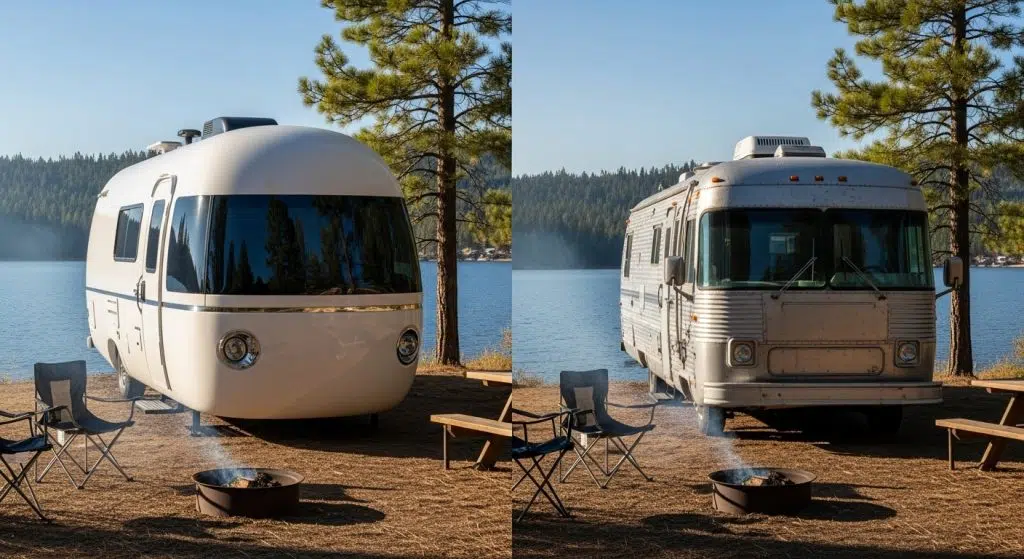
Did you know that fiberglass RVs typically weigh about 15-20% less than their aluminum counterparts? This difference is especially noticeable in RVs that are over 25 feet long.
Pretty interesting, right?
This lighter weight gives fiberglass models a distinct advantage when it comes to fuel efficiency. You see, their aerodynamic and streamlined design helps reduce drag and lessen the load on the engine. This is similar to how viscosity ratings in engine oils affect flow and efficiency under different conditions.
Additionally, fiberglass RVs are often designed with a streamlined shape that further improves their aerodynamics and fuel economy.
Weight Comparison Analysis
Although aluminum RVs often weigh less than their fiberglass counterparts, the differences vary considerably depending on construction methods and size.
All-aluminum models typically weigh about 100 pounds less than vacuum-bonded fiberglass campers, but weight savings can reach up to 500 pounds compared to traditional stick-and-tin trailers. These weight differences can impact fuel efficiency significantly, especially on longer trips where energy consumption becomes a key factor.
Fiberglass RVs use aluminum framing with foam insulation, which balances durability and weight. Meanwhile, aluminum RVs rely on heavier welded frames and fiberglass insulation, sometimes increasing mass. Proper fit and durability considerations are essential when selecting a camper shell to avoid functionality issues.
Smaller RVs under 25 feet show minimal weight disparity, but larger units highlight these contrasts more sharply.
You’ll notice that fiberglass shells weigh between 100-200 pounds, occasionally lighter than aluminum shells.
This nuanced weight distribution affects handling and towing, requiring careful consideration of frame density, wall thickness, and insulation type for ideal performance.
Fuel Economy Benefits
The weight differences between fiberglass and aluminum RVs directly influence fuel economy during towing. Fiberglass RVs often weigh less than traditional stick-and-tin aluminum units. However, some all-aluminum campers can be lighter by about 100 pounds. These weight variations affect fuel efficiency appreciably.
Proper heat management in RV construction materials also plays a role in maintaining overall durability and performance during travel.
Consider these key points:
- Reducing RV weight by approximately 500 pounds between all-aluminum and stick-and-tin models noticeably lowers fuel consumption.
- Lighter fiberglass construction eases towing demands, improving miles per gallon for your tow vehicle.
- Heavier aluminum stick-and-tin RVs generally yield poorer fuel economy due to increased mass.
Additionally, the aerodynamic shape of fiberglass RVs contributes to better fuel efficiency by reducing drag compared to boxy aluminum designs.
Understanding these weight impacts helps you optimize fuel usage when choosing between fiberglass and aluminum RVs.
This emphasizes the importance of construction materials on towing efficiency.
Aerodynamics and Efficiency
When considering aerodynamics and efficiency, fiberglass RVs offer distinct advantages over aluminum models due to their lighter weight and streamlined design.
Fiberglass RVs typically utilize aluminum framing combined with foam insulation, reducing overall weight compared to the wood framing and batt insulation in aluminum RVs. Their smooth, flat exteriors and rounded corners minimize wind resistance, enhancing aerodynamic performance and lowering drag.
This design approach is similar to how optimized light distribution improves vehicle performance in other industries. Additionally, fiberglass campers have a seamless surface with fewer joints, which reduces leak risks and contributes to maintaining aerodynamic integrity over time.
In contrast, aluminum RVs’ ridged siding and seams increase turbulence, negatively impacting fuel efficiency.
This weight and aerodynamic advantage means you’ll experience easier towing and reduced fuel consumption over long distances with fiberglass models.
While aluminum RVs may cost less upfront, the superior fuel efficiency and handling of fiberglass units translate to significant operational savings and environmental benefits during frequent or extended travel.
Thermal Performance and Insulation Benefits

Did you know that fiberglass RVs use rigid foam insulation? It really does a better job compared to the fiberglass batt insulation that’s often found in aluminum models. This means you get superior thermal resistance and moisture control.
Pretty great, right?
Additionally, laminate RVs with their lightweight aluminum frame often require more layers of rigid foam insulation to achieve comparable thermal performance. Choosing the right insulation can also help improve fuel efficiency by reducing heating and cooling demands.
Now, let’s talk about aluminum for a moment. One downside is that aluminum can experience thermal expansion, which puts stress on fasteners and sealants. This can lead to increased maintenance issues and might even compromise the insulation over time. Not ideal, if you ask me.
On the other hand, fiberglass walls have some added perks. They help with noise reduction by minimizing sound transmission, which means you can enjoy a much quieter cabin environment. Who wouldn’t want that?
Insulation Efficiency Comparison
How well your RV insulates directly impacts your comfort and energy efficiency throughout the year.
Fiberglass RVs employ dense rigid foam insulation within tightly sealed panels, minimizing air leaks and thermal bridging. Many fiberglass models even feature one-piece shells that enhance structural integrity and insulation quality.
Their design often includes components that allow for long-lasting performance and durability.
In contrast, aluminum RVs typically use fiberglass batt insulation prone to sagging and moisture absorption, reducing its effectiveness.
Key factors to contemplate:
- Material Density: Rigid foam in fiberglass RVs offers superior thermal resistance over fiberglass batts used in aluminum RVs.
- Moisture Resistance: Fiberglass panels resist moisture infiltration, preserving insulation integrity, whereas aluminum’s seams increase leak risk.
- Thermal Bridging: Fiberglass construction reduces heat transfer, while aluminum’s high conductivity elevates heat loss despite insulation.
Choosing fiberglass means better year-round insulation performance and sustained energy efficiency.
Thermal Expansion Impact
Insulation effectiveness hinges not only on material properties but also on how the RV’s exterior responds to temperature fluctuations. Fiberglass, with its low thermal expansion coefficient, minimizes structural stress and preserves insulation integrity.
Additionally, fiberglass RVs often incorporate foam insulation and an interior aluminum frame, which avoids wood rot issues common in other materials. This combination helps maintain thermal stability and reduces maintenance costs over time.
Aluminum’s higher expansion rate causes mechanical stress on fasteners and seams, risking leaks and warping. Its efficient heat transfer demands more interior climate control.
| Property | Fiberglass | Aluminum |
|---|---|---|
| Thermal Expansion | Low; reduces stress | High; increases stress |
| Seam Integrity | One-piece shell; minimal seams | Multiple seams; leak prone |
| Heat Transfer | Insulative; resists heat flow | Conductive; transfers heat |
| Structural Durability | Uniform stress distribution | Stress concentration points |
Choosing fiberglass improves thermal stability, durability, and insulation performance across seasonal extremes.
Noise Reduction Advantages
While traveling or parked, noise levels inside your RV substantially affect comfort and overall experience.
Fiberglass RVs excel in noise reduction due to their dense foam insulation and layered wall construction, which minimize sound transmission and vibration. This is similar to how high-viscosity gear oils provide superior protection under high stress by maintaining consistent performance.
Unlike aluminum RVs, which use fiberglass batt insulation prone to sagging, fiberglass RVs maintain consistent soundproofing over time.
Additionally, their smooth, solid exteriors lack ridges or staples that amplify noise.
Key noise reduction advantages include:
- Foam insulation’s superior density and moisture resistance prevent sound degradation.
- Layered fiberglass walls reduce flex and vibration, limiting noise transfer.
- Composite panels like Azdel enhance sound absorption with solid cores.
These factors combine to create a quieter, more comfortable interior environment during your RV adventures. Community feedback also highlights that fiberglass siding generally requires less maintenance and resists dents better than aluminum, contributing to its long-term durability and appeal user engagement insights.
Maintenance Requirements and Appearance
Because fiberglass exteriors feature smooth, flat surfaces, you’ll find them substantially easier to clean and maintain compared to aluminum. Fiberglass resists dirt accumulation and requires routine washing plus occasional waxing to preserve its glossy finish and protect against UV damage.
However, neglecting waxing can lead to chalking, complicating restoration after 10-15 years. Filters with higher filtration efficiency can similarly reduce maintenance demands by protecting engine components.
Aluminum’s matte finish traps dirt more readily, demanding more frequent cleaning. While aluminum paint maintains shine for 15-20 years, its ridged surface highlights dirt patterns more clearly.
Fiberglass also better resists dents and water infiltration, reducing maintenance related to structural damage. Still, both materials require regular seal inspections to prevent water intrusion. Additionally, aluminum is generally easier to repair than fiberglass, which can be a significant maintenance advantage.
Cost Considerations and Construction Materials
Though fiberglass RVs offer advanced durability and sleek design, you’ll pay a premium for these benefits, often between $2,000 and $5,000 more than comparable aluminum models.
This cost difference parallels considerations seen in automotive products, where premium materials and certifications often command higher prices, as seen in premium formulations like Castrol Edge Turbo Diesel.
The higher cost stems from labor-intensive lamination, specialized materials, and complex manufacturing equipment. Aluminum RVs use a wooden frame with thin aluminum siding, which cuts costs and simplifies repairs.
Consider these factors:
- Fiberglass panels are thicker and more impact-resistant but require costly, specialized repairs.
- Aluminum RVs are budget-friendly, with easier access to insulation and internal components.
- Fiberglass has a low thermal expansion coefficient, reducing stress on fasteners compared to aluminum.
Additionally, fiberglass trailers typically feature a sleek, smooth exterior which not only enhances appearance but also lowers wind resistance during towing.
Your choice will hinge on balancing upfront costs with material properties and maintenance complexity.
Longevity and Structural Integrity Over Time
When evaluating longevity and structural integrity, fiberglass RVs clearly outperform aluminum models due to their robust exterior materials and advanced framing techniques.
You’ll find fiberglass exteriors resist dents, water infiltration, and rot better, thanks to their molded, non-porous surfaces and sealed foam insulation.
The welded steel or aluminum framing in fiberglass RVs offers superior structural support and resists decay over time.
Conversely, aluminum RVs rely on wood framing vulnerable to moisture damage, requiring vigilant seam sealing to maintain integrity.
Aluminum panels easily dent, oxidize, and attract dirt, accelerating wear.
Additionally, fiberglass insulation retains rigidity, reducing thermal stress on walls, while aluminum’s batt insulation can settle, causing insulation gaps and condensation issues.
Maintaining fiberglass involves routine cleaning and UV protection, whereas aluminum demands frequent seam resealing and panel repairs to prevent structural degradation.
Aerodynamics and Design Advantages
If you want to maximize fuel efficiency and reduce towing strain, the aerodynamic design of your RV plays a crucial role. Fiberglass RVs offer superior aerodynamics due to their smooth, curved surfaces and seamless construction. This greatly reduces drag compared to aluminum’s ridged siding.
Maximize fuel efficiency and reduce towing strain with the superior aerodynamics of smooth, seamless fiberglass RVs.
This streamlined design lowers wind resistance and improves mileage.
Key aerodynamic advantages of fiberglass RVs include:
- Moldable fiberglass enables complex, rounded shapes that optimize airflow and minimize turbulence.
- Lighter fiberglass construction reduces overall drag and towing effort.
- Smooth, flat fiberglass surfaces cut wind noise and enhance stability in crosswinds.
Choosing fiberglass means benefiting from advanced design flexibility and measurable improvements in fuel economy. This makes it the preferred option for efficient, aerodynamic RV travel.
Frequently Asked Questions
Are Fiberglass or Aluminum RVS Better for Off-Road Camping?
Fiberglass RVs are better for off-road camping because they’re lighter, more aerodynamic, and more durable against impacts like hail or branches.
You’ll benefit from their seamless, non-porous construction that resists leaks and water damage. Their superior foam insulation keeps your interior comfortable and quiet, even in extreme weather.
While aluminum might be easier to repair, fiberglass offers enhanced structural integrity and fuel efficiency, making it the smarter choice for rugged terrain.
Which RV Type Is More Environmentally Friendly to Manufacture?
You’ll find fiberglass RV manufacturing generally emits fewer greenhouse gases than aluminum, especially when virgin aluminum is used.
However, fiberglass production is energy-intensive and releases toxic pollutants, with recycling being difficult.
Aluminum, while energy-heavy in smelting, offers significant emission reductions when using recycled material and is highly recyclable.
For a greener choice, recycled aluminum RVs outperform fiberglass in sustainability due to circular economy benefits and easier end-of-life processing.
Do Fiberglass or Aluminum RVS Have Better Resale Value?
Fiberglass RVs generally have better resale value than aluminum models.
You’ll find fiberglass holds up better because of its durability and resistance to dents, maintaining a smoother, newer look that buyers prefer.
Its premium perception drives higher demand in the used market.
While aluminum RVs initially cost less, they depreciate faster due to cosmetic wear and dents, which negatively impacts their resale price over time.
How Do Fiberglass and Aluminum RVS Compare in Fire Resistance?
You’ll find fiberglass offers better fire resistance than aluminum due to its non-combustible glass fibers and self-extinguishing resin.
While aluminum won’t burn, it rapidly conducts heat, risking faster fire spread to combustible materials inside.
Both materials meet fire safety standards, but fiberglass’s lower thermal conductivity gives it an edge.
Are There Differences in Noise Levels Inside Fiberglass Vs Aluminum RVS?
Imagine your RV as a quiet sanctuary or a noisy echo chamber.
You’ll find fiberglass RVs markedly quieter inside because their thick, layered panels and rigid foam insulation absorb sound and reduce vibration.
Aluminum RVs transmit sound more easily due to thinner metal sheets and batt insulation that sags, causing gaps.
Plus, aluminum’s expansion can loosen panels, increasing noise.
Final Verdict: Fiberglass or Aluminum RV?
When choosing between fiberglass and aluminum for your RV, remember: each material tells a different story of strength and resilience.
Fiberglass offers superior insulation and sleek aerodynamics, while aluminum shines in lightweight durability and ease of repair.
You’ll want to weigh fuel efficiency, maintenance, and weather resistance carefully.
Ultimately, your ideal RV material depends on how you value longevity versus performance because in RV design, every choice drives your journey’s success.