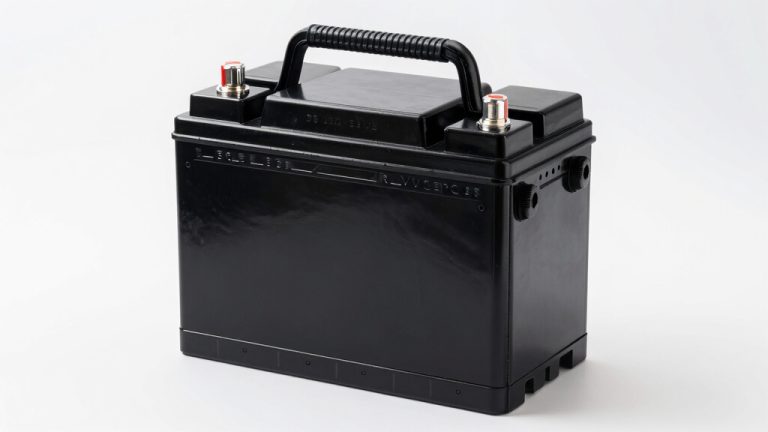
Your RV battery’s lifespan varies by type and usage.
Flooded lead-acid batteries last about 3–6 years but need regular maintenance.
AGM and gel types offer 3–8 years, are sealed, and more maintenance-free.
Lithium (LiFePO4) batteries last 10–15 years with higher cycle counts and deeper discharge tolerance.
Proper charging, avoiding deep discharges, and environmental care markedly extend battery life.
Understanding these factors helps you maximize performance and replacement timing.
You’ll find deeper insights ahead.
Key Takeaways
- Flooded lead-acid RV batteries typically last 3–6 years with regular maintenance and limited deep discharges.
- AGM RV batteries have a lifespan of about 3–7 years and require no water top-ups but benefit from voltage monitoring.
- Lithium RV batteries, especially LiFePO4, can last 10–15 years with proper charging and compatible battery management systems.
- Cycle life depends on depth of discharge; limiting DoD to 50% roughly doubles battery life across most chemistries.
- Proper charging, voltage monitoring, and maintenance significantly extend RV battery lifespan and prevent premature failure.
Types of RV Batteries and Their Lifespan
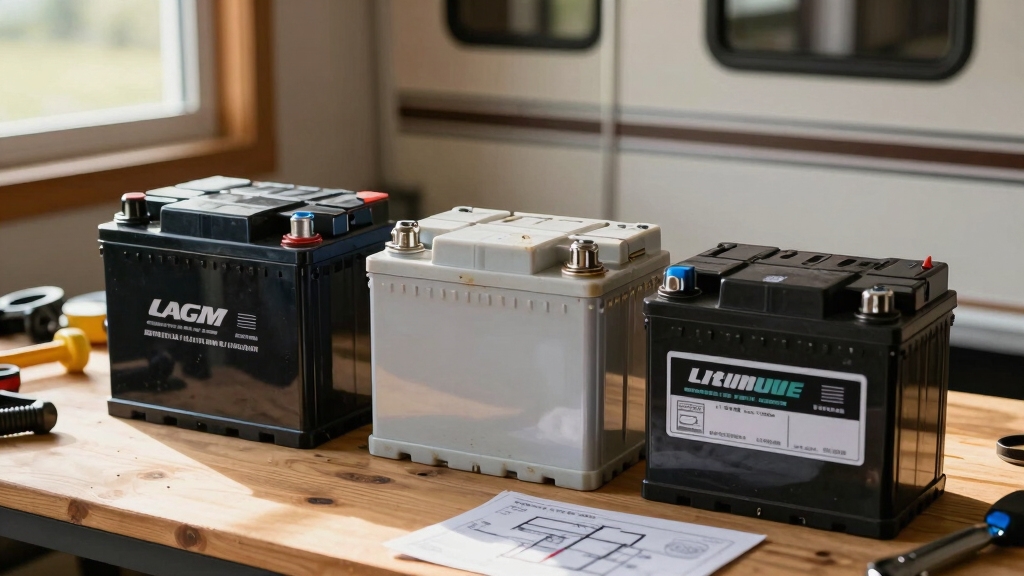
When choosing an RV battery, understanding the types available and their typical lifespans is crucial for peak performance and reliability.
Flooded lead-acid batteries last about 3–6 years with regular maintenance. They require electrolyte top-ups and careful charging to avoid sulfation. These batteries are the most common and affordable option for many RV owners. They are generally heavier and less efficient compared to newer technologies but remain popular due to cost-effectiveness.
AGM batteries, sealed and maintenance-free, offer 3–7 years lifespan. They’ve better vibration tolerance and quicker charging but remain sensitive to overcharge and temperature. Many models also feature a low self-discharge rate of around 3%, making them reliable for occasional use without frequent recharging.
Gel batteries also provide 3–6 years, excelling in deep-discharge tolerance yet demanding strict voltage control. Their sealed design prevents leaks and reduces maintenance, but improper charging can lead to reduced battery life.
Lithium Iron Phosphate (LiFePO4) batteries stand out with a lifespan of 10–15 years. They’ve high usable depth-of-discharge (80–90%) and a lightweight design, but they require compatible chargers and a battery management system.
Additionally, their high cycle life and rapid recharge capabilities make them increasingly popular among serious RV enthusiasts.
Specialized AGM variants typically last 3–8 years, varying by construction and use. Understanding these distinctions helps you select the right battery for your RV needs.
Cycle Life Comparison Among Battery Types
Cycle life can really differ from one battery type to another.
If you look at lithium-based options, they tend to stand out because of their impressive durability.
Now, depth of discharge (DoD) is something you’ll want to keep in mind too.
The deeper the discharge, the more it can cut down on cycle counts, especially with lead-acid batteries.
For example, lithium-ion batteries typically offer around 2000–4000 cycles, providing a much longer lifespan compared to traditional types.
Gel batteries, on the other hand, offer better deep-cycle performance than standard lead-acid batteries, extending their usable life in RV applications.
So, understanding these differences is key!
It’ll really help you pick the best battery for your RV, considering both your energy demands and how long you want it to last.
Cycle Lifespan Overview
Although battery lifespan depends on various factors, understanding cycle life across different RV battery types helps you make informed choices.
Flooded lead-acid batteries typically offer 200-500 cycles, lasting 2-3 years, but sulfation can reduce capacity if unused. They also require proper venting when used in RVs due to off-gassing during charging.
AGM batteries improve this with 500-800 cycles and 3-5 years lifespan, though they’re sensitive to extreme temperatures.
Gel lead-acid batteries provide 500-1000 cycles, tolerate deeper discharges, and last 3-6 years.
Lithium-ion batteries outperform lead-acid types markedly, delivering 2000-4000 cycles and a lifespan of 10-15 years, sometimes reaching 20 years with proper management. However, a charging system mismatch can shorten lithium-ion battery life if the RV was not originally equipped with this battery type.
Depth of discharge (DOD) critically impacts cycle life; limiting DOD to 50% can double the battery’s lifespan compared to 80%.
Regular use prevents sulfation in lead-acid batteries, ensuring better longevity and reliability.
Battery Type Durability
Because battery durability directly affects your RV’s energy reliability and replacement costs, understanding cycle life differences among battery types is essential. Surge protectors with high joule ratings also play a critical role in preserving battery health by preventing electrical damage from power surges.
Flooded lead-acid (FLA), AGM, and gel batteries typically offer 500 to 1,000 cycles under moderate depth of discharge (DOD) with proper maintenance. Lead-acid batteries also experience a significant reduction in life if discharged below about 50% DOD, which can limit usable capacity and cycle life. Using a surge protector with built-in fault detection can help avoid electrical faults that might otherwise shorten battery lifespan.
In contrast, lithium iron phosphate (LiFePO4) batteries deliver 2,000 to 5,000 cycles at around 80% DOD, with some high-end models claiming up to 10,000 cycles under ideal conditions. LiFePO4 also maintains usable capacity longer and tolerates deeper discharges without significant degradation, unlike lead-acid chemistries that usually limit you to 50% DOD for longevity.
Additionally, LiFePO4’s superior cycle life contributes to a longer calendar life, often exceeding 10 years, compared to 3–6 years for lead-acid types. Lithium batteries also offer greater efficiency and lower internal resistance than lead-acid options.
This cycle life advantage translates into fewer replacements and improved lifetime value for your RV battery system. Proper electrical protection, including the use of weatherproof and reliable surge protectors, further enhances the overall durability and safety of your RV’s power system.
Depth Discharge Effects
Understanding battery cycle life requires examining how depth of discharge (DoD) impacts longevity across different chemistries.
You’ll notice that lead-acid batteries degrade faster with DoD beyond 50%, while lithium batteries tolerate up to 95% DoD without significant damage. Using a battery desulfator can help restore lead-acid batteries affected by sulfation caused by deep discharges.
AGM batteries offer a middle ground, balancing cycle life and DoD flexibility.
The recommended DoD limits set by manufacturers play a crucial role in preventing premature battery damage and ensuring optimal performance.
Here’s a concise comparison:
| Battery Type | Recommended DoD | Typical Cycle Life at DoD |
|---|---|---|
| Lead-Acid | 50%-80% | 200-300 cycles |
| AGM | 50%-80% | 400-800 cycles |
| Lithium | 90%-95% | 2000+ cycles |
| Lead-Acid | Deep discharge | Sulfation, grid corrosion |
| Lithium | Deep discharge | Minimal capacity loss |
Voltage Differences and Their Impact on Battery Life
When you compare 6V and 12V RV batteries, their voltage differences directly influence their lifespan and performance.
The voltage difference between 6V and 12V RV batteries impacts both lifespan and overall performance.
A 6V battery typically lasts around 5 years with proper use, while 12V batteries average 3 to 6 years depending on maintenance. Using a battery monitor can help track battery health and prevent unexpected failures.
Voltage monitoring is essential to extend battery life and avoid damage.
Here’s what you need to focus on:
- Keep 12V batteries above 12 volts; dropping below causes irreversible damage. Recharge at 12 volts to maintain health.
- Two 6V batteries in series provide 12V at 100 Ah capacity, balancing voltage and durability.
- Lithium batteries maintain higher voltage under load, improving usable capacity and longevity compared to lead-acid types. Lithium batteries typically last 5–10 years, significantly longer than most lead-acid options.
Monitoring voltage precisely helps you prevent over-discharge, ensuring peak RV battery lifespan.
Effects of Depth of Discharge on Battery Longevity

You know, the depth of discharge (DoD) really plays a big role in how long your battery lasts.
When you go for deeper discharges, it tends to wear out the battery more quickly. But here’s the thing—different types of batteries handle this differently.
For instance, LiFePO4 cells are pretty tough; they can take on a higher DoD and still have a longer lifespan. On the other hand, lead-acid batteries don’t fare as well. They start to degrade faster if you push them to similar depths.
Generally, a lower DoD increases cycle life significantly, allowing the battery to provide more total energy over its lifetime. Proper maintenance and avoiding extreme conditions can also help prolong battery life and ensure optimal performance.
Depth of Discharge
At the core of battery longevity lies the Depth of Discharge (DoD), which measures the percentage of battery capacity used during each cycle.
Understanding DoD helps you optimize your RV battery’s lifespan by managing how deeply you discharge it. Typical DoD ranges include shallow (10–30%), moderate (~50%), and deep (80–100%).
Proper maintenance and disposal of battery-related fluids like antifreeze are critical to environmental safety and battery system health, highlighting the importance of environmentally responsible disposal.
Consider these key points:
- Lead-acid batteries typically recommend ≤50% DoD for longer life; LiFePO4 batteries tolerate deeper discharges (~80–95% DoD).
- Higher DoD drastically reduces cycle count. Shallow discharges can yield over 1,000 cycles, while deep discharges may only last 200–300 cycles. Depth of discharge is usually expressed relative to the battery’s full capacity, providing a standard way to compare usage cycles across different batteries (relative to full capacity).
- Deep discharges accelerate degradation mechanisms like sulfation in lead-acid and chemical stress in Li-ion, lowering capacity and increasing internal resistance.
Managing DoD within recommended limits is essential for maximizing your RV battery’s operational life.
Impact on Cycle Life
Managing the Depth of Discharge (DoD) directly influences your RV battery’s cycle life by determining how many charge-discharge cycles it can sustain before significant capacity loss occurs. Using a battery monitoring system can help track and control DoD effectively.
Shallow discharges of around 20-30% DoD for lead-acid batteries can extend cycle life to 500-700 cycles by minimizing plate sulfation. AGM batteries sustain 500-800 cycles at 50% DoD, while lithium variants can reach up to 15,000 cycles at 60% DoD.
Moderate discharges at 50% DoD strike a balance, delivering 300-500 cycles for lead-acid and 2,000-4,000 cycles for lithium in typical RV use. Lithium batteries typically outperform lead-acid ones due to their stable chemistry.
Conversely, frequent deep discharges above 80% DoD accelerate capacity degradation, reducing lead-acid cycles below 300 and shortening AGM lifespan.
Therefore, controlling your DoD is essential to maximizing battery longevity and maintaining reliable power on the road.
Battery Type Sensitivity
Although all batteries experience capacity loss with deeper discharges, the sensitivity to Depth of Discharge (DoD) varies markedly by battery chemistry. Understanding these differences helps you optimize cycle life for your RV battery.
- Lithium NMC batteries see a steep drop in cycles from ~2,000 at 20% DoD to only ~300 at full 100% DoD. Proper management of discharge cycles is essential to avoid premature capacity loss common in this chemistry.
- Lithium LFP batteries tolerate deeper discharges with up to ~12,000 cycles at 30% DoD and still maintain ~3,000 cycles at 100% DoD. However, even LiFePO4 chemistry is subject to degradation influenced by Depth of Discharge. These batteries also benefit from stable thermal behavior which helps maintain performance in varying conditions.
- Lead-acid batteries degrade rapidly with deep discharges, offering only 200-300 cycles at 80% DoD and suffering accelerated grid corrosion and capacity loss. They are also more vulnerable to damage when exposed to cold temperatures, which can exacerbate degradation.
Choosing a battery with chemistry suited to your typical DoD can appreciably extend your RV battery’s longevity and reliability.
Maintenance Requirements for Different Battery Types

Because each battery type has unique chemical properties and construction, their maintenance needs differ considerably.
Flooded lead-acid batteries require monthly electrolyte checks and terminal cleaning, plus quarterly equalization charges. AGM batteries need periodic voltage monitoring and terminal cleaning without water refills.
LiFePO4 demands voltage checks, compatible charging, and storing at partial charge. They also operate efficiently across a wide temperature range, making them versatile for various climates. General terminal care involves cleaning, tightening, and corrosion prevention. Proper storage conditions vary by type and affect longevity.
| Battery Type | Key Maintenance Tasks |
|---|---|
| Flooded Lead-Acid | Electrolyte level, terminal cleaning, equalization charge |
| AGM | Voltage check, terminal cleaning, dry storage |
| LiFePO4 | Voltage checks, compatible charger, partial SOC storage |
| General Terminal Care | Clean/ tighten connections, prevent corrosion |
| Storage | Full charge pre-storage, temperature control |
How Usage Patterns Affect RV Battery Life?
When it comes to your RV battery, how deeply you discharge it really plays a big role in how long it lasts. For lead-acid batteries, going below 50% depth of discharge can significantly reduce their lifespan. So, it’s something to keep in mind!
But there’s more to it than just how low you go. The power demands from your appliances also come into play. If you’re running a lot of high-demand devices, that can increase the discharge rates and how often you need to recharge. It’s like a double whammy for battery life!
To really get the most out of your battery, you’ll want to manage both the depth of discharge and the intensity of your power loads. Keep in mind that different battery types have varying charging cycles which affect their overall lifespan. By keeping an eye on these factors, you can help ensure your battery lasts as long as possible.
Depth of Discharge
Understanding Depth of Discharge (DoD) is crucial for managing your RV battery’s lifespan effectively. DoD measures how much capacity you use relative to the battery’s nominal rating. For example, discharging 100 Ah from a 200 Ah battery results in a 50% DoD.
The deeper you discharge, the fewer cycles your battery will last due to increased chemical stress. For most battery types, manufacturers specify a maximum recommended DoD to ensure optimal performance and longevity. To optimize DoD for your RV battery:
- Keep lead-acid batteries above 50% SoC (below 50% DoD) to reduce sulfation and extend life.
- LiFePO4 batteries tolerate deeper DoD (up to 80–90%) but avoid full 100% discharges.
- Design your battery bank to keep average DoD conservative, ideally 20–50% for lead-acid and 30–70% for LiFePO4, to maximize cycle life.
Additionally, maintaining batteries in mild temperature environments can significantly improve their lifespan by reducing temperature effects.
Appliance Load Impact
When you operate high-power appliances like air conditioners, microwaves, or electric ovens on your RV battery, you substantially increase the load. This causes rapid depletion and more frequent charge cycles.
Air conditioners alone can draw hundreds to over a thousand watts, drastically shortening runtime per charge. Microwaves and ovens generate high surge currents that accelerate capacity loss with repeated use. Continuous low-power loads, such as lights, fans, and control boards, add parasitic drain, reducing available amp-hours.
Frequent cycling from these usage patterns particularly stresses lead-acid batteries, which tolerate fewer cycles and accelerate degradation. Additionally, operating high-power devices without matching battery capacity or proper charging increases depth of discharge and internal temperature, further shortening battery life.
AGM and lithium batteries can last longer under these conditions due to their greater efficiency and lifespan. To maximize lifespan, balance appliance use with adequate battery sizing and efficient charging strategies.
Environmental Factors Influencing Battery Performance
Maneuvering the environmental factors that influence RV battery performance is essential for maximizing lifespan and reliability. You need to manage:
- Temperature extremes: High heat accelerates chemical degradation and self-discharge, reducing capacity and cycle life. Cold lowers available capacity and slows charging. Avoid exposing batteries outside their optimal range (~50–80°F). Additionally, batteries with higher temperature resistance support stable operation in these challenging conditions.
- Humidity and moisture: Excess moisture promotes terminal corrosion and increases internal resistance. This impairs charge efficiency and safety. Ensure dry, ventilated compartments and apply anti-corrosion treatments.
- Vibration and shock: Continuous vibration stresses internal connections and mounting hardware. This risks mechanical failures and shorts. Use secure, vibration-isolating mounts and inspect terminals regularly to maintain peak contact.
Controlling these factors preserves battery integrity, guaranteeing consistent performance throughout your RV travels.
Signs Your RV Battery Needs Replacement
Environmental conditions can only be controlled to a certain extent before battery wear becomes inevitable.
You should look for visible signs like swelling, casing cracks, or terminal corrosion, which indicate internal gas buildup or seal failure, necessitating replacement.
If your battery’s resting voltage remains below 12.4 volts after rest or drops sharply under moderate load, it signals increased internal resistance and declining capacity.
Notice if your appliances run markedly shorter between charges or if the battery fails to reach full charge despite proper charging; these are clear signs of diminished performance and capacity loss.
Additionally, erratic state-of-charge readings, inability to hold balanced voltages in multi-battery setups, or repeated rapid voltage sag during use also indicate internal degradation, meaning it’s time to replace your RV battery.
Tips for Extending the Life of Your RV Battery
Regularly following proper charging practices is essential to extending your RV battery’s lifespan. Avoid deep discharges below 50% state of charge for lead-acid batteries to prevent sulfation and capacity loss.
Use a multi-stage smart charger with bulk, absorption, and float stages to reduce overcharging and corrosion. Recharge immediately after each use to limit degradation. It is also important to match charger profile to your battery type to avoid damage.
To maintain your battery’s health, follow these tips:
- Check electrolyte levels monthly in flooded batteries and top with distilled water to prevent plate exposure.
- Clean terminals regularly, removing corrosion and applying dielectric grease for optimal conductivity.
- Store batteries fully charged in a cool, dry place, using a smart maintainer during long-term storage to prevent self-discharge.
These practices minimize capacity fade and guarantee reliable power for your RV adventures.
Choosing the Best Battery Type for Your RV Needs
When selecting the best battery type for your RV, you need to weigh factors like maintenance, lifespan, and performance characteristics carefully.
Choosing the right RV battery means balancing maintenance needs, lifespan, and overall performance carefully.
Flooded lead-acid batteries offer low upfront cost but need regular maintenance and have limited usable capacity.
AGM and Gel batteries provide maintenance-free operation and better vibration resistance, yet their cycle life remains under a decade with careful depth-of-discharge management.
Lithium iron phosphate (LiFePO4) batteries deliver superior usable capacity (80–100%), longer lifespan (8–15+ years), faster charging, and lighter weight, but require a compatible battery management system and charger. Additionally, LiFePO4 batteries are recognized for their high charge acceptance, enabling them to be charged about five times faster than most AGM batteries.
Consider your typical usage, climate, and budget: LiFePO4 excels for long-term, high-performance needs, while sealed lead-acid types suit moderate use with lower initial investment.
Avoid other lithium chemistries due to safety and longevity concerns.
Frequently Asked Questions
Can RV Batteries Be Recycled and How Is It Done?
Yes, you can recycle RV batteries.
Flooded lead-acid and AGM batteries go through mechanical pretreatment, shredding into black mass. Then metals like lead and copper get recovered via smelting or chemical leaching.
Lithium-based batteries require specialized processing due to their chemistry and safety risks.
You should discharge and safely transport them, avoiding damage.
Recycling facilities use advanced methods and safety controls to recover valuable materials while minimizing environmental impact.
What Are Common Safety Precautions When Handling RV Batteries?
When handling RV batteries, always wear gloves, safety goggles, and long sleeves to protect from acid burns.
Disconnect the negative terminal first and reconnect it last to prevent sparks. Use insulated tools and avoid metal contacts near terminals.
Never touch both terminals simultaneously to avoid electric shock. Work in well-ventilated areas to prevent gas buildup.
Remove jewelry and avoid hand-guiding batteries during lifting to reduce injury risks.
How Do Solar Panels Affect RV Battery Life?
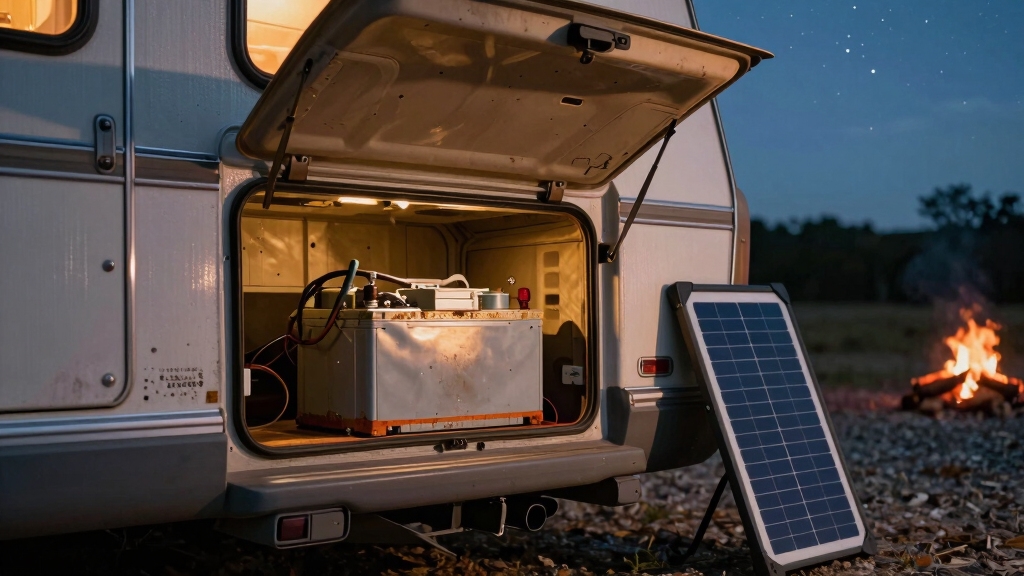
Solar panels extend your RV battery’s life by reducing deep discharges and maintaining a higher state-of-charge.
By topping off your battery daily, solar charging limits depth-of-discharge, which considerably increases cycle life, especially for LiFePO4 batteries.
Properly sized solar arrays with smart charge controllers guarantee consistent, efficient charging, prevent sulfation in lead-acid batteries, and protect against over-discharge.
This maintenance charging keeps your battery healthy and maximizes service life.
Are There Special Disposal Methods for Lithium RV Batteries?
Yes, you must follow special disposal methods for lithium RV batteries. You shouldn’t toss them in household trash or use curbside recycling.
You must never transport them without proper precautions. You need to insulate terminals, package batteries individually, and use certified recyclers or take-back programs.
Always check local regulations, inspect for damage, and store batteries safely until disposal to minimize fire and environmental risks effectively and responsibly.
What Are the Warranty Terms for Typical RV Batteries?
You’ll find typical RV battery warranties offer 6 to 12 months free replacement, with some brands extending to 3 years for non-commercial use.
After the free period, pro-rata coverage often continues for several years, depending on the manufacturer.
Warranty start dates rely on purchase or manufacture date, and proof is usually required.
Exclusions include abuse, neglect, and improper use, so always check specific terms to make certain your battery’s coverage.
Signs It’s Time to Replace Your RV Battery
Your RV battery’s lifespan dances on a delicate balance of type, care, and environment.
Like a finely tuned engine, understanding cycle life, voltage, and depth of discharge steers you toward smarter maintenance and timely replacement.
Keep an eye on performance signs and nurture your battery with proper upkeep to stretch its importance.
By choosing the right battery and tending to it diligently, you’ll power your adventures longer and stronger, making every mile count.