You can use Dexron VI fluid in transmissions that originally required Dexron III because Dexron VI is backward compatible by design.
It meets or exceeds Dexron III specifications and is licensed by GM for this purpose.
However, the formulation differences, like synthetic bases and friction modifiers, may alter shift feel or cause transient effects during changeover.
Manufacturers recommend verifying compatibility and performing a pan drop to minimize contamination risk.
Understanding these nuances helps guarantee peak performance and longevity in your transmission system.
Key Takeaways
- Dexron VI is officially backward compatible with Dexron III for GM Hydramatic transmissions and meets Dexron III specifications on paper.
- Mixing Dexron VI with residual Dexron III during pan drops is considered safe and commonly done during fluid transitions.
- Dexron VI uses synthetic base oils and improved additives, offering better thermal stability and longer fluid life than Dexron III.
- Friction modifiers and viscosity differences may alter shift feel, so adaptive controls may need relearning after switching fluids.
- Confirm vehicle manual specifies Dexron VI requirements, as compatibility does not extend to all transmissions or power steering systems.
Dexron III vs Dexron VI: Compatibility Breakdown
| Aspect | Dexron III | Dexron VI |
|---|---|---|
| Base Oils | Group II mineral oils | Synthetic premium stocks |
| Viscosity | Thicker, conventional flow | Thinner, better cold starts |
| Compatibility | Original spec for older GM units | Backward compatible with Dexron III |
| Fluid Life | Standard intervals | Up to 50% longer due to stability |
| Shift Feel | Traditional friction modifiers | Smoother with advanced additives |
| Best Use | Legacy transmissions | Modern and older Hydramatic systems |
| Switch Risks | N/A | Minor shift changes, pan drop advised |
Differences Between Dexron III and Dexron VI Formulations

Although both Dexron III and Dexron VI serve as automatic transmission fluids, their formulations differ markedly to meet evolving automotive requirements.
You’ll find Dexron III uses Group II base oils, reflecting 1990s standards. In contrast, Dexron VI employs premium synthetic base stocks for enhanced performance and improved oxidation resistance.
Dexron VI’s viscosity is notably thinner, improving low-temperature fluidity and maintaining consistent operation through superior viscosity stability.
Additive packages also differ: Dexron III focuses on anti-wear, anti-corrosion, and friction stability. Dexron VI integrates advanced additives targeting leak prevention, sludge control, and frictional enhancements for smoother gear engagement.
Performance-wise, Dexron VI offers improved thermal stability and longer fluid life. It surpasses Dexron III’s oxidative resistance and friction stability.
This makes Dexron VI ideal for newer transmissions demanding extended service life and superior protection. Meanwhile, Dexron III remains suitable for legacy systems and older vehicles.
Backward Compatibility of Dexron VI With Dexron III Systems
When you choose Dexron VI for a transmission originally designed for Dexron III, you benefit from GM’s official endorsement of backward compatibility. This guarantees safe use in Hydramatic systems and helps maintain performance over extended service intervals, similar to how Extended Performance oils are formulated for longevity.
Dexron VI’s formulation enhances thermal stability and frictional properties, ensuring smooth gear engagement and extended fluid life in older Dexron III transmissions. Field reports from vehicles like the Tahoe and Yukon confirm reliable performance even in high-mileage units after switching to Dexron VI.
You can safely mix Dexron VI with residual Dexron III during pan drops without risk. However, this compatibility is specific to GM Hydramatic transmissions; it doesn’t extend to Allison transmissions or some power steering systems. Additionally, Dexron VI includes updated additive packages which improve fluid performance compared to earlier Dexron III formulations.
Manufacturer Recommendations and Licensing Details

Since General Motors mandates Dexron VI for all warranty repairs as outlined in TSB 04-07-30-037D, you must use Dexron VI fluids to guarantee compliance and maintain warranty coverage on GM transmissions from 2006 onward.
This TSB specifies Dexron VI as the required fluid, superseding Dexron III and II in warranty contexts, although Dexron VI is backward compatible with Dexron III. Many shops report firmer shifts and possible fuel economy improvements after servicing with Dexron VI, supporting its practical advantages.
OEM licenses from ACDelco, Valvoline, and Kendall confirm adherence to GM specifications, assuring high shear stability and oxidation resistance. Choosing fluids with proper high shear stability ensures longer transmission life under stress.
Particularly, Dexron ULV is unsuitable as a substitute. While Dexron VI replaces Dexron III in GM Hydramatic transmissions, it’s excluded in certain applications like Allison transmissions.
Always verify manufacturer licensing and specific transmission model requirements to make certain proper fluid selection and warranty compliance.
Potential Risks and Considerations When Switching Fluids
Switching from Dexron III to Dexron VI requires careful consideration due to their distinct chemical formulations and performance characteristics.
You must be aware that Dexron VI’s different friction modifiers and lower viscosity can alter clutch engagement and shift feel, potentially increasing slippage risk in transmissions calibrated for Dexron III. Proper viscosity management is critical to prevent strain on transmission components during fluid transition.
Mixing fresh Dexron VI with degraded Dexron III fluid may dissolve varnish deposits, risking valve body contamination and erratic shifting. It is strongly recommended to drop the pan and change the filter to remove contaminants and avoid transmission damage.
Hydraulic pressures might also shift due to viscosity differences, affecting shift timing. Although seal compatibility issues are rare, aged elastomers could react adversely, revealing leaks.
Operationally, expect immediate changes in shift quality and possible transient pump noise until the system stabilizes.
Adaptive controls may require hundreds of miles to relearn, and temporary slip or delayed engagement may surface if deposits mobilize during the fluid conversion.
Best Practices for Transitioning From Dexron III to Dexron VI
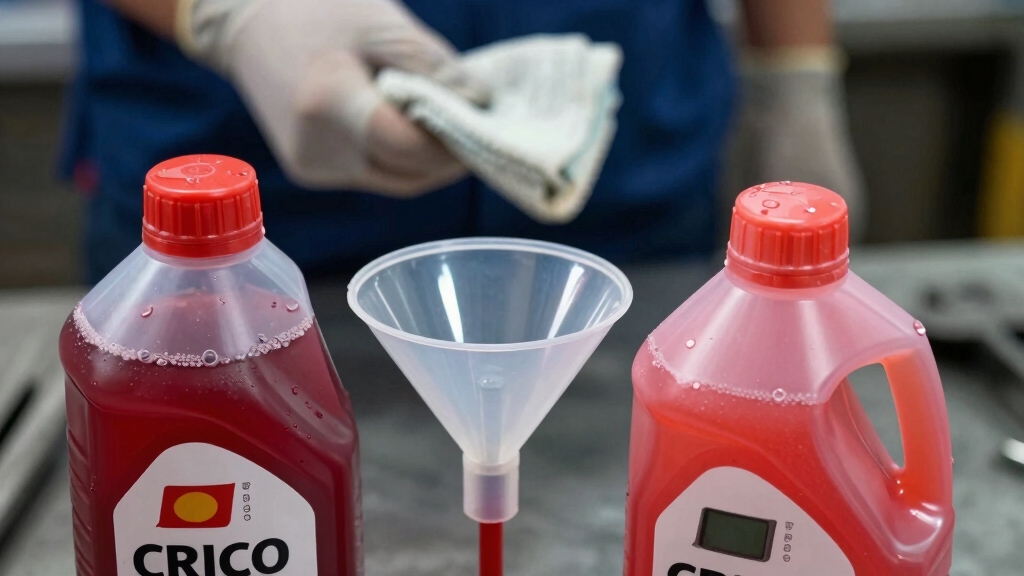
When you’re thinking about making the switch from Dexron III to Dexron VI, it’s a good idea to consider whether you really need to do a full fluid flush.
In many cases, just doing a partial pan drop will do the trick, and it helps to avoid dislodging any contaminants that might be lurking in there. Additionally, ensuring proper maintenance can prevent unexpected electrical damage from affecting vehicle systems.
Also, don’t forget to check the compatibility of the seals.
Since Dexron VI has a synthetic formulation, it can sometimes interact differently with the older seals that were designed for Dexron III.
Valvoline’s Dexron VI/Mercon LV Full Synthetic ATF is engineered to meet or exceed GM Dexron VI standards and is also back-serviceable to Dexron-II/III, making it a reliable choice for transitioning fluids with improved thermal stability.
Fluid Flush Necessity
In shifting from Dexron III to Dexron VI, performing a fluid flush isn’t always necessary and can sometimes pose risks. If the existing Dexron III fluid is degraded or contaminated, a full flush may dislodge debris, causing valve body clogs and increased clutch slippage.
Valvoline MaxLife ATF, being 100% compatible with Dexron VI fluids, can be safely mixed during this transition to maintain transmission performance. It is important to consider the manufacturer specifications to ensure proper fluid compatibility and performance.
Instead, a pan drop replacing about 5 quarts of fluid allows safe mixing of Dexron VI with residual Dexron III in torque converter and cooler lines. Monitor fluid condition closely before service.
- Avoid flush if fluid is black or contains metal particles.
- Perform pan drop as initial step for gradual fluid replacement.
- Inspect pan for wear debris indicating clutch issues.
- Multiple drain-and-fills minimize contamination mobilization.
- Confirm vehicle manual specifies Dexron VI requirements.
This approach balances effective fluid renewal with transmission longevity.
Seal Compatibility Checks
Before upgrading your transmission fluid from Dexron III to Dexron VI, you should thoroughly check seal compatibility to prevent premature leakage or failure.
Dexron VI’s synthetic base stocks and updated additives can alter seal swelling and solvency, causing older natural rubber or early nitrile seals to soften, harden, or crack over time. GM has issued a disclaimer on compatibility noting Dexron VI is not suitable for certain applications like power steering, which often use different seal materials.
It is important to understand that using fluids without proper seal compatibility can lead to system failures and increased maintenance costs.
Start by identifying seal materials via OEM data and visually inspecting for degradation like cracks or swelling. Conduct a soak test on a representative seal in Dexron VI for 24–72 hours to detect dimensional changes.
Review OEM bulletins for model-specific warnings and perform a controlled trial fill to monitor hydraulic behavior. If incompatibility risks emerge, plan to replace vulnerable seals with modern HNBR or FKM compounds designed for synthetic ATF compatibility.
Real-World Experiences and Performance Observations
Although Dexron‑VI is formulated to meet Dexron‑III specifications on paper, real-world experiences reveal nuanced performance differences when used in older transmissions originally designed for Dexron‑III.
Dexron-VI meets Dexron-III specs on paper, but real-world performance in older transmissions can differ subtly.
You’ll notice variations in shift feel and torque converter stall speeds, influenced by differing friction modifiers and viscosity profiles. Some users report improved thermal stability and smoother cold shifts, while others observe firmer clutch engagements that may feel harsher. These differences can affect hydraulic pressure and shift timing, especially in colder conditions.
The variability hinges on transmission design, wear condition, and fluid chemistry. It is critical to use the factory-specified fluids intended for the original transmission performance parameters to avoid unexpected wear.
- Slightly altered shift timing and clutch engagement
- Enhanced thermal and oxidation resistance
- Smoother cold-start behavior in some cases
- Occasional shift flare or slip reports
- No consistent mechanical harm in technician testing
These insights emphasize cautious evaluation before substituting Dexron‑VI for Dexron‑III in legacy units.
Frequently Asked Questions
Can Dexron VI Improve Fuel Efficiency Compared to Dexron III?
Yes, Dexron VI can improve your fuel efficiency compared to Dexron III.
Its ultra-low viscosity reduces frictional energy loss in your transmission, allowing smoother power transfer.
Dexron VI maintains consistent viscosity under various temperatures, preventing efficiency drops common with Dexron III.
Its synthetic base and frictional enhancements further reduce wear and energy waste, supporting more efficient gear engagements and ultimately maximizing your vehicle’s fuel economy over time.
Are Dexron III and VI Compatible With Manual Transmissions?
Dexron III and VI aren’t universally compatible with manual transmissions.
You’ll need to check your OEM’s specs because manual gearboxes often require specific fluids to protect synchronizers.
Dexron VI’s friction modifiers can affect synchro performance differently than Dexron III.
If your manual transmission explicitly allows Dexron III, Dexron VI might work chemically, but shifting feel may change.
Always follow manufacturer guidance to avoid potential wear or shifting issues.
Does Dexron VI Affect Transmission Fluid Change Intervals?
You’ll find Dexron VI can extend transmission fluid change intervals by up to 50% due to its superior oxidation resistance and thermal stability.
Its modern synthetic base stocks maintain fluid integrity longer under stress, allowing for longer service life where OEMs approve.
However, always follow your manufacturer’s guidelines since maintenance schedules depend on specific vehicle designs and operating conditions.
Deviating without confirmation may risk transmission performance or durability.
Can Dexron VI Be Used in Power Steering Systems Designed for Dexron III?
You can use Dexron VI in many power steering systems designed for Dexron III, but you should verify your vehicle’s OEM specifications first.
Dexron VI offers improved shear stability and lower viscosity, which may alter steering feel or pressure slightly.
While many users report no issues, some systems require Dexron III’s specific friction and seal compatibility.
Always consult your owner’s manual or service bulletin to confirm safe substitution and avoid potential seal or pump problems.
Is Dexron VI Safe for Use in Older Vehicles With High Mileage?
Yes, Dexron VI is safe for use in older high-mileage vehicles.
It offers superior oxidation stability, improved anti-wear protection, and optimized frictional properties, which help extend transmission life and improve shifting smoothness.
However, its thinner viscosity compared to Dexron III means you should monitor your transmission for leaks or seals’ compatibility.
Maximize Transmission Life Post-Dexron Switch
When switching from Dexron III to Dexron VI, you should tread carefully. Compatibility isn’t always cut and dried.
While Dexron VI is backward compatible with Dexron III systems, manufacturer guidelines and licensing details must guide your choice to avoid performance issues or damage.
Understanding differences in formulation and adhering to best practices guarantees a smooth changeover.
Ultimately, informed decisions will help you steer clear of costly mistakes and maintain peak transmission function.