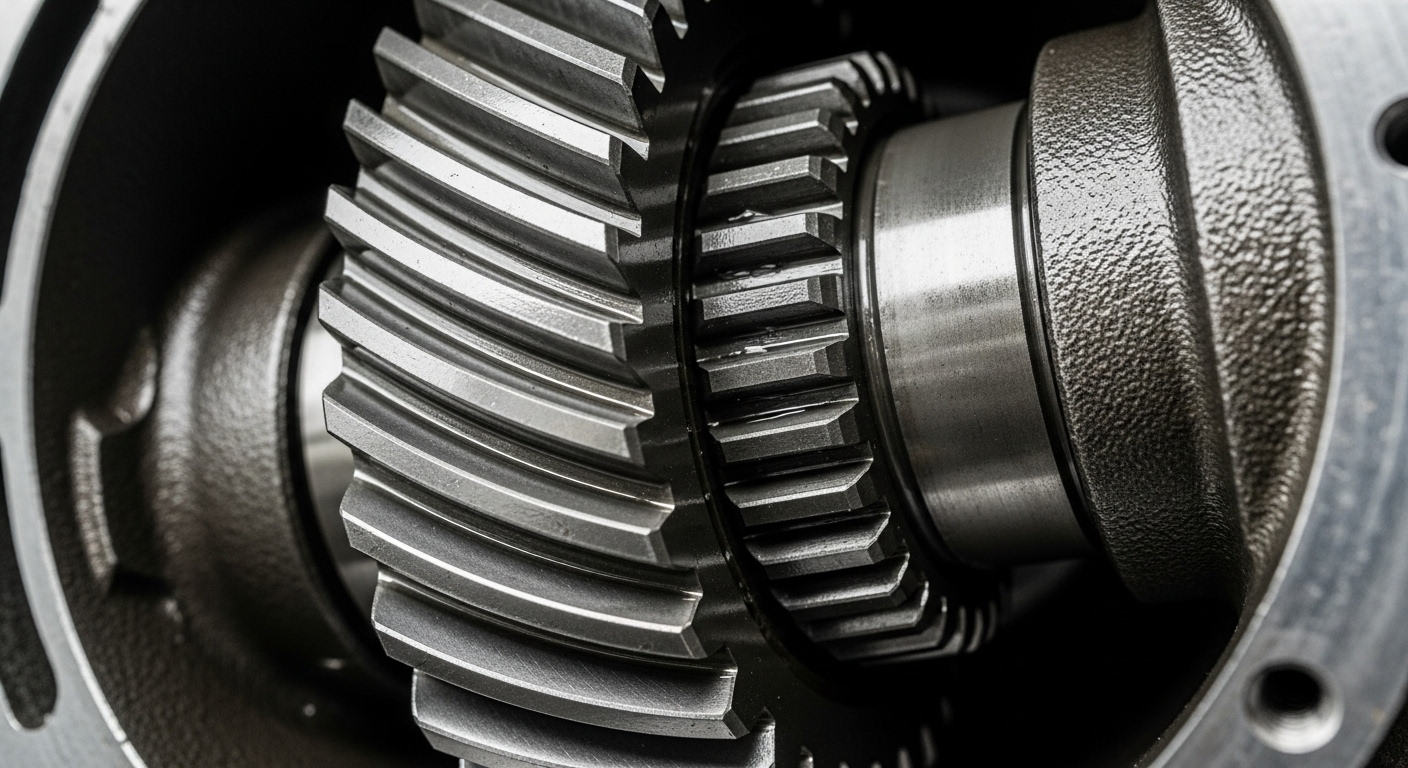
You’ll find 4.11 gears excellent for boosting low-speed torque and acceleration. This helps markedly with towing, hauling, and off-road driving.
They multiply engine torque by about 16% over common stock ratios, improving launches and climb capability while raising engine RPM at cruising speeds.
This ratio sharpens mid-range power, though it can slightly reduce top speed and fuel efficiency.
If you want a detailed look at installation, vehicle compatibility, and performance trade-offs, more insights follow.
Key Takeaways
- 4.11 gears improve acceleration by increasing wheel torque and keeping the engine in its optimal power range.
- They enhance towing and hauling by providing better low-speed torque for heavy loads and hill climbs.
- Off-road vehicles benefit from 4.11 gears with improved crawl control and torque for technical terrain.
- These gears slightly reduce top speed and fuel economy due to higher engine RPM at highway cruising.
- 4.11 gears are ideal for urban driving, performance street cars, and trucks needing strong low-end torque and quick launches.
The Meaning of a 4.11 Gear Ratio
Although gear ratios might seem complex at first, understanding a 4.11 ratio boils down to recognizing that the driveshaft must turn 4.11 times to rotate the driven ring gear once.
This ratio, expressed as 4.11:1, quantifies the final drive multiplication exclusively, ignoring transmission gear steps or tire size effects. Gear selection is often influenced by application requirements and operating conditions.
Numerically, 4.11 is considered a short or high gear ratio, meaning it produces higher engine RPM per wheel revolution compared to lower ratios like 3.25.
Small tooth count variations yield similar ratios such as 4.09 or 4.10 within the same axle family.
This notation helps you precisely calculate how engine speed scales with final drive selection, allowing you to analyze vehicle performance implications accurately without conflating it with other drivetrain variables.
A higher numerical final drive ratio like 4.11 generally increases torque multiplication but can also raise engine RPM at cruising speeds, affecting fuel economy and transmission heat generation effects on gearing.
How 4.11 Gears Multiply Torque Effectively?
Gears multiply engine torque by increasing the number of engine revolutions required to turn the wheels once. A 4.11 final drive ratio enhances this effect markedly, providing improved traction and performance in demanding conditions.
By multiplying engine torque through both transmission gear ratios and the final drive, 4.11 gears boost torque output at the wheels by about 16% over the common 3.55 stock ratio.
4.11 gears increase wheel torque by roughly 16% compared to the standard 3.55 ratio.
For example, with a 350 ft-lb engine torque and a 1st gear ratio of 2.27, 4.11 gears deliver approximately 3,265 ft-lb at the axle. This multiplication is consistent across all transmission gears, maintaining strong torque delivery in every gear.
Compared to 3.70 gears, 4.11 offers a 12% torque increase, striking a balance between aggressive torque multiplication and drivability without excessive RPM or fuel consumption penalties. This makes them especially favorable for vehicles equipped with heavy-duty tire chains that demand reliable torque in variable winter terrains.
Understanding that the final drive ratio is the number of engine turns per tire revolution helps explain why different gear ratios have such a direct impact on torque multiplication.
Ideal Vehicle Types for 4.11 Gear Ratios

When selecting a 4.11 gear ratio, you’ll find it suits a range of vehicle types that benefit from enhanced low-end torque and acceleration without sacrificing highway drivability.
This ratio balances city responsiveness and moderate top-speed capability, making it ideal for urban drivers, light-duty trucks, off-road vehicles, and performance street cars with mid-range power.
Because 4.11 gears fall into the category of short (low) gears, they provide stronger off-the-line acceleration while maintaining reasonable cruising RPMs. Choosing the right gear ratio also helps optimize vehicle control and towing stability.
| Vehicle Type | Key Benefit | Typical Use Case |
|---|---|---|
| Urban/Suburban Drivers | Improved low-speed acceleration | Stop-and-go traffic and quick merges |
| Light-Duty Trucks | Reduced downshifts, strong city drive | Delivery routes, local trades |
| Off-Road Vehicles | Better crawl control and torque | Technical trails with larger tires |
| Performance Street Cars | Enhanced 0–60 and mid-range acceleration | Street performance, daily use |
Benefits of 4.11 Gears in Towing and Hauling
Enhancing towing performance hinges on optimizing torque delivery at low speeds. A 4.11 gear ratio excels in this aspect by multiplying torque at the wheels during initial acceleration.
This improved torque multiplication reduces transmission and clutch strain when launching heavy trailers, especially on inclines or soft terrain. It ensures smoother, more controlled low-speed maneuvers.
Additionally, 4.11 gears lower transmission heat by enabling earlier upshifts and reducing continuous high-torque cycles. This extends component longevity. The durability and reliability of drivetrain components can be further enhanced by using high-performance materials designed to withstand increased loads.
They enhance engine braking capacity on descents, improving towing safety by minimizing brake fade and stabilizing trailer control under varying loads and conditions. While they improve fuel efficiency during low-speed towing by maintaining lower engine RPMs, these gears also require careful selection to match manufacturer limits.
This prevents accelerated wear on drivetrain components. Because increasing the gear ratio to 4.11 can reduce the pinion gear size, it is important to pair it with a strengthened differential like an Auburn differential to maintain durability.
Impact of 4.11 Gears on Acceleration and Performance
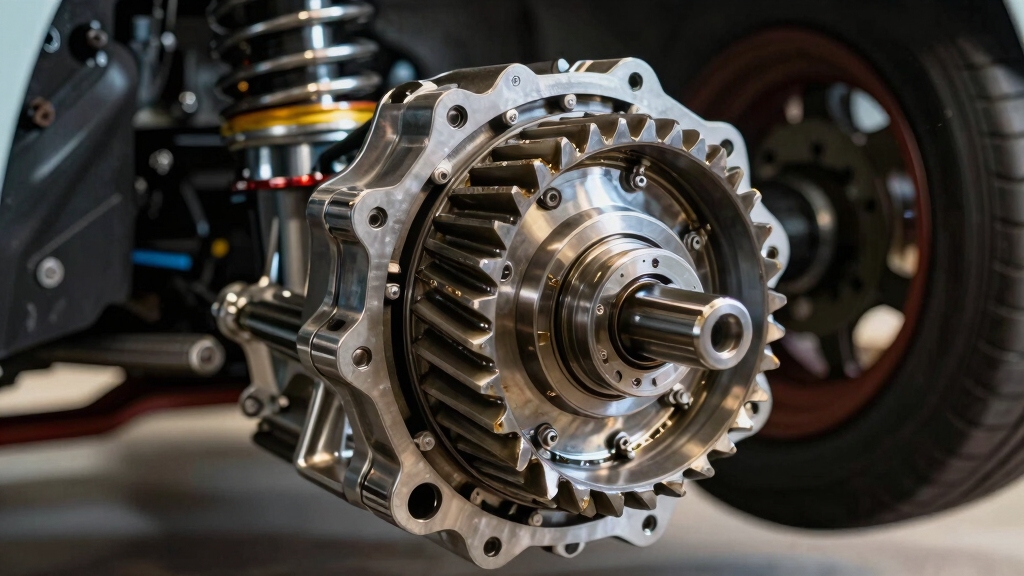
When you decide to upgrade to 4.11 gears, you’re actually multiplying the torque at the rear wheels. This boost in torque really ramps up your acceleration in a noticeable way.
It’s like giving your vehicle a little extra pep in its step! What happens here is that the power delivery shifts, allowing your engine to hit its prime RPM range more efficiently, which ultimately enhances both launch and mid-range performance.
The gear ratio of 4.11 means the driveshaft turns 4.11 times for every single rotation of the wheels, increasing torque multiplication and acceleration torque multiplier. This change also typically requires adjustments in vehicle maintenance and fuel consumption due to altered engine load characteristics.
But, here’s the catch: while you’re getting that improved acceleration, you might notice a trade-off when it comes to top speed. This is because the higher driveshaft RPM and the altered gear ratios can limit how fast you can go at full throttle.
So, yeah, it’s a bit of a balancing act between quick starts and top-end speed! The shift in performance dynamics is similar to how protective layers like paint protection film absorb impact to preserve integrity, emphasizing a trade-off between performance and durability.
Torque Multiplication Benefits
Swapping to 4.11 gears markedly boosts torque multiplication by increasing the rotational force delivered to the rear wheels. Compared to a stock 3.42 ratio, 4.11 yields a torque multiplication factor (TMF) of 1.199, meaning you gain nearly 20% more torque at the wheels before drivetrain losses.
For example, 355 ft-lbs engine torque with 3.08 gears produces 1,093 ft-lbs at the wheels, but switching to 4.11 raises that to 1,459 ft-lbs—a net gain of 365 ft-lbs. This multiplication enhances your vehicle’s low-speed thrust and accelerative response by leveraging higher engine RPMs and extending time in the powerband.
It is important to consider that a TMF greater than 1:1 indicates added drivetrain stress, which can increase the likelihood of component wear or failure if not properly managed added drivetrain stress.
Despite increased drivetrain resistance, 4.11 gears deliver superior torque-per-dollar efficiency versus engine mods, optimizing torque output effectively without altering the engine itself.
However, drivers should be aware that increased engine RPMs and drivetrain load may also contribute to transmission delayed shifting, especially if the transmission fluid and components are not properly maintained.
Acceleration Versus Top Speed
4.11 gears markedly sharpen your vehicle’s acceleration by increasing wheel torque for any given engine output. This shortens 0–60 mph and quarter-mile times compared to lower numerical ratios.
By raising engine RPM at launch, they keep the engine in its prime torque and horsepower range.
However, this gearing also affects top speed and cruising efficiency. Consider these core impacts:
Improved initial thrust and midrange acceleration by maintaining higher RPM within power bands.
Faster shift intervals enable quicker real-world launches but increase drivetrain stress.
Slightly reduced top speed if the engine hits redline prematurely due to higher axle ratio.
Elevated highway RPM raises engine noise and decreases fuel economy during steady cruising.
Balancing acceleration gains against top-speed and efficiency trade-offs is essential when selecting 4.11 gears.
Using higher numerical gears like 4.11 increases drivetrain stress due to elevated torque loads and rotational speeds.
Fuel Economy Considerations With 4.11 Ratios
Although higher numeric gear ratios like 4.11 increase engine RPM at highway speeds, you should carefully weigh their impact on fuel economy. Elevated cruise RPM generally leads to greater frictional and pumping losses.
For example, a 1999 Tacoma with 33″ tires and a 4.11 gear ratio reported around 13–14 mpg, which was slightly lower than after switching to 4.56 gears due to RPM differences. When powering an RV or similar vehicle, selecting the right power output requirements is critical to balancing performance and fuel efficiency.
Higher numeric gear ratios like 4.11 raise engine RPM, affecting fuel economy through increased friction and pumping losses.
The 4.11 ratio typically raises cruise RPM by 100–300, increasing fuel consumption. This is especially true during light-load highway cruising, where efficiency drops 1–4 mpg compared to taller gears.
However, efficient overdrive transmissions can partially offset this penalty by lowering effective cruise RPM. Diesel engines may experience less mpg loss due to broader torque curves, while gasoline engines are more sensitive.
Tire size further modulates RPM: larger tires reduce the penalty, while smaller ones amplify it. Urban driving often shows minimal or neutral impact.
Ultimately, evaluating fuel economy with 4.11 requires considering transmission type, tire diameter, load, and driving conditions for accurate assessment. Real-world reports indicate that re-gearing benefits can be significant when tire size increases substantially.
Comparing 4.11 Gears to Other Common Gear Ratios
When you take a look at 4.11 gears and compare them to other common gear ratios, it’s pretty clear that they give you a noticeable boost in low-end torque.
This means better acceleration and improved towing capacity, which is great if you need that extra power.
But hold on a sec! While that extra torque is awesome, it does come with a downside.
You’ll find that your engine RPMs will be higher when you’re cruising.
And you know what that means—your fuel economy might take a hit.
So, it’s really important to weigh these pros and cons carefully.
Ultimately, figuring out the right gear ratio for you depends on what you’re looking for in terms of performance and efficiency.
Are you after that quick acceleration, or is fuel economy more your jam?
It’s all about finding that sweet spot for your needs!
Keep in mind that higher engine RPMs can lead to reduced fuel economy due to increased fuel consumption at cruising speeds.
Torque Differences
Understanding torque differences among final drive ratios is key to optimizing vehicle performance for specific tasks. The 4.11 gear multiplies engine torque by 4.11 at the driveshaft, providing roughly 16% more torque at the wheels compared to a 3.55 ratio.
This makes it a mid-short “pulling” gear, offering a balance between torque output and drivability.
Key torque characteristics of 4.11 gears include:
Higher low-speed tractive force, improving launches and towing starts. This gearing helps maintain proper driveline angles which is critical to prevent vibrations and premature wear.
Less wheel torque than 4.44 but more than 3.70 and 3.55 ratios.
Reduced engine load at low speeds, aiding transmission and drivetrain longevity.
Enhanced midrange throttle response due to higher RPMs in gear.
Because the torque converter stall speed is influenced by the vehicle weight and gear ratio, selecting 4.11 gears often requires consideration of the vehicle’s curb weight to achieve optimal stall characteristics.
Choosing 4.11 gears optimizes torque for mixed towing, off-road, and daily driving scenarios.
Fuel Economy Impact
The 4.11 gear ratio enhances torque delivery but also influences fuel economy, especially compared to ratios like 3.73 and 3.55.
At highway speeds, 4.11 gears increase engine RPM, which raises fuel consumption relative to 3.73, known for operating at lower RPM and better MPG.
For mixed driving, vehicles with 4.11 gears achieve around 21.5 MPG, while highway-focused use can reach 25 MPG, slightly less efficient than 3.73 setups.
Compared to stock 3.55, 4.11 multiplies torque about 16% more but sacrifices some fuel economy.
Higher numerical ratios like 4.11 suit towing and improved acceleration but trade off highway efficiency.
Your choice depends on prioritizing performance over peak fuel savings, as 4.11 balances torque gains with an acceptable, though reduced, fuel economy profile.
Applications of 4.11 Gears in Medium-Duty Trucks
Consider how a 4.11 gear ratio enhances medium-duty truck performance by increasing torque multiplication at the wheels. This markedly improves low-speed pulling power and grade-holding capacity.
A 4.11 gear ratio boosts torque at the wheels, enhancing low-speed pulling power and hill-holding ability.
This makes it ideal for applications demanding strong launch torque and sustained hill climbs under load. You’ll find 4.11 gears particularly advantageous in vocations with frequent heavy starts and low average speeds, such as refuse or dump trucks.
They are also beneficial in towing-intensive operations requiring improved startability and safety. Routes with significant elevation changes where hill-climb capability is critical will see enhanced performance with this gear ratio.
Trucks equipped with PTO-driven equipment benefit from increased axle torque during low-speed, high-load tasks. Selecting 4.11 gears aligns well with powertrains designed for torque at lower rpm and transmissions offering overdrive to balance cruising efficiency.
Installation and Maintenance Tips for 4.11 Gear Sets
When it comes to installing a 4.11 gear set, it’s super important to prioritize professional installation. This way, you can ensure that the gear mesh and preload settings are just right.
Trust me, getting those settings correct can make all the difference. Before beginning, always verify availability of necessary tools to avoid delays and ensure a smooth installation process.
And don’t forget about regular maintenance! Checking for backlash and inspecting the bearings regularly can really help extend the life of your gears. Plus, it can prevent any premature failures that you definitely want to avoid.
Also, always make sure to source high-quality components and installation kits. Sticking to OEM specifications is key to maintaining reliability and performance. It’s worth it to invest in quality!
Professional Installation Importance
When installing 4.11 gear sets, ensuring precise pinion depth and backlash control directly impacts gear longevity and noise levels. You need a professional installer with ASE certification or manufacturer training to guarantee adherence to exact ring and pinion procedures.
Proper setup requires specialized tools like dial indicators and torque wrenches for accurate measurements and preload adjustments. Professionals also verify carrier compatibility to prevent vibration and premature failure.
It’s important to note that these gears are constructed from forged 8620 triple alloy steel, providing premium durability and strength for street and track use.
Key benefits of professional installation include:
- Precise shim or crush-sleeve calculations for correct pinion depth and backlash
- Accurate bearing preload and torqueing to prevent early bearing damage
- Iterative gear pattern checks for best tooth contact and reduced noise
- Written warranties and transparent procedure quotes ensuring accountability
Choosing a qualified shop safeguards your investment and preserves gear performance.
Gear Set Maintenance Practices
Professional installation sets the foundation for peak gear performance, but maintaining the 4.11 gear set demands ongoing attention to bearing preload, backlash, and gear tooth pattern.
You must verify pinion bearing preload using a calibrated torque or thrust tool to prevent premature failure and noise. Measure backlash with a dial indicator, ensuring it matches manufacturer specs precisely.
Inspect carrier bearings and adjust shims to maintain correct preload and consistent tooth contact. Apply gear marking compound to confirm an optimal tooth pattern centered on the face, adjusting pinion depth or shims as needed.
Tighten ring gear bolts to specified torque sequences to avoid distortion. Use only OEM-equivalent new bearings and replace seals during reassembly.
Finally, monitor lubrication levels with proper synthetic GL-5 oils and change intervals to sustain durability and performance.
Sourcing Quality Components
Make certain compatibility by meticulously verifying axle housing and carrier types against the specified 4.11 gear set to prevent fitment errors.
Confirm ring gear diameter and tooth count to match your axle model precisely, and always clean differential housing thoroughly of grease and metal shavings before installation.
Cross-check OEM and aftermarket part specs, focusing on material treatments like forging or nitriding for durability.
Always source complete install kits to minimize rework, ensuring you have bearings, shims, seals, and bolts in one package.
Prefer trusted brands offering detailed installation guides and tech support.
Key sourcing tips:
- Use manufacturer fitment charts and SKU listings to verify compatibility.
- Inspect components for machining defects or shipping damage upon receipt.
- Acquire proper measurement tools: dial indicator, micrometer, torque wrench.
Follow strict installation sequences, documenting shim locations and adjusting preload to spec.
Cost Efficiency of Upgrading to 4.11 Gears
Although upgrading to 4.11 gears involves upfront expenses ranging from $1,000 to $2,000 for a complete kit plus labor, you can achieve cost efficiency by considering aftermarket options and DIY installation to reduce costs by up to 50%.
Upgrading to 4.11 gears can cost $1,000-$2,000, but aftermarket parts and DIY can cut expenses by half.
Aftermarket gear sets cost 30-50% less than OEM, with bulk purchases lowering prices further to around $350 per axle. By installing gears yourself, you save $500-$1,000 in labor fees.
Factor in differential rebuild kits ($200-$400) and occasional synthetic gear oil changes ($100-$200) for maintenance.
While fuel economy slightly decreases at highway speeds, enhanced performance and towing capacity increase vehicle utility and resale value, justifying the initial investment.
Frequently Asked Questions
Can 4.11 Gears Be Used Effectively in Electric Vehicles?
Yes, you can use 4.11 gears effectively in electric vehicles, especially when you prioritize low-speed torque and acceleration.
They boost wheel torque, improving launch and hill-climb performance, which is great for heavier EVs or towing.
However, you’ll need to manage higher motor RPMs at cruising speeds to avoid efficiency losses.
Integrating a multi-speed transmission or advanced motor control can help balance performance with range and durability concerns.
How Do 4.11 Gears Affect Drivetrain Noise Levels?
Imagine your drivetrain as a finely tuned orchestra; 4.11 gears crank up the tempo but also amplify discordant notes.
You’ll notice increased noise, vibration, and harshness because higher gear ratios spin faster and load components harder. This elevates gear mesh sounds and resonant booms at highway speeds.
Any slight misalignment or wear becomes more pronounced, so precise setup and quality parts are essential to keep your drivetrain’s “music” harmonious rather than a harsh drone.
Are 4.11 Gears Compatible With All Tire Sizes?
No, 4.11 gears aren’t compatible with all tire sizes without adjustments. Larger tires lower effective gear ratio, reducing RPM gains, while smaller tires increase it.
You must verify tire clearance and fitment, and consider speedometer recalibration due to altered tire circumference and gear ratios.
Use gear-to-tire calculators to make certain your setup maintains desired performance and drivability.
Mechanical compatibility depends on differential and axle specs, not tire size alone.
What Are the Warranty Implications of Installing 4.11 Gears?
Installing 4.11 gears often voids your manufacturer drivetrain warranty if failures link to the modification.
Dealers typically deny coverage when aftermarket gear-induced wear or torque increases cause damage.
To protect your warranty, reinstall original gears before dealer visits or get pre-approval from the manufacturer.
Using OEM or certified gears and documenting installation helps defend claims, but you bear the burden of proof if issues arise after the swap.
Do 4.11 Gears Require Changes to Braking Systems?
You don’t automatically need to overhaul your brakes just because you slap on 4.11 gears.
However, if you ramp up towing, haul heavy loads, or push your vehicle hard, you’ll want to upgrade to bigger rotors, tougher pads, and better cooling.
The gears increase thermal stress during braking, so you must consider fluid with a higher boiling point and recalibrate ABS or traction control systems to keep everything precise and safe.
Next Steps for 4.11 Gear Performance
If you’re looking to boost torque and improve towing without sacrificing too much efficiency, 4.11 gears hit a sweet spot. They’re ideal for medium-duty trucks and heavy haulers, giving you reliable acceleration and power.
While they demand proper installation and upkeep, the upgrade often pays off in performance and cost. So, if torque matters, 4.11 gears are a smart, calculated choice.