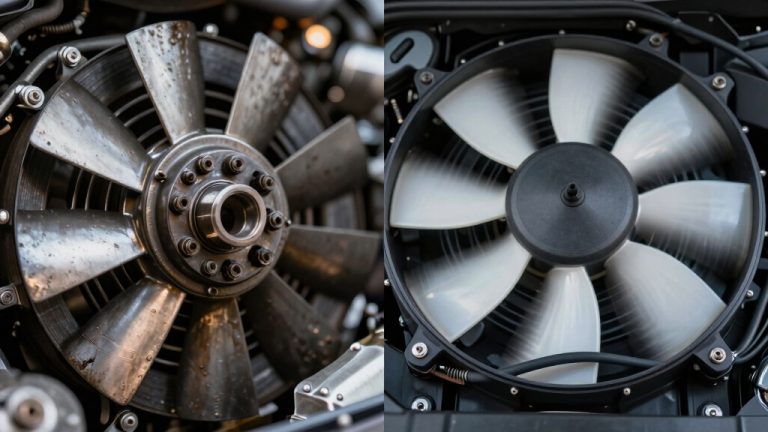
Wheel balancing evenly distributes mass around your tires to prevent vibrations at high speeds.
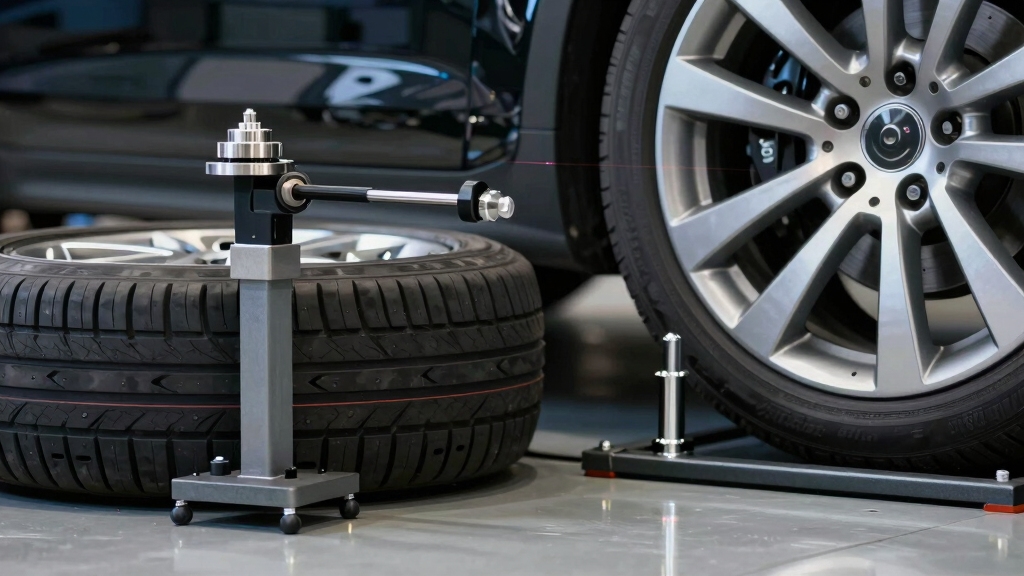
Wheel alignment adjusts your tires’ angles to ensure proper contact with the road, improving handling and preventing uneven wear.
You’ll notice balancing issues as steering wheel vibrations and thumping sounds.
Alignment problems cause your vehicle to pull or the steering wheel to sit crooked.
Both are essential for safety, tire life, and fuel efficiency. Understanding their differences will help you maintain peak vehicle performance.
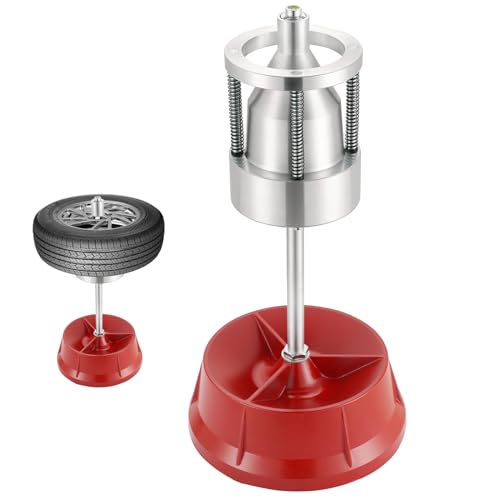
- Portable Bubble Wheel Balancer: Our wheel balancer is designed to balance tires accurately. Compact...
- Build to Last: The base of our tire balancer is made of aluminum alloy ,finished with rust-resistant...
- Easy-to-use Tire Balancer: Easily balance wheels with hubs from 1-1/2" to 4" diameter, the wheel...
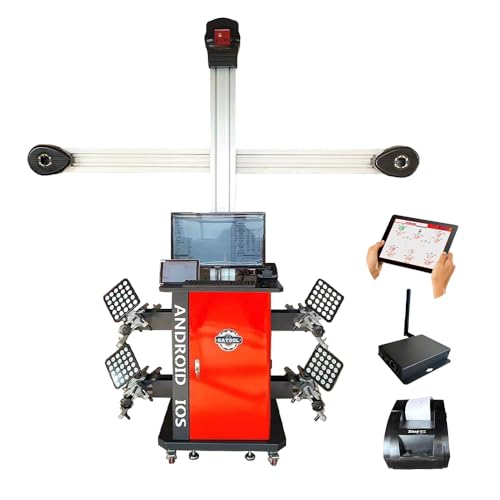
- The KT-AV9 3D Wheel Aligner incorporates the latest Android-based 3D camera measurement technology.
- It is compatible with Apple iOS, allowing tablets and smartphones to function as display terminals.
- It streamlines the alignment operation for significant time savings.
Key Takeaways
- Wheel balancing corrects uneven mass distribution around the tire, preventing vibrations at high speeds.
- Wheel alignment adjusts wheel angles (camber, caster, toe) for proper directional control and even tire wear.
- Balancing addresses vibrations felt in the steering wheel; alignment corrects vehicle pulling or crooked steering.
- Dynamic balancing uses computerized machines for precise weight placement; alignment uses 3D systems to measure wheel angles.
- Combined balancing and alignment improve ride quality, extend tire life, and enhance safety and fuel efficiency.
Wheel Balance vs Alignment: Side-by-Side Comparison
| Feature | Wheel Balancing | Wheel Alignment |
|---|---|---|
| Main purpose | Corrects uneven weight distribution in the tire/wheel | Corrects wheel angles for proper road contact |
| What you feel | Steering wheel vibrations, seat/floor shaking at speed | Car pulls left/right, steering wheel off-center |
| What it prevents | High-speed vibration, premature wear from bouncing | Uneven tire wear, wandering, poor straight-line tracking |
| What gets adjusted | Adds small counterweights to the rim | Adjusts camber, caster, toe via suspension geometry |
| Typical “when” | After new tires, rotations, vibration complaints | After potholes/curb hits, suspension work, pulling |
| Best result | Smoother ride, less shake, better comfort | Straighter driving, better handling, longer tire life |
| Can you need both? | Yes—vibration + uneven wear often means balance and alignment | Yes—alignment won’t fix a wheel that’s out of balance |
What Is Wheel Balancing?
What exactly does wheel balancing involve? It equalizes the mass distribution in the tire and wheel assembly around the axle, ensuring no heavier sections exist.
You’ll counteract uneven weight caused by manufacturing imperfections, damage, or debris like stones or mud. To balance, you mount the assembly on a balancer spindle, input wheel dimensions, and spin it at high speed. Proper wheel balancing complements other maintenance tasks such as using high-quality filters to protect your vehicle.
Sensors detect vibrations, showing imbalance amount and locations for weight placement. You then apply counterweights opposite heavy spots, measured in ounces.
There are static and dynamic balancing types: static aligns the center of mass on the rotation axis, while dynamic corrects imbalances on inner and outer planes. Regular balancing is recommended every 12,000 miles to maintain optimal performance and prevent premature tire wear.
After applying weights, you perform a check spin to confirm zero imbalance, ensuring smoother rotation, reduced vibrations, and extended tire life.
What Is Wheel Alignment?
How do you ensure your vehicle’s wheels maintain proper angles for optimal performance?
Wheel alignment adjusts wheel angles—camber, caster, and toe—to manufacturer specifications. This ensures wheels remain perpendicular to the ground and parallel to each other.
Among the three pivotal angles adjusted, caster refers to the forward or backward tilt of the steering axis, which affects balance and stability. Modern vehicles often require specialized batteries like the Everstart Maxx or Platinum to support advanced electronic systems that can influence alignment sensors.
Wheel alignment fine-tunes camber, caster, and toe, keeping wheels perpendicular and parallel for optimal vehicle performance.
This mechanical procedure enhances steering stability, promotes even tire wear, and improves fuel efficiency by optimizing tire-road contact through suspension adjustments.
Alignment types include two-wheel (front-end) for solid rear axles and four-wheel for independent suspensions. The latter is critical for four-wheel-drive vehicles.
Technicians measure the thrust line first, then adjust rear camber and toe, followed by front caster, camber, and toe. Proper alignment prevents uneven tire wear, reduces suspension strain, and ensures straight travel without pulling.
It’s a precise, essential maintenance task after impacts or suspension wear, distinctly different from wheel balancing.
How To Tell If Your Vehicle Needs Wheel Balancing Or Wheel Alignment?
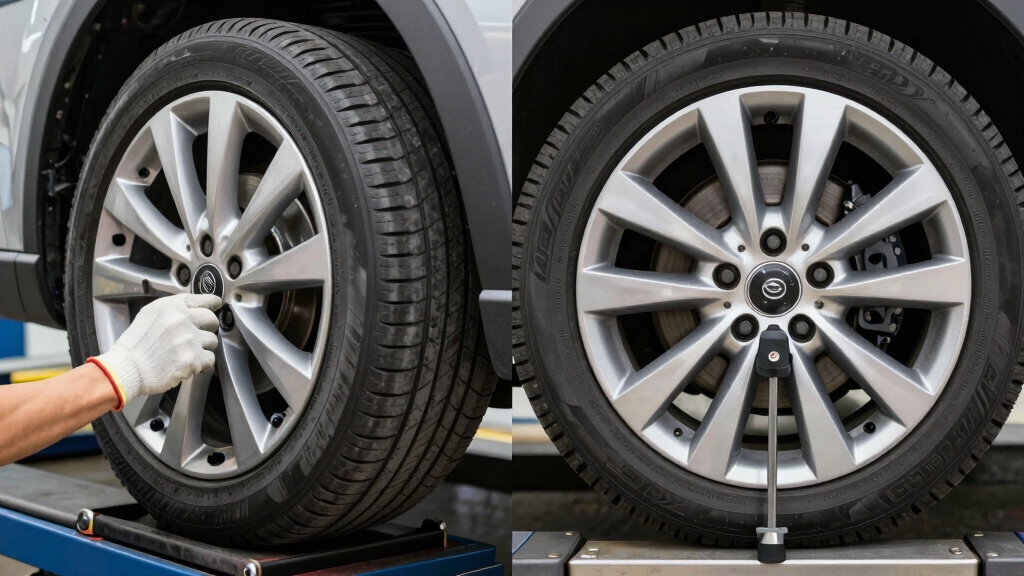
When should you consider wheel balancing versus wheel alignment? If you notice vibration in the steering wheel at highway speeds or hear a thump-thump sound varying with speed, your wheels likely need balancing. Proper maintenance intervals and regular checks can help extend the life of your tires and suspension components by preventing issues related to wheel imbalance.
Correcting these imbalances involves using small metal weights to ensure smooth rotation and prevent damaging vibrations.
Conversely, if your vehicle pulls to one side or the steering wheel sits crooked, alignment is the issue.
Key indicators to watch for include:
Wheel balancing: Steering wheel shakes at 65-75 mph; vibration in seat or floorboard; uneven, fast tread wear.
Wheel alignment: Vehicle drifts left or right; off-center steering wheel; squealing tires during turns.
Causes: Potholes or curb impacts can dislodge weights or misalign wheels. New tires require balancing; accidents often necessitate alignment.
Recognizing these signs helps you address the specific service your vehicle needs efficiently.
Key Differences Between Wheel Balancing And Wheel Alignment
So, let’s break it down a bit. Wheel balancing is all about correcting uneven weight distribution in your tires. When your wheels aren’t balanced, you might feel vibrations when you drive, which can be pretty annoying, right?
On the other hand, wheel alignment is focused on adjusting the angles of your wheels to match what the manufacturer recommends. This ensures that your tires are making proper contact with the road. Regular alignment maximizes tire life by maintaining proper wheel angles. Both wheel balancing and alignment contribute to preventing premature tire wear and improving vehicle safety.
Now, the process for each is quite different. For balancing, technicians use specialized machines to find any weight imbalances. If they find any, they’ll add counterweights to balance things out. In contrast, alignment involves tweaking the suspension components to set the camber, toe, and caster angles just right.
Both of these services play a crucial role in how your vehicle handles and how long your tires last. However, it’s important to remember that they address different mechanical issues. Keeping both in check is essential for your vehicle’s optimal performance!
Purpose And Function
A clear understanding of wheel balancing and wheel alignment reveals their distinct purposes and functions in vehicle maintenance.
Wheel balancing corrects uneven weight distribution around the tire and wheel assembly, eliminating vibrations and minimizing tire bounce for a smoother ride. It uses a specialized machine to measure weight distribution and applies small weights to the rim to correct any imbalance, ensuring weight distribution accuracy.
Proper maintenance also helps prevent issues like premature tire wear caused by imbalance.
Wheel alignment, on the other hand, adjusts wheel angles to ensure proper contact with the road, enhancing directional accuracy and vehicle handling.
Key purposes include:
- Balancing targets rotational stability by equalizing tire-wheel mass, preventing dynamic wobble and premature tire wear.
- Alignment adjusts suspension geometry to maintain perpendicular and parallel wheel positioning, enabling straight-line tracking.
- Both improve tire lifespan and driver comfort but address different mechanical issues. Balancing focuses on weight distribution, alignment on wheel angle settings.
Understanding these functions helps you maintain optimal vehicle performance and safety.
Tools And Techniques
How do the tools and techniques for wheel balancing and alignment differ in practice?
For alignment, you use advanced 3D camera-based systems like Katool AV533 or AUTOOL XC503, which measure toe-in, camber, and track width with minimal vehicle movement. These state-of-the-art machines provide precision, reliability, and performance, essential traits for quality service.
These systems often require a vehicle lift or rack and employ touchless or laser-guided methods for precise multi-angle analysis. Accurate alignment also ensures optimal tire wear and fuel efficiency, which can indirectly affect engine performance over time.
Balancing, you on the other hand, involve spinning the wheel off the vehicle on dynamic balancers that detect weight imbalances on both inner and outer sides. You attach corrective weights based on computer-calculated imbalance locations.
This process helps prevent vibrations that could lead to premature wear of suspension components and tires.
Dynamic balancers cost more but offer faster, more accurate results, while static or manual balancers rely on gravity and are simpler.
Alignment tools prioritize multi-point measurement with vehicle-mounted targets; balancing tools focus on rotation speed and vibration analysis on individual wheels. Proper balancing and alignment are both critical for maintaining vehicle longevity and smooth driving experience.
Impact On Vehicle
Why does wheel balancing matter as much as alignment for your vehicle’s performance?
Balancing corrects uneven weight distribution, eliminating vibrations that can cause premature tire wear and suspension strain.
Alignment adjusts wheel angles to ensure proper road contact, improving handling, steering response, and fuel efficiency. Proper alignment helps ensure straight tracking.
Both impact your vehicle differently but complement each other for optimal safety and performance:
Balancing targets high-speed shaking and reduces vibrations felt in the steering wheel or floorboard.
Alignment prevents pulling to one side and off-center steering, promoting even tread wear.
Together, they extend tire lifespan, protect suspension components, and enhance ride smoothness.
Ignoring either can lead to costly repairs, decreased fuel economy, and compromised driving safety.
Regular maintenance of both is essential for precise, comfortable, and efficient vehicle operation.
How Wheel Balancing Improves Ride Smoothness And Tire Life?
What makes your ride smoother and extends tire life substantially? Proper wheel balancing does.
By correcting both vertical and lateral imbalances through dynamic weighting, balancing ensures even tire contact with the road. It reduces vibrations felt in the steering wheel or seat, which are caused by uneven weight distribution. This also minimizes strain on suspension components and limits bounce memory in the 5-30 Hz range, enhancing ride comfort, especially at highway speeds.
Additionally, balancing prevents uneven tire wear by distributing weight uniformly across the tire surface. It offsets rim runout and firmness variations. Regular balancing combined with tire rotation prolongs tire lifespan and reduces premature replacements.
Furthermore, balanced wheels improve high-speed tire uniformity, ensuring consistent traction and stability. Performing regular maintenance, including cleaning vehicle sensors, can also contribute to overall driving safety and tire performance.
Ultimately, wheel balancing not only delivers a smoother ride but also maximizes tire durability and vehicle component longevity.
How Wheel Alignment Enhances Handling And Keeps Your Car Straight?
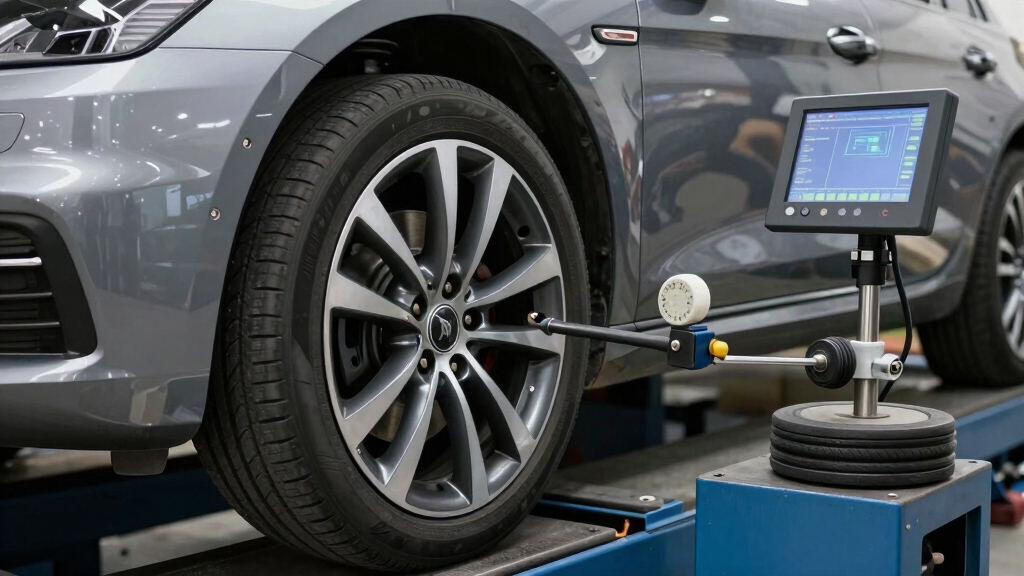
While wheel balancing smooths out vibrations and extends tire life, wheel alignment plays a key role in ensuring your vehicle handles precisely and tracks straight.
Proper alignment adjusts camber, caster, and toe angles to improve steering precision, preventing your car from pulling or wandering. This precise setup enhances vehicle stability at all speeds, especially on highways, and boosts handling responsiveness by optimizing tire contact and reducing steering effort. Regular alignment is as crucial as maintaining engine specifications to promote overall vehicle performance.
Regular alignment checks help catch issues early, preventing severe malfunctions and costly repairs due to misalignment.
Key benefits of correct wheel alignment include:
- Enhanced steering accuracy and predictable return-to-center behavior
- Stable, straight-line tracking without drift or pull
- Improved handling responsiveness for safer maneuvering and braking
When To Get Wheel Balancing And Alignment Together?
You know, it’s a good idea to get wheel balancing and alignment done together whenever you start to feel those annoying vibrations or notice uneven tire wear.
Oh, and if you’ve recently hit a pothole or a curb, that’s definitely a sign to check both.
It really makes sense to combine these services when you’re getting your tires rotated or installing new ones.
Doing it all at once helps ensure that your vehicle handles smoothly and can prevent any premature wear on your tires.
Plus, timing both together not only saves you time but also helps keep your vehicle’s suspension in good shape.
Regular checks after impacts or handling changes are important because proper alignment ensures optimal tire contact.
Signs To Check
When should you get wheel balancing and alignment done together? You should consider both services if you notice these key signs. Ignoring them can worsen handling and tire wear.
Vehicle pulling: If your car drifts left or right on straight roads, especially after hitting potholes or curbs, it signals alignment or balance issues needing combined correction. These symptoms can also be linked to problems caused by a faulty catalytic converter, which may affect engine performance and handling.
Steering wheel vibrations: Feeling a shaking or thumping in the steering wheel at certain speeds usually points to front wheel imbalance and possible misalignment.
Uneven tire wear: Irregular tread wear patterns, front or rear, indicate imbalance or misalignment that shortens tire life and requires simultaneous balancing and alignment. Regular alignments maintain optimal handling and tire wear.
Checking these signs promptly ensures safer handling, extends tire life, and prevents costly repairs.
Service Timing Tips
How often should you schedule wheel balancing and alignment together to maintain optimal vehicle performance? Ideally, get both services during your annual tire inspection or every 6,000 miles, aligning with manufacturer recommendations.
You should balance wheels every 5,000 to 6,000 miles or with every tire rotation. Alignment checks should occur at least twice yearly. Always balance new tires before installation and perform an alignment check simultaneously. Regular maintenance of tires with proper balancing and alignment supports treadwear durability and consistent handling.
After road impacts like potholes, curbs, or accidents, have both services done to prevent uneven wear and handling issues. Balancing adds mass to compensate for the uneven distribution and restore equilibrium in the tire and rim unit. When rotating tires, balance first, then align to detect and correct any imbalances transferred between axles.
Following this timing ensures balanced tires and precise alignment, optimizing ride quality, extending tire life, and maintaining vehicle safety.
Combined Service Benefits
Scheduling wheel balancing and alignment together during routine maintenance offers significant advantages beyond just timing convenience.
When you combine these services, you maximize tire longevity by preventing uneven wear. Balancing ensures even weight distribution while alignment corrects directional drift. This synergy reduces premature tire replacement. Additionally, the combined service enhances fuel efficiency by lowering rolling resistance and engine strain, which translates to savings at the pump.
You’ll also experience improved driving comfort and safety, as vibrations and steering pull are eliminated. This provides stable handling and reduces fatigue. Regular alignment checks also aid in early detection of suspension issues, helping maintain optimal vehicle performance through routine maintenance.
- Extends tire life up to 25% through uniform tread wear
- Improves fuel economy by reducing drag and engine load
- Boosts safety with better steering response and reduced suspension wear
Tips To Maintain Proper Wheel Balance And Alignment For Longer Tire Life
Why should you prioritize maintaining proper wheel balance and alignment?
Proper maintenance ensures even tire wear, maximizes tire life, and improves fuel efficiency.
To achieve this, balance your tires during seasonal rotations and align wheels per your manufacturer’s schedule or immediately after impacts like potholes. Proper wheel alignment involves adjusting wheel angles to be parallel to each other and perpendicular to the ground.
Address vibrations in the steering wheel or uneven tread wear promptly.
Use dynamic balancing for multi-plane correction and opt for four-wheel alignment for thorough adjustments.
Regularly rotate tires and maintain correct inflation to support alignment effectiveness.
Professional inspections should include mounting wheels on spinning machines for balance and measuring camber, toe, and caster angles for alignment.
Combining these services during the same visit saves time and ensures your tires maintain perpendicular road contact, extending their lifespan and enhancing vehicle safety.
Frequently Asked Questions
Can Wheel Balancing Fix a Steering Wheel That Vibrates Only at High Speeds?
You can fix some high-speed steering wheel vibrations by balancing your wheels, especially if the issue stems from unbalanced tires.
However, if vibrations persist above 80 km/h after balancing, other causes like misalignment, worn wheel bearings, or suspension problems might be at fault.
You’ll need a thorough inspection, possibly including road force balancing and alignment checks, to diagnose and resolve vibrations effectively at high speeds.
How Long Does a Typical Wheel Alignment Service Take?
A typical wheel alignment service usually takes about 30 to 60 minutes.
Two-wheel alignments are quicker, around 30-45 minutes, while four-wheel alignments generally require 60 to 90 minutes.
If your vehicle is a performance or luxury model, expect extra time due to complex suspensions.
Older or modified vehicles might take longer.
Most standard alignments finish within an hour, assuming no significant suspension issues or rusted fasteners slow the process.
Are Wheel Balancing Weights Harmful to the Environment?
Just like a knight’s heavy armor, lead wheel balancing weights weigh down the environment. Yes, they’re harmful.
As they fall off, they pulverize into toxic dust, contaminating soil, water, and air. You risk exposing children and aquatic life to dangerous lead levels, causing serious health issues.
Thankfully, alternatives like steel and zinc exist. Choose wisely and reduce environmental lead contamination by avoiding lead weights.
Can Incorrect Wheel Alignment Affect My Vehicle’s Warranty?
Yes, incorrect wheel alignment can affect your vehicle’s warranty.
Misalignment causes uneven tire wear, which manufacturers often exclude from coverage as wear-and-tear.
If tread depth differences exceed 2/32nds, tire warranty claims may be denied.
You’re required to perform alignment checks regularly, especially after suspension repairs or impacts, and keep detailed service records.
Neglecting alignment can void parts of your warranty related to tires and suspension components, shifting repair costs to you.
Is It Necessary to Rebalance Wheels After Repairing a Tire Puncture?
You absolutely can’t skip rebalancing after repairing a tire puncture. Imagine driving with a washing machine drum for a wheel!
When you remove and remount a tire, its balance shifts, causing vibrations and uneven wear.
Rebalancing redistributes weight evenly, ensuring smooth handling, longer tire life, and preventing suspension damage.
Most repair shops include it, usually costing around £10 per wheel.
Don’t risk it; rebalance to keep your ride safe and comfortable.
Stop the Shake or the Pull: Choose the Right Fix
Think of your wheels as the heartbeat of your vehicle. Balancing keeps that pulse smooth, while alignment ensures it beats true.
Neglecting either can throw your ride off rhythm, causing uneven tire wear and shaky handling.
By staying vigilant and addressing both wheel balance and alignment promptly, you’ll steer clear of costly repairs and enjoy a safer, smoother drive.
Keep your wheels in sync, and your journey will run like a finely tuned machine.

- Ideal for balancing wheels of most automobiles and light trucks quickly and easily
- Portable wheel balancer, which makes it easy to balance tires accurately with its bull's eye level.
- Lightweight, anti-rust enamel finished base, portable and convenient to carry and use.
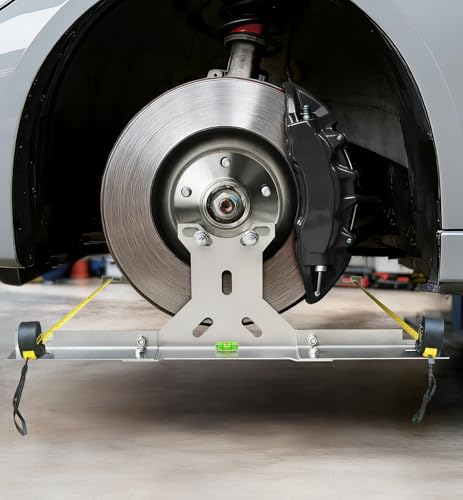
- DIY front‑end toe adjustment for home garages - Designed for car owners and home garages who want...
- Toe reference and adjustment tool, not a full alignment system - Provides a reliable toe angle...
- Heavy‑duty stainless steel plates for long‑term garage use - Thick stainless steel toe plates...
Last update on 2026-03-26 / Affiliate links / Images from Amazon Product Advertising API