
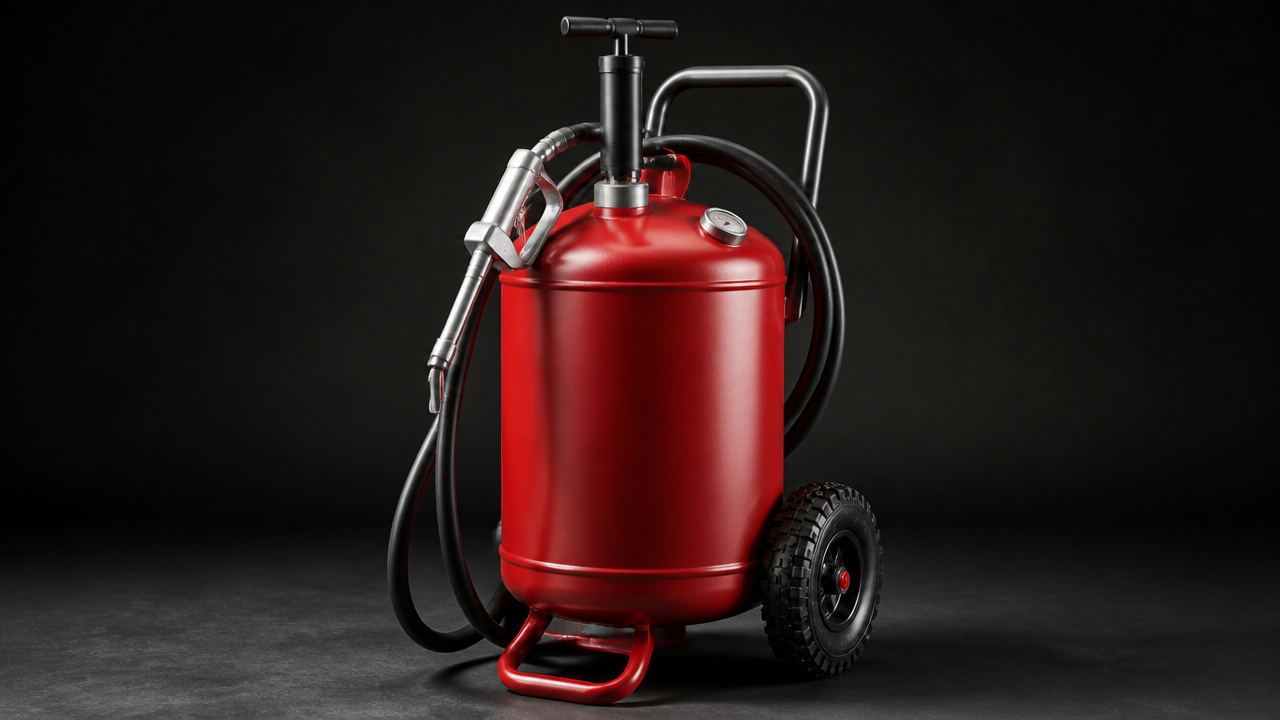

- 【High Volume & EFFICIENT】- Large capacity 35 gallon gas caddy with 11.9ft kink free hose e...
- 【Reversible Rotary Pump】- The reversible rotating hand pump can suck the fuel remaining in...
- 【Safe & Easy to Use】- Anti-static grounding clamp design can prevent accidental static...
- Expert Choice
- Top Rated
- Trusted Pick
Dragging fuel across a yard kills momentum. The can feels awkward, and the hose never quite reaches. Every refill risks a spill and another cleanup.
TUFFIOM’s 35-gallon tank and 11.9-foot hose stretch fueling farther with fewer stops. PAMBEE keeps refills light with 15 gallons and a 10-foot hose for quick jobs.
ANSE X1 fits tight spaces and smaller tasks. Its 6000mAh battery pump moves fuel without a full caddy.


Heavy-Duty Gas Caddies with Pump for Easier Refueling
Hauling fuel across yards, driveways, and jobsites wastes time; a reliable caddy with pump speeds refills, reduces spills, and keeps equipment ready.
1. TUFFIOM 35 Gallon Portable Fuel Caddy with Wheels and Manual Pump

- 【High Volume & EFFICIENT】- Large capacity 35 gallon gas caddy with 11.9ft kink free hose ensures...
- 【Reversible Rotary Pump】- The reversible rotating hand pump can suck the fuel remaining in the...
- 【Safe & Easy to Use】- Anti-static grounding clamp design can prevent accidental static...
Hauling fuel across a yard, driveway, or jobsite gets tedious fast when every refill means moving equipment instead of fuel. A 35-gallon tank changes that rhythm, giving you one mobile station for gas or diesel and a longer reach than a basic can.
Built with an 11.9-foot kink-free hose and a wide fill opening, it helps you move fuel with less spill risk and fewer awkward refills. The reversible rotary hand pump can send leftover fuel back into the tank, so the hose does not waste what you already transferred.
For safer handling, TUFFIOM includes an anti-static grounding clamp and an easy-to-read vent/oil level gauge. That combination helps you check fuel levels quickly and keep the transfer process more controlled.
Rolling it into position is easier than carrying a full container by hand. Two heavy-duty 10-inch wheels and two rotating wheels support smoother movement, while the alloy steel build adds sturdy, practical durability for regular use around tractors, mowers, ATVs, boats, and cars.
The result is a high-capacity fuel transfer setup that fits real maintenance routines instead of forcing extra trips. When you need to keep tools and vehicles ready, this portable tank keeps the fuel where you can use it.
Best for: Property owners, mechanics, and equipment users who need a mobile fuel station for large-volume transfers.
Pros:
- 35-gallon capacity reduces refill trips
- Reversible hand pump helps recover fuel from the hose
- 11.9-foot hose gives wider reach
- Grounding clamp supports safer fuel handling
- Wheels make transport easier across flat surfaces
Cons:
- 41 kg weight may be cumbersome when fully loaded
- Manual pumping could take more effort than powered transfer options
2. PAMBEE 15 Gallon Wheeled Fuel Caddy with Manual Pump and 10FT Hose
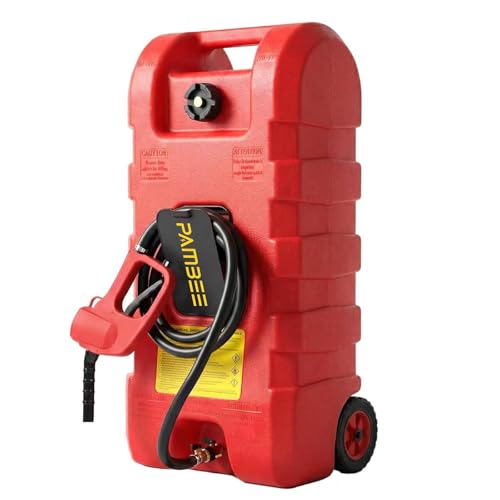
- 15-GAL LARGE CAPACITY: The 15-gallon maximum capacity gas tank can store enough fuel for multiple...
- 2 MODES OF OPERATION: This 57L gasoline container supports both siphon and gravity drive refuelling...
- EASY TO TRANSPORT: Designed with a top handle and 6-inch wheels, the fuel tank can be easily...
Towing fuel across a driveway or yard gets old fast when every refill means juggling cans, funnels, and spills. A wheeled tank changes that rhythm, giving you a cleaner way to move fuel without hauling separate containers from one machine to the next.
PAMBEE pairs a 15-gallon HDPE body with a 10-foot automotive-grade rubber hose, so you can reach equipment without dragging the tank into awkward spots. The manual siphon setup supports both siphon and gravity feed, with flow up to 3 gallons per minute in siphon mode when operated steadily.
Built-in brass shut-off valves at the tank and hose help you disconnect with less mess, while the rust-proof construction suits gasoline and diesel storage. The 6-inch wheels and top handle make it easier to roll across a garage floor, shop, or rougher ground.
Its size fits common refill tasks for cars, ATVs, boats, lawn equipment, and generators, so you can keep one container ready for several jobs. The long hose, secure shutoff points, and portable frame create a practical fuel transfer setup that feels organized instead of improvised.
Best for: Those who need a mobile fuel storage and transfer tank for vehicles, outdoor equipment, and backup power gear.
Pros:
- 15-gallon capacity for multiple refill jobs
- 10-foot hose reaches equipment more easily
- Manual siphon and gravity feed options
- Brass shut-off valves help reduce leaks
- Wheeled design improves portability
Cons:
- Manual pumping may take more effort than powered transfer systems
- Large size and 23.1-pound weight can feel bulky in tighter spaces
3. ANSE X1 Ultra Rechargeable Fuel Transfer Pump, Cordless 6000mAh Battery

- Leak-Proof Design: This fuel transfer pump incorporates over 10 structural enhancements at key...
- Lithium-ion Battery Powered Cordless Fuel Transfer Pump: Engineered with a powerful built-in 6000mAh...
- Patented Core Motor Technology: The sealability innovation ensures the fuel pump is exceptionally...
Ground-level refueling gets a lot easier when you stop lifting a full can and let a pump do the work. The ANSE X1 Ultra uses a built-in 6000mAh battery to move fuel with cordless convenience, so you can handle transfers without hunting for power cords or forcing awkward pours.
Its leak-resistant construction adds more confidence at the points that matter most, and the patented motor design is built for durable, steady operation. A snap-together setup keeps installation simple, and the USB-C charging makes it easy to top up between jobs.
Flow rate reaches 2.7 GPM on flat transfer and 2.2 GPM from ground to tank, which helps speed up refueling for cars, motorcycles, lawn mowers, and similar equipment. ANSE also lists compatibility with gasoline, diesel, kerosene, and non-potable water, giving you practical multi-use flexibility for everyday tasks.
The larger pump housing supports stronger flow, though smaller can openings under 1.3 inches may not fit. Built to meet FCC, CE, RoHS, and MSDS standards, it offers a cleaner, safer transfer setup for users who want less mess and less lifting.
Best for: Owners who want a lightweight, battery-powered fuel transfer setup for cans, small engines, and basic vehicle refueling.
Pros:
- Cordless 6000mAh battery for mobile use
- Fast transfer rate up to 2.7 GPM
- Leak-resistant construction at key points
- USB-C charging for simple recharging
- Works with several fuel and liquid types
Cons:
- May not fit gas can openings under 1.3 inches
- Plastic body may feel less rugged than metal alternatives
4. GAOMON 15-Gallon Portable Fuel Tank with Siphon Pump, 10-Foot Hose

- 【High-Capacity, High-Quality】The max capacity 60L fuel gasoline can stores enough fuel for...
- 【Siphon Any Liquid in Seconds】The gas caddy protect the environment by easily eliminating fuel...
- 【No Fuel Spills】The gasoline can has 2 brass shut off valves, one at the tank and one at the...
Fueling a truck, mower, or boat gets messy fast when the container is awkward to move and the hose fights back. GAOMON solves that with a 15-gallon capacity and a stop-and-go siphon handle that helps you move fuel without constant lifting.
The 10-foot automotive-grade hose gives you room to reach tanks from a comfortable position, while the integrated hose holder keeps storage tidier between jobs. Built from HDPE, the tank, nozzle, and hose are made for rust-resistant durability in regular garage or dock use.
Two brass shutoff valves add a cleaner handoff at both the tank and hose, helping reduce drips when you disconnect. The 2 gallons per minute flow rate in siphon mode also keeps filling and emptying moving without the slow drag that often comes with larger transfer cans.
Wheels and a molded top handle make transport easier over uneven ground, and the compact footprint fits neatly in a truck bed, shed, or garage corner. For users who want a practical fuel mover instead of a heavy lift, this GAOMON unit keeps the process straightforward and spill-conscious.
Best for: Property owners, boaters, and equipment users who need a mobile fuel transfer tank for gas, diesel, or similar liquids.
Pros:
- Large 15-gallon capacity for multiple refills
- 10-foot hose improves reach around vehicles and equipment
- Brass shutoff valves help limit drips during disconnect
- Wheels and top handle support easier movement
- HDPE construction resists rust
Cons:
- At 20.6 pounds empty, it may still feel bulky for some users
- The 33.5-inch height could take more storage space than smaller cans
5. Scepter Flo ‘N Go 14 Gallon Portable Fuel Station with Electric Pump, Red
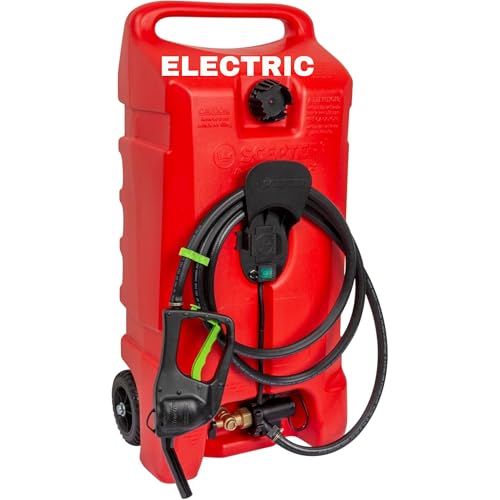
- 14-GALLON (53L) FUEL CADDY: The Scepter Flo 'N Go Powered Fueling Station is a gas can on wheels for...
- FAST FUEL TRANSFER: Flip the power switch to activate the pump; The heavy-duty Fill-Rite electric...
- EASY TO USE: The patented pump handle features a gas station-style stop and start; The 10-foot...

Tight refueling jobs get easier when you can bring the tank to the equipment instead of hauling jerry cans back and forth. A 14-gallon reservoir gives you room for bigger transfers, while the powered pump helps you move fuel quickly with less mess at the nozzle.
Flip the switch and the Fill-Rite transfer pump gets to work at 4.7 GPM on batteries, with even faster flow possible using the optional AC cable. The gas-station-style handle adds a familiar stop-and-start feel, and the 10-foot hose gives you enough reach for trailers, mowers, boats, and shop equipment.
Scepter built in practical details that matter in real use: 6-inch rugged wheels, hose hanger storage, nozzle clips, and a drip cap to help keep cleanup simple. Gravity and siphon modes add flexibility when you want another way to move fuel.
Safety features are part of the setup too, including D.O.T. certification, CARB and EPA compliance, anti-static design, a self-venting cap, and a child-safe lock. The spill-proof brass shut-off helps make disconnects cleaner, so you spend less time wiping up and more time getting work done.
Best for: Farm, marine, lawn care, and home users who need a mobile fuel station with fast transfer and long hose reach.
Pros:
- Large 14-gallon capacity for fewer refills
- Electric pump with quick transfer flow
- 10-foot hose reaches equipment easily
- Rugged wheels improve portability
- Built-in safety and spill-control features
Cons:
- Battery operation may require eight AA cells for use without AC power
- At 19.9 pounds empty, it may feel bulky for some users when fully loaded
6. Garvee 35 Gallon Fuel Caddy with Transfer Pump, Wheels and Steel Tank Orange

- High Volume 35 Gallon Fuel Caddy: The 35-gallon fuel caddy allows for easy maneuverability, letting...
- Two Way Rotary Pump: Bi-directional hand rotary pump allows you to dispense or siphon fuels with...
- Transport Effortlessly & Easy to Use: The anti-static ground clamp can prevent static discharges and...
Long hose runs and repeated can trips slow down fueling fast. A mobile tank changes that rhythm, putting gasoline, diesel, or kerosene right where you need it with far less hauling.
Garvee built this 35-gallon unit around a bi-directional rotary pump, so you can dispense or siphon fuel by reversing the cranking direction. That makes refilling quicker and keeps the process controlled instead of messy.
Anti-static grounding helps reduce discharge during transfer, while the fill gauge gives you a fast read on the fuel level. The wide neck and 9.8-foot kink-free hose support smoother filling with less spill risk.
Heavy-duty 8-inch wheels and 2-inch rollers help the caddy move across rough ground, and the carbon steel tank is built for UV and dent resistance. Garvee also includes a hose hanger, tube holder, and gas cap for cleaner storage between uses.
For garages, farms, lawns, marine work, and off-road equipment, the result is faster refueling with less lifting and fewer interruptions.
Best for: Those who need a portable fueling solution for cars, ATVs, boats, mowers, and other equipment that uses gasoline, diesel, or kerosene.
Pros:
- 35-gallon capacity reduces refill trips
- Reversible hand pump for dispensing or siphoning
- 9.8-foot hose supports reach and flexibility
- Wheels help with transport over uneven ground
- Steel tank adds durability for heavy use
Cons:
- 68.3-pound weight may be less convenient when fully handled empty
- Manual pumping could take longer than powered transfer for frequent use
7. VEVOR 16 Gallon Portable Fuel Tank with 12V Pump, Hose & Auto-Stop Nozzle

- Large Capacity Storage: Fueling has never been easier! With an impressive 16-gallon capacity, this...
- Electric Pump Assistance: Powered by both 12V and AA batteries, our gas caddy ensures you’re...
- Durable Material: Made from high-quality HDPE, this fuel caddy tank is corrosion-resistant...
Refueling several machines one by one gets old fast, especially when you’re juggling fuel cans, short hoses, and awkward pours. A larger reservoir changes the routine, and VEVOR’s 16-gallon unit gives you enough volume to cover multiple fills before you have to stop.
The 12V electric transfer pump moves fuel at up to 2.5 GPM, so you spend less time waiting around and more time getting equipment back to work. The 4-foot delivery hose and auto-stop nozzle help keep the process controlled, while the sealed inlet and outlet design adds a cleaner storage setup.
Built from HDPE, the tank is made to handle rough use without taking on corrosion easily. It is suited for gasoline and diesel, which makes it practical for boats, ATVs, lawn equipment, motorcycles, and shop tasks that call for a dependable mobile fuel source.
The red body is easy to spot in a crowded garage or truck bed, and the portable format keeps it useful wherever refueling needs move. With spill-conscious shutoff protection and a durable fuel-ready shell, it keeps the job more orderly from fill-up to storage.
Best for: Owners who need a mobile fuel setup for equipment, vehicles, and outdoor gear without constant trips back to the pump.
Pros:
- 16-gallon capacity reduces refill frequency
- 12V pump supports quick fuel transfer
- Auto-stop nozzle helps limit overfilling
- HDPE tank resists corrosion and wear
- Works with gasoline and diesel
Cons:
- 4-foot hose may feel short for some fill positions
- 14.1-pound empty weight can be noticeable when moving it by hand
8. GarveeTech 35 Gallon Portable Fuel Caddy with Manual Pump and Wheels, Red

- 【Heavy Duty Fuel Caddy】Built from premium steel, this 35 gallon fuel caddy offers superior...
- 【Manual Pump for Easy Fuel Transfer】Equipped with a smooth manual rotary pump, this fuel...
- 【Portable Rolling Fuel Tank】Designed as a portable fuel caddy with wheels, it features four...
Tight refueling jobs get easier when fuel stays contained, rolls where you need it, and pumps without power. GarveeTech builds this 35-gallon steel tank for moving gasoline, diesel, or kerosene to equipment that can’t be parked near a dispenser.
The manual rotary pump keeps transfer simple in garages, on farms, and at job sites. Its sealed body, secure cap, and reinforced fittings help support spill-conscious storage while the heavy-duty steel construction adds corrosion resistance for regular use.
Four all-terrain wheels and an ergonomic handle make the unit easier to position around trucks, boats, ATVs, lawn mowers, and generators. The 22-inch by 45-inch footprint gives you a compact profile for a tank of this size, and the 60.2-pound build feels substantial without becoming awkward to manage.
For hauling fuel between machines, the portable format works as a practical middle ground between small cans and fixed storage. You get a mobile refueling solution that supports cleaner transfers and fewer back-and-forth trips.
Best for: Heavy-duty users who need a wheeled fuel storage tank for tractors, outdoor power equipment, and mobile refueling tasks.
Pros:
- 35-gallon capacity for larger fuel jobs
- Manual pump works without electricity
- Steel body supports rugged handling
- Wheels and handle improve mobility
- Suitable for gasoline, diesel, or kerosene
Cons:
- 60.2-pound weight may be cumbersome when empty
- Manual pumping could take longer than powered transfer systems
9. Boaeatu 15 Gallon Portable Fuel Tank on Wheels with Pump and 10-Foot Hose

- 【Extra-Large Capacity, Durable Material】The 15-gallon (57-liter) high-capacity fuel storage tank...
- 【Dual-Mode Efficient Fueling】This portable gas tank supports both gravity flow and manual pump...
- 【Dual Leak-Proof Safety System】 Both the fuel tank and fuel lines are equipped with brass...
Tired of hauling fuel one container at a time? A 15-gallon reservoir changes the rhythm of refueling, especially when you need backup fuel for more than one machine. Boaeatu pairs that volume with a wheeled body, so moving fuel across a shop, driveway, or yard feels far less awkward.
Built from HDPE, the tank brings UV resistance, corrosion resistance, and scratch resistance to routine outdoor use. The dual-valve setup helps limit seepage during storage and transport, while the brass hardware adds a more secure seal than basic plastic fittings.
Fueling can be handled two ways: tilt for gravity flow or use the manual pump for faster transfer. The pump is rated to move fuel at up to 2 gallons per minute, which makes quick top-offs much easier when you do not want to wait around.
Wide wheels and a molded top handle help it roll over gravel, grass, and uneven ground without feeling clumsy. The 10-foot hose gives you room to reach vehicles, generators, lawn equipment, boats, and ATVs, and the hanging loop keeps storage tidier between uses.
Best for: Home and outdoor users who need a mobile fuel reserve for vehicles, equipment, and backup power.
Pros:
- 15-gallon capacity reduces frequent refills
- Dual fueling modes for flexible use
- Brass shut-off valves help reduce leakage
- 6-inch wheels improve mobility on rough ground
- 10-foot hose reaches larger equipment easily
Cons:
- At 22.2 pounds empty, it may still feel heavy for some users when full
- The manual pump setup can take extra effort compared with powered transfer systems
Top Gas Caddy With Pump Specs For Fast Fuel Transfer
| Product Name | Capacity | Pump Type | Hose Length | Material |
|---|---|---|---|---|
| TUFFIOM 35 Gallon Caddy | 35 gallons | Manual reversible rotary pump | 11.9 feet | Alloy Steel |
| PAMBEE 15 Gallon Caddy | 15 gallons | Manual siphon pump | 10 feet | HDPE |
| ANSE Rechargeable Pump | Not listed | Battery powered fuel transfer pump | Not listed | Plastic |
| GAOMON 15 Gallon Caddy | 15 gallons | LE fluid transfer siphon pump | 10 feet | HDPE |
| Scepter 14 Gallon Electric | 14 gallons | Electric fuel transfer pump | 10 feet | Plastic |
| Garvee 35 Gallon Caddy | 35 gallons | Two way rotary pump | 9.8 feet | Carbon steel |
| VEVOR 16 Gallon Caddy | 16 gallons | 12V DC 2.5 GPM electric pump | 4 feet | HDPE |
| GarveeTech 35 Gallon Caddy | 35 gallons | Manual pump | Not listed | Steel |
What Really Matters Before You Buy the Best Gas Caddy with Pump?

Fuel caddies look similar on a product page, but a few details decide whether they save time or create a mess. The right pick depends on how much fuel you move, how far the hose needs to reach, and whether you want hand pumping or electric help.
Small differences in tank size, pump style, and material can change how smoothly the whole setup works. Miss one of those pieces, and the caddy can feel awkward the first time you load it with gasoline, diesel, or kerosene.
Tank Size That Matches Your Refueling Routine
Capacity is the first filter because it determines how many stops you make and how heavy the unit gets once full. A 14- to 16-gallon caddy suits lighter home use, while a 35-gallon model fits bigger yards, multiple machines, or jobsite refills without constant topping off.
The physics are simple: more fuel means more weight, more slosh, and more load on the wheels and frame. A larger tank also changes the center of gravity, so a low-slung design and stable wheelbase matter when you roll over concrete seams, gravel, or a sloped driveway. Smaller HDPE tanks are easier to steer, while steel units usually feel more planted once filled.
Ignore capacity and you end up either making repeat trips or wrestling a tank that is too large for your space. The first wastes time; the second can make storage, maneuvering, and filling a lot less pleasant.
Pump Style and How Fast Fuel Actually Moves
Pump type decides whether you want a manual workout or a powered assist. Reversible rotary pumps, siphon handles, and electric transfer pumps all move fuel differently, and that difference affects speed, effort, and how controlled the fill feels at the nozzle.
Manual rotary pumps push fuel through mechanical displacement, which gives you direct control and keeps the setup independent of batteries or outlets. Electric pumps, like 12V DC or battery-powered units, rely on an impeller or diaphragm to create flow, so they can move fuel at 2.5 to 4.7 GPM without constant cranking. A reversible pump is handy because it can also send leftover fuel back into the tank instead of leaving the hose primed.
Pick the wrong pump style and refueling turns into either wasted effort or more downtime than you expected. A slow hand pump on a big tank gets old fast, while an electric setup without the right power source can leave you stuck mid-fill.
Hose Reach and Control at the Nozzle
Hose length matters more than it looks on paper because it decides whether you can stand where you want while filling. A 10-foot hose works for many garage and yard setups, while an 11.9-foot hose gives extra slack for wider equipment spacing or awkward tank positions.
Longer reach reduces the need to drag the caddy beside the machine, which lowers spill risk and lets the fuel flow from a steadier angle. Hose material matters too: automotive-grade rubber tends to flex without kinking, while kink-free designs keep the internal passage open so flow does not choke off under bends. Shorter hoses can be fine, but only if the tank can sit very close to the filler neck.
Skip this detail and you may end up tilting the caddy too hard, stretching the hose, or parking the unit in a bad spot just to reach the tank. That usually leads to clumsy pours and more fuel on the ground than you wanted.
Material Choice and Resistance to Rust or Cracking
Material decides how the caddy handles fuel, sunlight, impacts, and long storage cycles. HDPE bodies are light and resistant to corrosion, while steel and alloy steel versions bring a tougher feel for rougher garage or shop use.
HDPE works because it does not rust and it tolerates fuel contact well, which is useful for caddies that sit in humid garages or see seasonal use. Steel tanks handle abuse differently: the rigid shell resists dents and flex, but it needs good coating and sealed fittings to avoid corrosion at seams, caps, and welded points. The tank material also affects weight distribution, so a steel caddy may feel more stable yet harder to maneuver when full.
Overlook material and the tank can age badly long before the pump wears out. Cracking, corrosion, or brittle fittings can turn a handy fuel station into a storage headache and a spill risk.
Mobility Features That Make Heavy Fuel Usable
Wheels and handle design decide whether a full fuel caddy feels manageable or miserable. Once a tank is loaded, even a compact unit becomes heavy enough that weak wheels, poor balance, or a bad grip can make every move feel like a chore.
Look for large-diameter wheels, a frame that keeps the tank off the ground, and a handle you can steer without fighting the load. A good wheel setup reduces rolling resistance and helps the caddy cross driveway cracks or garage thresholds without jolting the fuel inside. If the frame sits too low, the tank can drag; if it sits too high, it becomes tippy when turning or braking.
Ignore mobility and the caddy becomes a stationary tank you still have to wrestle. That defeats the whole point, especially when you need to fuel mowers, generators, tractors, or boats in different spots.
Safety Features That Reduce Spills and Static Risk
Safety hardware is the part people notice least until something leaks or splashes. Secure caps, sealed fittings, auto-stop nozzles, and grounding features all help keep fuel where it belongs during transfer and storage.
Fuel transfer creates risk at every junction: cap, hose, pump body, and nozzle. A wide fill opening makes loading easier, but it also needs a tight seal afterward. Anti-static grounding matters because moving fuel through a hose can build charge, especially in dry conditions. Auto-stop nozzles help control overfill by shutting off when the tank nears full, while stop-and-go handles give you more control than a fully open line.
Leave safety features off the checklist and small mistakes get expensive fast. Drips stain floors, spills waste fuel, and static discharge is not something you want anywhere near a full caddy or a running machine.
Frequently Asked Questions
What size gas caddy works best for home use?
A 14- to 16-gallon caddy usually fits home garages well because it holds enough fuel for mowers, generators, and small equipment without taking over the space. It is easier to move than a 35-gallon unit, especially if you only refuel a few machines at a time.
If you have multiple tools to fill on the same day, a mid-size tank can cut down on repeat trips. The Scepter 14-gallon and VEVOR 16-gallon models are common picks for that reason.
Check where you will store it first; a tighter garage can make a larger caddy annoying fast.
Is a manual pump or electric pump better?
A manual pump is simpler and does not depend on batteries or wiring, which makes it handy for basic garage or yard use. An electric pump feels easier on your arms and usually moves fuel faster, especially on bigger transfer jobs.
For example, the Scepter electric model moves fuel at 4.7 GPM, while the VEVOR uses a 12V DC pump for controlled transfers. Manual rotary pumps are still a solid choice if you prefer fewer parts.
Pick electric if speed matters; choose manual if you want fewer power-related hassles.
How long should the hose be on a fuel caddy?
A hose around 10 feet is a good practical target for most jobs because it lets you reach a mower, truck, or boat tank without dragging the caddy too close. Longer hoses help when the equipment is parked awkwardly or tucked behind other gear.
The TUFFIOM model uses an 11.9-foot hose, while several others sit at 10 feet. Shorter hoses can still work, but they may force more repositioning during refills.
Measure the farthest fill point before buying, not just the nearest one.
Can these fuel caddies store gas and diesel?
Many portable fuel caddies can handle both gas and diesel, but the exact fuel compatibility depends on the model and materials. Steel and HDPE tanks are common choices because they support regular fuel storage in garage, farm, and jobsite settings.
Some products, like the TUFFIOM and Garvee 35-gallon units, are built for multiple fuel types, while others focus more on general transfer use. Always check the label and product notes before filling.
Never assume every caddy is multi-fuel; that one detail can save you a messy mistake.
What features matter most for spill control?
Look for a secure cap, a stable wheel base, and a nozzle or pump that gives you steady flow control. A well-designed hose and a tank with a fill gauge also help reduce overfilling and splash-back during transfer.
Models with auto-stop nozzles, reversible pumps, or integrated hose holders usually make cleanup easier. The GAOMON and VEVOR options add handling features that help keep the process more contained.
Move fuel slowly the first time you use a new caddy so you can judge the flow before filling at full speed.
Matching the Caddy to the Job
The right gas caddy closes the gap between slow, messy refills and a smoother fueling routine. With the right fit, you spend less time juggling fuel and more time keeping mowers, generators, and tractors moving.
Choose heavy-duty steel for frequent, high-volume use on larger properties, where durability matters most. Pick compact HDPE for light-duty tasks, smaller garages, or weekend users who want easier storage and simpler handling.
Before you buy, check tank size, hose length, and pump type so the caddy matches your setup. Keep seals in good shape and avoid oversizing, since a larger tank can be awkward to move and store.
Last update on 2026-10-30 / Affiliate links / Images from Amazon Product Advertising API


