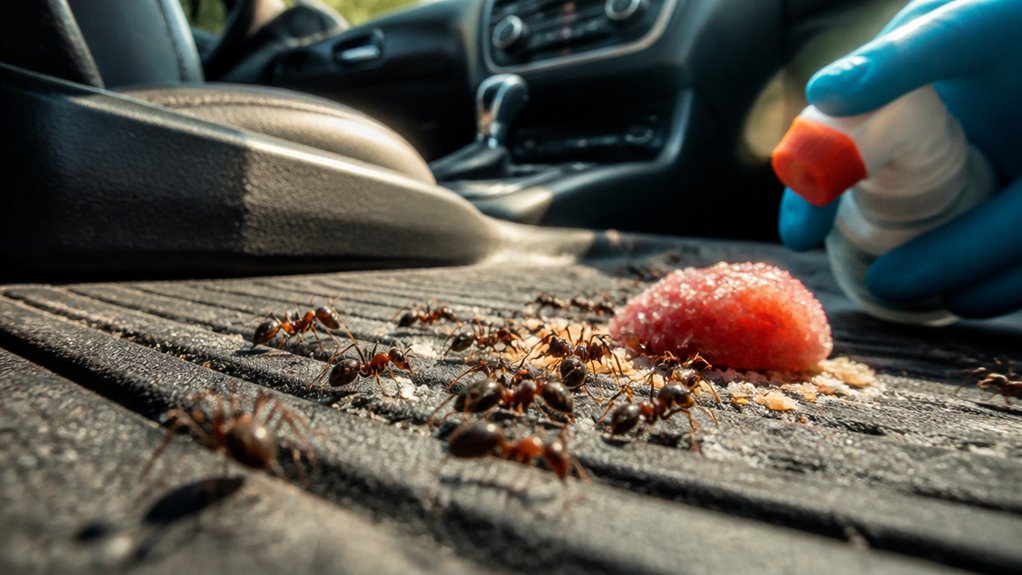
To get rid of ants in your car, start by locating their hotspots like floor mats, seats, and door seams. Remove all food, trash, and sticky residues that attract them.
Vacuum thoroughly and clean surfaces to disrupt ant trails. Avoid sprays that can harm your interior or repel bait.
Use EPA-approved, slow-acting ant baits placed near trails and entry points to target the colony effectively.
Maintaining cleanliness and monitoring parking areas can prevent reinfestation. Exploring these methods further will guide you through each critical step.
Key Takeaways
- Identify and remove ant hotspots by inspecting floor mats, seats, door seams, and following ant trails to entry points inside the car.
- Eliminate food sources by clearing trash, wrappers, and spills, especially in cupholders, door pockets, and seat crevices.
- Thoroughly vacuum and clean seats, carpets, crevices, and hard surfaces to remove food particles and disrupt ant pheromone trails.
- Use slow-acting, vehicle-safe ant baits placed near active trails and entry points, avoiding food-contact areas and securing bait stations.
- Avoid spraying pesticides inside the car; maintain cleanliness and monitor bait stations regularly to prevent reinfestation.
Finding Where Ants Hide in Your Car

To track down where ants hide in your car, start by pinpointing the exact locations where they appear most frequently.
Observe floor mats, seats, trunk, door seams, and the dashboard for ant presence. Follow visible ant trails carefully to identify entry points and potential food sources.
Check whether ant activity extends beyond the vehicle to nearby parking spots, garages, or vegetation, as this can indicate external colony proximity.
Remove all stored food and personal items to expose hidden debris such as crumbs, sticky drink residue, or food wrappers that attract ants.
Systematically inspect crevices, under seats, and compartments where debris can accumulate.
Using a leakproof liner trash can can help contain food waste and reduce ant attraction in your vehicle.
This targeted approach guarantees you identify the infestation’s origin and extent, which is critical before initiating removal or treatment procedures.
Cleaning Your Car to Remove Food and Ant Trails
First things first, let’s tackle that clutter. Go ahead and remove any food, trash, and wrappers from your car. This will really help in getting rid of those pesky attractants. You don’t want to give ants any reason to stick around!
Once you’ve cleared out the junk, grab your vacuum and give those seats, carpets, and all those little crevices a thorough clean. Trust me, crumbs and debris are prime hiding spots for ants, so it’s worth the effort to get in there.
Finally, let’s finish strong! Wipe down all the hard surfaces with a suitable cleaner. This won’t only eliminate any lingering food residue but also disrupt those ant trails. You’re on your way to a cleaner car and a pest-free ride!
For ongoing protection, consider using floor mats with raised edges and channel designs that trap dirt and spills, helping to reduce attractants inside your vehicle.
Remove Food And Trash
Clear out all food, wrappers, and trash from your car to eliminate the primary attractants for ants. Focus on removing crumbs, sticky residues, and discarded packaging, which provide both food and scent trails.
Inspect common hotspots like cupholders, door pockets, and under seats. Discard any trash promptly to disrupt ant foraging behavior and chemical trail formation. This action reduces the chance of reinfestation by cutting off their food source.
Applying corrosion protection to metal surfaces can also prevent damage that might create hiding spots for pests.
| Location | Common Food Debris | Action Needed |
|---|---|---|
| Cupholders | Sticky drink spills | Wipe thoroughly |
| Door pockets | Snack wrappers, crumbs | Remove and clean |
| Seat crevices | Crumbs and food residue | Clear and wipe |
Removing these attractants is a critical step to control ant presence in your vehicle.
Vacuum Seats And Carpets
Regularly vacuuming your car’s seats, carpets, and crevices removes food particles and ant trails that attract and sustain infestations.
Focus on areas where crumbs and sticky residues accumulate, such as under seats and in seat crevices. Proper vacuuming disrupts the chemical trails ants use to navigate and find food, effectively breaking their foraging patterns.
When vacuuming, pay special attention to:
- Floor mats and carpet edges where debris collects
- Seat seams and folds that trap food particles
- Trunk areas where stored items may hide crumbs
- Crevices between seats and consoles
- Underneath removable seat cushions to uncover hidden debris
Discard vacuum contents immediately to prevent reinfestation. This step is essential for reducing ant presence by eliminating their primary attractants inside the vehicle. Additionally, maintaining clean air inside the cabin with a cabin air filter can improve overall hygiene and reduce odors that might attract insects.
Wipe Surfaces Thoroughly
You should thoroughly wipe all hard surfaces inside your car to eliminate food residues and disrupt ant trails.
Focus on areas where crumbs and spills accumulate, including the dashboard, cupholders, door pockets, and center console.
Use a suitable interior cleaner that effectively removes sticky residues without damaging surfaces.
Cleaning ant trails is critical because ants rely on chemical pheromones to navigate. Removing these cues interrupts their movement and reduces reinfestation risk.
After wiping, allow surfaces to dry completely before returning belongings or applying bait.
Avoid leaving damp spots, as moisture can attract ants.
Regularly inspect and clean these areas to maintain a sanitary environment, minimizing food sources and eliminating ant pathways inside your vehicle.
This method complements vacuuming and baiting for thorough ant control.
Ensure that cleaning products used do not compromise dashboard adhesion to prevent repairs or accessories from loosening due to moisture or residue.
Using Ant Baits Safely Inside Your Car
When dealing with ants in your car, it’s super important to choose an ant bait that’s specifically labeled safe for use inside vehicles. This way, you can be sure you’re applying it correctly and not causing any damage to your car’s interior.
To get the best results, try placing the bait near active ant trails. Just make sure it’s not near any surfaces where you might come into contact with food. This will help the bait work its magic more effectively.
And don’t forget to check on the bait regularly! Replacing it when necessary will help you keep the ant problem under control. Keeping an eye on things will make a big difference in your fight against those pesky ants!
Additionally, ensuring good ventilation practices in your car can help reduce any chemical odors from the bait and improve overall air quality.
Choosing Safe Ant Baits
When selecting ant baits for use inside your car, make sure the product label explicitly permits application in vehicles to comply with safety and regulatory guidelines. Not all ant baits are formulated or approved for enclosed spaces like cars, so verifying this prevents harm to vehicle interiors and occupants.
To choose safe ant baits:
Confirm EPA registration and vehicle-use authorization on the label.
Avoid baits containing volatile solvents or strong odors that can damage fabrics or cause discomfort.
Select baits designed for slow-acting ingestion to guarantee ants carry poison back to the colony.
Use tamper-resistant bait stations to minimize exposure risk to children and pets.
Follow all manufacturer directions precisely for application, handling, and disposal to maintain safety and efficacy.
Additionally, selecting products made with durable and corrosion-resistant materials can help ensure longevity and safety inside your vehicle.
Proper Bait Placement
Setting out ant bait correctly inside your car guarantees maximum effectiveness while maintaining safety.
First, place bait near areas with confirmed ant activity: floor mats, door seams, or under seats. This ensures ants can easily locate it.
Avoid placing bait on or near food-contact surfaces to prevent contamination.
Secure baits to prevent shifting during driving using adhesive strips or small containers if needed.
Keep bait out of reach of children and pets by positioning it in concealed, low-traffic zones.
Follow product label directions precisely regarding placement and quantity. Improper positioning can reduce bait uptake or increase exposure risks.
Do not spray insecticides near bait to avoid contamination or repelling ants.
Proper bait placement targets the colony efficiently while minimizing risks inside your vehicle.
For enhanced cleaning after bait use, consider applying safe car wash products to protect your vehicle’s surfaces from residue buildup.
Monitoring And Maintaining Bait
Regularly inspecting ant bait stations inside your car guarantees they remain effective and safe.
You should check bait placement frequently to make certain ants are actively feeding and that bait hasn’t dried out or been contaminated.
Maintaining bait properly prevents repellency and maximizes ant control.
Follow these essential steps for monitoring and maintaining bait safely inside your vehicle:
Verify bait is positioned near active ant trails but away from food-contact surfaces.
Replace bait promptly if depleted or ignored by ants to maintain attractiveness.
Avoid spraying pesticides or cleaning agents near bait to prevent contamination.
Secure bait stations to prevent access by children and pets.
Continue inspecting after baiting to detect new ant activity and treat accordingly.
Consistent monitoring enhances bait efficacy and ensures safe use within your car’s confined space.
Additionally, ensure the area is well-ventilated during treatment to minimize exposure to any fumes and maintain safe air quality.
Why You Should Avoid Sprays and Pesticides in Your Car?
Although it might seem like a quick fix, using sprays and pesticides inside your car can introduce harmful chemicals to confined spaces where you and passengers breathe.
Using sprays inside your car can release harmful chemicals into tight spaces where you and passengers breathe.
Many household insecticides aren’t formulated for use in vehicles and may emit volatile organic compounds (VOCs) that linger on upholstery and vents.
Applying sprays indiscriminately risks contaminating surfaces that come into contact with skin or food.
Additionally, pesticides can repel ants temporarily without eliminating the colony, potentially worsening the infestation.
Labels often restrict indoor automotive use due to toxicity and flammability concerns, so you should adhere strictly to product directions.
Instead of sprays, targeted baits approved for vehicles reduce chemical exposure and improve control efficacy.
If infestations persist, consulting a licensed pest professional is safer and more effective than repeated pesticide applications in your car.
Proper maintenance and cleaning of the vehicle interior can also help reduce conditions that attract ants and other pests.
Preventing Ants From Returning to Your Car
To keep ants from coming back after treatment, focus on eliminating their access to food and shelter in your car.
Ants are attracted to crumbs, spills, and trash, so maintaining a clean interior is vital.
Regularly inspect and clean all surfaces to remove residual food sources and ant pheromone trails.
Store food only in sealed containers.
Remove snacks and wrappers promptly.
Clean spills immediately, especially sugary or sticky residues.
Vacuum carpets, seats, floor mats, and trunk regularly to eliminate crumbs.
Avoid leaving pet food or other attractants inside the vehicle.
After cleaning and baiting, monitor your car for any renewed ant activity to address issues early.
Consistent sanitation and vigilance help prevent reinfestation and guarantee your car remains ant-free.
Managing Ants Around Your Car’s Parking Spot
When managing ants around your car’s parking spot, you need to assess the environment carefully for potential attractants and nesting sites.
Effectively managing ants near your car starts with identifying attractants and potential nesting areas.
Inspect for food scraps, trash, and vegetation near the parking area that could harbor ant colonies. Avoid parking near visible ant trails or nests and clear debris that may serve as shelter.
Regularly check tires, door sills, and the ground for active ant activity. If ants trail from a nearby nest toward your vehicle, move your car to a different spot.
Maintaining a clean parking environment reduces the likelihood of ants entering your car. Persistent ant issues originating outside the vehicle often require addressing the surrounding habitat to prevent repeated infestations and protect your car effectively.
Frequently Asked Questions
Can Ants Damage My Car’s Electrical Wiring or Components?
Yes, ants can damage your car’s electrical wiring or components. Certain ant species are attracted to electrical currents and may chew on wiring insulation, causing shorts or malfunctions.
If you notice ants near your car’s engine bay or wiring harness, inspect carefully for damage. Prevent infestation promptly to avoid costly repairs.
Regular cleaning, removing food sources, and addressing ant trails help reduce the risk of electrical harm caused by ants.
Are Certain Car Materials More Attractive to Ants?
You might think leather seats are ant magnets, but ants aren’t drawn to materials themselves.
Instead, they’re attracted to food residues, crumbs, or sticky spills on surfaces like fabric or vinyl.
So, it’s not the car materials that lure ants; it’s the hidden snacks and sugary spills.
Keeping all materials clean and dry is your best defense, no matter if it’s cloth, leather, or plastic interior components.
How Long Does It Take for Ant Baits to Work Inside a Vehicle?
Ant baits inside a vehicle typically take 3 to 7 days to show noticeable results.
You’ll need to place the bait near active ant trails, ensuring ants find and consume it.
Ants carry the bait back to the colony, gradually reducing their numbers.
Check the bait regularly and replace it if ants stop feeding.
Avoid spraying insecticides around bait areas, as this can repel ants and delay effectiveness.
Is It Safe to Use Natural Remedies Like Vinegar or Essential Oils in Cars?
Yes, you can safely use natural remedies like vinegar or essential oils in your car, but you need to be cautious.
Vinegar effectively disrupts ant trails but has a strong odor that may linger. Essential oils like peppermint can repel ants but may stain or damage interior materials if undiluted.
Always dilute oils, avoid direct application on sensitive surfaces, and test a small area first. Proper ventilation during and after use is essential for safety.
Can Ants Survive Winter Inside a Parked Car?
Yes, ants can survive winter inside a parked car if conditions provide warmth, shelter, and food sources.
Cars parked in garages or heated areas offer a stable environment that protects ants from freezing temperatures.
If you leave food crumbs or spills inside, ants can sustain their colony.
To prevent survival, remove all food debris, clean thoroughly, and seal entry points.
Regular inspections during cold months help detect and eliminate hidden infestations early.
Keep Ants Out for Good With Smart Prevention
To tackle troublesome ants in your car, target their trails thoroughly by tracking their hiding spots.
Thoroughly tidy your vehicle to terminate tempting treats and use ant baits cautiously to curb colonies without chemicals.
Avoid sprays that could stain or harm interiors.
Finally, foster a fortress by frequently flushing food fragments and managing areas around your parking place.
Consistent care curbs creeping critters, creating a clean, comfortable, and contamination-free car cabin.