
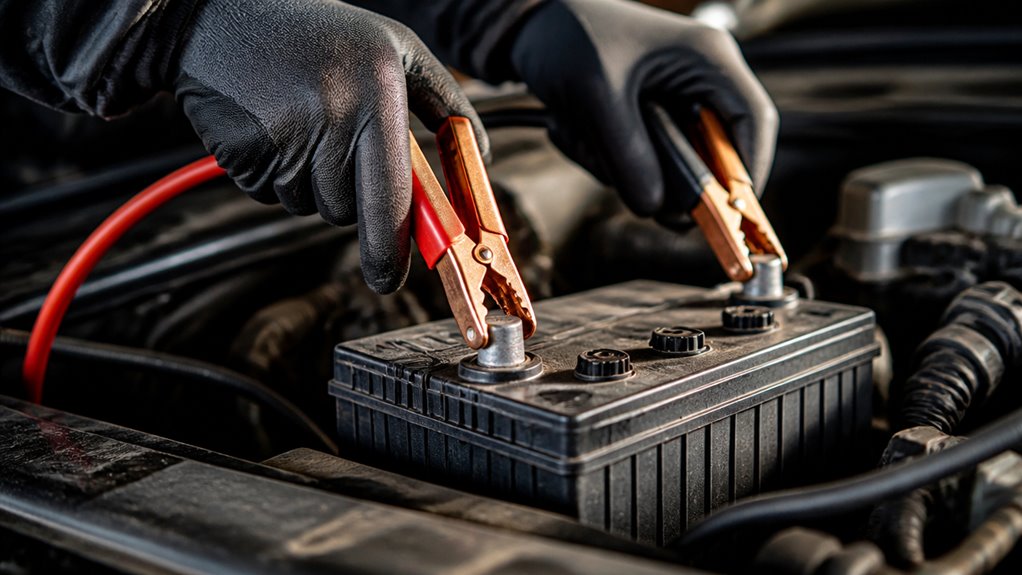
Yes, you can jump start an AGM battery, but you must follow precise safety and connection steps due to its sealed, low-resistance design.
Always check for physical damage and corrosion before proceeding. Guarantee correct polarity to avoid damage.
Use an AGM-compatible jump starter or charger with reverse polarity protection. Connect cables in proper order and avoid repeated start attempts.
After jump-starting, recharge with an AGM-specific charger to maintain battery life. Understanding these details helps you safely manage your AGM battery’s performance.
Key Takeaways
- AGM batteries can be jump-started if undamaged and proper polarity is confirmed before connecting clamps.
- Use AGM-compatible jump starters or chargers with reverse polarity protection to avoid battery damage.
- Connect positive clamps first to dead then donor battery, negative to donor battery, and ground to engine block/frame.
- Avoid jump-starting cracked, swollen, leaking, or physically damaged AGM batteries due to safety risks.
- After jump-start, recharge AGM battery with a compatible charger or drive 30+ minutes to restore charge safely.
What Makes AGM Batteries Different?

Absorbent Glass Mat (AGM) batteries differ fundamentally from traditional flooded lead-acid batteries in their internal design and construction.
AGM batteries use a fiberglass mat separator to absorb and immobilize the electrolyte, preventing free liquid movement inside the case. This design enhances resistance to vibration and reduces the risk of acid spillage.
Fiberglass mats lock in electrolyte, boosting vibration resistance and eliminating acid spills inside AGM batteries.
Unlike flooded batteries, AGM cells are sealed, making them maintenance-free and less prone to evaporation. AGM batteries also exhibit lower internal resistance, which allows for faster charging and better performance under high electrical loads.
You should note that this construction affects how the battery handles charging, discharging, and jump-starting, requiring more careful connection techniques and attention to polarity to avoid damaging the internal structure.
Additionally, AGM batteries typically have a self-discharge rate of approximately 1–3% per month, which impacts their storage and maintenance requirements.
Is It Safe to Jump Start an AGM Battery?
While AGM batteries are generally more sensitive to jump-starting than traditional flooded batteries, you can safely jump-start them if you follow proper procedures and precautions.
Make certain the battery isn’t frozen, cracked, swollen, or leaking before attempting a jump start. Always observe correct polarity and secure terminal connections to avoid damaging the battery’s internal structure.
Use AGM-compatible jump starters or settings when available, and never force repeated start attempts if the initial tries fail.
Keep sparks away from the battery by grounding the final clamp on an unpainted metal surface away from the terminals.
Using chargers with reverse polarity protection helps prevent damage during jump-starting and charging operations.
How to Connect Jumper Cables to AGM Batteries?
After confirming that your AGM battery is safe to jump-start and that you understand the precautions, the next step is connecting the jumper cables correctly.
First, park both vehicles close enough with ignitions off and parking brakes set. Attach the red clamp to the positive terminal of the dead AGM battery.
Then connect the other red clamp to the positive terminal of the donor battery. Next, connect the black clamp to the negative terminal on the donor battery.
Finally, attach the remaining black clamp to an unpainted metal ground on the disabled vehicle’s engine block or frame, not the battery terminal. This grounding reduces the risk of sparks near the battery, which is critical for safety and protecting the AGM battery’s delicate internal structure during the jump-start process.
AGM batteries are maintenance-free and sealed, which is why proper jump-starting technique is essential to avoid damage to their internal components.
How to Jump Start Your AGM Battery, Step by Step?
Start by ensuring both vehicles remain off with parking brakes engaged before you begin the jump-start process.
Connect the red clamp to the dead AGM battery’s positive terminal, then attach the other red clamp to the donor battery’s positive terminal.
Next, connect the black clamp to the donor battery’s negative terminal. Finally, attach the remaining black clamp to an unpainted metal ground on the disabled vehicle’s engine block or frame.
Start the donor vehicle and let it run for 2 to 5 minutes to stabilize voltage. Then, attempt to start the disabled vehicle.
If it doesn’t start, wait a few minutes and retry. Once the engine starts, carefully remove cables in reverse order.
Let the vehicle run to recover surface charge, but remember jump-starting provides temporary power only.
Ensure the battery is properly ventilated during and after the jump-start to prevent the accumulation of hydrogen gas.
Common Mistakes to Avoid When Jump Starting Your AGM Battery
Following the proper jump-start procedure helps protect your AGM battery, but certain mistakes can still compromise its performance or cause damage.
Avoid reversing polarity when connecting cables, as this can irreparably harm the battery’s internal structure.
Never clamp directly onto painted surfaces or terminals with corrosion. Always use clean, unpainted metal contacts to ensure secure connections and reduce the risk of sparking.
Don’t attempt to jump-start a battery that’s cracked, swollen, or leaking; this endangers safety and battery integrity.
Avoid rapid, repeated start attempts, which can overheat the battery and starter motor.
Finally, bypassing manufacturer instructions or skipping grounding the negative cable on the engine block or frame increases spark hazards and voltage instability.
Staying vigilant prevents damage and maximizes your AGM battery’s lifespan.
Proper maintenance and using sensor-safe formulations can help protect sensitive electronic components during battery care.
How to Recharge and Maintain Your AGM Battery After a Jump?
Regularly recharging your AGM battery after a jump start is essential to restore its capacity and guarantee reliable performance.
After jump-starting, use a compatible charger or drive your vehicle for at least 30 minutes to replenish charge.
Monitor voltage to ensure it rises above 10.5 volts. Stop charging immediately if you notice excessive heat or hissing sounds, signaling battery failure.
High-quality jump starters with reverse polarity protection help prevent damage during the jump-start process.
| Action | Importance |
|---|---|
| Use AGM-compatible charger | Prevents internal damage |
| Drive 30+ minutes | Restores surface charge |
| Monitor voltage | Detects insufficient charge |
| Stop if overheating | Avoids battery collapse |
Consistent maintenance extends battery life and avoids unexpected failures. This assures your AGM battery delivers optimum power.
How to Tell When It’s Time to Replace Your AGM Battery?
You’ll know it’s time to replace your AGM battery when you start seeing consistent voltage drops and a noticeable dip in performance, even though you’re charging it properly.
It’s a real hassle when your battery doesn’t hold up, right?
Also, keep an eye out for any physical damage. If you spot swelling, cracks, or any kind of leakage, that’s a clear sign it’s time for a change.
Being aware of these signs can really help you avoid unexpected failures down the line.
It’s all about making sure you have reliable power when you need it!
Monitoring voltage levels regularly can help you catch early signs of battery degradation before it becomes a major issue.
Signs of Battery Wear
Often, an AGM battery will show specific signs of wear that indicate it’s nearing the end of its service life.
You might notice physical damage such as swelling, cracks, or leakage on the battery casing. These are clear indicators of internal failure.
Corrosion buildup at the terminals can also signal deterioration, impairing effective current flow.
Additionally, if your battery struggles to hold a charge despite proper charging procedures, it likely suffers from diminished capacity.
Excessive self-discharge or frequent need for jump starts further suggests wear.
You should also pay attention to unusual heat generation during use or charging, which points to internal short circuits or plate damage.
When you observe any of these signs, it’s time to replace your AGM battery to avoid sudden failure.
Using a charger with desulfation and pulse charging functions can sometimes help recover a battery before replacement becomes necessary.
Voltage and Performance Drop
When your AGM battery’s voltage consistently falls below its rated level, its performance will degrade noticeably, signaling that replacement may be necessary.
AGM batteries typically operate at about 12.8 to 13.0 volts when fully charged. Readings below 12.4 volts suggest partial discharge.
If you observe frequent voltage drops under load or during engine start attempts, it indicates reduced capacity and increased internal resistance.
Additionally, if your battery fails to hold a charge despite proper recharging, it’s a clear sign of deterioration.
Use a multimeter to check resting voltage and perform a load test for accurate assessment.
Persistent voltage deficits affect engine cranking power and accessory function. Timely replacement avoids unexpected failures and potential damage to your vehicle’s electrical system.
For ongoing battery health, consider using a battery monitor to track voltage, state of charge, and cycle count, helping to extend battery lifespan and optimize performance.
Physical Damage Indicators
Physical damage to an AGM battery usually signals imminent failure and the need for immediate replacement.
You should inspect the battery case for cracks, swelling, or deformation, which indicate internal damage or gas buildup.
Look for any leakage of electrolyte, visible corrosion on terminals, or burnt marks, as these are signs the battery can no longer maintain integrity or safe operation.
If you notice bulging or a distorted case, the internal plates may have warped, reducing capacity and risking rupture.
Damaged AGM batteries can’t be safely jump-started or recharged and pose hazards like acid leaks or fire.
When you detect any of these physical damage indicators, replacing the AGM battery promptly is essential to assure safety.
Proper handling and support using heavy-duty materials during maintenance can prevent further damage and ensure safety.
Tips for Extending the Life of Your AGM Battery
Regularly maintaining your AGM battery markedly extends its lifespan and guarantees reliable performance. To maximize durability, you should focus on proper care and usage.
- Avoid deep discharges: AGM batteries tolerate fewer deep discharges than conventional types. Keep the voltage above 12.4 volts to prevent sulfation and capacity loss.
- Use compatible chargers: Always use AGM-specific or smart chargers with temperature and voltage regulation to avoid overcharging and thermal stress.
- Maintain clean terminals: Corrosion increases resistance and heat. Regularly inspect and clean terminals with a proper battery cleaner and ensure tight, secure connections.
Frequently Asked Questions
Can I Use Any Portable Jump Starter With an AGM Battery?
You shouldn’t use just any portable jump starter with an AGM battery.
AGM batteries require jump starters with AGM-compatible settings or modes to avoid damage.
Using a standard jump starter without these features risks reverse polarity or excessive current, harming the battery’s internal structure.
Always check your jump starter’s specifications and the AGM battery manufacturer’s recommendations.
If unsure, opt for a device explicitly designed for AGM batteries to guarantee safe, reliable jump-starting.
How Long Can an AGM Battery Safely Remain Jump-Started?
Think of jump-starting an AGM battery as borrowing a spark, not a long-term loan.
You shouldn’t keep it jump-started for more than a few minutes, typically 2 to 5 minutes, just enough to stabilize voltage and start the engine.
Prolonged jump-starting risks damage.
Once running, let your vehicle charge the battery properly for at least 15 to 30 minutes.
Always recharge fully afterward to preserve your AGM battery’s lifespan and performance.
What Are the Signs of Internal Damage After a Bad Jump Start?
You’ll notice signs like swelling or cracking of the battery case, hissing sounds, or unusual warmth during or after charging. These indicate internal damage.
Voltage may drop below 10.5 volts despite charging attempts, or the battery might fail to hold a charge. If your AGM battery shows these symptoms after a jump start, it likely suffered internal harm.
Continuing use risks further damage or failure.
Can Cold Weather Affect Jump-Starting an AGM Battery?
Yes, cold weather markedly affects jump-starting an AGM battery. Low temperatures reduce the battery’s chemical activity, lowering its voltage and cranking power.
You might find it harder to start the vehicle, and the battery may struggle to accept a charge. Make sure tight cable connections and allow extra time for voltage stabilization before attempting ignition.
Avoid repeated attempts to prevent damage. Recharge promptly after a successful jump start to restore capacity.
Is It Safe to Jump Start an AGM Battery if the Car Is Hybrid?
Picture a hybrid car’s intricate electrical system humming quietly under the hood.
Yes, you can safely jump start an AGM battery in a hybrid, but you must be extra cautious.
Follow the manufacturer’s jump-starting procedures precisely. Use proper polarity and connect to the designated terminals or grounding points.
Hybrid systems are sensitive. Improper jump-starts risk damaging the battery or electronics.
Always consult your owner’s manual before proceeding to avoid costly mistakes.
Maintain Your AGM Battery for Reliable Performance
You can jump start an AGM battery safely if you follow the proper steps and precautions.
Unlike traditional batteries, AGM batteries require careful handling due to their unique design and sensitivity to voltage spikes.
By connecting jumper cables correctly and avoiding common mistakes, you protect both your battery and vehicle electronics.
Remember, jump starting is a temporary fix. Regular maintenance and timely replacement are key to ensuring your AGM battery performs reliably over time.


