
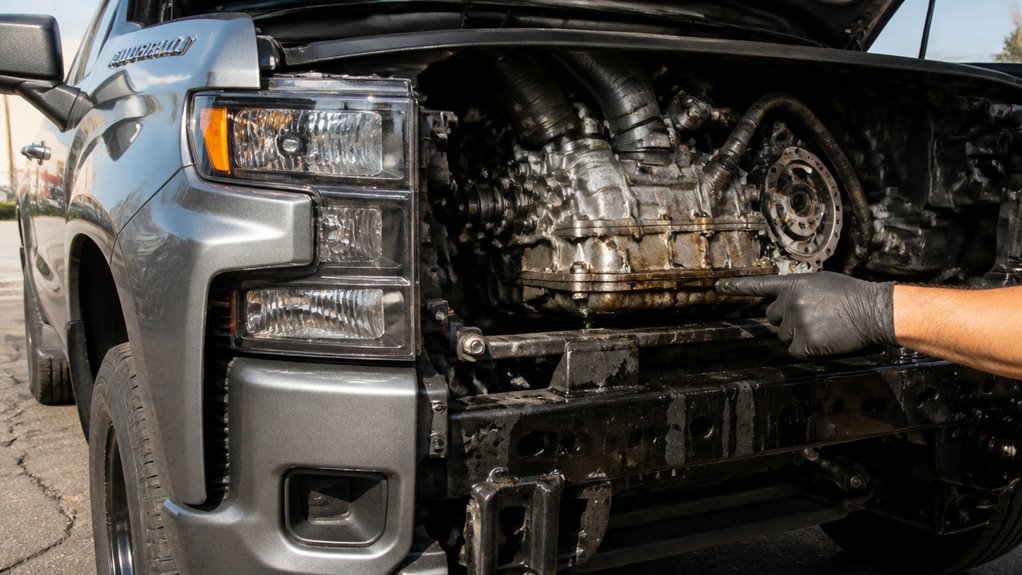
If your 2020 Chevy Silverado experiences hard shifts, slipping, or harsh clunks, fluid degradation and valve body wear are likely undermining hydraulic pressure and shift timing.
Moisture-contaminated or overheated transmission fluid impairs torque converter clutch action, causing shudder and hesitation. Worn valve body bores and check balls create abrupt pressure spikes and delayed shifts.
Diagnosing these precise symptoms is pivotal to avoid premature failure. Understanding these factors will clarify how to address Silverado transmission issues effectively.
Key Takeaways
- 2020 Chevy Silverado 8L90 transmissions often exhibit hard shifts, slipping at low speeds, and hesitation during gear changes.
- Valve body wear causes delayed shifts and harsh metallic clunks, especially during 1-2 transitions and reverse gear engagement.
- Moisture-contaminated or overheated ATF leads to torque converter clutch shudder, harsh shifts, and hydraulic pressure loss.
- GM TSB 18-NA-355 recommends full fluid exchange with Mobil 1 Synthetic LV ATF HP and cooler line flushing to fix shudder issues.
- Persistent harsh shifting, slamming reverse, or high transmission temperature require professional diagnosis and possible valve body repair.
Common Transmission Problems in the 2020 Chevy Silverado

If you own a 2020 Chevy Silverado, you might experience several transmission issues that impact performance and drivability.
Owners of the 2020 Chevy Silverado may face transmission problems affecting vehicle performance and smooth operation.
Common problems include hard shifts from a stop, slipping at low speeds, and hesitation during gear changes. Some drivers report surging when braking, which can indicate torque converter clutch irregularities.
You may also notice harsh metallic clunks during the 1-2 shift or a delay in shift command responsiveness. Transmission temperature can run abnormally high, signaling potential fluid or mechanical concerns.
Additionally, reverse gear shifts might slam unexpectedly, causing jerks. These symptoms point to a combination of hydraulic pressure inconsistencies and mechanical wear within the valve body and torque converter system.
Understanding these problems helps you identify when professional diagnosis and repair are necessary to maintain peak transmission function. Proper maintenance including timely fluid changes and inspection of the valve body can help prevent serious transmission damage.
Causes of Hard and Slipping Shifts in the Silverado
You know, hard and slipping shifts in the Silverado often come down to one main culprit: degraded transmission fluid. When the fluid breaks down, it messes with the hydraulic pressure, which is crucial for smooth shifting.
But it doesn’t stop there. Valve body wear is another big player in this game. When the bores get worn down or components start to erode, it throws off the precise timing of shifts. This can lead to some pretty abrupt gear engagements, which no one enjoys.
And let’s not forget about shift command delays. These delays can really pile on the issues, making it even harder for your Silverado to switch gears smoothly. It’s a chain reaction that can leave you feeling frustrated behind the wheel! Regular maintenance, including fluid checks and filter replacements, is essential to prevent accelerated mechanical wear and costly repairs.
Transmission Fluid Issues
Addressing transmission fluid issues is essential when diagnosing hard or slipping shifts in the 2020 Chevy Silverado. Poor fluid quality or contamination degrades hydraulic pressure control, which directly impacts shift timing and firmness.
Moisture absorption in the automatic transmission fluid (ATF) reduces its lubricating and hydraulic properties, causing shudder and torque converter clutch slippage. Overheated fluid also loses viscosity, leading to delayed or harsh shifts.
You need to check fluid levels, color, and smell for early detection of degradation. GM’s Technical Service Bulletin 18-NA-355 emphasizes a complete fluid exchange using Mobil 1 Synthetic LV ATF HP to restore proper function.
Ignoring fluid condition risks accelerating internal wear and transmission failure. Maintaining fluid integrity guarantees consistent hydraulic pressure for smooth, reliable gear engagement. Additionally, using shocks with advanced valving systems can help maintain overall vehicle control and reduce stress on the transmission during towing and hauling.
Valve Body Wear
While transmission fluid quality plays a critical role, valve body wear markedly contributes to hard and slipping shifts in the 2020 Chevy Silverado.
The aluminum valve body suffers from worn bores and eroded castings around check balls, disrupting precise hydraulic pressure routing. This wear impairs the valve body’s ability to regulate pressure accurately, causing delayed or sudden shift commands.
You’ll notice hard shifts, abrupt clunks, or slipping as hydraulic circuits malfunction. These mechanical failures prevent smooth gear engagement, especially during 1-2 shifts.
Repair typically involves dropping the transmission pan to clean or replace the valve body assembly. Diagnosing valve body wear requires ruling out fluid contamination or sensor faults.
Worn components produce distinct pressure irregularities that directly affect shift quality and transmission longevity. Maintaining proper oil level and fluid quality is essential to prevent seal drying and further transmission issues.
Shift Command Delays
Valve body wear disrupts hydraulic pressure control, but shift command lags add another layer of complexity to the Silverado’s shifting issues.
When the transmission control module sends a shift command, worn valve body bores slow hydraulic pressure response, causing delayed gear engagement.
This delay leads to hard shifts or slipping, especially during low-speed transitions like the 1-2 shift.
You’ll notice a sudden pressure hit and metallic clunk as the transmission abruptly engages.
Diagnosing shift command lags requires inspecting valve body wear and ensuring hydraulic circuits operate within specification.
While fluid condition influences performance, mechanical wear primarily causes these delays.
Addressing shift command lags often involves valve body cleaning or replacement, as outlined in GM bulletin 19-NA-266, to restore precise hydraulic control and eliminate harsh or slipping shifts.
For optimal performance, maintaining factory-engineered fitment in related components can help prevent premature wear and ensure smoother operation.
Understanding Transmission Surge and Hesitation Issues
If your 2020 Chevy Silverado experiences transmission surges or hesitation, you’re likely encountering issues related to inconsistent hydraulic pressure or delayed shift commands.
These symptoms typically arise from wear in the valve body, where eroded bores and damaged check balls impair precise hydraulic pressure control.
This inconsistency disrupts timely gear engagement, causing the transmission to momentarily surge or hesitate when shifting.
Additionally, degraded automatic transmission fluid (ATF) can exacerbate these effects by affecting fluid viscosity and pressure regulation.
Diagnosing surge and hesitation requires isolating fluid condition from mechanical valve body faults, as each demands distinct corrective actions.
Addressing these issues early helps prevent further damage, ensuring smoother shift changes and reliable transmission performance in your Silverado.
Regularly monitoring transmission temperature can help detect early signs of these problems before they lead to severe damage.
What Causes 1-2 Transmission Shift Slip and Harsh Clunks?
If you’re dealing with 1-2 shift slip and those harsh clunks, it could be due to some wear in the valve body.
Over time, the bores can become worn, and the castings might erode. This wear messes with the flow of hydraulic pressure, causing those annoying delayed shift commands and those sudden pressure hits you might be feeling during shifts.
It’s really important to understand these mechanical issues.
Having a good grasp of what’s going on can make a big difference when it comes to diagnosing and fixing these transmission symptoms effectively.
Also, regularly checking the transmission fluid color and condition can help identify early signs of mechanical wear before severe damage occurs.
Valve Body Wear Effects
Understanding the root cause of 1-2 transmission shift slip and harsh clunks requires examining the wear in the valve body’s aluminum bores and the erosion of the check ball castings.
This wear disrupts the valve body’s ability to regulate hydraulic pressure accurately, causing shift irregularities. Specifically, you’ll encounter:
- Enlarged bores in the aluminum valve body that reduce hydraulic sealing effectiveness.
- Eroded check ball castings that fail to block fluid correctly.
- Resulting abrupt pressure changes that produce harsh metallic clunks during shifts.
As these components degrade, the transmission can’t maintain precise fluid control.
This leads to delayed pressure buildup and slip during the 1-2 shift.
Addressing valve body wear often requires disassembly and either cleaning or replacing worn parts to restore smooth, consistent shifting and eliminate harsh clunk noises.
Proper maintenance and the use of reliable hydraulic components with self-lubricating features can help extend valve body lifespan and reduce wear-related issues.
Shift Command Delays
Frequently, shift command delays in the 2020 Chevy Silverado’s transmission stem from hydraulic pressure inconsistencies caused by worn valve body components.
When valve body bores erode or casting surfaces degrade, the transmission’s hydraulic circuits fail to direct fluid precisely. This results in delayed actuation of clutches and bands, leading to 1-2 shift slip and harsh metallic clunks.
You’ll notice a sudden pressure spike when the transmission finally engages the gear, causing the characteristic clunk. These symptoms indicate valve body mechanical failure rather than fluid issues.
While fluid condition affects shudder and smoothness, shift command delays require valve body inspection, cleaning, or replacement. GM’s technical service bulletins recommend dropping the transmission pan for access, as precise hydraulic control is critical to prevent slip and harsh engagement during initial shifts.
Regular maintenance and care of transmission components is essential to prevent such failures and ensure optimal vehicle performance.
How Valve Body Wear Affects Silverado Transmission Shifting?
Although the valve body is a relatively small component within the transmission, its condition directly impacts the Silverado’s shifting performance.
When the valve body’s aluminum bores wear or the casting erodes from check ball movement, it disrupts hydraulic pressure control.
This wear leads to imprecise shift timing and abrupt pressure hits.
You’ll notice these effects as:
- Delayed shift commands caused by fluid misdirection.
- Harsh metallic clunks during shifts due to sudden pressure changes.
- Inconsistent hydraulic pressure preventing smooth gear engagement.
Understanding valve body wear is vital since it governs hydraulic flow essential for precise shifting.
If you ignore this wear, you risk increased transmission stress and premature failure.
Addressing valve body wear restores accurate pressure modulation, improving shifting consistency and transmission longevity.
Regular maintenance, including fluid checks and proper fluid replacement, is critical to prevent such hydraulic issues and extend transmission life.
How to Diagnose Transmission Shudder and Vibration in Silverado?
When you experience shudder or vibration in your Silverado, isolating the cause requires careful evaluation of speed range, transmission model, and fluid condition.
Focus on the 35-55 mph range where the GM 8-speed 8L90 transmission commonly exhibits shudder, often called the “Chevy Shake.”
Check the ATF fluid for moisture contamination, as degraded fluid impairs torque converter clutch operation.
Confirm symptoms aren’t related to valve body mechanical failures, which cause clunks or delayed shifts rather than continuous shudder.
Perform a thorough fluid analysis and inspect for erratic shift behavior or temperature anomalies.
Distinguishing a fluid-induced shudder from mechanical faults is essential before proceeding with repairs.
Use diagnostic tools to monitor transmission temperature and shift timing, correlating data with driver-reported vibration to pinpoint the root cause accurately.
Fixing Transmission Shudder With TSB 18-Na-355
After pinpointing moisture-contaminated ATF as the cause of your Silverado’s shudder between 35-55 mph, applying the procedures outlined in TSB 18-NA-355 offers a proven remedy.
Identifying moisture-contaminated ATF as the cause of Silverado shudder leads to a reliable fix via TSB 18-NA-355.
This technical service bulletin focuses specifically on fluid-related issues in the GM 8-speed 8L90 transmission. It targets the torque converter clutch shudder caused by degraded ATF.
To effectively implement this fix, you should:
- Perform a complete fluid exchange using Mobil 1 Synthetic LV ATF HP (blue label) to eliminate moisture-contaminated ATF.
- Flush the transmission cooler lines thoroughly to remove residual contaminants.
- Reset transmission adaptive learning by clearing transmission control module codes.
Following these steps methodically guarantees restoration of hydraulic stability and eliminates the shudder. This approach avoids addressing mechanical valve body failures, which require separate interventions.
Repair Solutions for Transmission Clunk and Valve Body Wear
Since valve body wear directly disrupts hydraulic pressure control, you’ll need targeted repairs to resolve transmission clunk issues in the 2020 Chevy Silverado.
Worn bores and eroded valve body castings cause imprecise fluid routing. This leads to delayed shift commands and sudden pressure hits that produce the characteristic clunk.
Addressing this requires dropping the transmission pan to access the valve body for inspection. You’ll either clean or replace the valve body assembly, depending on the extent of wear.
Additionally, check the stator shaft support for potential damage. Follow GM bulletin 19-NA-266 closely to guarantee proper procedure.
Avoid confusing these mechanical clunks with fluid-related shudders; they demand different remedies. Precision in diagnosis and repair prevents recurring clunk and restores smooth hydraulic control.
When to Seek Professional Help for Silverado Transmission Problems?
If you notice persistent harsh shifting, unusual clunks, or shudders that fluid changes don’t resolve, it’s time to consult a professional technician. These symptoms often indicate underlying mechanical failures, such as valve body wear or torque converter clutch degradation that require expert diagnosis.
Don’t delay addressing:
- Repeated slamming into reverse or delayed shift commands, which may signal valve body bore erosion.
- Transmission temperature consistently running high, risking further component damage.
- Shudder between 35-55 mph that persists after a complete fluid exchange, suggesting deeper torque converter or hydraulic pressure issues.
A trained technician uses specialized diagnostic tools to differentiate between fluid-related issues and mechanical faults, ensuring precise repair.
Early professional intervention prevents transmission failure and costly replacements, safeguarding your Silverado’s performance and longevity.
Frequently Asked Questions
What Type of Transmission Fluid Is Recommended for the 2020 Silverado?
You should use Mobil 1 Synthetic LV ATF HP (blue label) for your 2020 Silverado’s transmission.
This fluid specifically addresses issues caused by moisture absorption in the automatic transmission fluid. It helps reduce shudder and protects the torque converter clutch.
Following Technical Service Bulletin 18-NA-355, a complete fluid exchange with this synthetic ATF guarantees peak hydraulic pressure control and shift quality.
This helps maintain transmission performance and longevity.
How Often Should Transmission Fluid Be Changed in the Silverado?
You should change your Silverado’s transmission fluid every 45,000 to 60,000 miles under normal driving conditions.
If you tow heavy loads or drive in severe conditions, consider changing it more frequently, around every 30,000 miles.
Using the recommended Mobil 1 Synthetic LV ATF HP guarantees peak performance.
Regular fluid changes prevent moisture buildup, reduce shudder, and maintain hydraulic pressure precision.
This helps you avoid transmission wear and costly repairs.
Can Transmission Issues Cause Reduced Fuel Efficiency in the Silverado?
You expect smooth shifts but instead get jerks and slips. This contrast directly impacts fuel efficiency.
Yes, transmission issues can reduce your Silverado’s fuel economy. When shifts hesitate or slip, the engine works harder, burning more fuel.
Problems like torque converter clutch shudder or delayed shift commands disrupt peak power transfer. This forces excessive fuel consumption.
Addressing these transmission faults promptly helps restore efficient engine performance and saves fuel.
Are There Any Recalls Related to the 2020 Silverado Transmission?
There aren’t any official recalls specifically targeting the 2020 Silverado transmission as of now.
However, GM has issued Technical Service Bulletins (TSBs) addressing known transmission concerns, like shudder and harsh shifts. These bulletins outline repair procedures but don’t mandate recalls.
You should monitor GM’s updates closely and consult your dealer if you experience symptoms.
Manufacturers sometimes expand bulletins into recalls based on real-world data and severity.
What Are the Typical Costs of Repairing Silverado Transmission Problems?
You might face some wallet adjustments when repairing transmission issues, typically ranging from $1,000 to $4,000 depending on the severity.
Minor fixes like fluid replacement or valve body cleaning cost around $500-$1,000.
More involved repairs such as valve body replacement or torque converter fixes can push costs higher.
Complete transmission rebuilds or replacements often exceed $3,000.
Always diagnose precisely to avoid unnecessary expenses and ensure the right repair path.
Don’t Ignore Warning Signs of Transmission Issues in Your 2020 Silverado
Just like steering through a complex highway, your 2020 Chevy Silverado’s transmission demands precise attention to avoid unexpected detours like hard shifts, slips, and clunks.
Understanding valve body wear and addressing issues such as transmission shudder with targeted fixes like TSB 18-Na-355 can keep your drive smooth.
Don’t ignore warning signs; diagnose early and seek professional help promptly to maintain peak performance and prevent costly breakdowns on your Silverado’s journey.


