
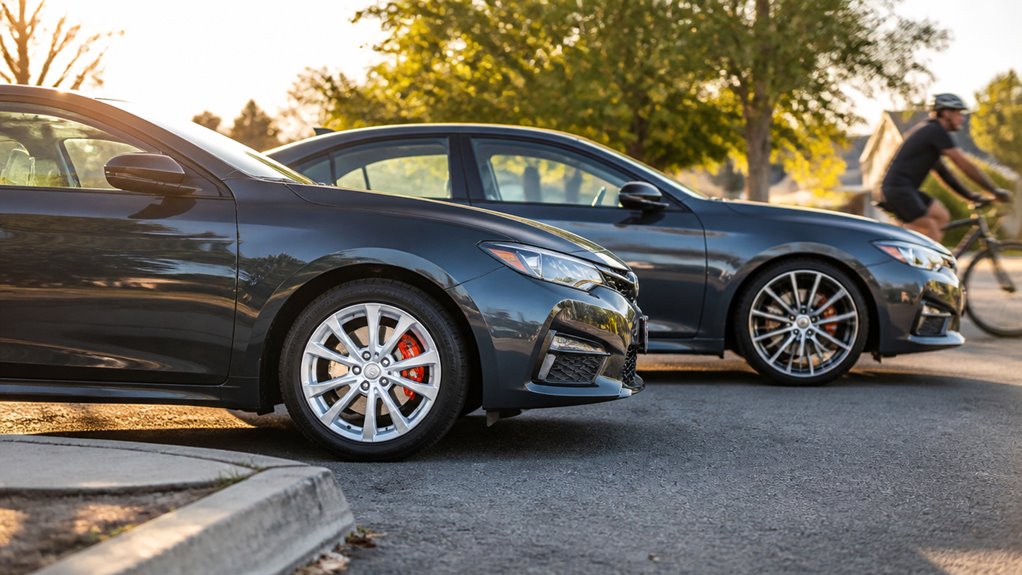
Yes, bigger wheels affect your vehicle’s MPG by increasing weight, rolling resistance, and drivetrain strain. Upsized wheels add rotational mass, forcing your engine to work harder during acceleration and cruising. This lowers fuel economy by 4 to 10 percent.
Wider tires enlarge the contact patch, raising friction and energy loss. Additionally, lower sidewalls increase rolling resistance and reduce ride cushioning. These combined factors decrease efficiency, especially in stop-and-go driving.
Understanding these dynamics helps you make smarter wheel and tire choices for better MPG.
Key Takeaways
- Bigger wheels increase weight and rotational mass, requiring more energy for acceleration and reducing fuel economy by 4 to 10 percent.
- Larger tires have a bigger contact patch, increasing rolling resistance and friction, which lowers MPG.
- Heavier wheels strain the suspension and drivetrain, decreasing mechanical efficiency and further reducing fuel economy.
- Frequent stop-and-go driving magnifies fuel penalties from upsized wheels due to increased inertia and rolling resistance.
- Choosing lightweight alloy wheels and tires with optimized rolling resistance can help mitigate fuel economy loss.
How Upsizing Wheels Lowers Your Vehicle’s Fuel Economy?

When you upsize your wheels, you increase their weight and diameter, which directly raises rolling resistance and engine workload.
Upsizing wheels adds weight and size, boosting rolling resistance and demanding more from your engine.
Heavier wheels demand more torque to accelerate, as the additional rotational mass resists changes in velocity. This means your engine must exert greater force, reducing overall efficiency.
Larger diameter wheels also affect the drivetrain by increasing unsprung weight, which strains suspension and power delivery components.
The increased mass requires more energy for acceleration and sustaining speed, leading to higher fuel consumption.
Additionally, heavier steel wheels exacerbate this effect compared to lightweight alloys.
Frequent stop-and-go city driving magnifies fuel penalties, as repeated acceleration cycles demand greater engine output.
Consequently, upsizing wheels compromises your vehicle’s fuel economy by increasing mechanical resistance and engine load.
Choosing tires with optimized rolling resistance can help mitigate some of the fuel economy loss caused by bigger wheels.
How Bigger Wheels Increase Rolling Resistance and Raise Fuel Consumption?
When you decide to upgrade to bigger wheels, you mightn’t realize what that really means for your vehicle.
First off, those larger wheels are heavier, which directly increases rolling resistance. In simple terms, they need more energy to keep moving.
And it’s not just the weight; the bigger surface area that comes in contact with the road really ramps up friction too. This added friction puts more strain on your engine, making it work harder.
So, what does all this mean for your wallet? Well, these combined factors lead to higher fuel consumption.
In short, to maintain speed efficiently, your vehicle will be guzzling more gas than before.
Additionally, selecting tires with an improper load capacity for your vehicle can further decrease fuel efficiency due to increased rolling resistance and strain.
Tire Size And Weight
Increasing your wheel size directly raises rolling resistance, forcing your engine to consume more fuel to maintain speed.
Larger wheels add significant mass, increasing the rotational inertia your engine must overcome. This added weight elevates rolling resistance, requiring more energy to keep the tires turning.
As a result, your engine works harder, increasing fuel consumption. Additionally, the increased unsprung weight strains the drivetrain, reducing acceleration efficiency.
Heavier steel wheels exacerbate this effect compared to lightweight alloys. The cumulative impact can reduce fuel economy by 4 to 10 percent, depending on wheel size and weight.
Understanding these dynamics helps you anticipate the trade-offs associated with upsizing wheels, especially if you prioritize fuel efficiency and drivetrain longevity.
Maintenance of drivetrain components, such as U-joints, becomes more critical with increased stress from larger wheels and heavier loads.
Surface Contact And Friction
By expanding the surface area of tire contact with the road, bigger wheels directly raise rolling resistance. This demands more energy from your engine to maintain momentum.
Larger tires increase the contact patch, intensifying friction between the tire tread and pavement. This frictional force resists rotation, forcing your engine to burn more fuel to overcome it.
Additionally, wider tires paired with lower sidewalls compound this effect. The increased tread width and reduced cushioning elevate rolling resistance further.
The added mass of bigger wheels also contributes to unsprung weight, increasing the energy required for acceleration and steady cruising.
Consequently, you’ll notice a measurable decline in fuel economy, typically between 4 and 10 percent. This is as your vehicle compensates for the greater rolling resistance and friction associated with upsized wheels.
Maintaining proper tire inflation can help mitigate some of the fuel economy losses caused by bigger wheels.
How Heavier Wheels Reduce Acceleration and MPG?
Heavier wheels can really impact how your car performs. You see, they increase unsprung weight, which means your engine has to put in more effort when you accelerate. That added mass doesn’t just weigh down your ride; it also puts a strain on the drivetrain. As a result, you end up losing some of that overall efficiency.
Now, if you think about it, this becomes even more obvious when you’re driving in stop-and-go traffic. Those effects really add up, and you might notice a dip in your fuel economy. So, while those stylish wheels might look great, they could be costing you at the pump! Upgrading to high-quality ignition coils can help improve engine efficiency to partially offset these losses.
Impact Of Unsprung Weight
Adding heavier wheels increases the unsprung weight, which directly hampers your vehicle’s acceleration efficiency.
Unsprung weight includes components not supported by the suspension, primarily wheels and tires. This additional mass demands more engine power to rotate and accelerate, reducing overall fuel efficiency.
Here’s how unsprung weight impacts your vehicle:
- Increased rotational inertia: Heavier wheels resist changes in speed, forcing your engine to work harder during acceleration and deceleration.
- Reduced suspension responsiveness: Excessive unsprung weight impairs suspension control, leading to less efficient energy transfer and increased fuel consumption.
- Higher rolling resistance: Heavier wheels often couple with larger tires, increasing frictional forces that further degrade MPG.
Additionally, upgrading to shocks with nitrogen-charged technology can help mitigate some of the negative effects of heavier wheels by improving ride comfort and handling.
Understanding unsprung weight’s role helps explain why bigger, heavier wheels reduce acceleration and fuel economy.
Drivetrain Strain Effects
Heavier wheels increase the rotational mass your drivetrain must overcome, directly elevating the mechanical load on components like the transmission and differential.
This added inertia demands more torque to initiate and sustain wheel rotation, causing your engine to exert greater effort during acceleration.
As a result, the drivetrain experiences amplified strain, reducing overall mechanical efficiency.
The increased unsprung mass also impacts energy transfer, requiring more fuel to maintain speed and respond to throttle inputs promptly.
Heavier steel wheels, in particular, exacerbate this strain compared to lightweight alloy alternatives, which minimize rotational inertia.
Consequently, you’ll notice a measurable decline in acceleration performance and fuel economy, as the engine compensates for the increased load.
Understanding this dynamic clarifies why heavier, larger wheels negatively affect your vehicle’s MPG and acceleration efficiency.
Using surge protectors can help safeguard your vehicle’s electrical system from the additional strain caused by increased mechanical load.
City Driving Fuel Penalties
The increased rotational mass from larger, heavier wheels doesn’t just affect highway performance; it also imposes significant penalties during city driving.
When you navigate stop-and-go traffic, the engine must work harder to overcome the added inertia of heavier wheels. This reduces acceleration efficiency and increases fuel consumption.
This effect is especially pronounced in urban settings due to frequent starts and stops.
Consider these key impacts:
- Heavier wheels increase unsprung weight, forcing the engine to expend more energy during acceleration.
- Rolling resistance rises with larger, wider tires, demanding more fuel to maintain momentum.
- Drivetrain strain intensifies from the added mass, compounding fuel inefficiency in city conditions.
Additionally, increased mechanical wear and strain on transmission components from heavier wheels can lead to accelerated drivetrain wear, further reducing overall efficiency.
Understanding these factors clarifies why bigger wheels can reduce your vehicle’s city MPG.
How Wider Tires Add Friction and Lower Efficiency?
When you choose wider tires, you increase the surface area of tread in contact with the pavement, which directly raises rolling resistance.
This larger contact patch demands more energy to rotate the tires, forcing the engine to work harder.
The increase in friction between the tire and road surface elevates the force opposing motion, thereby reducing fuel efficiency.
Additionally, wider tires typically weigh more, further compounding the load on the drivetrain.
This combination of increased friction and mass requires additional fuel consumption to maintain speed.
The effect isn’t linear; as tire width grows, rolling resistance escalates disproportionately, creating a substantial fuel economy penalty.
Understanding this interaction helps you make informed decisions about tire size, balancing performance benefits against the inevitable drop in miles per gallon.
Choosing the right tire and wheel setup can also impact long-term vehicle maintenance and protection, similar to how selecting proper floor mats affects vehicle longevity.
How Lower Sidewalls Affect Fuel Economy and Ride Quality?
Although lower sidewalls enhance a vehicle’s aesthetic and handling responsiveness, they reduce the cushioning between the road and wheel. This results in increased rolling resistance.
You’ll notice a firmer ride due to less rubber absorbing road irregularities. This also raises the risk of rim damage from potholes. This design shifts more impact forces directly to the wheel, increasing mechanical strain.
Consider these impacts:
- Lower sidewalls elevate rolling resistance, forcing your engine to expend more energy maintaining speed.
- Reduced cushioning transmits greater vibration and noise into the cabin, degrading ride comfort.
- The risk of rim damage rises, potentially increasing maintenance costs and affecting long-term vehicle efficiency.
Proper maintenance, including regular cleaning with wheel cleaners designed to remove brake dust and grime, can help preserve wheel integrity and performance.
Understanding these effects helps you evaluate trade-offs between style, handling, and fuel economy.
Tips for Choosing Wheels and Tires to Maximize MPG
Lower sidewalls may improve handling but come with trade-offs that can reduce fuel efficiency.
Lower sidewalls enhance handling but can negatively impact fuel efficiency due to increased rolling resistance.
To maximize MPG, choose wheels with smaller diameters and lighter weight alloys to reduce unsprung mass and rolling resistance.
Opt for tires with higher sidewalls to maintain cushioning, which lowers energy loss from road impact.
Keep tires properly inflated to minimize drag and avoid wide or aggressively treaded tires that increase surface friction and fuel consumption.
Prioritize low rolling resistance tire compounds designed for efficient energy transfer.
Avoid upsizing wheels beyond manufacturer recommendations, as this increases weight and friction, forcing the engine to burn more fuel.
Frequently Asked Questions
Do Bigger Wheels Impact Tire Wear and Replacement Costs?
Yes, bigger wheels impact tire wear and replacement costs.
You’ll face faster wear because larger wheels often come with wider, lower-profile tires that experience increased surface friction and rolling resistance.
This accelerates tread degradation.
Additionally, replacing bigger tires costs more due to their size and specialized construction.
You’ll also encounter higher chances of damage from potholes, further increasing maintenance expenses.
How Do Larger Wheels Affect Vehicle Handling and Safety?
Larger wheels can improve handling by increasing contact patch and reducing sidewall flex, giving you sharper steering response.
However, they also reduce ride cushioning due to lower sidewalls, raising the risk of rim damage and harsher rides.
The added unsprung weight can impair suspension performance, potentially compromising safety during sudden maneuvers.
You need to balance wheel size with tire characteristics to maintain ideal handling and safety.
Can Bigger Wheels Alter My Car’s Speedometer Accuracy?
Yes, bigger wheels can alter your car’s speedometer accuracy.
When you install larger diameter wheels, your tires cover more ground per revolution. This causes the speedometer, which measures rotations, to underreport your actual speed.
This means your speedometer will show a slower speed than you’re truly traveling.
To maintain accuracy, you must recalibrate the speedometer to account for the new wheel size.
This ensures precise speed readings and compliance with safety regulations.
Are Bigger Wheels Compatible With All Types of Brakes?
Only some bigger wheels fit all brake types; compatibility depends on wheel diameter and brake size.
If your brakes are large, like performance or heavy-duty rotors, you’ll need wheels with enough clearance.
About 10% of aftermarket wheels mightn’t clear bigger brake calipers.
You must check wheel specifications against your brake dimensions precisely.
Otherwise, improper fit can cause interference, reduce braking efficiency, or damage components.
Do Larger Wheels Affect Insurance Premiums or Vehicle Warranty?
Yes, larger wheels can affect your insurance premiums and vehicle warranty.
Insurers may increase premiums because bigger wheels can alter handling, risking safety and increasing accident likelihood.
Also, if you install wheels outside manufacturer specifications, your warranty could be voided, especially if damage relates to suspension or drivetrain components.
Always check with your insurer and dealer before upgrading to avoid unexpected costs or warranty denial.
Understanding Bigger Wheels and MPG: Next Steps for Savvy Drivers
Think of bigger wheels like carrying extra weight on a long hike. They drain your energy faster.
By increasing rolling resistance, adding heft, and widening tires, upsized wheels directly reduce your vehicle’s fuel economy. Lower sidewalls may improve handling but can further compromise efficiency.
To maximize MPG, choose wheels and tires that balance size, weight, and friction carefully. Making informed choices guarantees your ride remains both efficient and performance-optimized.


