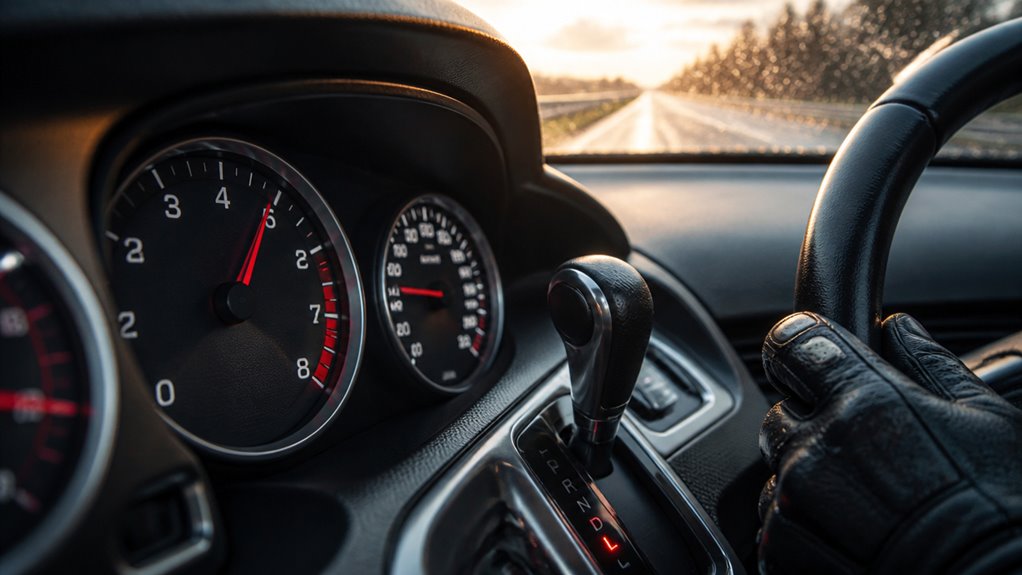
You can typically drive between 15 and 35 mph in low gear on an automatic transmission. Exact limits depend on your vehicle’s design and manufacturer settings.
Low gear holds lower gear ratios to boost torque and control, preventing upshifts at higher RPMs. Driving too fast risks excessive engine stress, overheating, and accelerated wear.
Always follow your owner’s manual for safe speed and RPM limits. Understanding these factors helps optimize performance and protect your transmission.
Key Takeaways
- Low gear speed limits vary by vehicle, typically ranging from 10 to 35 mph depending on transmission design and manufacturer settings.
- Engine RPM is the primary safety indicator; staying within manufacturer RPM limits prevents transmission damage.
- Low gear is designed for steep climbs, towing, and engine braking, not routine high-speed driving.
- Excessive speed in low gear causes high RPM, increasing wear and reducing fuel efficiency.
- Consult the owner’s manual for specific low gear speed and RPM limits tailored to your vehicle model.
What Is Low Gear in Automatic Transmissions?

Low gear in automatic transmissions refers to a setting that limits the transmission to its lowest gear or a set of lower gears. This prevents upshifts and allows the engine to maintain higher RPM for increased torque and control.
Low gear locks the transmission in lower gears, boosting engine RPM for greater torque and control.
When you engage low gear, the transmission resists shifting to higher gears. This keeps the engine in a power band optimized for torque rather than speed.
This setting is particularly useful for situations requiring enhanced traction, such as climbing steep grades or towing heavy loads.
You’ll find that low gear varies by vehicle, with some automatics holding a single low gear and others cycling through multiple low gears to manage engine speed.
To use it effectively, always consult your owner’s manual for specific operational guidelines and RPM limits.
Using low gear in stop-and-go traffic can increase transmission temperature, so understanding thermal management is important to prevent overheating.
How Vehicle Design Affects Low Gear Speed Limits?
Understanding how your vehicle’s design impacts low gear speed limits helps you apply the setting correctly and safely. Your car’s transmission type, gear ratios, and control logic determine how low gear functions and at what speeds it can be used without risking over-revving.
Some automatic transmissions hold a single low gear, while others allow shifts between multiple low gears to manage engine RPM. Additionally, the engine’s power band and torque curve influence how quickly RPM rises as speed increases in low gear.
Because of these variables, two vehicles at the same speed in low gear can exhibit vastly different engine loads and mechanical stress. To avoid damage, always consult your owner’s manual for gear-specific speed and RPM limits tailored to your vehicle’s precise design and transmission programming. Hybrid vehicles with an eCVT transmission may not have traditional low gear settings, affecting how low gear speeds should be managed.
Why There Is No Single Maximum Speed in Low Gear?
Because automatic transmissions vary widely in design and programming, you can’t rely on a single maximum speed for low gear across all vehicles.
Low gear typically restricts the transmission to lower gear ratios, but the exact speed limit depends on manufacturer settings, gear ratios, and engine characteristics.
Some models shift between low gears automatically, altering speed limits dynamically.
| Vehicle Model | Low Gear Behavior | Approximate Max Speed Range (mph) |
|---|---|---|
| Model A (Older) | Fixed low gear | 15–25 |
| Model B (Modern) | Auto shifts within low gears | 20–35 |
| Model C (Towing Spec) | Lower RPM limits | 10–20 |
Refer to your owner’s manual for precise limits tailored to your vehicle’s transmission and engine design.
Selecting the optimal gear ratio is essential to balance engine power, torque delivery, and vehicle speed in low gear.
How Engine RPM Affects Safe Speeds in Low Gear?
When you’re driving in low gear, it’s really important to keep an eye on your engine RPM. If you go beyond the limits set by the manufacturer, you could be putting your engine under a lot of stress. Nobody wants that!
High RPMs can wear down internal components way faster than normal and can even lead to transmission damage, especially if you’re running at those levels for a long time. Yikes!
Additionally, aggressive acceleration and sudden torque spikes impose extreme shock loads that can accelerate axle fatigue and wear.
RPM Limits And Safety
When operating in low gear, engine RPM serves as the primary indicator of safe speed limits. Exceeding the recommended RPM range can lead to excessive mechanical stress.
You should monitor RPM closely and avoid pushing beyond manufacturer-specified thresholds to maintain drivetrain integrity. Different vehicles have varied RPM limits for low gear, so consult your owner’s manual for exact figures.
| RPM Range | Safety Implication |
|---|---|
| 0 – 2,000 | Ideal for low-speed control |
| 2,000 – 3,500 | Normal operation range |
| 3,500 – 4,500 | Approaching caution zone |
| 4,500 – 5,000 | High risk of wear/damage |
| Above 5,000 | Exceeds safe operational limit |
Keep RPM within safe bounds to prevent engine and transmission damage. Using a professional diagnostic tool with active bidirectional testing can help monitor engine and transmission performance to avoid damage during operation.
Engine Stress At Speed
Monitoring engine RPM closely in low gear reveals how speed influences mechanical stress on the engine and transmission. As you increase speed, the constrained gear range forces the engine to operate at higher RPMs, elevating internal component strain.
This elevated RPM amplifies wear on pistons, valves, and transmission elements, risking premature failure if sustained. You must avoid exceeding manufacturer RPM limits, typically outlined in the owner’s manual, to prevent overheating and accelerated degradation.
Each vehicle’s gear ratios dictate the RPM-speed relationship, so a safe speed in low gear varies markedly. By controlling speed to keep RPM within recommended thresholds, you minimize stress and maintain drivetrain longevity.
Ignoring these parameters risks costly damage and reduced performance, making RPM monitoring essential for safe low-gear operation. Additionally, using manufacturer-recommended oil helps protect engine components under such stress conditions.
When and Why to Use Low Gear While Driving?
Although many drivers overlook the low gear option, engaging it proves essential for managing steep climbs, heavy loads, and challenging terrain. You should use low gear to maximize torque and maintain engine control when ascending or descending grades, towing, or steering through slippery surfaces.
Low gear restricts upshifts, allowing the engine to deliver increased power and enhanced engine braking, which reduces brake wear on long descents. It also prevents transmission hunting between gears under heavy load conditions. However, use low gear only within the manufacturer’s specified speed and RPM limits to avoid undue mechanical stress.
Consult your owner’s manual for precise guidelines, as transmission behavior and maximum allowable speeds vary by vehicle model and design. Low gear optimizes control and torque but isn’t intended for routine driving at higher speeds. For vehicles operating in harsh environments, incorporating durable corrosion protection in maintenance can help preserve transmission and drivetrain components.
What Happens When You Drive Too Fast in Low Gear?
When you drive too fast in low gear, your engine RPM can really spike. This isn’t great because it puts a lot of stress on the internal components, which can lead to accelerated wear. You definitely don’t want that!
Plus, that high-RPM operation raises the risk of damaging your transmission. Excessive heat and mechanical strain can be a recipe for disaster.
And let’s not forget about fuel efficiency. Running in low gear at high speeds just isn’t efficient and can even be harmful in the long run. So, it’s really best to avoid that practice altogether!
Upgrading to durable and adaptive shock absorbers can help maintain vehicle control and reduce mechanical stress under demanding driving conditions.
Engine Stress and Wear
Excessive engine speed caused by driving too fast in low gear markedly increases mechanical stress on both the engine and transmission components.
When you push the engine beyond its ideal RPM range, internal parts like pistons, valves, and bearings experience higher friction and heat, accelerating wear.
The elevated RPM also forces the valve train and timing components to operate under greater strain, risking premature fatigue.
Since low gear limits upshifting, the engine remains at high revs, reducing lubrication efficiency and increasing thermal load.
This continuous high-stress operation can degrade engine seals and gaskets, leading to leaks and reduced compression over time.
To minimize wear, monitor engine RPM closely and avoid exceeding manufacturer-recommended limits.
This ensures mechanical longevity and reliable performance.
Using engine seal repair additives can help reduce wear-related leaks and maintain compression when high revs contribute to seal degradation.
Transmission Damage Risks
If you drive too fast in low gear, your transmission endures significant mechanical strain due to prolonged engagement of lower gear ratios.
This constant stress can accelerate wear and increase the risk of costly damage. When you push your vehicle beyond its intended limits, you expose critical components to excessive heat and friction, which can degrade transmission fluid and compromise lubrication.
Here are four key risks you face:
- Overheating of transmission components, leading to premature failure.
- Rapid wear of clutch packs and bands due to high RPM stress.
- Increased likelihood of gear slippage as internal parts degrade.
- Potential damage to the torque converter from sustained high load.
To protect your transmission, always adhere to manufacturer speed and RPM guidelines when using low gear. Using high-quality lubricants and filtration systems can help maintain optimal engine protection under such stressful conditions.
Reduced Fuel Efficiency
Beyond the mechanical risks of driving too fast in low gear, you’ll also face a noticeable drop in fuel efficiency.
Low gear forces the engine to run at higher RPMs, which increases fuel consumption disproportionately compared to speed.
Since the transmission holds lower gear ratios, your engine works harder to maintain speed, burning more fuel than it would in higher gears.
This inefficiency results from increased internal friction, elevated engine load, and suboptimal combustion cycles at elevated RPMs.
Furthermore, prolonged operation in low gear at high speeds prevents the transmission from shifting to more economical gears, further reducing mileage.
To optimize fuel efficiency, you should avoid sustained high speeds in low gear and consult your owner’s manual for recommended speed and RPM limits specific to your vehicle’s transmission design.
How to Shift Safely Into and Out of Low Gear?
When shifting into low gear, you should first reduce your vehicle’s speed to a level appropriate for the transmission and engine specifications outlined in the owner’s manual. Abrupt shifts at high speeds can cause drivetrain shock and excessive engine RPM.
To shift safely into and out of low gear:
- Gradually decelerate to the recommended speed range before selecting low.
- Engage the low gear smoothly to avoid transmission strain and maintain vehicle control.
- Monitor engine RPM closely; if it approaches the upper limit, reduce speed immediately.
- Return to Drive once the need for low gear, such as steep terrain or towing, has passed to prevent unnecessary wear.
Following these steps guarantees mechanical integrity and optimizes performance during demanding driving conditions.
How to Check Your Vehicle’s Low Gear Speed Limits?
After mastering the correct procedure to shift into and out of low gear, you need to determine the exact speed limits your vehicle specifies for operating in this mode.
Consult your owner’s manual first; it provides model-specific data on low gear speed and recommended RPM ranges.
Avoid generic speed figures since transmission design varies widely. Monitoring engine RPM while in low gear helps prevent excessive wear or damage.
Use the manual’s guidelines to balance torque needs against mechanical limits.
| Vehicle Model | Low Gear Speed Limit (mph) | Max RPM in Low Gear | Notes |
|---|---|---|---|
| Model A | 25 | 4000 | Suitable for towing |
| Model B | 30 | 4500 | Supports multiple low gears |
| Model C | 20 | 3800 | Prioritize engine braking |
| Model D | 28 | 4200 | Avoid prolonged high RPM usage |
Frequently Asked Questions
Can Low Gear Improve Fuel Efficiency on Steep Hills?
Low gear generally won’t improve fuel efficiency on steep hills because it keeps engine RPM high, increasing fuel consumption.
However, it provides better control and prevents frequent shifting, which can reduce fuel waste from abrupt throttle changes.
You’ll get more consistent power delivery and engine braking, but overall, fuel economy usually decreases.
For precise efficiency gains, monitor your engine RPM and follow your vehicle’s manual recommendations tailored to your specific model.
Does Low Gear Affect Automatic Transmission Fluid Temperature?
Does using low gear increase automatic transmission fluid temperature? Yes, it often does because low gear keeps the engine and transmission working harder at higher RPMs, generating more heat.
You’ll notice fluid temperature rising during prolonged low-gear use, especially on steep climbs or heavy towing. To protect your transmission, monitor fluid temperature and avoid extended low-gear operation beyond manufacturer recommendations found in your owner’s manual.
How Does Low Gear Impact Vehicle Stability on Icy Roads?
Low gear improves your vehicle’s stability on icy roads by providing controlled, low-speed torque, reducing wheel spin and enhancing traction.
It limits abrupt power delivery, helping you maintain better grip and smoother acceleration. Engine braking in low gear also aids in preventing skids during descents.
However, you must balance speed and RPM, as excessive revving can reduce control. Always adjust your driving to conditions and consult your manual for best use.
Can Using Low Gear Prevent Transmission Overheating?
Wondering if low gear prevents transmission overheating?
Using low gear can help by keeping engine RPMs controlled during heavy loads or steep descents, reducing strain on the transmission’s cooling system.
It enhances engine braking and limits frequent shifting that generates heat.
However, it’s not a cure-all.
Prolonged low gear use at high RPMs can increase heat.
Always follow your vehicle’s manual for proper low gear use to avoid overheating risks.
Is Low Gear Beneficial for Off-Road Driving Conditions?
Yes, low gear is beneficial for off-road driving as it provides enhanced torque and control at low speeds.
You’ll gain better traction on uneven, slippery, or loose surfaces like mud, snow, or rocks.
This gear limits upshifts, allowing precise power delivery and reducing wheel slip.
Using low gear helps you navigate challenging terrain safely by increasing engine braking and preventing the transmission from hunting between gears during demanding conditions.
Protect Your Transmission With Smarter Shifting
Mastering low gear means managing mechanical momentum with mindful measurement. You’ll notice no neat number neatly nails down the max speed; it depends on design, RPM, and driving dynamics.
To dodge damage and drive decisively, explore your vehicle’s specific specs and shift safely. Remember, reckless revving or rapid rushing in low gear risks ruining your ride.
Stay sharp, shift smart, and safeguard your system’s strength for smooth, steady success.