To clean your RV black water tank, start by firmly closing all valves and guaranteeing your sewer hose is leak-free.
Flush the toilet and perform controlled rinse cycles, using slow water flow to avoid splashing.
Apply RV-safe chemical treatments directly into the tank and allow 12–72 hours for dwell time.
Agitate stubborn buildup with ice and detergent by driving briefly.
Finally, use a pressure wand to clean sensors and guarantee accurate readings.
Following these steps sets the foundation for thorough tank maintenance and improved system longevity.
Key Takeaways
- Close the black tank valve firmly and ensure all other valves are closed to isolate the tank before cleaning.
- Use bacteria-based or enzyme RV-safe cleaners and allow 12–72 hours dwell time for effective buildup breakdown.
- Agitate the tank by adding ice, water, and detergent, then drive the RV for 10–15 minutes to loosen deposits.
- Perform multiple fill-and-dump rinse cycles with slow water flow until the discharged water runs clear.
- Clean sensor probes by directing water with a pressure wand against tank walls and sensors for accurate readings.
Close Valves and Get Your RV Black Tank Ready

Start by firmly closing the black tank valve to prevent waste from leaking during cleaning.
Begin by securely closing the black tank valve to stop any waste leakage during cleaning.
This step is critical to avoid contamination and maintain control over waste flow.
Confirm the valve is fully shut by manually checking its position.
Next, inspect all valve seals and connections for wear or damage.
Replace faulty components to guarantee a secure system.
Close any additional valves linked to the black tank, like the toilet or auxiliary valves, to isolate the tank completely.
This setup prepares the tank for flushing and rinsing without accidental discharge.
Make sure your sewer hose connection is tight and leak-free before proceeding.
Proper valve closure and system readiness reduce the risk of spills and facilitate efficient cleaning processes.
For effective maintenance, it is also important to empty all holding tanks to avoid bacterial growth and odors.
Flush and Rinse Your RV Black Tank Properly
Alright, let’s get into how to properly flush and rinse your RV black tank. First things first, make sure to close the black tank valve before you flush the toilet. This helps clear out any initial residue that might be hanging around.
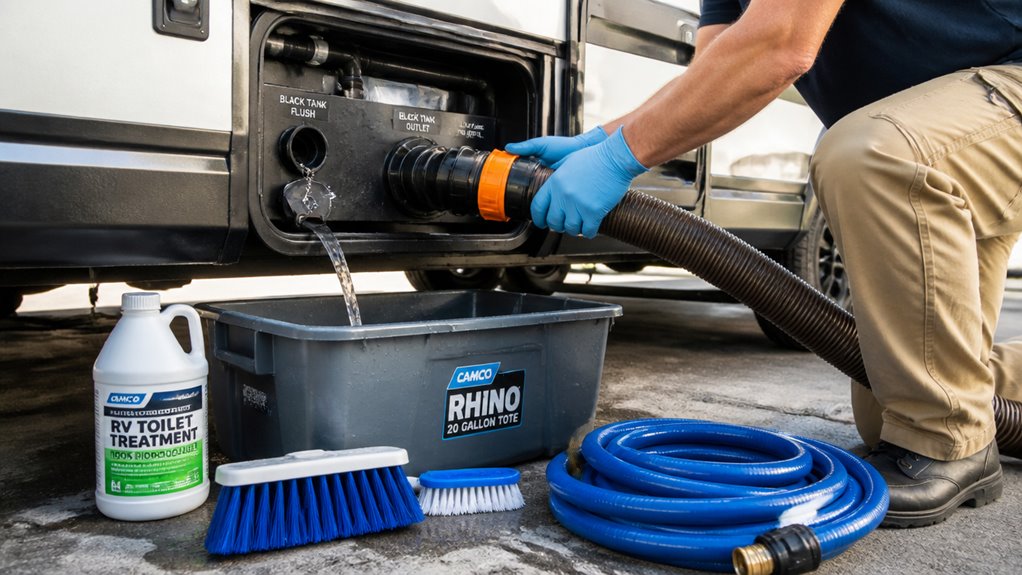
Next up, grab your rinse hose and connect it to the sewer fitting. When you open the valve, do it in controlled cycles. This way, you can avoid any splashing and ensure you’re getting a good clean.
Oh, and as you’re rinsing, remember to use a slow water flow. This is super important because it helps prevent overpressurizing the system and ensures that you get a nice, clear runoff. Happy rinsing!
For enhanced durability and performance during your travels, consider tires with Durawall sidewall protection to reduce the risk of damage while on the road.
Proper Valve Operation
Master proper valve operation by closing the black tank valve before beginning any flush or rinse cycle. This prevents premature drainage and ensures waste stays in the tank long enough for effective cleaning and breakdown.
When you flush or rinse, opening the valve too soon wastes water and reduces cleaning efficiency.
Follow these steps for effective valve management:
- Close the black tank valve before starting flushing or rinsing.
- Flush the toilet bowl first to clear residue.
- Connect the rinse hose securely to the RV sewer fitting.
- Open and close the valve in controlled cycles until runoff is clear.
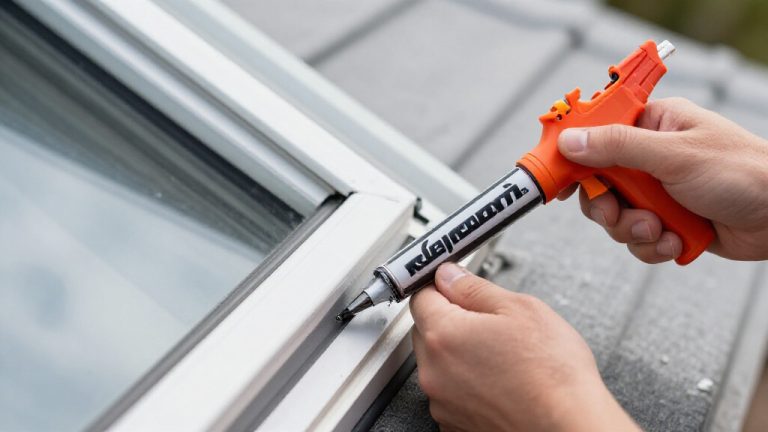
Proper valve handling optimizes water use and cleaning. It protects your tank and sensors from buildup and damage. Using flexible and durable sealants on your RV roof can similarly protect critical components like valves and fittings from leaks and weather damage, ensuring long-term system integrity.
Effective Rinse Techniques
Flushing and rinsing your RV black tank effectively requires controlled water flow and valve operation to remove waste residue and prevent buildup.
Start by closing the black tank valve before cleaning. Flush the toilet bowl to clear initial residue.
Attach a flush hose to the RV sewer rinse fitting, then turn on water slowly to avoid splashing.
Open and close the valve in cycles until runoff runs clear. For tougher buildup, fill the tank with water to loosen debris, then dump after rinsing.
Repeat this fill-and-dump cycle if water remains cloudy. Adding ice and detergent during travel can agitate stubborn deposits.
Always rinse thoroughly after chemical treatments and maintain adequate water in the tank to aid waste breakdown and sensor accuracy.
For optimal results, maintain a regular maintenance schedule to prevent buildup and ensure system longevity.
Use Water-Fill and Dump Method on Your RV Black Tank
When you fill up the black water tank with water during a rinse cycle, you help lift and loosen debris stuck to the tank walls.
This water-fill and dump method enhances sediment removal by increasing hydraulic force inside the tank.
Here’s how to apply it effectively:
- Fill the tank slowly until water backs up near the toilet pipe or tank throat.
- Close the black tank valve to retain liquid for waste breakdown between cycles.
- Open the valve and dump the tank after a full rinse to flush loosened debris.
- Repeat fill-and-dump cycles if the discharged water remains cloudy or contains solids.
Using this method regularly improves cleaning efficiency and reduces buildup without harsh chemicals. For stubborn stains, consider using RV black streak removers to maintain a spotless finish and protect your tank surfaces.
Apply Detergents to Your RV Black Tank for Deep Cleaning
When it comes to keeping your RV black tank fresh, choosing the right cleaner is key. Look for bacteria-based or enzyme cleaners specifically designed for RV black tanks. These are great at breaking down waste and eliminating odors.
Once you’ve picked your cleaner, just pour it directly into the toilet. Make sure to let it sit for the recommended amount of time. This really helps the cleaner work its magic!
And don’t forget to follow the product instructions closely. This way, you’ll avoid any damage and get the best results possible. Happy cleaning! Using biodegradable and non-toxic cleaners can help protect your RV plumbing and the environment during the cleaning process.
Choosing Effective Tank Cleaners
To tackle stubborn buildup and odors in your RV black water tank, you’ll want to apply specialized tank cleaners that go beyond simple rinsing. Choosing the right cleaner guarantees effective breakdown of waste, odor control, and sensor accuracy.
Focus on products designed for RV systems and septic compatibility to avoid plumbing damage.
Consider these factors when selecting a tank cleaner:
- Enzyme-based formulas promote bacterial growth to break down solids and reduce odors.
- Biodegradable detergents minimize environmental impact while providing cleaning power.
- Soak time requirements vary; longer dwell times improve deep cleaning.
- Avoid harsh chemicals like bleach that can damage tank materials and sensors.
Selecting cleaners with these attributes helps maintain your black tank’s function and longevity. Many effective options include sensor-safe formulations that protect tank sensors while ensuring thorough waste breakdown.
Proper Cleaner Application Methods
Apply detergents directly through the toilet to reach the black water tank’s interior surfaces effectively. First, close the black tank valve and flush to reduce residue.
Pour the cleaner slowly, allowing it to coat tank walls. Let the solution dwell 12 to 72 hours for best breakdown. Use bacteria-based or enzyme cleaners for deep cleaning and deodorizing.
After soaking, perform rinse cycles with water, using fill-and-dump methods to flush loosened debris.
| Step | Action |
|---|---|
| 1. Close valve | Prevent flow, retain liquid for cleaning |
| 2. Pour detergent | Apply through toilet, coat tank walls |
| 3. Dwell time | Wait 12-72 hours for chemical action |
| 4. Rinse & flush | Use water cycles to remove residues |
Agitate Your RV Black Tank to Remove Stubborn Buildup
Boost the cleaning power of your RV black tank by agitating its contents to dislodge stubborn buildup.
Agitation helps break down residue stuck to tank walls and sensors, improving flush efficiency and sensor accuracy.
Agitation loosens residue on tank walls and sensors, enhancing flush performance and sensor reliability.
One effective method involves adding ice cubes, water, and a small amount of detergent into the tank.
Then, drive your RV briefly to create a sloshing motion that scrapes deposits loose.
Follow these steps for peak agitation:
- Add ice, water, and detergent to the black tank.
- Secure all valves and close the tank valve.
- Drive the RV for 10–15 minutes to agitate the mixture.
- Flush and rinse the tank thoroughly to remove loosened debris.
Repeat agitation cycles as needed until buildup clears.
To further protect your system, consider insulating your tanks and pipes with foam insulation to prevent freezing during cold weather.
Clean RV Black Tank Sensors and Keep Your Tank Safe
Once you’ve loosened the buildup inside your black tank, focus on cleaning the sensors that monitor waste levels. Residue on sensor probes often causes inaccurate readings, so target these areas carefully.
Use a pressure wand or side-spraying tool through the toilet to direct water against tank walls and sensor surfaces. Avoid direct downward sprays that miss deposits.
Perform multiple rinse cycles, especially if the tank has been unused for months, to remove hardened deposits like struvite. After thorough flushing, check sensor accuracy and repeat cleaning if necessary.
Maintain tank safety by keeping the black tank valve closed between uses to preserve liquid for waste breakdown. Always rinse thoroughly after chemical treatments and use only RV-safe cleaners to protect your plumbing system.
For improved safety during maintenance, consider using a stable ladder designed for RV tasks to reach high or awkward tank access points.
Frequently Asked Questions
What Is the Best Frequency for Cleaning an RV Black Water Tank?
You should clean your RV black water tank after every 3 to 5 uses or at least once a month during regular trips.
Frequent cleaning prevents buildup and sensor errors.
If you notice odors or inaccurate sensor readings, clean it immediately.
For extended storage, perform a thorough cleaning before and after.
Regular maintenance keeps the system working efficiently and reduces costly repairs.
Don’t forget to use appropriate cleaners and follow safety practices.
Can Household Bleach Damage My RV Black Water Tank?
Using household bleach on your RV black water tank is like using a sledgehammer to crack a nut. It can damage seals and harm beneficial bacteria essential for waste breakdown.
Bleach’s harsh chemicals might corrode plumbing and sensors over time. Instead, opt for RV-safe, bacteria-based cleaners designed to protect your tank’s integrity while effectively deodorizing and breaking down waste.
Always rinse thoroughly if you ever use bleach to minimize chemical residue.
How Do I Prevent Odors During Long-Term RV Storage?
To prevent odors during long-term RV storage, make sure you completely flush and clean the black water tank first.
Add a bacteria-based tank treatment and enough water to keep waste broken down.
Keep the tank valve closed to preserve liquid and prevent gas escape.
Store your RV with the tank valve shut and periodically check or add treatments if stored for months to maintain freshness and avoid buildup.
Are Enzyme Treatments Safe for All RV Plumbing Systems?
Yes, enzyme treatments are generally safe for most RV plumbing systems because they use natural bacteria to break down waste without harsh chemicals.
However, you should always choose products labeled as RV-safe and septic-compatible to avoid damaging seals or sensors.
Avoid bleach-based or harsh chemical cleaners alongside enzymes, as they can kill beneficial bacteria.
Always follow the manufacturer’s instructions to maintain effective, safe cleaning and protect your plumbing system.
What Should I Do if My RV Black Tank Sensor Stops Working Entirely?
About 60% of RV sensor issues stem from residue buildup. If your black tank sensor stops working entirely, start by thoroughly cleaning the sensor probes with a pressure wand or side-spraying tool to remove hardened deposits.
Run multiple rinse cycles, adding agitation methods like ice cubes and water to loosen grime. If problems persist, check wiring connections and consider sensor replacement.
Always make certain you use compatible cleaners to avoid damage.
Discover the Benefits of Regular RV Black Water Tank Maintenance
By following these steps, you’ll keep your RV black water tank as clean as a whistle, ensuring smooth operation and preventing buildup.
Regular flushing, proper rinsing, and using detergents will maintain peak performance.
Don’t forget to agitate the tank and clean the sensors to avoid clogs and false readings.
With consistent care, your tank will stay reliable and odor-free, making every trip hassle-free and enjoyable.