
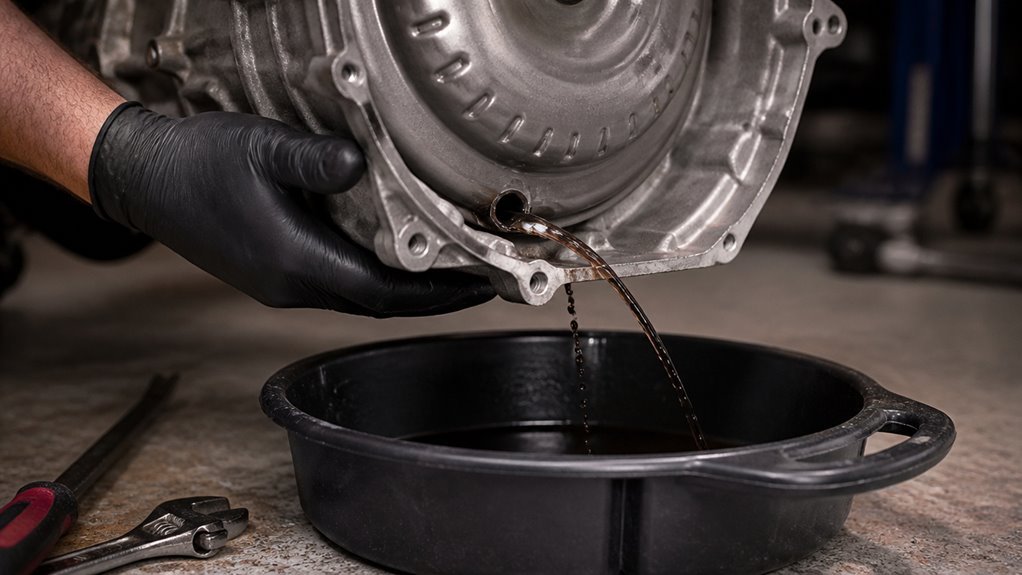
You can’t simply drain torque converter fluid without a drain plug since most converters don’t have one. The fluid is held inside internal chambers and cooler lines.
Draining the transmission pan only removes part of the fluid, leaving old fluid that harms performance. Instead, you’ll need to perform a cooler-line exchange or partial pan drain.
Follow manufacturer procedures carefully to avoid damage. Proper safety precautions and fluid level checks are essential. Learn how to fully refresh the fluid and prevent issues ahead.
Key Takeaways
- Most torque converters lack drain plugs; fluid inside requires special procedures beyond pan draining to fully replace old fluid.
- Perform a cooler-line fluid exchange by disconnecting the return line and running the engine in short intervals to flush out fluid.
- Refill the system with the exact volume of manufacturer-recommended ATF after each fluid removal cycle to maintain proper levels.
- Consult the factory service manual for specific torque converter fluid service procedures and to confirm plug presence or absence.
- Use proper PPE and contamination prevention methods when handling ATF and disconnecting cooler lines to ensure safety and system integrity.
Why You Can’t Simply Drain a Torque Converter Fluid?

Although you might expect to drain torque converter fluid as easily as draining transmission pan fluid, the process is more complex.
Most torque converters lack a drain plug and hold fluid within their internal chambers and the cooler circuit.
A simple pan drain won’t reach this fluid. When you drain only the pan, a significant volume of old fluid remains trapped inside the converter and cooler lines.
This incomplete fluid replacement can degrade transmission performance over time.
Since transmission designs vary widely, you need to consult factory service information for your vehicle’s exact procedure.
Using the wrong ATF or improper fluid replacement method risks damage.
Consequently, draining torque converter fluid requires specialized procedures beyond a standard pan drain.
This ensures you fully renew the fluid in all transmission components.
Because the thermal bypass valve controls fluid flow to the cooler, its proper function is critical for maintaining transmission fluid temperature during operation.
How to Identify If Your Vehicle Has a Torque Converter Drain Plug?
Since torque converter drain plugs aren’t standard on all vehicles, you need to verify whether your specific model includes one before attempting to drain the fluid.
Start by consulting the factory service manual or official manufacturer documentation for your vehicle’s make, model, and year. These sources typically specify the presence and location of a drain plug if equipped.
Consult your vehicle’s factory service manual to verify the presence and location of a torque converter drain plug.
Physically inspect the transmission housing around the torque converter area under the vehicle. A drain plug usually appears as a bolt or plug distinct from pan bolts.
If you can’t locate a plug or the documentation doesn’t mention one, your vehicle likely lacks a torque converter drain plug. In that case, follow manufacturer-recommended procedures for fluid exchange or pan drain instead of attempting to drain the converter directly.
For accurate diagnosis and maintenance, using a professional scanner with active bidirectional testing can help verify system status and fluid conditions before servicing.
How to Do a Pan Drain and Refill for Partial Fluid Service?
When you’re doing a pan drain, you’re essentially removing fluid from the transmission pan.
Now, keep in mind that this process leaves a good amount of fluid in the torque converter and the cooler circuit. So, you’re not getting everything out, but that’s okay.
Once you’ve drained the fluid, it’s time to refill.
Make sure to use the automatic transmission fluid that your manufacturer recommends. This is super important because using the wrong fluid can lead to some serious damage down the line.
And don’t skip the refill steps! It’s crucial to follow the exact procedure laid out in your vehicle’s service manual.
After you’ve added the new fluid, double-check the fluid level to ensure everything’s just right. This little detail can make a big difference in your transmission’s health!
For added protection, consider incorporating corrosion inhibitors to safeguard metal components exposed during maintenance.
Pan Drain Basics
A transmission pan drain removes fluid from the transmission pan but leaves much of the fluid inside the torque converter and cooler circuit. This method provides a partial fluid service and is commonly used when no converter drain plug exists.
When performing a pan drain, you’ll:
Safely park and secure the vehicle, then remove the transmission pan bolts to drain fluid into a clean container.
Clean the pan and replace the filter if applicable, ensuring all gasket surfaces are free of debris.
Reinstall the pan with a new gasket, torque bolts to manufacturer specs, and prepare for fluid refill.
For improved vehicle longevity and performance, consider upgrading to high-quality shocks that enhance ride comfort and control, especially if your vehicle experiences rough driving conditions or heavy loads as noted in shock selection criteria.
Fluid Refill Steps
Although you’ve removed most of the transmission fluid from the pan, you’ll need to carefully refill the system with the correct amount and type of automatic transmission fluid (ATF) specified by the manufacturer.
First, verify all cooler lines and seals are securely reconnected to prevent leaks. Use a clean funnel to pour the specified ATF into the transmission dipstick tube or fill port, matching the volume removed during the pan drain.
After refilling, start the engine and let it reach the manufacturer-recommended operating temperature. Check the fluid level with the transmission in the specified state, usually idling in park or neutral, and add fluid incrementally to avoid overfilling.
Finally, inspect all connections for leaks and verify proper fluid level following the exact factory service procedure to guarantee reliable transmission performance. Always consult the owner’s manual or official documentation to ensure the correct fluid volume and type for your specific vehicle.
How to Use a Cooler-Line Exchange to Refresh Torque Converter Fluid?
By focusing on the transmission cooler lines, you can effectively refresh the torque converter fluid without direct access to the converter itself. This method uses the cooler-line exchange process, which flushes out old fluid while introducing new automatic transmission fluid (ATF).
Begin by identifying the return cooler line per your vehicle’s service manual. Disconnect it and route it into a clean container to capture the expelled fluid. Run the engine in short intervals, around 10 to 15 seconds, to pump out about two quarts of fluid before stopping. Always replace the removed volume with the specified ATF to maintain proper fluid levels.
Key steps to follow:
- Identify and disconnect the return cooler line safely.
- Collect expelled fluid and measure volume precisely.
- Repeat exchange cycles, adding new ATF equal to the fluid removed.
For optimal transmission performance and longevity, regular fluid exchanges like this help maintain heavy-duty protection under towing and stop-and-go driving conditions.
Safety Tips for Transmission Fluid Service
Before you dive into transmission fluid service, it’s super important to make sure your vehicle is supported securely. Use some reliable jack stands and don’t forget to chock the wheels to stop any unwanted movement. Safety first, right?
Also, make sure you’re wearing gloves and eye protection. Handling hot fluid can be tricky, and you definitely want to avoid any contamination.
And hey, when you’re getting ready to disassemble things, take a moment to clean the connection areas. Keeping dirt out of those open lines is essential for maintaining system integrity. A little prep goes a long way!
Additionally, always disconnect all power sources before performing maintenance to avoid sparks or shorts.
Proper Vehicle Support
When working underneath a vehicle to service transmission fluid, you must make sure it’s securely supported to prevent accidents. Proper vehicle support guarantees stability and protects you from sudden shifts or falls during the procedure. Always prioritize safety by using appropriate equipment and following best practices.
To properly support your vehicle:
Park on a level surface, apply the parking brake, and chock the wheels to prevent rolling. Use a hydraulic jack to raise the vehicle, then place properly rated jack stands under manufacturer-recommended lift points. Never rely solely on the jack; it can fail unexpectedly, causing the vehicle to drop.
These steps create a stable working environment, minimizing risk while you access transmission components safely. Additionally, using wheel chocks for stability further ensures the vehicle remains stationary throughout the service.
Personal Protective Equipment
You should always wear proper personal protective equipment (PPE) during transmission fluid service to minimize exposure to hazardous fluids and prevent injuries.
At minimum, wear chemical-resistant gloves to avoid skin contact with automatic transmission fluid (ATF), which can cause irritation.
Use safety goggles or face shields to protect your eyes from splashes, especially when disconnecting cooler lines or removing transmission components.
Wear long sleeves and pants to reduce skin exposure. If working under the vehicle, make sure your clothing is snug to avoid entanglement with moving parts.
Additionally, use a mechanic’s apron or coveralls for extra protection and easy cleanup.
Proper PPE reduces risks of burns from hot fluid and contamination, ensuring your safety throughout the draining and fluid-handling process.
For added safety, consider using protective gear made from chemical-resistant materials that can withstand exposure to oils and solvents commonly encountered during transmission maintenance.
Contamination Prevention Methods
Maintaining cleanliness during transmission fluid service is critical to prevent contamination that can compromise system performance and longevity. You need to keep dirt, metal shavings, and moisture out of the transmission system at all times.
Contaminants can cause premature wear or block fluid passages, leading to costly repairs. To prevent contamination effectively, you should:
Clean connection points and cooler lines thoroughly before disassembly. Use proper containers to collect and store used fluid without spills. Seal all open lines and transmission openings immediately after fluid removal.
Following these steps minimizes the risk of foreign material entering the system. It preserves fluid integrity and guarantees reliable transmission operation after servicing. Always handle ATF with gloves and eye protection to safeguard yourself and maintain a contaminant-free environment. Using adhesives or tapes with chemical and heat resistance in repair areas can further protect the system from environmental damage during maintenance.
How to Check Torque Converter Fluid Levels and Inspect for Leaks?
Regularly checking the torque converter fluid level is essential to guarantee proper transmission operation and prevent damage.
Start by warming the engine to the manufacturer’s specified temperature. Then park on a level surface with the parking brake engaged.
Locate the transmission dipstick if available, and remove it to inspect fluid level and condition. The fluid should be clear and reddish; dark or burnt-smelling fluid signals contamination or overheating.
If no dipstick exists, consult factory service information for the proper checking procedure, often involving specific temperature and engine states.
Next, thoroughly inspect around the transmission and cooler lines for leaks. Check seals, clamps, and connections.
Address any leaks immediately to avoid fluid loss and transmission damage. Maintain fluid at the correct level using the specified automatic transmission fluid.
Frequently Asked Questions
Can Using the Wrong ATF Damage My Transmission?
Yes, using the wrong automatic transmission fluid (ATF) can damage your transmission. Incorrect ATF may lack the necessary friction modifiers, detergents, and viscosity required for your specific transmission design.
This can cause overheating, slipping, or premature wear of internal components. Always consult your vehicle’s factory service information to confirm the correct ATF specification before refilling.
Using the exact fluid protects your transmission’s performance and longevity.
What Are the Risks of Drilling a Torque Converter?
If you drill into a torque converter, you risk damaging its delicate internal components and creating metal shavings that contaminate the transmission fluid.
These shavings can cause severe wear and failure.
Plus, sealing a drilled hole securely is challenging, risking leaks and fluid loss.
Instead, always follow manufacturer instructions.
Improvised drilling can lead to costly repairs and unsafe operation.
How Often Should I Perform a Cooler-Line Exchange?
You should perform a cooler-line exchange based on your vehicle manufacturer’s recommendations, typically every 30,000 to 60,000 miles.
However, don’t rely on a generic interval; consult your specific service manual since transmission designs vary.
Frequent exchanges can help maintain fluid cleanliness and transmission performance, but overdoing it isn’t necessary.
Always use the correct ATF and follow the precise procedure to avoid contamination or damage during the fluid exchange.
Can Metal Debris in ATF Indicate Transmission Failure?
Could metal debris in your ATF be signaling transmission failure? Yes, it often indicates internal wear or damage.
When you find metal particles, it suggests components are deteriorating, which can lead to serious malfunction.
Don’t ignore this sign; continuing to operate without addressing the issue risks further damage.
You should seek a professional diagnosis promptly, as fluid exchange alone usually won’t fix underlying mechanical problems causing metal contamination.
What Should I Do if My Vehicle Lacks a Service Procedure?
If your vehicle lacks a specific service procedure, don’t improvise risky methods like drilling the torque converter. Instead, use a cooler-line fluid exchange to refresh ATF while minimizing contamination risk.
Always consult factory service manuals or contact the manufacturer for guidance. Prioritize safety by following general transmission fluid service protocols.
Consider professional inspection if you suspect internal damage or contamination. Avoid shortcuts that could cause costly transmission failure.
Protect Your Transmission With Proper Fluid Maintenance
When draining torque converter fluid without a drain plug, remember that “a stitch in time saves nine.”
You can’t simply drain it like engine oil, so use a pan drain or cooler-line exchange to refresh the fluid effectively.
Always check fluid levels afterward and inspect for leaks to avoid costly damage.
Following proper safety protocols guarantees you maintain your transmission’s performance and longevity without unnecessary risk or expense.