
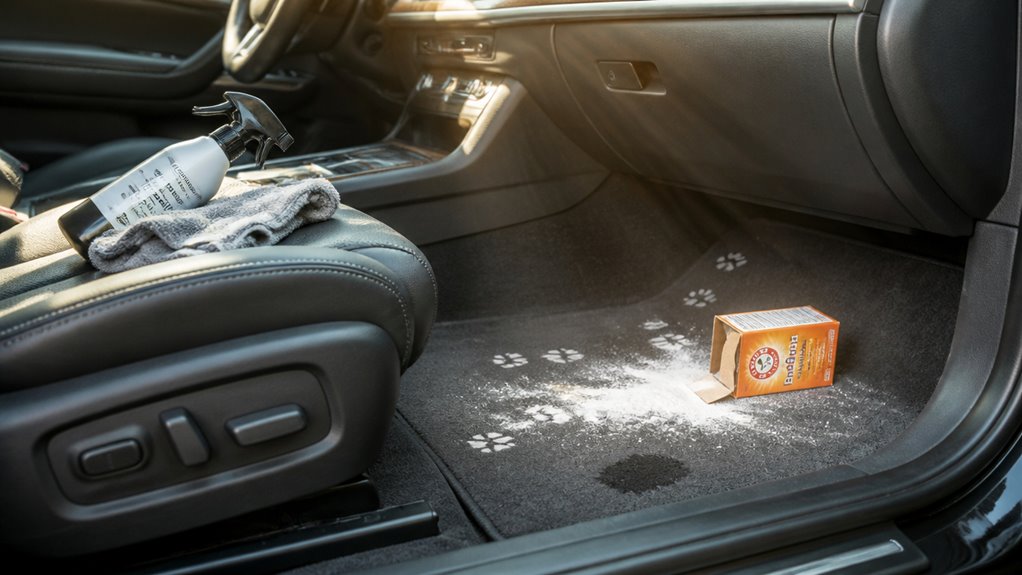
To get mouse smell out of your car, start by ventilating it outdoors with all doors, hood, and trunk open for at least 20 minutes.
Inspect and remove droppings, urine, nests, and dead rodents using gloves and disinfectants. Never dry sweep or vacuum dry waste.
Replace contaminated cabin air filters and clean ventilation ducts. Check for rodent damage to wiring or insulation and repair as needed.
Taking these thorough steps will effectively reduce odor and prevent future infestations. Further guidance covers inspection and prevention details.
Key Takeaways
- Ventilate the car by opening all doors, hood, and trunk for at least 20 minutes in a well-ventilated area to reduce trapped odors.
- Inspect and remove droppings, nests, and urine stains from under seats, carpets, trunk, and engine compartment using gloves and disinfectant.
- Saturate contaminated areas with disinfectant or bleach solution, let sit for at least 5 minutes, then wipe and seal waste in plastic bags.
- Replace cabin air filters and clean air intake vents and ventilation ducts to prevent odor circulation inside the vehicle.
- Check for chewing damage on wiring and hoses; seek professional repairs and seal rodent entry points to prevent recurrence.
Identify the Source of Mouse Odor in Your Car

Before you can eliminate a mouse smell from your car, you need to identify its exact source.
Start by examining common areas: under seats, beneath floor mats, along carpet edges, inside the trunk, glove box, and engine compartment.
Look carefully for droppings, urine stains, nests, or a dead rodent.
Next, inspect the air intakes and cabin air filters, as rodent contamination here can circulate odor throughout the cabin.
Perform this inspection outdoors or in a well-ventilated space, opening the hood, doors, and trunk to air the vehicle for about 20 minutes beforehand.
If the car has been idle for a long time, check air intakes and filters before engine startup.
Note any chewing damage to wiring, hoses, belts, or insulation, which requires professional evaluation to prevent further issues.
Consider replacing the cabin air filter to reduce lingering odors and improve air quality inside the vehicle.
Inspect Common Rodent Hiding Spots for Waste and Damage
Let’s dive into checking under the seats. It’s a good idea to look for any droppings, nests, or even signs of damage to the upholstery and wiring. You never know what you might find hiding out of sight!
Once you’ve done that, move on to the engine compartment. Make sure you’re in a well-ventilated area before popping the hood. Here, you’ll want to inspect for any rodent waste, chewed hoses, belts, and insulation.
It’s really important to pay close attention to areas near the air intakes. Contamination there can lead to some unpleasant odors spreading through your ventilation system.
Also, sealing any entry points where rodents could get inside the car is key to preventing future infestations.
Check Under Seats
While inspecting your vehicle for mouse odor, focus closely on the area under the seats. Rodents often seek shelter there.
Remove floor mats and lift carpet edges to expose hidden surfaces. Carefully examine for droppings, urine stains, nests, or any signs of chewed upholstery or wiring.
Use a flashlight to identify subtle damage. If you find contamination, wear rubber gloves before handling.
Avoid dry sweeping or vacuuming to prevent airborne particles. Instead, saturate affected areas with a disinfectant or bleach solution, adhering to the product’s contact time.
After soaking, wipe up residue with disposable towels and discard properly. Check wiring and insulation thoroughly for gnaw marks, as damaged components require professional repair.
Systematically documenting each finding guarantees an all-inclusive cleanup and helps eliminate persistent mouse odor effectively.
Additionally, ensuring good ventilation during this process helps reduce lingering odors and prevents moisture buildup that could worsen the smell.
Inspect Engine Compartment
Lift the hood and carefully examine the engine compartment, focusing on common rodent hiding spots such as near the battery, air filter housing, and wiring harnesses.
Look for droppings, urine stains, nesting materials, or carcasses that can emit odor. Inspect wiring, hoses, belts, and insulation meticulously for chewing damage, which may compromise vehicle safety and require professional repair.
Check air intakes and cabin air filters for contamination, as these can spread odor into the cabin. Perform inspections in a well-ventilated area, wearing gloves to handle waste safely.
Avoid disturbing dry rodent waste to prevent airborne particles; instead, apply a disinfectant to contaminated areas, allow proper contact time, then remove residue with disposable towels.
Thorough inspection and removal of all contamination in the engine compartment are essential to eliminate persistent mouse odor effectively.
To prevent re-infestation, it is crucial to seal entry points such as gaps around wiring and vents to block rodent access to the engine compartment.
Air Out Your Vehicle to Reduce Mouse Odor
Firstly, open up your vehicle’s doors, hood, and trunk. Make sure you do this in a well-ventilated area so that fresh air can flow through. It’s a good idea to let it air out for at least twenty minutes.
This will really help get rid of those pesky mouse odors that might be lingering inside.
Taking this step not only helps with the smell but also clears out any airborne contaminants. Once you’ve given it some time to breathe, you can move on to a more detailed inspection or cleaning.
To prevent ongoing issues, be sure to check for clogged drains or leaks that can trap moisture and worsen odors.
Open Doors And Hood
Open your vehicle’s doors, hood, and trunk in a well-ventilated area to help dissipate mouse odor before inspection. This step reduces trapped air and facilitates the escape of volatile compounds from rodent contamination.
To maximize odor reduction, focus on these actions:
Position the vehicle in direct airflow, such as a breezy driveway or open garage, to enhance ventilation.
Keep all openings fully ajar to avoid restricting air exchange in enclosed compartments.
Inspect under the hood for nests or droppings near air intakes, wiring, and insulation while airing out.
Using a dehumidifier to reduce humidity can further help eliminate moisture that contributes to persistent odors.
Ventilate For Twenty Minutes
Before inspecting your vehicle for rodent contamination, allow it to ventilate for at least twenty minutes with the doors, hood, and trunk fully open.
This step helps dissipate trapped odors and airborne particles from rodent droppings, urine, or nesting materials, improving air quality inside the vehicle.
Make certain all openings remain unobstructed to facilitate maximum airflow.
Ventilation reduces the risk of inhaling harmful contaminants during your inspection and cleaning process.
Use this time to prepare necessary safety equipment, such as gloves and disinfectants, before entering the vehicle.
Proper ventilation is a critical preliminary action that minimizes odor concentration and aids in identifying contamination sources more effectively.
This sets the stage for thorough, safe remediation measures.
For enhanced safety when inspecting vehicles, consider using devices with infrared night vision to detect rodent activity in low-light conditions.
Use Well-Ventilated Area
Frequently, airing out your vehicle in a well-ventilated area markedly reduces mouse odor by dispersing trapped contaminants before inspection.
To maximize effectiveness, open all doors, the hood, and trunk, allowing fresh air to circulate thoroughly. This process dilutes volatile compounds from rodent urine and nests, improving odor dissipation.
When you air out your car, remember to:
Choose an outdoor or garage space with good airflow and no enclosed barriers.
Keep the vehicle open for at least 20 minutes to guarantee adequate ventilation.
Avoid operating the HVAC system during airing to prevent spreading odors inside.
This method prepares the vehicle for detailed inspection and cleaning by reducing airborne contaminants and odor intensity efficiently.
Safely Remove Mouse Droppings, Urine, and Nests
When handling mouse droppings, urine, and nests, you must wear rubber or plastic gloves to prevent direct contact with hazardous materials.
Always wear rubber or plastic gloves to avoid direct contact with hazardous mouse droppings, urine, and nests.
Avoid sweeping or vacuuming dry waste to prevent airborne contamination. Instead, thoroughly saturate the affected areas with a disinfectant or a bleach solution, ensuring the material is completely soaked.
Maintain the wet contact for at least five minutes or follow the disinfectant’s label instructions.
Afterward, carefully wipe up the softened waste with disposable paper towels.
Seal and discard all contaminated materials in a plastic bag. Conduct this process outdoors or in a well-ventilated space, keeping the car’s hood, doors, and trunk open for airflow.
This method minimizes exposure risks and effectively removes rodent waste without dispersing harmful particles into the environment.
To further reduce residual odors and maintain cleanliness, consider regular cleaning and maintenance of the affected areas.
Disinfect Hard Surfaces After Removing Rodent Waste
After you remove all rodent waste, thoroughly disinfect hard surfaces using a product approved for killing viruses and bacteria.
Follow the manufacturer’s dilution and contact-time instructions to guarantee efficacy. This step eliminates residual contaminants that contribute to odor and health risks.
Focus on these critical areas:
Door handles, dashboard, and steering wheel, where frequent contact occurs.
Floor mats, pedals, and center console surfaces that may have indirect contamination.
Under-seat hard surfaces and exposed metal panels prone to rodent access and waste accumulation.
Apply disinfectant evenly, allowing it to remain wet for the recommended time.
Avoid rushing this process, as incomplete disinfection can leave viral particles active.
Use disposable towels to wipe surfaces afterward and discard them safely.
This methodical approach markedly reduces persistent mouse odor and contamination.
Using enzymatic cleaners can further help break down organic residues and odors left by rodents.
Replace Cabin Air Filters and Inspect Ventilation System
Replace the cabin air filter promptly if you find signs of rodent contamination such as nesting material, droppings, or urine. Contaminated filters can continuously circulate odors and allergens.
After removal, inspect the ventilation system, including air intakes and ducts, for debris or residue. Thoroughly clean or replace affected components to prevent odor recurrence.
| Inspection Step | Action Required |
|---|---|
| Cabin Air Filter | Remove and replace if contaminated |
| Air Intake Vents | Check for nests or debris |
| Ventilation Ducts | Clean or vacuum to remove residue |
Ensure you perform these tasks in a well-ventilated area, wearing gloves. Proper maintenance of these components is critical to effectively eliminate persistent mouse odor from your car’s interior. Immediate ventilation after contamination is essential to prevent the odor from worsening due to moisture or prolonged contact with surfaces, as explained in Preventative Measures.
Repair Chewed Wiring and Rodent Damage
Inspecting and replacing contaminated cabin air filters is only part of maintaining your vehicle’s health after rodent intrusion. You must carefully examine wiring, hoses, belts, and insulation for chewing damage. Chewed wiring poses serious risks, including electrical shorts and vehicle malfunction, so address this promptly.
To repair rodent damage effectively:
Identify all damaged components. Use a flashlight and inspection mirror for hard-to-see areas. Avoid driving if wiring insulation is compromised. Seek a professional automotive electrician for repairs. Replace or repair damaged hoses and belts to prevent leaks or mechanical failure.
Taking these steps prevents further damage and ensures your vehicle operates safely and reliably after rodent exposure. Don’t delay professional assessment if damage is extensive or beyond your repair skills.
How to Handle Persistent Mouse Odor?
When persistent mouse odor lingers despite thorough cleaning, you need to pinpoint and eliminate any remaining contamination sources before trying deodorizing treatments.
Begin by inspecting hidden areas such as under seats, carpet edges, trunk, glove box, and the engine compartment for unnoticed droppings, urine, nests, or carcasses.
Check the air intakes and cabin air filters thoroughly, as rodent contamination in ventilation systems often causes persistent smells.
Ventilate the vehicle by opening the hood, doors, and trunk for 20 minutes before inspection.
If odor intensifies when the fan runs, focus on the intake system.
After locating contamination, use a disinfectant to soak and remove waste safely.
Avoid masking odors with air fresheners; instead, remove all contamination.
If odor persists or sources are inaccessible, seek professional cleaning or mechanical inspection to fully resolve the issue.
Keep Mice From Coming Back to Your Car
To keep mice from coming back to your car, you need to maintain regular inspections and control measures, especially during periods of inactivity.
Check for fresh droppings, urine, nests, or signs of chewing on wiring and belts. Early detection prevents extensive contamination and damage.
Additionally, reduce rodent access near your parking area by removing debris and food sources.
Inspect your vehicle periodically, focusing on hidden areas like under seats and in engine compartments.
Use traps or deterrents around your garage or parking spot to minimize rodent presence.
Store your car in a location that allows easy access for routine checks and prompt intervention.
Frequently Asked Questions
Can Mouse Odor Cause Health Problems for Car Occupants?
Yes, mouse odor can cause health problems for car occupants. The smell often signals presence of rodent droppings, urine, or nests, which may harbor harmful bacteria and viruses.
You can be exposed to allergens or pathogens like hantavirus, which pose respiratory risks. To protect yourself, inspect and clean contaminated areas thoroughly.
Wear gloves, ventilate the vehicle well, and avoid driving if wiring damage is present until a professional assesses it.
What Types of Disinfectants Are Safest for Car Interiors?
Think of disinfectants as your car’s bodyguards. They need to be tough but gentle.
Use household disinfectants labeled for interior surfaces or a diluted bleach solution (1 part bleach to 10 parts water).
Avoid harsh chemicals that could damage upholstery or electronics.
Follow manufacturer instructions precisely, ensuring proper dilution and contact time.
Always test a small area first, and avoid spraying directly on sensitive components like air filters or wiring to keep your car safe and clean.
How Long Does It Take for Mouse Odor to Completely Dissipate?
Mouse odor can take anywhere from several days to a few weeks to completely dissipate, depending on thoroughness of cleaning and ventilation.
You’ll need to remove all contamination sources, disinfect affected areas, replace cabin air filters, and ventilate the car regularly.
Persistent odors often indicate missed waste or nesting materials, requiring reevaluation.
Using deodorizing sprays without eliminating the source won’t speed dissipation, so focus on complete removal and repeated airing.
Are Ultrasonic Devices Effective at Repelling Mice in Cars?
Ultrasonic devices aren’t reliably effective at repelling mice in cars. While the adage “prevention is better than cure” applies here, these devices often fail to penetrate vehicle compartments fully.
They also don’t consistently deter rodents. You should focus on thorough inspection, sealing entry points, and removing attractants.
Relying solely on ultrasonic repellents can let mice persist. Combine them with physical and chemical control methods for best results.
Can Professional Ozone Treatments Remove Mouse Smell Safely?
Yes, professional ozone treatments can safely remove mouse smell if performed correctly.
You’ll want a certified technician to control ozone levels and exposure time, as excessive ozone can damage vehicle materials and pose health risks.
Ozone oxidizes odor-causing molecules effectively but only after thorough cleaning of contamination.
Seal The Entry Points Before The Smell Comes Back
You now know that a single mouse can produce up to 50 droppings daily, making thorough cleaning vital.
By identifying odor sources, safely removing waste, disinfecting surfaces, and replacing cabin filters, you methodically eliminate the smell and health risks.
Repairing damage and sealing entry points guarantees mice don’t return.
Follow these steps precisely to restore your car’s hygiene and prevent persistent odors caused by rodent infestations efficiently and effectively.


