
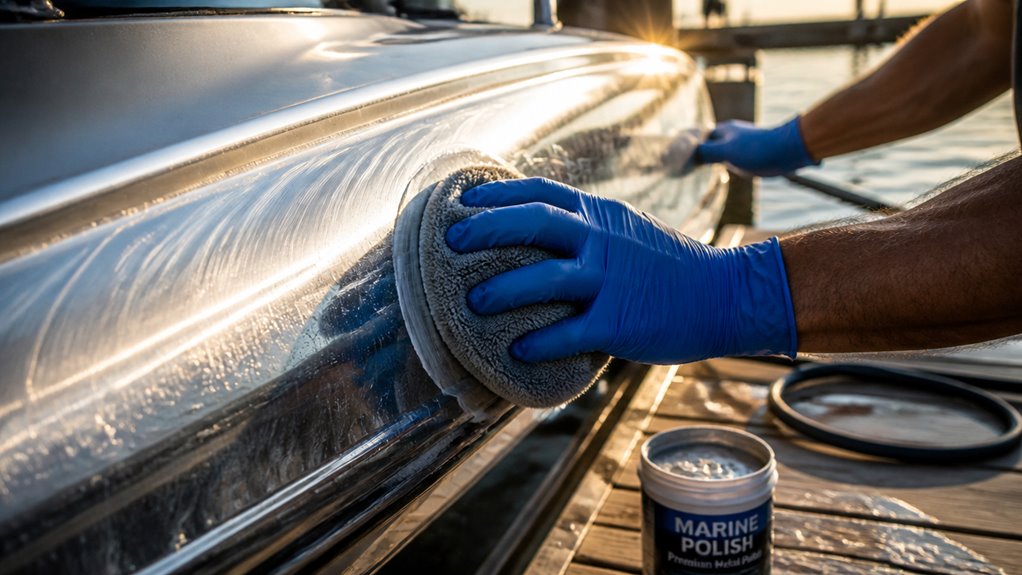
To polish your aluminum boat, start by washing and removing grime with a mild soap and specialized aluminum cleaner.
Sand the hull progressively from 180 to 600 grit for smoothness.
Then apply aluminum polish using appropriate buffing pads in overlapping motions with a power buffer.
Work carefully to avoid contamination and streaks.
Finish by applying wax or a protective coating to preserve the shine.
Following this, you’ll find detailed steps to maintain your boat’s polished finish effectively.
Key Takeaways
- Clean the aluminum boat with a mild soap and antioxidizing cleaner to remove dirt, oxidation, and grime before polishing.
- Sand the surface progressively using 180-, 320-, and 600-grit sandpaper for a smooth, uniform finish.
- Apply aluminum polish in sections with appropriate buffing pads and use a power buffer with circular, overlapping motions.
- Wipe off polish residue immediately with a microfiber cloth to prevent streaks and ensure even shine.
- Protect the polished surface by applying paste wax or ceramic coating and rinse regularly to maintain the finish.
Pick the Best Cleaners and Tools for Your Aluminum Boat

When you set out to polish your aluminum boat, start by picking the right cleaners and tools to guarantee effective results without damaging the metal.
Choose an aluminum cleaner designed to remove dirt and oxidation without harsh abrasives. Select aluminum polish or compound specifically formulated to restore shine.
Prepare various buffing pads—orange, yellow, and white—for different polishing stages. Use a power buffer, drill attachment, or palm sander to apply polish consistently and efficiently.
Keep microfiber cloths and rags on hand for wiping and inspecting progress. Don’t forget protective gloves and eyewear to secure safety during the process.
Avoid generic cleaners or inappropriate tools that can scratch or dull aluminum surfaces. Prioritizing quality supplies streamlines polishing and preserves your boat’s finish.
For enhanced protection and shine, consider applying a polymer coating designed for metal and fiberglass surfaces.
Prepare Your Aluminum Boat for Polishing
Before applying any polish, thoroughly prepare your aluminum boat to guarantee the best adhesion and finish.
Start by washing the hull with a mild soap and an antioxidizing cleaner to remove dirt, oxidation, and grime.
Use a soft brush to scrub the surface gently, ensuring all contaminants lift away without scratching the aluminum.
Rinse thoroughly with fresh water and allow the boat to dry completely to avoid trapping moisture under the polish.
Remove any fittings or old paint that may interfere with polishing if you’re restoring the surface.
Finally, apply a dedicated aluminum cleaner designed for low-micron abrasion to brighten the metal and clear residual debris.
Working in small sections helps maintain control and prevents premature drying.
Proper preparation is essential for a durable, reflective polish.
For best results, consider using a product with fine grit aluminum oxide to gently remove oxidation without damaging the surface.
Sand Aluminum Boats for a Smooth Finish
Although polishing enhances shine, sanding your aluminum boat first makes certain a smooth, even surface that maximizes the polish’s effectiveness.
Begin sanding with 180-grit sandpaper to remove oxidation and surface imperfections. Progress methodically to 320-grit, then finish with 600-grit for a refined, uniform texture.
Use a palm sander on accessible areas, applying long, consistent passes to blend sanding marks and eliminate scratches. Focus on the sides first, especially for jon boats, to achieve a mirror-like finish.
Keep the sanding surface clean and avoid applying excessive pressure to prevent uneven abrasion. Sanding in stages guarantees the aluminum surface is properly prepared, allowing polishing compounds to adhere better and reveal a brighter, smoother finish.
Always wipe down the boat thoroughly after sanding before proceeding to polish. Ensuring the surface is completely dry before polishing helps achieve optimal adhesion and results.
Polish and Buff Aluminum Boats for a Shine
Apply aluminum polish in manageable sections using a buffing pad to guarantee even coverage and best results.
Apply aluminum polish in small sections with a buffing pad for even coverage and optimal results.
Work with a power buffer or drill attachment, using circular, overlapping motions to ensure uniform polishing.
Start with an orange buffing pad paired with a brown polishing compound.
Progress to finer pads: yellow with green rouge and white with purple for a mirror finish.
Change pads regularly to avoid contamination and maintain effectiveness.
Keep buffer speed low and work both horizontally and vertically to blend the surface evenly.
After polishing each section, immediately wipe residue with a clean microfiber cloth to prevent streaks.
This method restores the aluminum’s natural shine and smoothness, preparing your boat for the final protective step.
Avoid rushing to ensure consistent, professional results.
Because aluminum is prone to deformation under heat stress, maintaining low buffer speeds helps preserve the integrity of the metal during polishing.
Protect Your Aluminum Boat With Wax or Coating
Protecting your aluminum boat with wax or a ceramic coating extends the polished surface’s durability and shields it from environmental damage.
After polishing, apply a high-quality paste wax in circular motions using a clean microfiber cloth, ensuring even coverage. Let the wax haze, then buff it off thoroughly to remove residue and enhance gloss.
Alternatively, use a ceramic coating designed for aluminum. Apply it sparingly with a foam applicator, allow it to flash for about two minutes, then level off to prevent streaks.
Both methods create a protective barrier against UV rays, oxidation, and water exposure, reducing maintenance frequency.
Choose the protection based on your boat’s use and storage conditions for peak longevity and sustained shine.
For longer-lasting protection, consider coatings with proven hydrophobic properties to repel water and contaminants effectively.
Tips to Maintain Your Aluminum Boat’s Shine Between Polishing
Keeping your aluminum boat’s shine intact between polishing sessions requires consistent care and attention.
Rinse your boat with fresh water after each use to remove salt, dirt, and contaminants that accelerate oxidation.
Rinse your aluminum boat with fresh water after every outing to prevent salt and dirt buildup.
Use a mild aluminum cleaner periodically to eliminate light oxidation without abrasive sanding. Avoid harsh chemicals or abrasive sponges that can scratch the surface.
Store your boat under cover or use a UV-resistant boat cover to minimize sun damage.
Regularly inspect for surface imperfections and promptly address spots with a quick polish using a microfiber cloth and a small amount of aluminum polish.
Maintain wax or ceramic coating by reapplying every few months to enhance protection and reduce oxidation.
These steps preserve the polished finish, extending intervals between full polishing sessions.
Additionally, understanding the importance of preventing damage from environmental factors can help maintain your boat’s condition over time.
Frequently Asked Questions
Can I Polish an Aluminum Boat in Direct Sunlight?
You shouldn’t polish an aluminum boat in direct sunlight. The heat causes polish and compounds to dry too quickly, reducing their effectiveness and making it harder to achieve an even shine.
Working in shade or during cooler parts of the day guarantees proper bonding and easier buffing. Also, avoid high temperatures that can cause streaking or residue buildup, compromising the finish and protection of your aluminum surface.
How Often Should I Polish My Aluminum Boat Annually?
You should polish your aluminum boat at least twice a year to maintain its finish and protect against oxidation.
If you use your boat frequently or in harsh conditions, increase polishing to three or four times annually.
Regular polishing removes oxidation and restores shine, preventing corrosion.
Always prep the surface properly and apply wax or ceramic coating after polishing to extend protection and reduce the need for frequent maintenance.
Is It Safe to Use Household Cleaners on Aluminum Boats?
You shouldn’t use household cleaners on aluminum boats because they often contain harsh chemicals that can damage the metal or strip protective coatings.
Instead, choose aluminum-specific cleaners designed to remove oxidation and dirt without harming the surface.
These specialized products guarantee safe cleaning, maintain the aluminum’s integrity, and prepare it properly for polishing.
Using proper cleaners prevents corrosion and extends your boat’s lifespan effectively.
What Should I Do if My Aluminum Boat Has Deep Scratches?
If your aluminum boat has deep scratches, start by sanding the area with 180-grit sandpaper to smooth edges.
Then progress to 320 and 600 grits for blending.
Clean the surface thoroughly to remove debris.
Apply aluminum polish or compound with a buffing pad to restore shine.
For severe damage, consider filling with aluminum-specific filler before sanding and polishing.
Always finish with a protective wax or coating to prevent further corrosion.
Can Aluminum Boat Polish Damage the Environment?
Polish products potentially pose pollution problems, primarily if improperly poured or washed.
You shouldn’t discard aluminum boat polish down drains or directly into waterways, as chemicals can contaminate ecosystems.
Choose eco-friendly, biodegradable polishes to minimize environmental impact.
Always collect rinse water and dispose of it responsibly.
From Dull Hull to Mirror Finish
Now that you’ve polished your aluminum boat to a mirror finish, think of it as a sleek silver arrow cutting through the water with ease.
By choosing the right tools, sanding carefully, and sealing with protective wax, you’re not just enhancing its shine; you’re extending its life.
Keep up with regular maintenance, and your boat will gleam like new, ready to conquer every wave with confidence and durability.