
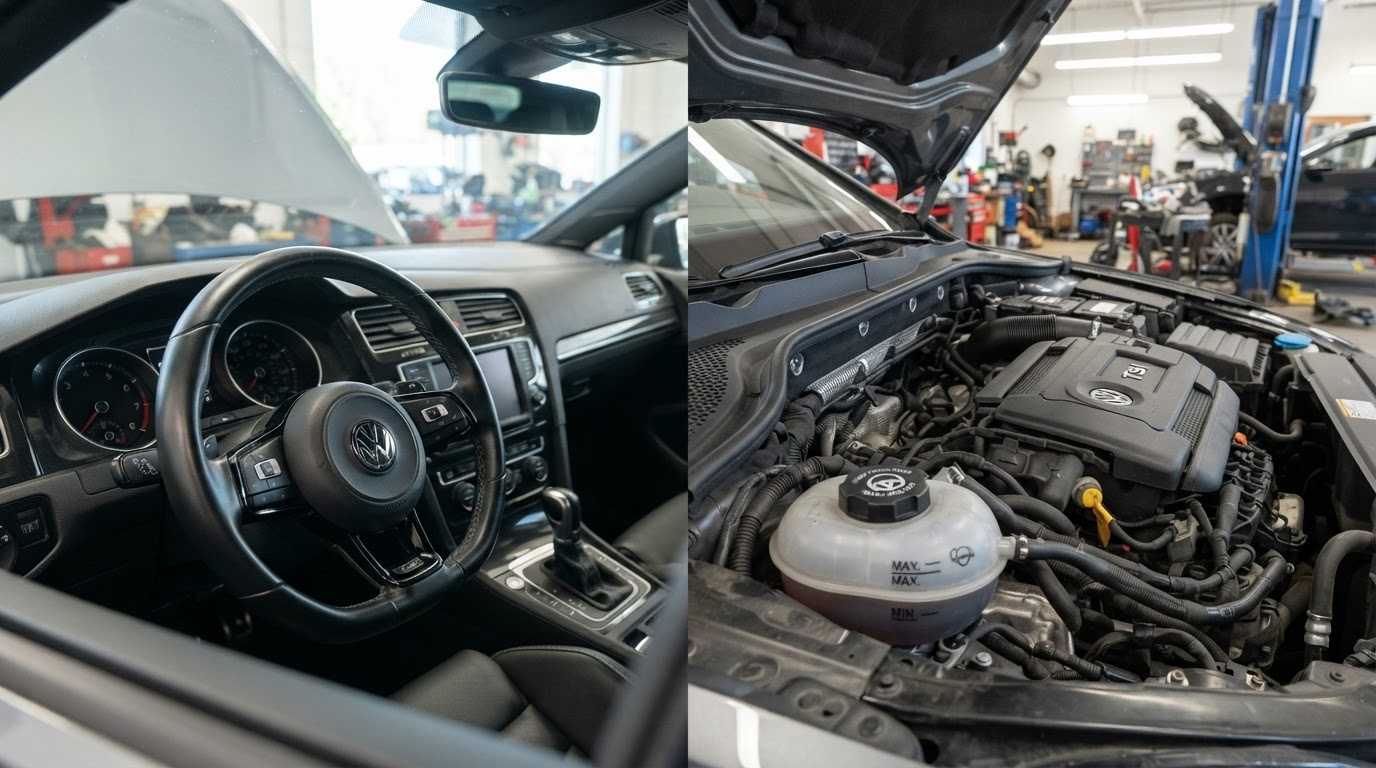
You’ll notice power steering issues through whining or squealing noises, especially during sharp turns. This indicates low fluid or worn belts.
Your steering wheel may feel stiff or hard to turn, signaling fluid loss or pump problems. Erratic steering, pulling to one side, or jerking movements suggest internal wear or contamination.
Check for fluid leaks or darkened fluid that compromise system performance. Early signs help prevent severe damage, and understanding these symptoms can guide you to effective fixes.
Key Takeaways
- Whining or squealing noises during steering, especially on sharp turns, often indicate low fluid levels or worn belts.
- Stiff or hard-to-turn steering wheel at low speeds signals hydraulic pressure loss or pump malfunction.
- Groaning or bubbling noises near the pump suggest contaminated or aerated power steering fluid.
- Grinding or knocking sounds point to mechanical wear or internal pump and steering gear damage.
- Erratic steering behavior, such as shaking or pulling to one side, indicates fluid contamination or component degradation.
Power Steering Noise Symptoms
Power steering noise symptoms often indicate underlying mechanical or fluid issues that need immediate attention. When you hear whining or squealing during steering, especially worsening on sharp turns, it often signals low fluid levels or worn belts.
Groaning or bubbling sounds coming from the pump typically suggest air trapped in the system or fluid contamination. Grinding or knocking noises point to mechanical wear or damage within the pump or steering gear.
Additionally, a screeching noise at engine start-up may mean belt slippage or pump failure. If you detect these sounds, inspect the fluid condition and level immediately, and check for leaks or belt integrity.
Addressing these auditory symptoms promptly helps prevent further system damage and guarantees safe steering performance. Maintaining proper fluid levels and regularly checking for fluid contamination can significantly reduce power steering noise issues.
Steering Wheel Stiffness and Resistance
You might notice that the steering wheel feels a bit stiff or hard to turn, especially when you’re driving slowly or trying to park. It can be pretty frustrating, right?
This stiffness often comes from a few common issues, like low fluid levels, pump failure, or problems with the belt. All these factors can make steering more effortful and less responsive.
If you catch these symptoms early on, you can tackle the underlying causes effectively. This way, you’ll be back to enjoying smooth steering in no time!
Keep in mind that degraded power steering fluid can cause increased metal wear and corrosion, which may worsen steering performance due to insufficient lubrication.
Causes of Steering Resistance
When your steering wheel feels stiff or resists turning, it often signals underlying issues within the steering system that demand immediate attention.
Common causes include low power steering fluid levels, which reduce hydraulic pressure and increase steering effort.
Contaminated or degraded fluid can impair pump efficiency, causing resistance.
A failing power steering pump often generates insufficient assist, leading to stiffness.
Additionally, worn or loose drive belts may slip, reducing pump performance.
Mechanical factors like damaged steering rack components or binding linkages also create resistance.
Leaks in hoses or connections lower fluid volume, diminishing system responsiveness.
Diagnosing steering resistance requires inspecting fluid condition and levels, checking belt tension, and evaluating pump operation.
Promptly addressing these root causes prevents further damage and restores smooth steering functionality.
Front suspension and steering assemblies face amplified loads in FWD vehicles, which can contribute to increased steering resistance due to mechanical stress.
Symptoms of Hard Steering
Hard steering often signals increased resistance within the steering system, making it difficult to turn the wheel smoothly.
You may notice the steering wheel feels unusually stiff, especially at low speeds or while parking.
This resistance can indicate problems like low power steering fluid, a failing pump, or belt issues restricting hydraulic assistance.
When you experience hard steering, the increased effort required can compromise vehicle control and safety.
Key symptoms to watch for include:
- Stiff or hard-to-turn steering wheel requiring more force
- Increased resistance during slow-speed maneuvers or parking
- Unresponsive or sluggish steering feel despite normal input
Recognizing these signs early helps you diagnose potential hydraulic or mechanical failures before they escalate into more severe steering system problems.
A common cause of these symptoms is a failing or missing serpentine belt, which powers the power steering pump and affects steering assistance.
Fixing Stiff Steering Wheels
Address steering stiffness promptly by diagnosing the root causes, such as low power steering fluid, worn belts, or a failing pump.
Begin by checking the fluid level and condition; low or dark fluid can impair hydraulic pressure, causing resistance.
Inspect belts for cracks or looseness, as worn belts reduce pump efficiency.
If fluid and belts are adequate, test pump operation for whining or groaning noises indicating failure.
Examine hoses for leaks or damage, which can lower system pressure and stiffen steering.
Replace contaminated fluid and repair leaks promptly.
If the pump is faulty, replace it to restore proper assistance.
After repairs, bleed the system to eliminate air pockets that cause stiffness.
Regular maintenance prevents recurrence and guarantees smooth steering response, improving control and safety.
Using high-quality suspension components with corrosion-resistant coatings can also enhance steering performance and reduce stiffness over time.
Steering Control and Handling Problems
Several key signs indicate steering control and handling problems, which directly affect your vehicle’s safety and drivability.
You might notice erratic or shaking steering, which signals instability in the steering system. Jerky or rough steering movements often point to mechanical wear or hydraulic inconsistencies.
Additionally, your vehicle pulling to one side can indicate uneven pressure or alignment issues within the power steering mechanism.
- Erratic or shaking steering while driving
- Jerky or rough steering movement
- Wheel pulling to one side
These symptoms suggest internal component degradation or hydraulic malfunction. Prompt diagnosis and repair are vital to restore precise steering response and maintain safe vehicle handling.
Ignoring these signs can lead to compromised control and increased accident risk.
Proper maintenance and timely inspection of seal integrity can prevent related handling issues caused by fluid leaks or pressure loss.
Power Steering Fluid Leaks and Level Checks
When you notice fluid pooling beneath your vehicle or observe a drop in the power steering fluid level, it’s essential to inspect the system promptly.
Check the reservoir for fluid at or below the ADD mark, which indicates a leak or consumption issue. Examine hoses, connections, and the pump for signs of seepage or damage.
Inspect the reservoir at or below the ADD mark and check hoses, connections, and pump for leaks or damage.
Power steering fluid typically appears reddish or pinkish; dark brown or black fluid suggests contamination and requires replacement. Leaks often occur near hose fittings or the pump seal.
Regularly monitoring fluid condition and level helps prevent pump cavitation and steering resistance. Use a clean rag to wipe the dipstick or reservoir cap before checking.
Addressing leaks early guarantees system integrity and consistent hydraulic pressure, maintaining smooth steering operation.
For efficient maintenance and repair tasks, having the right tools, such as a cordless impact wrench with adjustable speed modes and high torque, can make loosening and tightening fittings much easier.
Warning Signs of Power Steering Failure
When your power steering starts to fail, you might notice some warning signs. For instance, you could hear whining, squealing, or even grinding noises. Those sounds can be pretty alarming, right?
At the same time, you may feel changes in how your steering performs. Maybe it feels like there’s more resistance than usual, or the handling seems a bit erratic. It’s important to pay attention to these symptoms early on. Catching them in time can help you diagnose any power steering issues before they get worse. Additionally, steering instability can indicate underlying suspension problems such as worn ball joints that affect vehicle control.
Audible Warning Signals
A whining or squealing noise while turning your steering wheel often signals early power steering issues. This sound typically comes from a worn belt or low fluid levels, indicating your system isn’t getting proper hydraulic support.
If you hear consistent groaning or bubbling noises near the pump, that’s a sign the fluid might be aerated or contaminated, reducing its efficiency.
Additionally, grinding or knocking sounds could mean mechanical components within the pump or steering rack are failing and require immediate attention.
- High-pitched squeals worsening during sharp turns
- Bubbling or groaning noises from the power steering pump
- Grinding or knocking sounds indicating internal mechanical faults
Recognizing these auditory signals early can help you diagnose power steering problems before they escalate. Monitoring system performance regularly can prevent catastrophic damage and costly repairs.
Steering Performance Changes
Auditory signals like whining or grinding often precede noticeable changes in steering performance.
You’ll likely experience increased resistance when turning the wheel, especially at low speeds or during parking maneuvers.
The steering may feel stiff, unresponsive, or require markedly more effort, indicating hydraulic pressure loss or pump malfunction.
Additionally, erratic steering behaviors such as shaking, jerking, or the wheel pulling to one side can signal internal component wear or fluid contamination.
Loose or sloppy steering, with excessive play, suggests mechanical linkage issues or fluid depletion.
Monitoring these performance shifts is vital because they directly affect vehicle control and safety.
If you notice these symptoms, inspect fluid levels and quality immediately.
Consider professional diagnostics to pinpoint pump, belt, or hose failures before complete power steering loss occurs.
Regular checks for worn belts or misaligned pulleys can prevent persistent whining and maintain power steering system performance.
Common Causes of Power Steering Issues
When power steering issues crop up, they usually trace back to a handful of common causes you can diagnose early. Identifying these root problems helps you prevent further damage and maintain safe steering performance.
The most frequent culprits include fluid-related problems, mechanical wear, and belt or hose failures.
Low or contaminated power steering fluid causes increased steering effort and noises due to poor lubrication and pressure.
Worn or damaged pump leads to inconsistent steering assistance and unusual whining or groaning sounds.
Loose or slipping drive belt results in pump underperformance, causing stiff steering and squealing noises.
Frequently Asked Questions
How Often Should Power Steering Fluid Be Replaced?
You should replace your power steering fluid every 50,000 to 75,000 miles or roughly every 3 to 5 years, depending on your vehicle’s manufacturer recommendations.
If you notice dark, dirty fluid or hear whining noises, change it sooner.
Regular fluid replacement prevents pump wear and system contamination, ensuring smooth steering performance and avoiding costly repairs.
Always check fluid condition during routine maintenance to diagnose early signs of failure.
Can Cold Weather Affect Power Steering Performance?
Yes, cold weather can affect your power steering performance. When temperatures drop, the power steering fluid thickens, increasing resistance and making the steering wheel feel stiff or hard to turn.
This coincides with slower fluid circulation, which strains the pump and can cause whining noises. To diagnose, check fluid viscosity and temperature-related changes.
Ensuring you use the correct fluid and routine maintenance will help maintain smooth steering even in cold conditions.
Is It Safe to Drive With a Leaking Power Steering System?
It’s not safe to drive with a leaking power steering system. The leak reduces fluid levels, causing increased steering resistance and difficulty maneuvering, especially at low speeds.
This compromises your control and can lead to pump damage or complete steering failure. You should address leaks promptly by inspecting hoses, seals, and fluid levels.
Driving without repair risks mechanical failure and unsafe handling, increasing accident potential. Get it fixed immediately.
What Maintenance Prevents Power Steering Pump Failure?
To prevent power steering pump failure, you need to regularly check and maintain proper fluid levels and quality.
Change the power steering fluid as recommended, avoiding dirty or contaminated fluid that can damage the pump.
Inspect hoses and belts for leaks or wear, replacing them promptly.
Keep the reservoir clean and monitor for foaming or bubbles.
Routine system flushes and timely repairs will guarantee the pump operates efficiently and lasts longer.
How Does Power Steering Impact Fuel Efficiency?
Power steering systems subtly influence your vehicle’s fuel efficiency by drawing engine power to assist steering.
While this eases maneuvering, the hydraulic pump or electric motor consumes energy, slightly reducing miles per gallon.
Efficient, well-maintained systems minimize this effect. However, worn components or leaks increase load, further taxing fuel consumption.
You can optimize fuel economy by keeping your power steering system in peak condition, ensuring its energy demands remain as modest as possible.
Take Action Now: Don’t Ignore Power Steering Issues Symptoms for Your Safety
If you notice that 30% of power steering failures stem from fluid leaks, don’t ignore early signs like noise, stiffness, or handling issues.
Addressing these symptoms promptly can prevent costly repairs and guarantee safer driving.
Regularly check fluid levels and inspect for leaks to maintain peak steering performance.
By staying vigilant, you’ll diagnose problems early and keep your vehicle’s power steering system functioning reliably and efficiently.


