
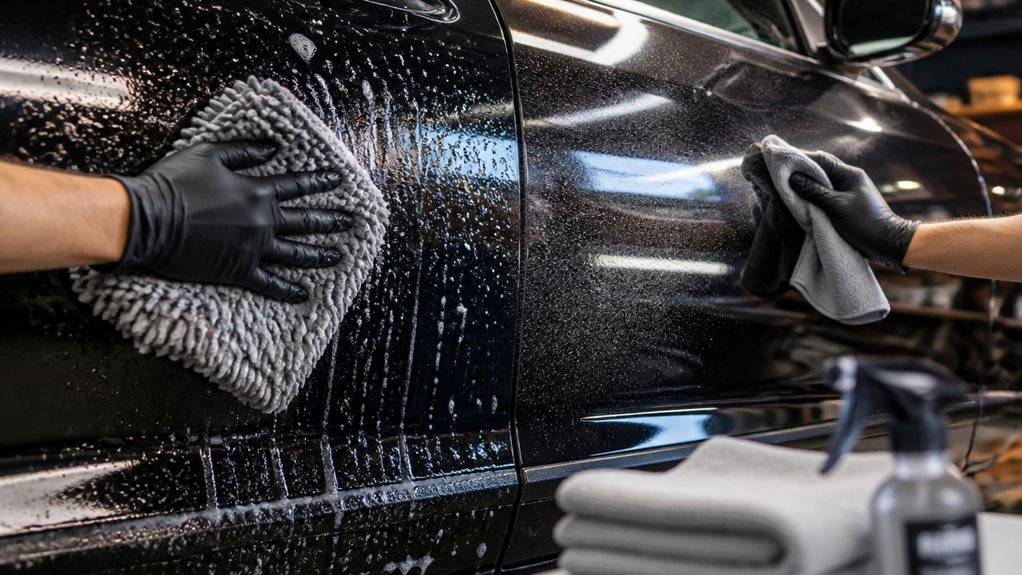
You’ll want to choose waterless wash for quick, light cleaning without using any water. It sprays on ready-to-use and wipes off with dry microfiber towels.
For moderate to heavy dirt, rinseless wash is safer. It uses a diluted solution and wet towels to lift grime without scratching while conserving water.
Both protect your vehicle’s finish and minimize environmental impact. Understanding their differences helps you pick the best method for your needs.

- SWIFT WIPE WATERLESS WASH SPRAY (CWS20916) – Clean and shine your vehicle without water; just...
- HIGH LUBRICATION FORMULA – The Chemical Guys waterless car wash spray encapsulates dirt and grime...
- CLEANING SPRAY SAFE FOR ALL EXTERIOR SURFACES – Works as an exterior car cleaner on paint, glass...

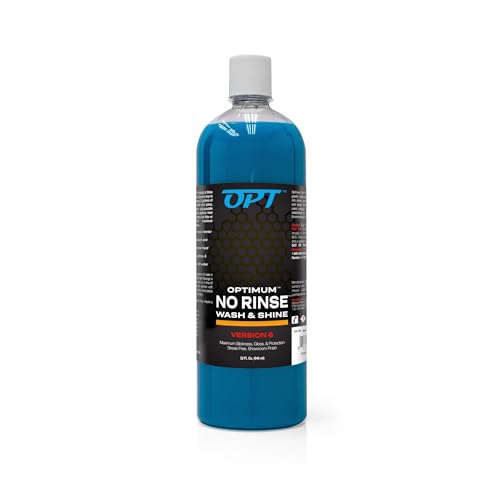
- Version 6 The slickest and glossiest version of ONR yet. Safe on all vehicle surfaces including...
- The only rinseless wash that encapsulates dirt and drops it to the bottom of the wash bucket for...
- Premium Car Wash Soap Alternative: Optimum No Rinse Concentrate only requires 1 oz per 2 gallons of...
Key Takeaways
- Waterless wash is a ready-to-use spray wiped off with dry microfiber towels, ideal for lightly dusty vehicles and quick touch-ups without water.
- Rinseless wash requires diluting a concentrated solution in a bucket and uses damp microfiber towels to safely clean moderate to heavy dirt levels.
- Waterless encapsulates dirt and adds light ceramic protection, while rinseless loosens dirt without residue and often maintains pH-neutrality to protect coatings.
- Waterless offers superior convenience and zero water use, but rinseless is safer for heavier grime and better suited for off-road or garage cleaning.
- Both methods reduce environmental impact by minimizing water use and chemical runoff, with rinseless using about 5-10 gallons and waterless using none.
Waterless Wash Vs Rinseless Wash: Which Method Fits Your Needs?
| Feature | Waterless Wash | Rinseless Wash |
|---|---|---|
| Water Usage | Zero water used, making it highly eco-friendly | Uses 5 to 10 gallons of water per wash, significantly less than traditional methods |
| Best For Dirt Levels | Ideal for light dust and fingerprints on clean vehicles | Suitable for light to moderate dirt including off-road mud |
| Cleaning Method | Spray-on ready-to-use formula, wiped off with dry microfiber towels | Diluted concentrated solution applied with damp microfiber towels or sponges |
| Surface Protection | Leaves a short-term ceramic protective layer enhancing shine | Acts as a cleaner only, no protective residue left behind |
| Convenience | Highly portable, quick and mess-free, no bucket needed | Requires mixing and bucket use, better for multiple vehicles or garage use |
| Environmental Impact | Avoids water runoff and chemical contamination | Reduces water use drastically compared to hose washing, with biodegradable chemicals |
| Risk of Paint Damage | Higher risk if used on heavy grime due to abrasive particles | Lower risk due to wet media cleaning and safer on dirtier surfaces |
Differences Between Waterless and Rinseless Wash

Although both waterless and rinseless washes aim to clean vehicles with minimal water, they differ fundamentally in application methods and chemical composition.
Waterless and rinseless washes both conserve water but differ in application and chemical makeup.
Rinseless wash requires mixing a concentrated solution with a small amount of water. It uses wet or damp microfiber towels or sponges to lift and remove dirt.
In contrast, waterless wash involves spraying a ready-to-use product directly onto the vehicle’s surface. You then wipe it off with dry microfiber cloths.
Chemically, rinseless solutions destabilize and loosen dirt particles without leaving residue. Waterless formulations encapsulate dirt and provide a short-term ceramic protective layer.
Surfactant and polymer concentrations vary accordingly, with rinseless wash focusing on effective cleaning. Waterless wash balances cleaning with light surface protection.
Rinseless wash is especially valued for its polymer-based formula that encapsulates dirt, allowing safe wipe-away cleaning without the need for water rinsing.
When Should You Use Waterless vs Rinseless Wash?
When it comes to keeping your car clean, choosing between a waterless wash and a rinseless wash can make a big difference. If your vehicle is just lightly dusty or already pretty clean, a waterless wash is the way to go. It’s super convenient and perfect for those times when you want to save water.
On the other hand, if your vehicle has light to medium dirt, you might want to consider a rinseless wash. This method isn’t only safer for your car’s finish, but it also gets the job done effectively while using minimal water. So, the key is to really understand how dirty your vehicle is. That way, you can pick the best cleaning method that keeps your car looking great without wasting any resources! Many top products combine cleaning and protective layers using ceramic coating technology to enhance durability and water beading.
Vehicle Dirt Level
When determining whether to use a waterless or rinseless wash, the level of dirt on your vehicle plays a pivotal role. You should assess the dirt accumulation precisely to choose the safest cleaning method.
Waterless wash is ideal for clean or lightly dusty surfaces, while rinseless wash suits light to medium dirt levels better. Heavy grime or off-road mud demands rinseless wash to avoid scratching. Consider these guidelines:
Use waterless wash for light dust, fingerprints, or bird droppings. Opt for rinseless wash when dirt is visible but not caked on. Avoid waterless wash on vehicles with heavy grime or mud.
Rinseless wash accommodates moderate dirt via wet media cleaning. For thick dirt layers, rinseless wash loosens particles safely without scratching.
Match your wash method to dirt level to protect your vehicle’s finish. For optimal results, choose products with waterproof ratings that ensure durability and effectiveness in various cleaning conditions.
Cleaning Convenience
Selecting the right wash method goes beyond dirt level and extends into the convenience of cleaning based on your circumstances.
If you need a quick, water-free solution for a lightly dusty or clean vehicle, waterless wash is your best option. It allows you to spray and wipe anywhere without buckets or rinsing, making it highly portable and time-efficient.
However, for multiple vehicles or when dirt accumulation is moderate, rinseless wash offers superior convenience. Using a single bucket of diluted solution, you clean with wet microfiber towels, reducing water use and floor mess.
Rinseless wash suits garage settings where you can manage damp media and want efficient, low-water cleaning. Choose waterless for extreme portability and rinseless for controlled, efficient multi-vehicle care.
Many rinseless wash products are pH-neutral formulas that safely protect wax and ceramic coatings during cleaning.
Environmental Benefits of Waterless and Rinseless Wash
Although both waterless and rinseless wash methods reduce environmental impact compared to traditional washing, they achieve this through different approaches to water conservation and chemical use.
Waterless wash eliminates water usage entirely, relying on specialized chemicals to encapsulate dirt.
Rinseless wash, meanwhile, uses minimal water, about 5 to 10 gallons, combined with surfactants to loosen contaminants efficiently.
Key environmental benefits include:
- Waterless wash avoids water runoff and floor mess, reducing contamination risks.
- Rinseless wash markedly cuts water consumption versus traditional hose washing.
- Both methods reduce chemical runoff by using biodegradable formulations.
- Waterless wash leaves a protective polymer layer, extending surface longevity.
- Rinseless wash’s concentrated solutions minimize packaging waste and resource use.
Choosing either method helps you conserve water and limit pollutant discharge effectively. Additionally, using these methods with proper dilution ensures paint safety and maximizes cleaning effectiveness.
How Waterless and Rinseless Wash Clean Your Vehicle?
To break down dirt effectively, waterless and rinseless wash methods rely on distinct chemical actions tailored to their application styles.
Waterless wash sprays a specialized formula that encapsulates dirt particles, lifting them gently from the vehicle’s surface without water. This prevents scratching while leaving a short-term protective ceramic layer.
In contrast, rinseless wash uses a diluted solution rich in surfactants and polymers to destabilize and loosen dirt. You apply it with damp media, which traps and removes contaminants efficiently, requiring no rinsing afterward.
Unlike waterless wash, rinseless wash acts purely as a cleaner and leaves no residue. Both rely on chemical formulations optimized for their respective media—dry microfiber cloths for waterless and wet towels or sponges for rinseless. This ensures safe, effective cleaning tailored to different dirt levels.
Effective use of these methods also depends on selecting high-quality microfiber towels to minimize swirl marks and protect the paintwork.
Tools and Methods for Waterless and Rinseless Wash
Mastering the right tools and methods is essential for effectively executing waterless and rinseless washes. For rinseless washing, you’ll mix the product with water in a bucket, using damp microfiber towels or sponges to clean.
Master the right tools and techniques for effective waterless and rinseless vehicle washes.
Waterless washing requires spraying the solution directly onto the vehicle, then wiping with dry microfiber cloths to lift dirt without water. Both rely on surfactants and polymers but differ in application techniques.
Key tools and methods include:
- Spray bottle for waterless wash solution
- Bucket and water for diluting rinseless wash
- Microfiber towels (wet for rinseless, dry for waterless)
- Soft sponges for rinseless wash application
- Sectional cleaning approach to avoid residue buildup
Using these tools correctly guarantees efficient, safe, and effective cleaning results. Selecting products with effective surfactants and foaming action can enhance cleaning by breaking down grime and dirt more efficiently.
Applying Waterless vs Rinseless Wash: Step-by-Step
When you’re ready to use a waterless wash, just spray the product directly onto surfaces that are clean or only a bit dusty. Then, grab a microfiber cloth and wipe off the dirt. It’s pretty straightforward, and you’ll leave behind a nice protective layer.
On the other hand, if you’re going for a rinseless wash, you’ll need to mix the solution with some water first. Soak your towels or sponges in that mixture, and then pre-treat sections of your vehicle. This method helps you safely remove light to medium grime without needing to rinse anything off.
For best results, be sure to use well-formulated cleaners and soft microfiber tools to protect your vehicle’s paint and trim during washing, as recommended in best auto detail kits.
Waterless Wash Steps
Begin by spraying the waterless wash solution evenly across a small section of the vehicle, ensuring complete coverage without oversaturation. Use a high-quality spray bottle for controlled application.
Next, gently wipe the treated area with a clean, dry microfiber towel to lift dirt encapsulated by the solution. Flip or replace the towel frequently to avoid scratching the surface.
Repeat the process section by section until the entire vehicle is clean. Finally, inspect for streaks or residues and buff lightly with a fresh microfiber cloth to enhance shine and leave protective ceramic polymers intact.
- Spray small, manageable sections for thorough cleaning.
- Use dry microfiber towels to avoid water streaks.
- Frequently change towels to prevent dirt redeposition.
- Avoid heavy dirt areas unsuitable for waterless wash.
- Perform a final buff for ideal finish and protection.
Choosing a product with biodegradable components ensures environmental safety and reduces harmful runoff during the waterless wash process.
Rinseless Wash Procedure
Mix the rinseless wash solution thoroughly with water in a bucket, following the manufacturer’s recommended ratio to guarantee peak cleaning strength.
Next, soak a microfiber towel or sponge in the solution, ensuring it’s damp but not dripping.
Work on one vehicle section at a time, gently wiping with the wet media to lift dirt without scratching the surface.
Use a clean, dry microfiber towel immediately after to remove loosened contaminants and prevent streaks.
Replace towels frequently to avoid reapplying dirt.
For heavily soiled areas, reapply the rinseless solution and repeat the process.
This method conserves water while effectively removing light to medium grime, making it suitable for multiple vehicles in succession without rinsing.
Always discard used solution responsibly to minimize environmental impact.
For best results, ensure the rinseless wash solution is compatible with your vehicle’s finish to avoid any surface damage, similar to choosing the right surface compatibility in paint removers.
Pros and Cons of Waterless vs Rinseless Wash
Although both waterless and rinseless wash methods aim to reduce water usage, each presents distinct advantages and limitations depending on your vehicle’s condition and cleaning environment.
Waterless and rinseless washes both save water but suit different vehicle conditions and cleaning needs.
Waterless wash offers superior convenience and zero water use, ideal for lightly soiled vehicles, but risks scratching if overused on heavy dirt.
Rinseless wash uses minimal water and is safer on moderately dirty surfaces, suitable for multi-vehicle cleaning, but requires mixing and more prep time.
Waterless wash leaves a short-term protective coating; rinseless does not.
Rinseless wash handles heavier dirt better than waterless.
Waterless wash is quicker and mess-free.
Rinseless wash conserves water while allowing multiple vehicles to be cleaned with one bucket.
Waterless wash isn’t recommended for vehicles with heavy grime to avoid surface damage.
Frequently Asked Questions
Can Waterless or Rinseless Wash Damage My Vehicle’s Paint Over Time?
You won’t damage your vehicle’s paint over time if you use waterless or rinseless wash correctly.
Both rely on surfactants to lift dirt gently, but you must avoid heavy grime with waterless wash. Abrasive particles can scratch paint when wiped.
Rinseless wash, using wet media, is safer for dirtier surfaces. Always use clean microfiber towels and proper technique to prevent swirl marks and maintain your paint’s integrity.
Are These Washing Methods Safe for All Types of Vehicle Finishes?
Think of your vehicle’s finish like delicate fabric. You can clean it, but the method matters.
These washing methods are generally safe for most finishes if you follow guidelines. Waterless wash suits lightly dusty, clean surfaces, while rinseless wash handles moderate dirt better.
Avoid heavy grime to prevent abrasion. Always use proper microfiber towels and correct dilution.
If you’re unsure about your finish type, test a small area first to confirm safety and avoid damage.
How Do These Washes Affect Wax or Sealant Longevity on My Car?
These washes impact wax or sealant longevity differently.
Waterless wash leaves a short-term ceramic protection layer that can slightly boost your wax or sealant durability.
Rinseless wash, however, acts purely as a cleaner without adding any protective residue.
So it won’t extend your coating’s lifespan.
If you want to preserve or enhance your wax or sealant, waterless wash offers a mild benefit.
Rinseless wash is neutral in this regard.
Can Rinseless or Waterless Wash Be Used in Freezing Temperatures?
You should know that rinseless wash uses 5–10 gallons of water.
In freezing temperatures, both rinseless and waterless washes require caution. Water can freeze quickly, causing slippery surfaces and reducing effectiveness.
Rinseless wash, needing diluted solution in buckets, risks freezing, so avoid it below 32°F.
Waterless wash, sprayed directly, works better in cold but may not lift grime well if dirt is frozen solid.
Always test small areas first.
Are There Any Health or Safety Concerns When Using These Cleaning Products?
Yes, you should handle these products carefully to avoid skin or eye irritation since they contain surfactants and polymers.
Always wear gloves and avoid inhaling sprays or mists to reduce respiratory risks. Use in well-ventilated areas and follow manufacturer instructions.
Keep products out of reach of children and pets. Proper storage prevents accidental exposure.
These precautions help you safely use cleaning solutions without health hazards.
Choose Smart: When to Use Waterless or Rinseless Wash for Best Results?
When you choose between waterless and rinseless wash, picture your car gleaming under the sun, spotless without a drop wasted.
Waterless wash is perfect for light dust, delivering a quick, eco-friendly shine.
Rinseless wash, with its gentle yet thorough rinse, suits dirtier vehicles while conserving water.
Both methods protect your paint and the environment.
By mastering these techniques, you guarantee your car looks pristine, no matter where or when you wash it.
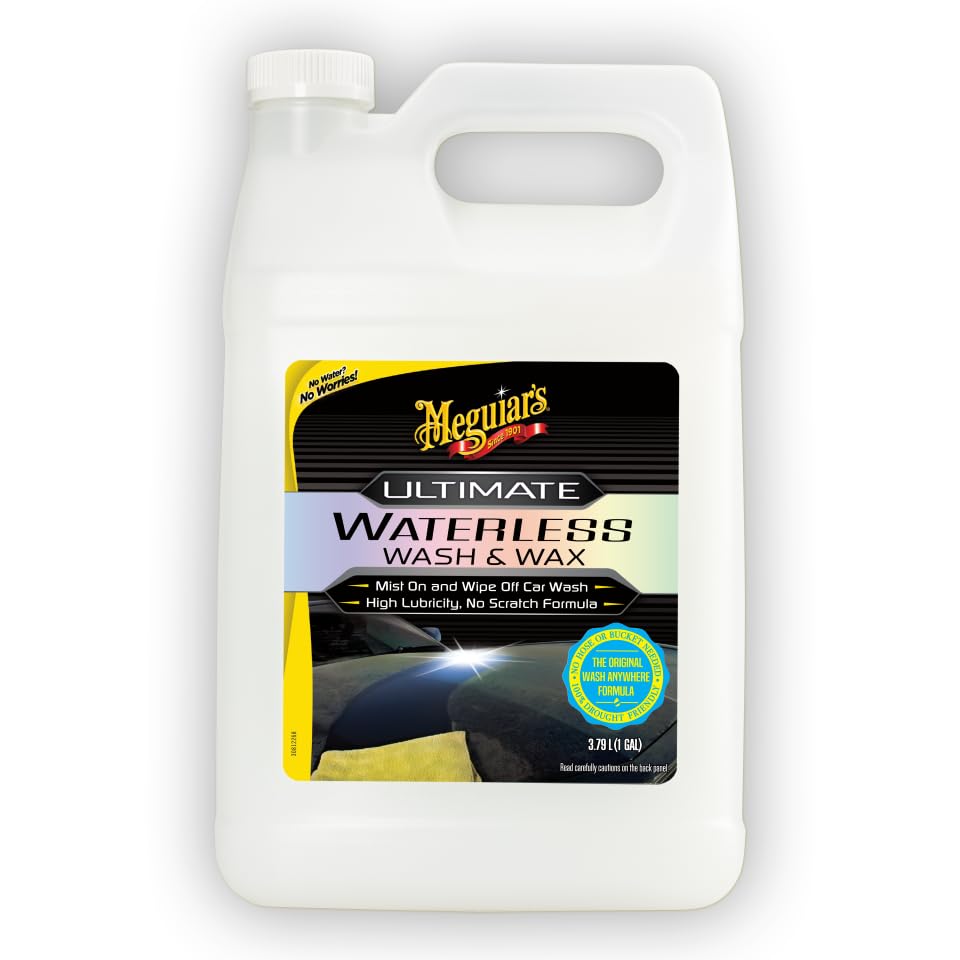
- ONE EASY STEP: Clean and protect your vehicle in one convenient step with the premium formula of...
- SPOT-FREE FORMULA: The advanced chemistry of this waterless car wash and wax is specially designed...
- LONG-LASTING BARRIER: This 2-in-1 car wash soap and wax leaves behind a lasting, glossy synthetic...

- The Premium Car Wash Soap Alternative: Optimum No Rinse Concentrate only requires 1 oz per 2 gallons...
- Increased Polymer Protection: ONR Rinseless Wash contains a blend of unique polymers that...
- Total Car Cleaning All-In-One: ONR safely cleans and protects all exterior surfaces, trim, wheels...
Last update on 2026-10-26 / Affiliate links / Images from Amazon Product Advertising API


