
Why is my air suspension so bouncy? In most cases the answer is one of five things: worn shocks or struts, a leaking air spring, a leak in an air line, fitting or valve, the wrong air pressure or ride height, or a weak compressor that can’t keep up.
The air springs carry the weight of the vehicle, but they don’t control movement on their own. The shocks do that job. When the shocks wear out, or when the springs lose pressure, the body keeps moving up and down after every bump instead of settling.
Below you’ll find how to tell these causes apart, simple checks you can do at home, and when it’s time to hand the job to a shop.
Key Takeaways
- Worn shocks or struts are the most common cause: the air springs hold the vehicle up, but nothing stops it from bouncing.
- Cracked or leaking air springs lose pressure, so the vehicle sags and bottoms out over bumps.
- Leaks in air lines, fittings or the valve block make the compressor run again and again and leave the ride height uneven.
- Pressure or ride height outside the maker’s spec gives a soft, floaty or harsh ride.
- A tired compressor can’t refill the system fast enough, so ride quality gets worse the longer you drive.
Common Causes of Bouncy Air Suspension

A bouncy ride almost always comes from one of two problems: the system can’t control movement (dampers), or it can’t hold pressure (springs, lines, valves and compressor).
Air springs hold the vehicle up. Shocks stop it from bouncing. A bouncy ride means one of the two isn’t doing its job.
Here is a quick way to tell which side the problem is on:
- The vehicle sits level but keeps bouncing after bumps: look at the shocks or struts first.
- One corner sags, especially after it has been parked overnight: look for a leak in that corner’s air spring, line or fitting.
- The compressor runs often or for a long time: there is a leak somewhere, or the compressor itself is getting weak.
- A warning light or “suspension fault” message is on: read the codes before replacing any parts.
The sections below go through each cause in the order a technician would usually check them.
Worn Shocks and Struts: The Most Common Cause
Your air springs carry the weight, but the shocks and struts control how fast the suspension compresses and rebounds. When their internal valving wears out, the body keeps moving after a bump. You get the floaty, “boat on waves” feel that most people describe as bouncy.
Many air suspension systems use a separate shock next to each air spring. Others combine the two in one air strut. Either way, a worn damper causes bounce even when the air side is perfectly healthy.
To check your shocks and struts:
- Watch for extra movement: after a dip or speed bump, a healthy suspension settles in about one movement. If it keeps going up and down two or three times, the dampers are worn.
- Look for oil: an oily, dirty film on the shock body means the seal is leaking and the shock is losing damping.
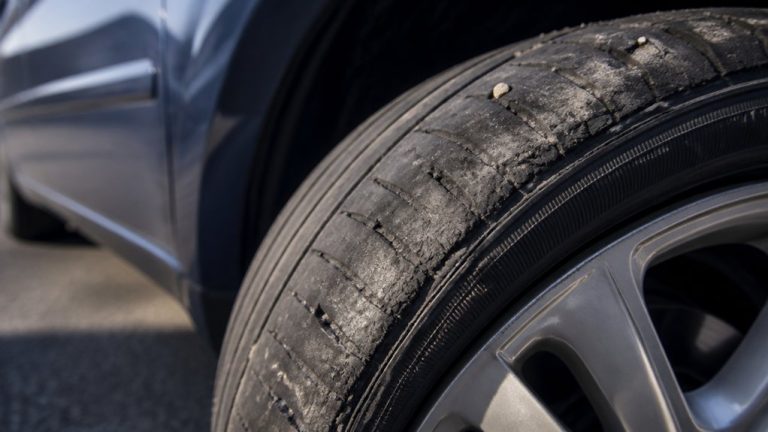
- Check the tires: cupped or scalloped wear on the tread often points to worn dampers.
- Replace in pairs: once the air side checks out, replace worn shocks or struts across the same axle so both sides behave the same.
If you’re shopping for new dampers, our guide to the best shock absorbers covers what to look for. If you’re weighing two strut brands, the TRQ vs KYB struts comparison is a good place to start.
Spotting Leaks in Air Suspension Springs
The air spring (also called an air bag or bellows) is a rubber sleeve that holds pressurized air. Over time the rubber dries, cracks and starts to leak. Once it loses pressure, the spring can’t hold the vehicle at the right height. The suspension then runs low, bottoms out and feels bouncy and unsettled.
Three simple checks will find most air spring leaks.
Identifying Visible Damage
Start with a good look at each air spring with the vehicle at normal ride height. Use a flashlight and focus on these areas:
- The rubber bellows: look for cracks, splits, dry rot, scuffs or bulges, especially in the folds where the rubber rolls over the piston.
- The top and bottom mounts: check for corrosion, looseness or damage where the spring meets the body and the axle.
- The connected parts: follow the air line from the spring and look at the fitting and the nearby valve for damage.
A spring that looks lower or more wrinkled than the one on the other side of the same axle is a strong sign it’s losing air.
Using Soapy Water
Soapy water finds leaks that you can’t see. First, let the system pump up to normal ride height. Then mix water with a little dish soap in a spray bottle.
Spray the air springs, air line fittings and valve connections, one area at a time. Watch for bubbles that grow; even small, foamy bubbles mean air is escaping. Mark each leak with a paint pen or tape so you can find it again for the repair.
This test costs almost nothing and is the same check many shops start with.
Listening For Hissing
A bigger leak often makes a hissing sound you can hear. To find it:
- Pick a quiet place: park with the engine off and the system fully pumped up.
- Go corner by corner: put your ear near each air spring, air line and the valve block.
- Use a tool to narrow it down: a mechanic’s stethoscope or a length of hose held to your ear makes a small leak much easier to pin down.
Catching a leak early saves the compressor from running non-stop, which is how a cheap repair turns into an expensive one.
Air Suspension Line, Fitting, and Valve Leaks
Not every leak is in the spring itself. The plastic air lines, push-in fittings and the valve block that sends air to each corner can all leak too.
Common signs include:
- One corner that drops overnight while the others stay up.
- A hissing sound near the valve block or along a line.
- The compressor running every time you start the vehicle, or cycling often while you drive.
Use the same soapy water test on every fitting and along each line, especially where lines pass near hot exhaust parts or sharp edges. Valve block connections are a very common leak point, so check them carefully.
Fixing these leaks quickly keeps the pressure stable and the ride height even, and it takes a big load off the compressor.
When Air Pressure or Ride Height Causes a Rough Ride
Air suspension only rides the way it should when each spring holds the pressure and height the maker set. If the pressure is off, or one corner sits higher or lower than the rest, the ride gets bouncy or harsh even when every part is in good shape.
Low Pressure Effects
When pressure drops below the maker’s spec, the springs can’t support the load properly. Here’s what you’ll notice:
- Bottoming out: with too little air, the suspension runs out of travel over bumps and hits the bump stops.
- Wrong ride height: the vehicle sits low, which changes the suspension angles and makes handling feel vague.
- A busy compressor: the system keeps trying to add air, which wears the compressor faster.
Many systems show their ride height and pressure in a service menu or with a scan tool. Compare the readings with the figures in your owner’s or service manual. If you’ve added aftermarket air bags for towing, keep them inside the pressure range the bag maker lists.
Uneven Ride Height
When one corner sits lower than the others, that corner does less work and the opposite corner does more. The vehicle can lean, wander and bounce unevenly.
Measure from the center of each wheel to the edge of the fender at all four corners on level ground and compare. A difference between sides usually points to a leak in that corner, a faulty ride height sensor or a sticking valve.
Fix the cause first. Then, if the system allows it, run a ride height calibration with a scan tool so all four corners read correctly again.
Weak Air Suspension Compressor and System Overload
The compressor refills the system whenever pressure drops. A worn compressor fills slowly or not at all, so the vehicle never quite reaches the right height and the ride gets worse the longer you drive.
Watch for these signs:
- Long or frequent run times: a compressor that runs constantly is usually making up for a leak, and it can overheat and shut down to protect itself.
- Strange noises or no sound at all: grinding, rattling or silence when it should run can mean a worn motor, a failed relay or a blown fuse.
- Damaged connections: check the wiring plug and the air fittings for corrosion, melting or looseness.
Always fix leaks before replacing a compressor. A new compressor connected to a leaking system will wear out the same way the old one did. Also keep the load within the vehicle’s payload rating, because carrying too much weight makes the whole system work harder.
How to Test for Bouncy Air Suspension Problems?
Work through the system in order, from the simplest checks to the most involved:
- Scan for codes: if a warning light is on, read the codes first. They often point straight to a sensor, valve or compressor fault.
- Look it over: check the shocks, struts, air springs and lines for leaks, cracks and damage.
- Run the soapy water test: with the system pumped up, spray every spring, fitting and valve connection.
- Check the damping: drive over a dip or speed bump and watch how many times the body moves before it settles.
- Measure the ride height: compare all four corners with each other and with the maker’s figures.
Safety note: before you lift or jack up a vehicle with air suspension, switch the system to jack or service mode as your owner’s manual describes. Otherwise it may try to level itself while the vehicle is in the air.
| Test | What to Look For | Likely Cause |
|---|---|---|
| Visual inspection | Cracks, oil on shocks, damaged lines | Worn dampers or leaking parts |
| Soapy water test | Growing bubbles | Air leak at that spot |
| Bump test | Two or more bounces before settling | Worn shocks or struts |
| Overnight height check | One corner lower in the morning | Leak in that corner |
| Compressor run time | Runs long or often | Leak or weak compressor |
When to Get Professional Help for Air Suspension Issues?
Many leaks and worn shocks can be found at home, but some problems need a scan tool and shop equipment. Get professional help when you see:
- Persistent uneven height or a compressor that never stops, even after you’ve fixed the leaks you found.
- Warning lights or fault codes for the air suspension that point to sensors, valves or the control module.
- Damage you can’t safely repair, such as a cracked strut assembly or a damaged valve block.
Air suspension parts are under pressure, and a vehicle that drops unexpectedly can cause injury. If you’re unsure, let a qualified technician handle it.
Which Fix Should You Start With?
Start with what’s cheapest to check. If the vehicle sits level but bounces, look at the shocks or struts. If a corner sags or the compressor runs often, hunt for leaks with soapy water before buying any parts. Replace the compressor last, and only after the system holds air. If a warning light is on, read the codes first.
Frequently Asked Questions
Can Weather Conditions Affect Air Suspension Performance?
Yes. In cold weather, rubber air springs and plastic lines stiffen, and small cracks can start to leak. Moisture inside the system can also freeze in the lines or valves. Heat speeds up the aging of rubber parts. Check your air suspension more often after very cold or very hot spells, and pay attention to how long the compressor runs.
How Do Air Suspension and Traditional Springs Compare in Durability?
Coil and leaf springs are simple and usually last the life of the vehicle with little care. Air suspension gives an adjustable ride and load leveling, but it has more parts that wear: air springs, lines, valves, sensors and a compressor. For a side-by-side look at the trade-offs, see our coilovers vs air suspension comparison.
What Maintenance Prevents Air Suspension Wear Over Time?
Inspect the air springs, shocks and lines for cracks, leaks and oil whenever the vehicle is on a lift. Run a soapy water test if a corner ever drops overnight. Keep the load within the payload rating, keep the compressor’s air intake filter clean if your system has one, and fix small leaks right away so the compressor isn’t overworked.
Are Aftermarket Air Suspension Kits Reliable for Daily Driving?
They can be, if you choose a kit from a well-known maker, have it installed properly and keep up with maintenance. Cheaper kits are more likely to leak and to strain the compressor. Our guide to the best suspension brands is a good starting point. If you only need a little extra support, air shocks or air bags are simpler options.
Does Air Suspension Impact Vehicle Towing Capacity?
Air suspension and add-on air bags for towing help keep the vehicle level under a trailer. That improves stability, braking and headlight aim. They do not raise the towing or payload limits set by the maker, so always stay within the figures in your owner’s manual.