
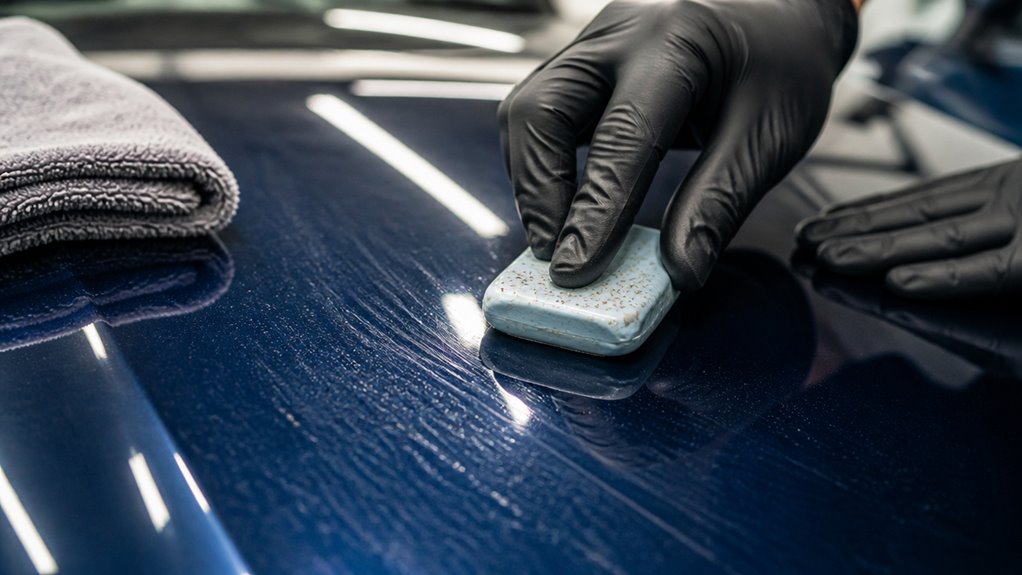
Using a clay bar will remove some wax from your vehicle’s surface because it lifts bonded contaminants and residues mechanically. However, if you use a fine clay bar with proper lubrication, gentle pressure, and light, controlled motions, you can minimize wax loss and avoid stripping it completely.
Keep in mind that old or weak wax is more vulnerable. After claying, you’ll need to reapply wax to restore full protection. The following details explain how to protect your wax effectively during claying.
Key Takeaways
- Clay bars can partially remove or disturb surface wax, especially if the wax is old, thin, or weakly bonded.
- Fine-grade clay bars typically reduce wax effectiveness but rarely strip wax completely with proper technique.
- Excessive pressure, repeated passes, or insufficient lubrication increase the likelihood of wax removal during claying.
- Using plenty of lubricant and gentle, light pressure helps minimize wax disruption while removing contaminants.
- It is recommended to reapply wax or sealant immediately after claying to restore full paint protection.
What a Clay Bar Does: Removing Paint Contaminants?

When you use a clay bar, its primary function is to remove paint contaminants that regular washing can’t eliminate. These include embedded particles like road tar, overspray, bug residue, dust, and pollution bonded to the surface.
Before claying, you lubricate the paint to reduce friction and avoid scratching. Moving the clay bar gently across the paint lifts contaminants without abrasion.
This process doesn’t correct paint defects or strip the finish chemically; instead, it decontaminates the surface, leaving it smooth and clean. You’ll notice a “glass-like” feel afterward, indicating reduced surface contamination.
Claying prepares the paint for polishing or waxing by ensuring contaminants won’t interfere with subsequent steps. This improves adhesion and finish quality.
For optimal results, it is important to remove surface contaminants thoroughly before claying to prevent scratches during the process.
Clay Bars and Wax: How They Affect Each Other
Although clay bars primarily target embedded contaminants, they can also affect the wax layer on your vehicle’s paint. When you use a clay bar, it lifts bonded particles but may simultaneously disturb or partially remove surface wax, especially if it’s old, thin, or weakly bonded.
Fine clay bars tend not to strip wax completely but can still reduce its effectiveness. The process involves lubricating the paint and gently gliding the clay to minimize abrasion. Yet some wax disruption is inevitable due to the physical removal of surface residues.
To maintain peak protection, you should expect to reapply wax or sealant after claying. Understanding this interaction helps you balance effective decontamination with preserving your paint’s protective layer. Applying wax or sealant immediately after claying and wiping down with a microfiber towel enhances gloss and durability by creating a protective layer of protection.
When Clay Bars Remove Wax: Causes and Risks?
Because clay bars physically lift contaminants from the paint surface, they can also disturb or partially remove wax.
This is especially true if you apply too much pressure or make repeated passes over the same area.
Wax removal becomes more likely when the protective layer is thin, degraded, or weakly bonded.
Aggressive claying, heavy contamination, or insufficient lubrication increases the risk of stripping wax.
You should avoid forceful, circular motions, as these can exacerbate wax loss and potentially cause surface marring.
While finer clay bars reduce this risk, partial wax removal still occurs due to the mechanical action involved.
Keep in mind that claying is designed primarily for decontamination, not wax removal.
To maintain peak protection, plan to reapply wax or sealant after claying to restore any diminished barrier.
Proper lubrication techniques are essential to minimize paint damage and reduce wax removal during claying.
How to Clay Bar Without Stripping Wax?
Maintaining your vehicle’s wax while claying requires careful technique and attention to detail.
Start by thoroughly washing and drying your car to remove loose dirt that could scratch the surface.
Begin with a thorough wash and dry to eliminate dirt that may cause scratches.
Use a dedicated clay lubricant or quick detailer liberally to minimize friction and prevent wax removal.
Work in small sections with light, even pressure, moving the clay bar gently back and forth.
Avoid circular or aggressive motions that can lift wax.
Frequently knead and fold the clay to expose a clean surface, reducing the risk of dragging contaminants across the paint.
Inspect each panel after claying to ensure smoothness without overworking the area.
It is also important to work on cool, shaded surfaces and use fine-grade clay bars to minimize the risk of damaging the wax or paint.
After Clay Bar Use: Restoring Wax Protection
Once you finish claying your vehicle, you’ll need to restore the wax protection that the process may have partially removed or weakened.
Claying removes embedded contaminants but can also strip or disturb the wax layer, especially if it’s old or thin.
To maintain peak paint protection, apply a fresh coat of wax or sealant immediately after claying. This replenishes the protective barrier, enhances gloss, and aids in water beading.
Before applying, confirm the surface is clean and dry, wiping off any residue left from the clay or lubricant.
Use a high-quality wax compatible with your paint type, applying in thin, even layers.
Allow it to cure according to manufacturer instructions, then buff to a smooth finish to maximize durability and protection.
For the best results, apply wax in shaded, cool areas to avoid quick drying and ensure an even, polished finish, as recommended for safe detailing methods.
Choosing Clay Bars That Preserve Wax
When selecting a clay bar, consider the product’s aggressiveness and texture to minimize wax removal. Finer clay bars with a softer, less abrasive composition disturb wax layers less, preserving surface protection while still removing contaminants.
Choose finer, softer clay bars to effectively remove contaminants while preserving your vehicle’s wax protection.
Avoid coarse or highly aggressive clay bars if maintaining existing wax is a priority, as they can strip or lift weakened wax films. Always pair the clay bar with sufficient lubrication to reduce friction and prevent unnecessary abrasion.
Be mindful that even fine clay bars can partially remove wax, so plan to inspect and reapply wax post-claying. By choosing a clay bar designed for gentle decontamination, you balance effective contaminant removal with preserving as much wax as possible.
This optimizes your vehicle’s finish and protection longevity. Additionally, proper lubrication during claying is crucial as it creates a slick surface that minimizes abrasion and helps safeguard your paint and wax layer.
Frequently Asked Questions
Can Clay Bars Be Used on Tinted Windows Without Damaging Tint?
Yes, you can use clay bars on tinted windows, but you need to be cautious.
The clay bar won’t damage the tint if you use plenty of lubricant and apply light pressure.
Avoid aggressive rubbing or using the clay on edges where the tint film may lift.
Always test a small area first and keep the clay clean.
Proper technique prevents scratches or tint damage, making claying safe for tinted glass surfaces.
How Often Should I Use a Clay Bar on My Vehicle?
You shouldn’t clay bar your vehicle too often. Doing it too frequently can wear down the paint’s protective layers.
Generally, once or twice a year is enough, depending on your environment and how often you drive. If your paint feels rough after washing, it’s a sign you may need claying.
Always inspect your surface carefully and use light pressure. Overdoing it risks damaging the finish and removing wax prematurely.
Are There Alternatives to Clay Bars for Removing Contaminants?
Yes, you have alternatives to clay bars for removing contaminants.
You can use chemical paint cleaners or iron fallout removers that dissolve embedded particles without abrasion.
Wash mitts with microfiber or foam and specialized detailing sprays also help lift contaminants.
Additionally, synthetic clay mitts offer similar decontamination with less risk of marring.
Each method varies in effectiveness depending on contamination severity, so choose based on your paint’s condition and your maintenance goals.
Can Clay Bars Remove Tree Sap or Bird Droppings Effectively?
Yes, clay bars can effectively remove tree sap and bird droppings, as these are types of bonded contaminants embedded on your vehicle’s surface.
When you lubricate the area and gently rub with a clay bar, it lifts and traps these stubborn residues without harsh abrasion.
However, very hardened or thick deposits might require multiple passes or additional cleaning methods before claying to guarantee complete removal without damaging your paint.
Is Claying Safe on Matte or Textured Paint Finishes?
Imagine wielding a clay bar like a knight’s sword. Handle it carefully on matte or textured paint.
Claying can be safe if you use a fine clay bar with plenty of lubricant and light pressure. Avoid aggressive scrubbing that might dull or alter the finish.
Always test a small area first. Proper technique guarantees you remove contaminants without harming the delicate surface, preserving your matte or textured paint’s unique appearance.
Maintain Your Shine: Expert Tips on Clay Bar Use and Wax Reapplication
When you use a clay bar, think of it as a fine-toothed comb for your paint. It removes contaminants without pulling out your wax if done carefully.
However, aggressive claying or the wrong type can strip wax away like sandpaper on a finish. To protect your investment, choose clay bars designed to preserve wax.
Always follow up with a fresh wax layer. This guarantees your paint stays smooth and shielded, ready to shine.


