


- Compatible with J1772 EVs Charging Adapter -for Tesla charger adapter supports up to 60A c...
- More Charging Options -FOCSPROD for Tesla to J1772 adapter, enabling your J1772 electric v...
- Fast Charging – Supports Level 2 charging up to 60A/250V, delivering stable power transfer...
- Expert Choice
- Top Rated
- Trusted Pick
Tesla charging gets annoying fast. Your cord is ready, but the plug refuses to fit. You waste time, scan the lot, and miss the easy charge.
FOCSPROD keeps the fix simple with 60A support and broad Tesla compatibility. Zanch matches that charging strength and adds IP65 protection for wet, rough conditions.
Raylix fills the higher-power gap with 80A support. It suits drivers who want extra charging headroom.


Compact Tesla to J1772 Adapters for Faster Charging
Charging access expands fast with the right Tesla to J1772 adapter, turning limited outlets into reliable Level 2 options and making every stop more productive.
1. FOCSPROD Level 2 Charging Adapter for Tesla Connectors, 60A 250V
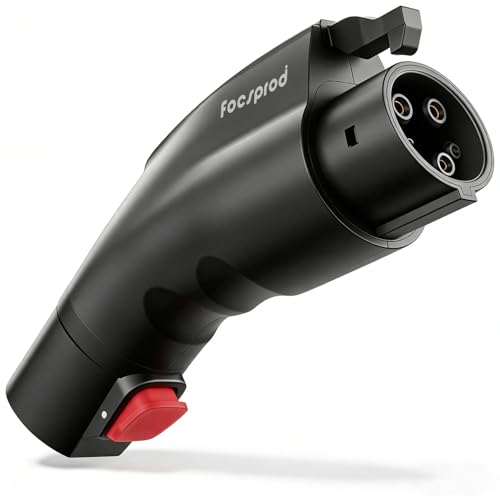
- Compatible with J1772 EVs Charging Adapter -for Tesla charger adapter supports up to 60A charging...
- More Charging Options -FOCSPROD for Tesla to J1772 adapter, enabling your J1772 electric vehicle to...
- Fast Charging – Supports Level 2 charging up to 60A/250V, delivering stable power transfer with...
Charging access can feel limited until you add a compact bridge between your vehicle and Tesla-powered outlets. Built for Level 2 use, this adapter supports up to 60A at 250V and opens the door to a much wider set of charging locations without changing your routine.
Stable power transfer helps keep charging sessions consistent, while the handheld form factor makes it easy to store in the car. FOCSPROD designed it for Tesla Mobile Connectors, Wall Connectors, and Destination Chargers, so you can plug in with less guessing and more confidence.
Safety matters when you are moving higher current through a small accessory, and this unit is SGS certified to meet UL 2252 requirements. The built-in lock feature adds another layer of security, which is useful when you leave the vehicle charging in public or shared spaces.
Its compact black-and-red build keeps the footprint small, but the function stays practical: more charging options, quick setup, and dependable compatibility for J1772-equipped EVs. For drivers who want portable convenience without giving up fast Level 2 charging, it fits the job cleanly.
Best for: EV owners who want broader access to Tesla charging hardware while keeping a small, easy-to-carry adapter in the vehicle.
Pros:
- Supports up to 60A and 250V
- Works with Tesla Mobile, Wall, and Destination Chargers
- SGS certified to UL 2252 standards
- Compact handheld design for travel
- Built-in lock feature for added security
Cons:
- Not compatible with Tesla Superchargers or DC fast charging
- Best suited to J1772-equipped EVs, so it may not fit every charging setup
2. Zanch Heavy-Duty EV Charging Adapter, 60A 250V NACS Converter, Compact

- [Important Note] Please verify your charger type before use. This Tesla to J1772 adapter converts...
- [Convenient & Efficient Charging] This NACS to J1772 adapter greatly extends your EV charging...
- [Ready for Extreme Conditions] This heavy-duty Tesla charger adapter operates reliably in wide...
Access to a Tesla destination charger can feel limited until you have the right converter. Zanch turns that gap into usable charging range with support for 60A and 250V AC power, making it a practical fit for travel, commuting, and stop-and-go charging.
Built for real-world use, it handles temperatures from -22°F to 122°F and carries an IP65 water and dust resistance rating. Integrated rubber seals help it stay steady in wet, dusty, or hot conditions without adding bulk to your bag.
The housing uses UL94 V-0 flame-retardant PC construction and is tested for 10,000 mating cycles, so repeated plugging and unplugging is part of the design. Double anti-drop locks and CE, FCC, and RoHS certifications add a layer of confidence during everyday charging.
Its compact 7.8 x 3.9 x 2.1-inch size and 0.86 lb weight make it easy to keep in the car, and the included velvet pouch helps it stay organized. Keep in mind that it is made for Tesla V1/V2 Destination Chargers and not for Superchargers or Tesla vehicles, so checking charger type first matters.
Best for: EV owners who need a portable converter for Tesla destination charging and want a rugged, travel-ready backup.
Pros:
- Supports 60A, 250V AC charging
- Compact and easy to carry
- IP65-rated against water and dust
- Flame-retardant housing for added durability
- Double anti-drop locks for a secure connection
Cons:
- Works only with Tesla V1/V2 Destination Chargers
- Not suitable for Superchargers or Tesla vehicles
3. Raylix Compact NACS Adapter for J1772 EVs, 80A 250V Fast AC Charging
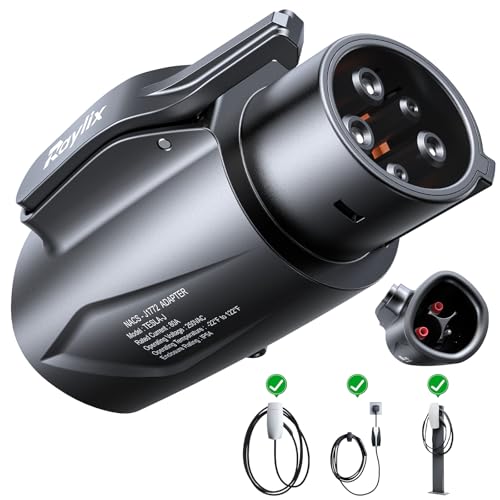
- [Wide Compatibility & Easy Access] Unlock access to thousands of Tesla AC chargers! This tesla to...
- [Compatibility Notice] This NACS to J1772 adapter does not support Tesla Superchargers (Level 3/DC...
- [Charge Anywhere, Stress-Free] With this tesla charger adapter, your J1772 EV instantly gains access...
Access to Tesla AC charging often looks simple on paper, yet the real value is getting the higher-power stations to work with your own connector standard. Raylix bridges that gap with a compact adapter that lets compatible EVs and plug-in hybrids use Tesla Wall Connectors, Destination Chargers, and Mobile Connectors without extra setup.
Rated for up to 80A at 250V AC, it gives you more headroom than lower-amperage adapters and helps cut down charging delays on capable vehicles. That matters when you want faster Level 2 charging at home, at work, or during road trips where Tesla AC equipment is already available.
The build focuses on everyday carry and rough-use practicality. At just 0.53 lb, it slips into a glovebox or trunk easily, while the water-resistant and flame-retardant construction is designed for temperatures from -22°F to 122°F. The compact form keeps the connection straightforward and easy to pack.
Compatibility reaches across many SAE J1772 EVs and PHEVs from brands such as Ford, Hyundai, Chevrolet, Honda, Cadillac, Rivian, BMW, Volkswagen, and Toyota. Keep in mind that it does not work with Tesla vehicles, Tesla Superchargers, or certain models including Jeep Cherokee 4xe, Chevy Bolt, and Chrysler Pacifica Hybrid.
Best for: J1772 EV and PHEV owners who want dependable access to Tesla AC charging with a lightweight, high-amperage adapter.
Pros:
- Supports up to 80A for high-power AC charging
- Works with Tesla Wall Connectors, Destination Chargers, and Mobile Connectors
- Compact 0.53 lb design for easy storage
- Built for broad J1772 EV and PHEV compatibility
- Designed for cold and hot operating conditions
Cons:
- Does not work with Tesla Superchargers
- Not compatible with some specific vehicle models
4. Wigoo J1772 Adapter for Tesla Model 3/Y/S/X/Cybertruck, 80A

- [Wide Compatibility] Wigoo J1772 to Tesla Charge Adapter is ONLY for Tesla Model 3/Y/S/X and...
- [Insulating Cap, Keep 0% Disconnect] The Insulating Cap, the most surprising tech in 2024, ensures...
- [MAX 80A 240V Charging] This Wigoo J1772 to Tesla Charging Adapter is capable of Max 80 amps of...
Tesla charging gets awkward when the nearby station uses a J1772 plug, and that’s exactly where a solid adapter matters more than flashy claims. Wigoo bridges that gap for Model 3, Y, S, X, and Cybertruck owners who want access to home Level 1 and Level 2 units plus thousands of public stations.
Built for up to 80A at 240V, it gives your charging setup room to work with compatible hardware without adding unnecessary complexity. The insulating cap is meant to reduce accidental contact and help keep the connection steadier, which is useful when you’re plugging in and out often.
Materials matter here. The shell uses IP65-rated PC material, reinforced brass, and a super-strong alloy for drop protection, water resistance, and everyday handling. Wigoo also rates it for wide temperature use, so it stays practical across changing conditions instead of feeling fragile in the garage or driveway.
The included velvet drawstring pouch keeps the adapter easier to store in the car, and the compact two-port design keeps the setup simple. You get a straightforward charging bridge that fits the way Tesla owners actually use public and home charging.
Best for: Tesla owners who need access to J1772 charging stations and home chargers without carrying extra gear.
Pros:
- Works with Model 3, Y, S, X, and Cybertruck
- Supports up to 80A and 240V compatible charging
- Insulating cap helps reduce exposed-contact risk
- IP65-rated materials add moisture and dust resistance
- Includes a storage pouch for travel and trunk use
Cons:
- Charging speed still depends on the station’s output limit
- Only fits Tesla vehicles, so it won’t suit non-Tesla EVs
5. ELEGRP 80A NACS to J1772 EV Charging Adapter with Carry Bag

- 【80A High Capacity】ELEGRP NACS to J1772 adapter supports up to 80 Amps and 200V to 250V maximum...
- 【IP54 Weatherproof Design】Engineered for durability and safety, this Tesla charger adapter...
- 【Portable and Protective】Each adapter comes with a high-quality carry bag to keep your trunk...
Tight charging setups can leave you needing one adapter that does more than bridge plug shapes. ELEGRP built this unit for AC Level 2 charging up to 80A high-capacity output, so you can make better use of compatible stations without adding unnecessary bulk to your kit.
The IP54-rated body helps keep charging steady through damp, dusty, and hot conditions, with an operating range from -22°F to +122°F. That makes it a practical choice for weather-resistant use when your charging routine doesn’t stop for changing conditions.
Designed for vehicles with a J1772 inlet, it works with Tesla High Powered Connector, Destination Charger, and Mobile Connector setups on AC charging only. The compact form factor and included carry bag make it easier to keep in the trunk, while the ELEGRP design adds organized portability and everyday convenience.
Support matters when you rely on charging gear often, and the included 2-year replacement coverage adds peace of mind around normal use. If you want a cleaner way to tap into compatible Level 2 charging, this adapter keeps the setup straightforward with wide EV compatibility and a simple carry-and-store design.
Best for: EV owners with a J1772 inlet who need dependable AC Level 2 charging from compatible Tesla-based charging equipment.
Pros:
- Supports up to 80A for Level 2 charging
- IP54-rated for added environmental protection
- Works with Tesla High Powered Connector and Destination Charger
- Includes a carry bag for cleaner storage
- Compact and lightweight for travel use
Cons:
- Works only with AC Level 2 charging, not DC fast charging
- Requires a vehicle with a J1772 receptacle
6. QIAO)) Tesla Charging Adapter for SAE J1772 Stations, 80A 250V
No products found.
Tight charging options can get in the way fast, especially when the nearest AC station uses a different connector. A compact adapter bridges that gap so you can tap into more Level 1 and Level 2 locations without changing your routine.
Built for Tesla Model 3, Y, X, and S owners, the QIAO)) unit supports up to 80A at 250V for strong AC charging access. It is not meant for DC charging, and it is not suitable for Cybertruck use, so vehicle matching matters here.
Safety details are doing real work behind the scenes: CE/FCC certification, silver-plated terminals, IP55 protection, and IK10 impact resistance all support a firmer, more durable connection. It is rated for temperatures from -22°F to 122°F and for more than 10,000 plug cycles.
The small body and plug-and-play design make it easy to keep in the car. At 0.57 lbs, it fits neatly in the included pouch, which helps when you are moving between home charging, commutes, and road travel. QIAO)) keeps the setup simple and portable without adding clutter.
Best for: Tesla owners who want dependable access to SAE J1772 AC charging stations for everyday driving and travel.
Pros:
- Supports up to 80A and 250V AC charging
- Compact, lightweight, and easy to store
- IP55 waterproof and dustproof rating
- IK10 impact resistance for tougher use
- Includes a protective pouch for transport
Cons:
- Not compatible with Cybertruck models
- Cannot be used with DC fast-charging stations
7. EVqiaoyi NACS Charging Adapter for J1772 EVs, 50A Portable Fast Charge

- Universal Compatibility: Designed for J1772 EVs, perfectly compatible with Tesla Wall Connector...
- High-Efficiency Fast Charging: Supports max 50A current and 250V AC voltage, enabling rapid...
- Dual Anti-Theft Design: Supports vehicle electronic lock (vehicle-equipped). When charging, the lock...
Tight charging setups can leave you relying on stations that don’t match your port, and that mismatch usually wastes more time than the charge itself. A compact adapter solves that gap by letting your vehicle connect to Tesla Wall Connector hardware, Destination Station units, and a Mobile Charger without extra setup.
Built for up to 50A and 250V AC, it uses copper alloy conductors and silver-plated pins to support efficient power transfer and lower energy loss during charging. The EVqiaoyi unit is designed for SAE J1772 EVs and keeps the connection simple: plug in, start charging, and move on.
Safety features matter most once the cable is left unattended, so the adapter adds dual anti-theft protection with vehicle locking and an included mechanical lock for the charging side. A one-click power-off button lets you stop charging before unplugging, which helps reduce wear on the port.
Temperature monitoring adds another layer of control, with automatic shutdown at 85℃ and restart at 65℃ when compatible equipment supports recovery. The portable form factor makes it easy to keep in the car for regular use or longer trips.
Best for: SAE J1772 EV owners who want a compact connector for Tesla charging hardware with added locking and temperature control.
Pros:
- Supports up to 50A charging
- Works with Tesla Wall Connector, Destination Station, and Mobile Charger
- Includes vehicle lock and mechanical anti-theft lock
- One-click power-off button for easier unplugging
- Compact size fits easily in a bag or vehicle
Cons:
- Not compatible with Super Chargers
- Automatic recovery depends on compatible charging equipment and vehicle support
Leading Tesla To J1772 Adapters For Level 2 Charging
| Product Name | Current | Voltage | Safety / Durability | Weight / Size |
|---|---|---|---|---|
| FOCSPROD Tesla Adapter | 60 A amperage; 60 A current rating | 250 volts input; 250 volts_of_alternating_current output | SGS certified; complies with UL 2252 | Form factor: Handheld; color: Black Red |
| Zanch Tesla Adapter | 60 A amperage | 250 volts input; 250 volts_of_alternating_current output | IP65 waterproof; UL94 V-0 flame-retardant PC housing | 13.8 ounces; 3.93 x 2.19 x 7.87 inches |
| Raylix Tesla Adapter | 80 A amperage; 80 A current rating | 250 volts input; 250 volts_of_alternating_current output | Water resistant; extreme durability; lab-tested 10,000+ plug-ins | Form factor: compact; color: Black |
| Wigoo J1772 Adapter | 80 A current rating | 240 volts input | IP65 drop-protect & water-protect PC material | Number of ports: 2; color: Black |
| ELEGRP Tesla Adapter | 80 A supports; 200V to 250V maximum current | 200V to 250V maximum current | IP54 waterproof; works from -22°F to +122°F | Item weight: 1.26 pounds; package: 7.17 x 4.53 x 3.23 inches |
| QIAO Tesla Adapter | 80 A amperage | 250 volts input | IP55 waterproof; IK10 impact resistance | Item weight: 9.1 ounces; package: 4.45 x 2.6 x 2.4 inches |
| EVqiaoyi J1772 Adapter | 50 A amperage; 50 A current rating | 250 volts input; 220 volts output | Temperature protection; anti-theft lock; power-off button | Form factor: Portable; color: Black |
What separates the best Tesla to J1772 adapter from a cheap plug converter?

The wrong adapter can leave you with a charging setup that looks compatible but behaves badly under load. The best Tesla to J1772 adapter earns its keep by matching amperage, handling heat, and maintaining a solid electrical connection every time you plug in.
Small spec differences matter here more than most buyers expect. A unit that fits physically but underdelivers on current rating, sealing, or connector quality can slow charging or wear out faster than the rest of your gear.
1. Current rating that matches your charging hardware
Current rating is the first filter because it determines whether the adapter can safely carry the power your charger wants to deliver. If your wall unit is rated for 60A or 80A and the adapter tops out below that, the bottleneck is immediate: charging speed drops, and the hardware runs closer to its limits.
At the technical level, higher amperage means more thermal stress across the contact surfaces, so the internal conductors, pins, and housing have to manage resistance carefully. That is why adapters built around 250V AC and heavier-duty contact materials tend to hold up better in Level 2 use, especially on setups like Tesla Wall Connectors or Destination Chargers. The Raylix and Wigoo units, for example, are built around 80A headroom, while FOCSPROD and Zanch sit at 60A.
Ignore this, and the mismatch can show up as slow charging, excess heat, or a setup that feels “fine” until repeated use starts exposing weak points. The adapter may still connect, but it stops being a dependable part of the charging chain.
2. Vehicle and connector compatibility
Compatibility is the other deal-breaker because the adapter has to match both the vehicle side and the station side without forcing you into awkward workarounds. A Tesla owner shopping for J1772 access needs a unit that fits the car’s inlet cleanly and mates with the charger plug without wobble or partial engagement.
The mechanism is simple but unforgiving: the inlet, latch geometry, and pin alignment all have to meet accurately, or contact pressure drops and the electrical path becomes less stable. Products like Wigoo are aimed at Tesla Model 3/Y/S/X/Cybertruck, while QIAO)) explicitly skips Cybertruck support. That kind of detail matters because the wrong adapter can physically seem close enough while still failing at latch lock, clearance, or conductor alignment.
If you ignore compatibility, you do not just lose convenience. You risk buying an adapter that sits unused in the glove box because it never fully matches your vehicle or the station layout you actually rely on.
3. Heat handling and contact efficiency
Heat control decides whether an adapter stays dependable after repeated charging sessions. Every plug connection creates resistance at the contact points, and resistance becomes heat, especially when current climbs toward 80A. A good adapter minimizes that heat rise through tight tolerances, conductive pin design, and housing materials that do not deform under load.
Several models point to specific engineering choices here: copper alloy conductors, silver-plated pins, flame-retardant PC housing, and UL-style material ratings all help the adapter maintain contact pressure and reduce energy loss. That matters because even small losses at the connector become noticeable over time, particularly on frequent Level 2 charging. A design with better thermal management tends to keep the plug interface cooler and more consistent during long sessions.
Skip this factor, and the adapter may still “work” while quietly running hotter than you want. That can lead to softened plastics, premature wear, or charging interruptions that show up exactly when you need a full session.
4. Weather sealing and outdoor durability
Sealing matters because many charging sessions happen in garages, driveways, apartment lots, or public spaces where moisture and dust are part of the deal. An adapter with an IP65 or similar rating is built to resist water and dust intrusion better than a barebones housing, which helps keep the connection stable when conditions are less than ideal.
The construction details are doing the work here: rubber seals, water-resistant shells, flame-retardant PC, and protective caps reduce the chance that grime or moisture reaches the contact area. Zanch, for example, adds IP65 protection and a wide temperature range from -22°F to 122°F, while ELEGRP uses an IP54 body for weather resistance. Those numbers are not decoration; they describe how much abuse the shell can tolerate before the internals start paying for it.
Ignore weather protection, and the adapter becomes fragile in the exact places you need it most. Wet contacts, dusty storage, and temperature swings can shorten its usable life and make each plug-in feel less secure.
5. Size, weight, and daily carry convenience
Portability sounds minor until you start storing the adapter in a frunk, under a seat, or in a travel bag and realize bulky gear gets left behind. A compact body makes the adapter easier to carry, easier to stash, and less annoying to use every day, which matters if you charge away from home often.
The physical design also affects stress on the connector during use. A lighter unit with a better shape reduces tugging at the port and lowers the chance of awkward leverage when the cable hangs at an odd angle. Zanch’s 13.8-ounce body and 3.93 x 2.19 x 7.87-inch size show how compact packaging can still support serious charging specs. That balance is what makes an adapter feel practical instead of like another piece of dead weight.
If you ignore this, the adapter may still perform electrically but fail in daily life. Too much bulk means less convenience, more clutter, and a higher chance it stays home when you actually need it.
6. Safety certifications and build standards
Certification is the last filter because it signals that the adapter was built around recognized electrical and material standards rather than guesswork. For a high-current accessory, that matters: the difference between a decent-looking shell and a properly specified unit can show up in how the adapter handles load, insulation, and prolonged use.
FOCSPROD lists SGS certification and compliance with UL 2252, while Zanch adds UL94 V-0 flame-retardant housing. Those details point to material behavior under heat and electrical stress, not marketing gloss. A safer adapter typically uses better insulation, more reliable contact design, and housing materials that resist ignition or deformation if something goes wrong.
Leave this out of your buying decision, and you are trusting the adapter to manage high current without much evidence behind it. That is a bad trade when the whole point of the accessory is protecting the connection between your car and your power source.
Frequently Asked Questions
Can a Tesla to J1772 adapter work with public charging stations?
A Tesla to J1772 adapter is mainly useful for accessing J1772-equipped Level 1 and Level 2 chargers, which is where a lot of public AC charging lives. It lets a Tesla plug into those stations without changing the vehicle side of the connection. The key limit is speed: this is for AC charging, not fast DC charging, so the station’s output still controls the pace.
For example, an adapter rated at 80A may still charge slower if the station is capped lower. Match the adapter to the station’s amperage before relying on it for long stops.
Check the charger label first; a high-rated adapter cannot push more power than the station allows.
What amperage should I look for in the best Tesla to J1772 adapter?
For most Tesla owners, a higher amperage rating gives more flexibility, especially if you use stronger home or destination chargers. A 60A adapter works well for many setups, while 80A models offer more headroom on compatible hardware. The best choice depends on your charging gear, not just the adapter itself.
If your wall unit or destination charger is limited to 40A, an 80A adapter does not increase output beyond that. It only means the adapter can safely handle more when the charger can deliver it.
Buy for the charger you own now, plus a little margin for future use.
Is a waterproof adapter worth paying extra for?
A waterproof or water-resistant adapter matters if you charge outdoors, park in mixed weather, or keep the unit in a trunk that sees temperature swings. Ratings like IP65 or IP54 give more confidence around dust and moisture than a bare-bones shell. That extra protection is useful when charging habits are unpredictable.
One practical example: an adapter used at apartment parking lots or roadside destination chargers may get wet more often than a garage-kept unit. The sealed housing can reduce worry during rainy stops.
Look for sealed contacts and a snug fit, not just a weather label on the box.
Will a Tesla to J1772 adapter fit every Tesla model?
Fit depends on both the adapter design and the vehicle model. Many Tesla-compatible adapters work with Model 3, Y, S, and X, but some listings exclude Cybertruck or specific trims. That matters because connector shape and charging behavior can vary by use case. A close match avoids annoying surprises at the plug.
For example, one adapter may support Model 3/Y/S/X while another specifically leaves out Cybertruck use. Always check the product’s vehicle list before ordering.
Do not assume Tesla compatibility is universal; model support should be spelled out clearly.
What is the biggest mistake people make with these adapters?
The most common mistake is assuming the adapter changes charging speed by itself. It only connects two standards; the charger, cable, and vehicle still set the actual power flow. Another frequent miss is buying the wrong direction of adapter, since Tesla-to-J1772 and J1772-to-Tesla are not the same thing. That mix-up can waste time and money.
A simple example: a 250V adapter rated for AC charging will not help with DC fast charging, even if the connector seems close. Always verify the plug standard and charging type before checkout.
Double-check the direction in the product title before you click buy.
The Adapter Choice That Opens More Charging Options
The right Tesla to J1772 adapter closes the gap between Tesla-only plugs and broader Level 2 access, so charging becomes simpler and more flexible. With the correct match, you get fewer dead ends at public stations and a smoother routine at home or on the road.
FOCSPROD fits most drivers who want dependable everyday use, while Raylix is better for those needing higher 80A headroom. For frequent travel or damp conditions, Zanch is the more rugged pick.
Start by checking your charger’s output and connector fit, then choose the adapter that matches your real needs. Avoid forcing a tight-looking connection, and keep the unit clean and dry to reduce wear and connection issues.
Last update on 2026-11-06 / Affiliate links / Images from Amazon Product Advertising API


