
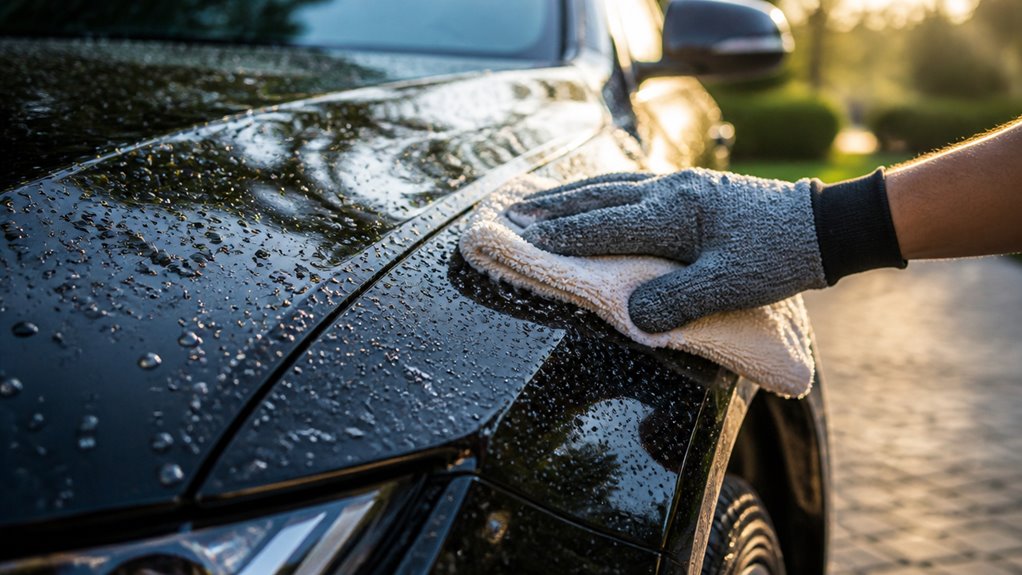
A rinseless wash lets you clean your vehicle without needing a hose or water rinse.
It uses a polymer-based formula that encapsulates dirt and contaminants, preventing scratches as you wipe them away with microfiber towels.
This pH-balanced solution safely suspends soil, protects your paint, and maintains wax or sealants between full washes.
It’s ideal for water-restricted areas or quick detailing.
Understanding its application and benefits reveals how it protects and preserves your car’s finish.
Key Takeaways
- A rinseless wash cleans vehicles without water rinsing using a polymer-based formula that encapsulates and traps dirt for safe wipe-away cleaning.
- The formula combines polymers and surfactants to lift and suspend contaminants, reducing the risk of scratches and swirl marks on paint.
- It requires mixing a small amount of concentrate in water, applying with microfiber cloths or mitts, and drying immediately to avoid streaks.
- Designed for water-saving and convenience, rinseless wash is ideal for water-restricted areas, mobile detailing, and quick maintenance between full washes.
- The method preserves wax, sealants, and coatings by using pH-balanced, polymer-based formulas that maintain finish appearance and prolong surface protection.
What Is a Rinseless Wash and How Does It Work?

Although rinseless wash might sound unfamiliar at first, it offers a highly efficient car cleaning method that requires no water rinsing. This technique uses a special formulation combining polymers and surfactants.
Rinseless wash provides an efficient car cleaning method using polymers and surfactants without any water rinsing.
The polymers encapsulate dirt particles, preventing them from scratching the paint, while surfactants trap soil safely. Instead of emulsifying contaminants like traditional shampoos, rinseless wash suspends dirt for removal with microfiber towels.
You dilute one to two ounces of concentrate per gallon of water. Then cleanse one vehicle section at a time using specialized microfiber cloths or sponges. After wiping, you immediately dry each area with a clean microfiber towel to avoid streaks.
This method demands precise application to guarantee effective encapsulation and safe dirt removal without water rinsing. Many rinseless wash products are formulated with biodegradable components to ensure environmental safety and reduce harmful runoff.
Why Choose a Rinseless Wash Instead of a Traditional Wash?
When you want to clean your vehicle efficiently without relying on a hose or large water supply, rinseless wash offers a superior alternative to traditional washing methods.
It markedly reduces water consumption by eliminating the need for continuous rinsing, making it ideal for water-restricted areas and apartment living.
This method encapsulates dirt with polymers, allowing safe removal through wiping, which minimizes paint scratching risks.
Additionally, rinseless wash cuts cleaning time by about two-thirds compared to soap-and-water techniques.
You can use just one bucket of solution and microfiber towels, simplifying the process and reducing equipment needs.
For optimal results, it is important to use mild cleaning solutions to avoid damaging your vehicle’s finish.
How to Apply a Rinseless Wash: Step-by-Step Guide?
Before you begin, prepare a solution by mixing one to two ounces of rinseless wash concentrate per gallon of clean water in a single bucket.
Mix one to two ounces of rinseless wash concentrate per gallon of clean water in a single bucket.
Next, saturate a microfiber cloth or wash mitt in the solution. Start cleaning one vehicle section at a time, gently wiping to encapsulate and lift dirt without scratching.
Immediately dry each section with a clean microfiber towel to prevent water spots. If the surface dries before wiping, reapply solution and wipe again to maintain lubrication.
For heavily soiled areas, perform a second wash cycle to ensure complete dirt removal. Work systematically, progressing from the top down to avoid recontamination.
This precise method reduces water use while protecting paint integrity, delivering a streak-free, safe finish. Using premium microfiber towels helps prevent scratches and enhances drying efficiency.
Essential Tools and Products for a Rinseless Wash
To perform an effective rinseless wash, you’ll want to gather a few essential tools. High-quality microfiber towels are a must, along with specialized rinseless wash sponges. Don’t forget to have a single clean water bucket on hand!
Now, when it comes to cleaning products, make sure you choose a properly formulated rinseless wash concentrate. This is key for safely encapsulating dirt and ensuring your paint gets the protection it needs. Using products with the right pH balance helps prevent paint damage and residue buildup during washing.
Required Equipment Overview
Getting set up for a rinseless wash requires a specific selection of tools designed to maximize cleaning efficiency while protecting your vehicle’s surfaces.
You’ll need equipment engineered to work with the unique chemistry of rinseless wash solutions, ensuring dirt is safely encapsulated and removed without scratching.
Key equipment includes special rinseless wash sponges with advanced foam and cross-cut textures, such as Big Red or Ultra Black Sponges, to lift contaminants effectively.
Microfiber cloths and wash mitts are essential for applying the solution gently and preventing swirl marks.
A single water bucket is needed to mix your rinseless wash concentrate, simplifying the process by eliminating multiple rinse stages.
Using these tools properly helps you achieve a streak-free, scratch-safe clean while optimizing the rinseless wash method’s advantages.
For best results, consider using soft microfiber towels to dry and remove dust without damaging paint or glass.
Recommended Cleaning Products
Several specialized cleaning products form the backbone of an effective rinseless wash system, ensuring ideal dirt encapsulation and surface safety.
You’ll need a rinseless wash concentrate formulated with polymers and surfactants that trap and lift dirt without emulsifying it. This prevents scratches during wiping.
To apply, mix one to two ounces of this concentrate per gallon of water. Use microfiber cloths or wash mitts designed for gentle cleaning, as well as specialized rinseless wash sponges like the Big Red or Ultra Black Sponge to optimize dirt removal.
After washing each section, immediately dry it with a clean microfiber towel to avoid water spots. These products balance cleaning power with paint safety, providing a streak-free finish while minimizing water use and mechanical abrasion risks.
Choosing a pH-balanced formula is essential for preserving wax, sealants, and coatings during rinseless washes.
Best Situations to Use a Rinseless Wash
You know, rinseless wash really shines in situations where water is scarce or even off-limits. Think about those areas where traditional washing just isn’t feasible.
With rinseless wash, you can clean your vehicle without the need for a hose or pressure washer, which is super handy.
Plus, if you’re a mobile detailer, this method is a game-changer. It allows you to clean on the go without hassle.
Many rinseless wash products also incorporate eco-friendly, biodegradable ingredients to minimize environmental impact while protecting your vehicle.
Water-Restricted Environments
When water access is limited or prohibited, rinseless wash becomes an essential solution for maintaining vehicle cleanliness without violating restrictions.
You can clean your vehicle effectively by using a small amount of rinseless wash concentrate diluted in a single bucket of water. This eliminates the need for hoses or running water.
This method is ideal for environments where water use is regulated or banned, ensuring compliance while preserving your vehicle’s finish safely.
Consider using rinseless wash in:
- HOA communities or apartments with strict water use policies
- Regions enforcing drought-related water conservation measures
- Outdoor areas lacking accessible water sources
Using rinseless wash also helps maintain the protective coatings on your vehicle, similar to how UV-resistant materials protect RV covers from degradation.
Mobile Detailing Convenience
Mobile detailers can rely on rinseless wash to streamline their workflow by eliminating the need for bulky equipment and constant water access.
You’ll only need a single bucket, rinseless wash concentrate, microfiber towels, and specialized sponges, reducing setup time considerably.
This method allows you to clean vehicles efficiently at remote locations, events, or clients’ homes where water sources are limited or unavailable.
The polymer-based formula safely encapsulates dirt, enabling you to wipe it away without rinsing, minimizing the risk of scratches.
Because it cuts water consumption drastically, you can comply with local restrictions while maintaining high-quality service.
Using rinseless wash, you can complete jobs faster, carry less gear, and adapt to varied environments without compromising paint protection or cleaning performance.
It’s important to remember that regular maintenance, such as washing, can extend the longevity of wax protection and keep your RV’s finish looking its best.
How a Rinseless Wash Protects Your Car’s Paint and Finish?
A rinseless wash protects your car’s paint and finish by encapsulating dirt particles with specialized polymers, preventing abrasive contact during cleaning. Instead of breaking down dirt, it traps contaminants, allowing you to safely wipe them away with a microfiber towel. This reduces the risk of scratches and swirl marks.
This method uses minimal water, limiting debris movement and paint damage. When you apply the rinseless wash, these key factors guarantee paint protection:
- Polymers encapsulate dirt, preventing direct surface abrasion.
- Surfactants lift and suspend contaminants safely for removal.
- Immediate drying with microfiber towels avoids residue and streaks.
Additionally, many rinseless wash formulas incorporate hydrophobic polymer technology to enhance water beading and prolong surface protection.
Frequently Asked Questions
Can Rinseless Wash Products Be Used on Motorcycles or Boats?
Yes, you can use rinseless wash products on motorcycles and boats. Their polymer-based formula safely encapsulates dirt without harsh chemicals.
This protects delicate paint and trim on these vehicles.
Since rinseless wash requires minimal water and reduces scratch risk, it’s ideal for motorcycles and boats where water runoff and access may be limited.
Just follow the proper dilution and application technique with microfiber towels to guarantee a clean, streak-free finish.
How Long Does a Rinseless Wash Solution Typically Last Once Mixed?
Think of your rinseless wash solution like fresh paint. It works best shortly after mixing. Typically, you’ve got about 24 hours before the solution starts losing efficacy due to polymer breakdown and reduced surfactant action.
To maintain optimal encapsulation of dirt and ensure streak-free results, mix only what you’ll use in a single session. Proper dilution (1-2 ounces per gallon) and immediate use guarantee peak performance and paint safety.
Are Rinseless Wash Products Safe for Tinted Windows and Vinyl Wraps?
Yes, rinseless wash products are generally safe for tinted windows and vinyl wraps when used correctly.
Their polymer-based formula gently encapsulates dirt without harsh chemicals, minimizing damage risk.
You should always test a small area first and avoid aggressive scrubbing.
Proper dilution and wiping with microfiber towels guarantee you protect delicate surfaces.
This helps preserve tint integrity and wrap adhesion while achieving a clean, streak-free finish.
What Is the Environmental Impact of Rinseless Wash Chemicals?
Like a whisper in a drought, rinseless wash chemicals minimize environmental impact by drastically cutting water use and runoff.
You’ll reduce water consumption by up to 90% compared to traditional washes, lowering strain on local supplies.
The polymers and surfactants are designed to encapsulate dirt without harsh emulsifiers, making them biodegradable and less toxic.
When applied correctly, you’ll protect aquatic ecosystems and conserve resources, aligning efficiency with eco-conscious care.
Can Rinseless Wash Remove Stubborn Stains Like Tar or Sap?
Rinseless wash generally can’t remove stubborn stains like tar or sap on its own because it encapsulates loose dirt rather than breaking down heavy contaminants.
You’ll need specialized tar or sap removers for those spots before rinseless washing. After treating tough stains, rinseless wash effectively cleans surrounding areas without water.
Always follow up with microfiber towels to avoid scratches and ensure safer paint protection during the cleaning process.
Make Car Washing Faster and Smarter
So, if you’re tired of wasting gallons of water and scrubbing like a medieval knight, a rinseless wash might just be your new best friend.
It’s efficient, eco-friendly, and lets you pamper your car’s paint without turning your driveway into a swimming pool.
Who knew saving the planet and your paint job could be as simple as a quick spray and wipe?
Welcome to the future of car care. Try not to get too excited.


