
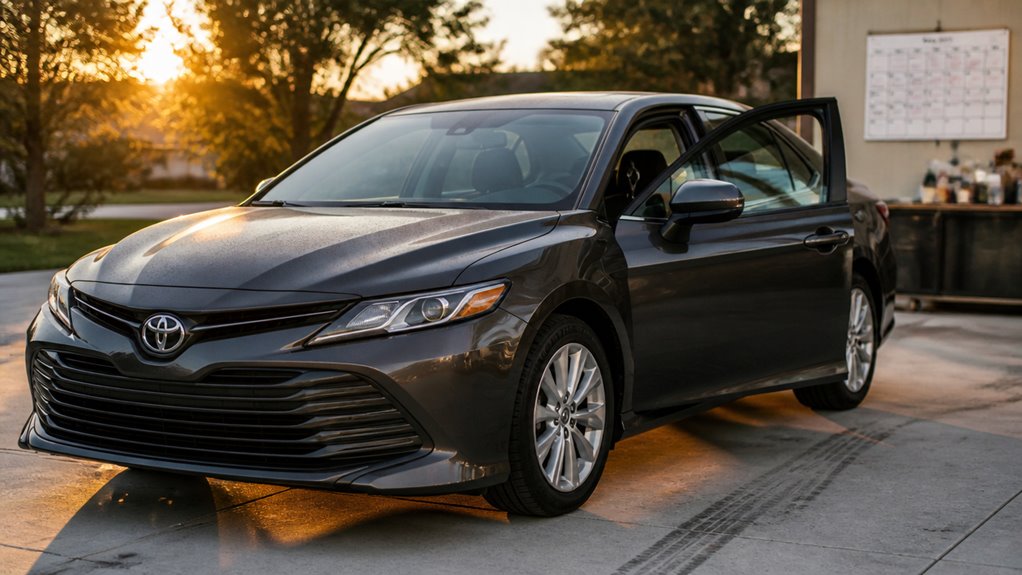
You should start or drive your sitting car at least every one to two weeks to keep the battery charged, fuel stable, and engine fluids circulating.
Driving for 15–30 minutes is more effective than just starting or idling, as it fully warms the engine and prevents moisture buildup and carbon deposits.
Longer storage periods need more careful maintenance, like using battery maintainers and fuel stabilizers.
Understanding these details will help you optimize car health during inactivity.
Key Takeaways
- Start or drive a sitting car every 1 to 2 weeks to maintain battery and mechanical health.
- Driving 15–30 minutes is better than just starting to fully recharge the battery and circulate fluids.
- For storage under 30 days, no start is needed; over 30 days, start and drive every 14–21 days.
- Avoid idling only, as it fails to reach proper engine temperature and does not protect components.
- Use a battery maintainer or disconnect switch during long storage to prevent battery drain.
How Often Should You Start or Drive a Sitting Car?

Typically, you should start or drive a sitting car once every one to two weeks to maintain its mechanical and battery health. Most experts recommend a weekly to biweekly interval, with older or more vulnerable vehicles needing starts closer to every 7 to 10 days.
For cars stored in controlled environments, the interval may extend up to two to four weeks, though monthly starts are the least aggressive suggestion. This schedule helps prevent battery discharge and keeps fluids circulating, reducing risks of component degradation.
You’ll want to avoid longer periods without operation, as extended inactivity accelerates issues related to fuel stability and battery drain. Sticking to these intervals guarantees your vehicle remains functional and ready for regular use without major maintenance setbacks. Using a battery disconnect switch during extended storage can help prevent battery drain and simplify maintenance.
Why Driving Is Better Than Just Starting Your Car?
You know, driving your parked car does a lot more than just getting the engine going. It actually helps recharge the battery, keeping those voltage levels nice and high. Plus, when you take it for a spin, the engine reaches its full operating temperature. This is great because it boosts combustion efficiency and cuts down on wear and tear.
And let’s not forget about the fluids! When you drive, you’re helping circulate essential fluids like oil and coolant. This is super important for maintaining proper lubrication and preventing moisture buildup in the system. So, next time you think about just starting your car, remember that taking it for a drive is way better for its health! Regular driving also helps prevent issues like moisture buildup in your car’s interior, which can lead to unpleasant odors and mold growth.
Battery Charge Benefits
Regularly driving your parked car provides substantially better battery charge benefits than simply starting the engine.
When you drive, the alternator actively recharges the battery at peak rates, compensating for natural discharge and accessory loads.
In contrast, merely starting the engine initiates minimal alternator output, often insufficient to restore full charge.
Driving for at least 15 to 30 minutes guarantees the battery attains a stable state of charge, extending its lifespan and reducing the risk of a discharged battery.
Additionally, sustained engine operation supports consistent voltage regulation, preventing undercharging or overcharging scenarios that can degrade battery cells.
Consequently, incorporating regular driving intervals into your vehicle’s schedule is vital for maintaining reliable battery performance, especially when the car sits idle for extended periods.
Regular monitoring of battery voltage during and after driving helps detect early signs of battery deterioration and ensures optimal charging efficiency.
Engine Warm-Up Importance
Although starting your car’s engine initiates basic functions, driving it guarantees the engine reaches peak operating temperature. This is essential for proper lubrication and efficient performance.
Idling alone often fails to achieve this critical thermal state, limiting oil flow and increasing wear. When you drive your car, you:
- Raise engine temperature uniformly, ensuring oil viscosity decreases to the most favorable levels for protection.
- Activate combustion conditions that prevent carbon buildup and fuel residue.
- Engage mechanical components under load, promoting proper thermal expansion and reducing premature wear.
Simply starting the engine without driving may leave internal parts inadequately lubricated and operating below ideal temperatures.
For sustained engine health, brief driving sessions surpass idle-only starts by fully warming the engine and maintaining its mechanical integrity over time. Additionally, cold weather can increase fluid viscosity and reduce hydraulic pressure, so driving helps to restore optimal hydraulic pressure and fluid flow within the transmission.
Fluid Circulation Effects
Driving your car not only warms the engine but also guarantees thorough circulation of essential fluids like oil, coolant, and transmission fluid.
When you merely start your engine and let it idle, these fluids often don’t reach peak flow rates. This limits their ability to lubricate, cool, and protect critical components.
Active driving raises fluid pressure and temperature more effectively, ensuring contaminants are flushed and wear is minimized.
For example, oil circulation prevents metal-to-metal contact. Coolant flow disperses heat to avoid hotspots.
Transmission fluid also needs movement through the system to maintain hydraulic function and prevent seal degradation.
Hence, a short drive, typically 15 to 30 minutes, better preserves your vehicle’s mechanical health than idle-only starts, especially during extended periods of inactivity.
For reliable maintenance and safety, ensuring your vehicle is properly supported by certified equipment with multiple safety locks is essential during any repairs or inspections.
How Battery Health Affects Starting Frequency?
Frequently, battery health dictates how often you need to start a parked car. A discharged battery is the most common reason a vehicle won’t start after sitting idle.
To maintain peak battery condition, you should consider these points:
Start the car weekly or biweekly to prevent battery drain from parasitic loads.
Use a battery maintainer for extended storage to keep voltage stable without frequent starts.
Monitor battery voltage regularly; a drop below 12.4 volts signals the need for charging or starting.
Neglecting battery health can lead to complete discharge, shortening battery lifespan and increasing starting difficulty.
Starting the vehicle periodically guarantees the alternator recharges the battery, maintaining its readiness.
For longer storage, battery management strategies outweigh frequent starting, preserving battery integrity and optimizing vehicle reliability.
Proper charging and monitoring systems can extend battery life and prevent premature failure.
Fuel Degradation and Moisture Risks in Stored Cars
Hey there! Just a heads-up: fuel starts to degrade pretty noticeably after around 30 days. This is especially true if you’re using ethanol blends, which can be prone to phase separation, particularly in humid conditions.
Also, moisture can build up in both the fuel and exhaust systems if the car sits idle for too long. This can lead to corrosion and performance issues down the line.
Fuel Breakdown Timeline
Fuel in a parked car begins to degrade noticeably within about 30 days, especially when ethanol-blended gasoline is involved.
Ethanol attracts moisture, accelerating chemical breakdown and phase separation.
This can impair engine performance and fuel system components.
Understanding the timeline helps you manage your vehicle’s storage effectively.
Key points to take into account:
Within 30 days: Ethanol-blended fuel may start phase separation, causing water and ethanol to separate from gasoline.
30 to 60 days: Fuel oxidation increases, forming gums and varnishes that clog injectors and carburetors.
Beyond 60 days: Degraded fuel can lead to hard starts, rough idling, and potential engine damage if left untreated.
To maintain fuel integrity, start and drive your car at least every 1 to 2 weeks during extended storage periods.
Using a fuel stabilizer can significantly slow down degradation and protect your engine during storage.
Moisture Accumulation Effects
Moisture often builds up in a parked car’s fuel system and exhaust components when the vehicle sits unused for extended periods. This moisture can lead to corrosion inside fuel lines, degrade gasoline quality, and cause phase separation in ethanol-blended fuels, especially in humid environments after about 30 days.
As water settles, it promotes microbial growth and rust, impairing fuel injectors and clogging filters. Similarly, condensation in the exhaust system accelerates rust formation, risking costly damage.
To mitigate these effects, you should start and ideally drive your car every one to two weeks. This practice circulates fuel, evaporates moisture, and maintains system integrity.
If you can’t drive the car, at least running the engine for 15 to 30 minutes helps reduce moisture accumulation and extends fuel system life during storage.
Additionally, using fuel stabilizers designed for ethanol blends can prevent deposits and phase separation, helping to maintain fuel system stability during extended storage.
Why Idling Without Driving Is Risky for Your Car?
Frequently, idling a parked car without driving can accelerate wear on engine components and fail to maintain ideal operating conditions.
When you let your engine idle, it doesn’t reach peak temperature, which prevents proper combustion and fluid circulation. This can lead to increased carbon buildup and incomplete fuel burn.
Consider these risks when idling without driving:
Insufficient fluid circulation: Oil and coolant don’t evenly protect engine parts, causing premature wear.
Battery underuse: Idling doesn’t recharge the battery effectively, risking discharge over time.
Fuel system degradation: Fuel doesn’t refresh, increasing moisture buildup and potential corrosion.
For car longevity, it’s better to drive rather than just idle, ensuring all systems operate under proper load and temperature conditions. Using advanced ignition systems can further help prevent premature engine damage and improve overall performance.
How Storage Duration Changes Starting and Driving Needs?
Storage duration markedly influences how often you should start and drive your parked car to maintain its condition. For short-term storage under 30 days, starting may not be necessary. For medium durations, starting and driving every 14 to 21 days is advisable to maintain battery charge and fuel quality. Extended storage beyond three months requires more exhaustive preservation. Regular maintenance also includes ensuring your windshield remains clear and fog-free by using anti-fog windshield cleaners.
| Storage Duration | Recommended Interval | Recommended Action |
|---|---|---|
| Under 30 days | No start needed | Minimal intervention |
| 15 to 45 days | Every 21 days | Start and drive ~15 minutes |
| 46 to 90 days | Every 14 days | Start and drive 20-30 min |
| Over 90 days | Intensive storage prep | Use battery maintainers |
Adjust intervals based on your vehicle’s condition and storage environment.
Frequently Asked Questions
Can Extreme Weather Affect How Often I Should Start My Car?
Extreme weather can definitely affect how often you should start your car.
For instance, batteries lose about 20% of their efficiency in freezing temperatures, making more frequent starts necessary to prevent discharge.
In cold climates, you might need to start or drive your car weekly to keep fluids circulating and the battery charged.
Conversely, hot weather accelerates fuel degradation, so regular starts help maintain fuel quality and prevent moisture buildup.
Adjust intervals based on your local climate for best care.
Is It Safe to Use Remote Start for Maintaining a Sitting Car?
Yes, you can use remote start to maintain a sitting car, but it’s best if you drive the vehicle afterward.
Remote starting alone often leads to insufficient battery charging and poor fluid circulation.
Idling without driving can increase wear and carbon buildup.
For effective maintenance, use remote start to warm the engine, then take a 15-30 minute drive to guarantee proper mechanical system activation and fuel system refreshment.
How Does Tire Pressure Change When a Car Sits Unused?
Tire pressure drops like a slowly leaking balloon when your car sits unused. Air molecules naturally seep through the tire rubber, causing gradual deflation.
Temperature changes also affect pressure: cooler air contracts, reducing psi, while warmer air expands it.
You should check and adjust tire pressure regularly because underinflated tires can lead to uneven wear, poor handling, and increased fuel consumption.
Maintaining proper psi guarantees safety and tire longevity.
Should I Disconnect the Battery if the Car Will Sit Long-Term?
Yes, you should disconnect the battery if your car will sit long-term. This prevents slow battery drain caused by parasitic loads from electronics and can extend battery life.
Alternatively, use a battery maintainer or trickle charger to keep it charged without overcharging.
Before disconnecting, make sure you have any radio or security codes handy, as some systems may reset when power is removed.
This approach protects your battery during extended storage.
What Are Signs That a Sitting Car Needs Professional Maintenance?
If you notice your sitting car struggles to start, that’s a clear sign it needs professional maintenance.
Persistent battery drain, unusual engine noises, or excessive smoke on startup also indicate issues.
Additionally, if brakes feel spongy or tires show flat spots, don’t ignore it.
Moisture buildup causing corrosion or fuel system problems can silently damage your car.
Catch these signs early to avoid costly repairs and guarantee reliability.
Start Smart And Avoid Costly Storage Problems
Think of your sitting car like a dormant engine waiting for life. Starting it occasionally is like a heartbeat, but driving it is the pulse that keeps every system vibrant.
Neglecting this rhythm invites battery drain, fuel decay, and moisture buildup, silently corroding your vehicle’s health.
So, don’t just wake your car; set it in motion regularly to maintain its mechanical vitality and make certain it’s ready when you need it most.


